

ProductPRODUCT
Featured products
Contact Us
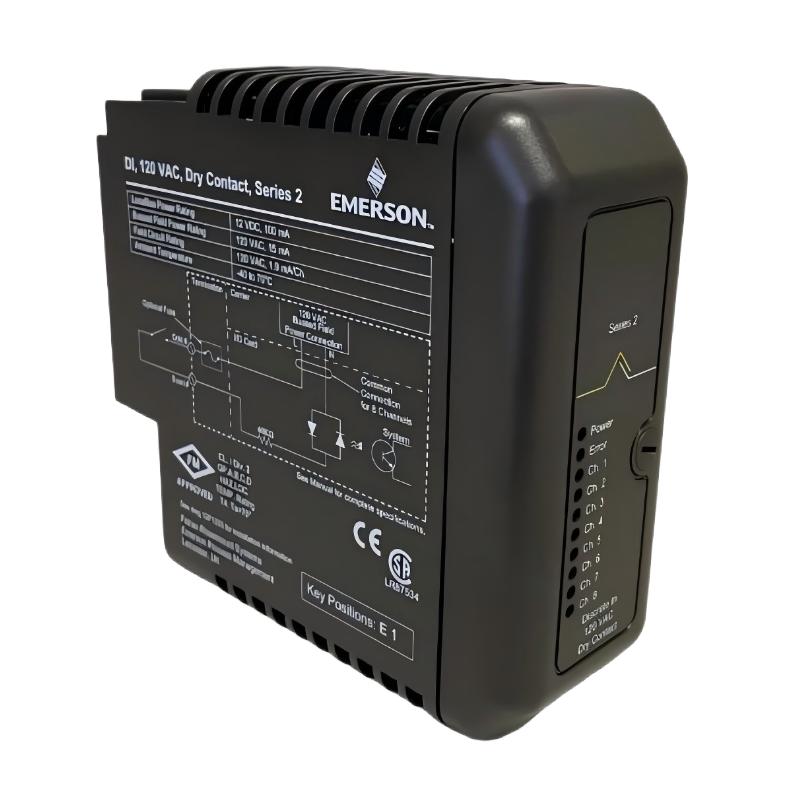
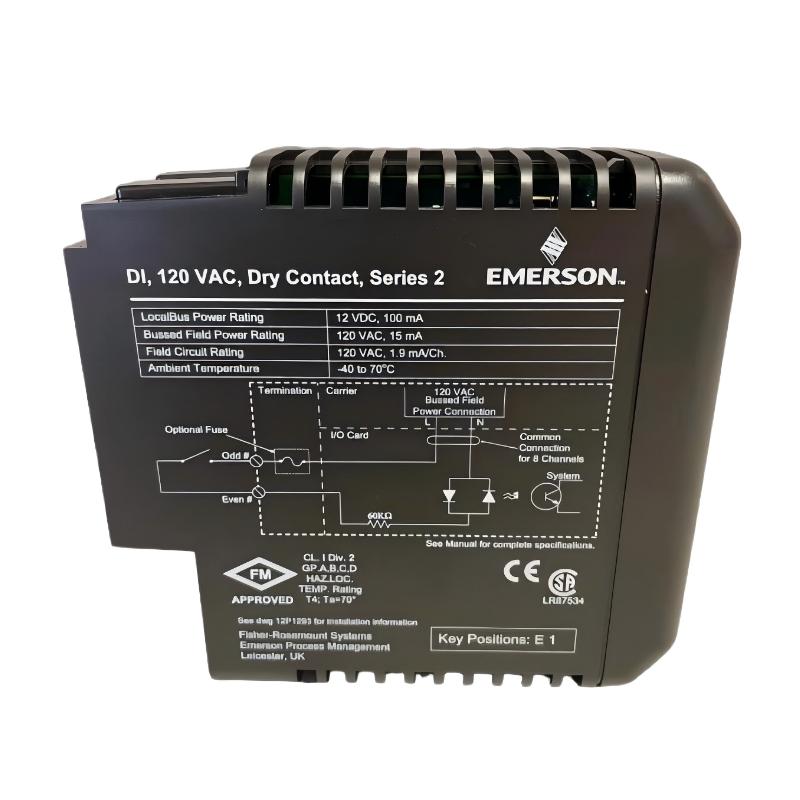
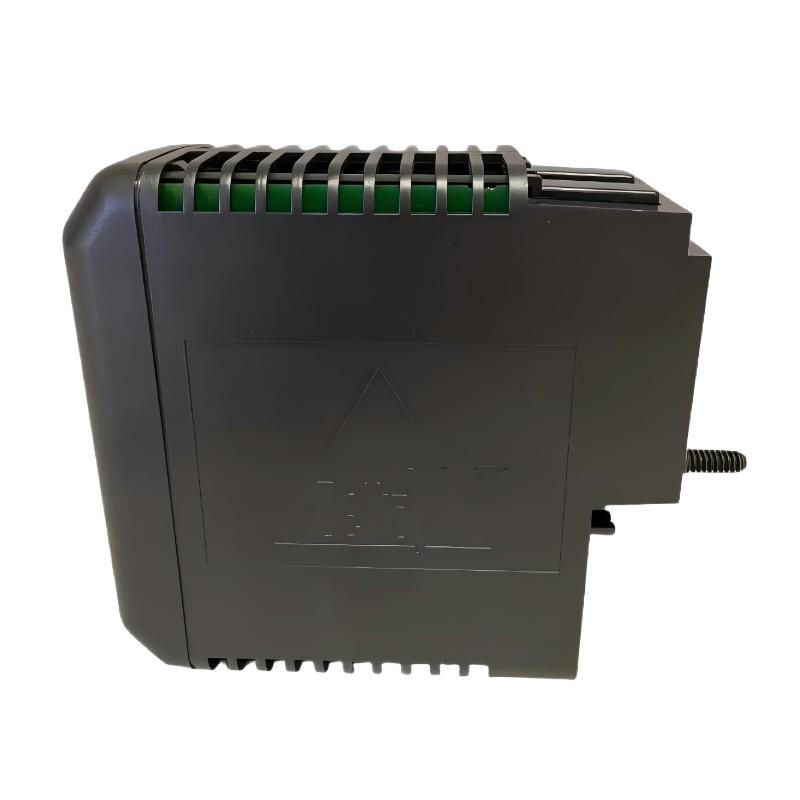
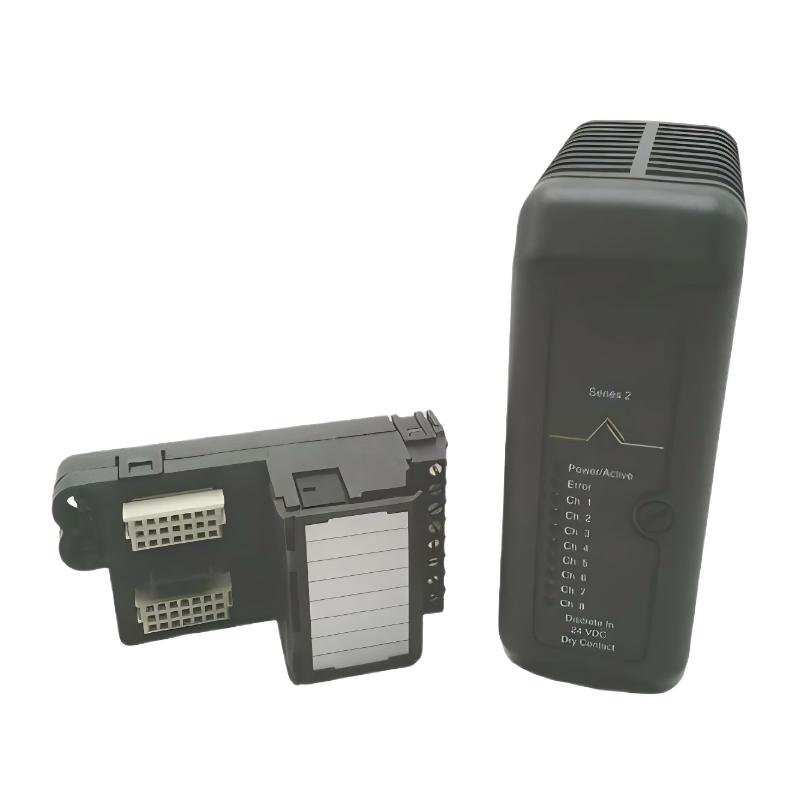
- Emerson
- VE4001S4T2B2
- Discrete Input Card
- USA
- 107 x 41 x 105 mm
- 0.25 kg
- Xiamen, China
- New & In Stock
- T/T, PayPal, Western Union
- 1 Year
- 1-3 Working Days
- DHL, UPS, TNT, FedEx and EMS.
- 24-Hour Service
- COO
- 4
Our advantage

Global Logistics
We have a 10-year logistics and express cooperation agreement, so our products can be shipped to any place in the world.

Brand new and original
Our products are imported in bulk from the place of origin. Because of the cooperative relationship, our products are all original and 100% new.

24-hour service
We provide 7*24 hours service to our customers. We will be there whenever you need us.

Price advantage
All our products are priced very favorably because we have our own warehouse and supply.
| Company Information | |||
| [email protected] | |||
| Mobile | +8615980777398 | ||
| +8615980777398 | |||
| 15980777398 |
Product Introduction
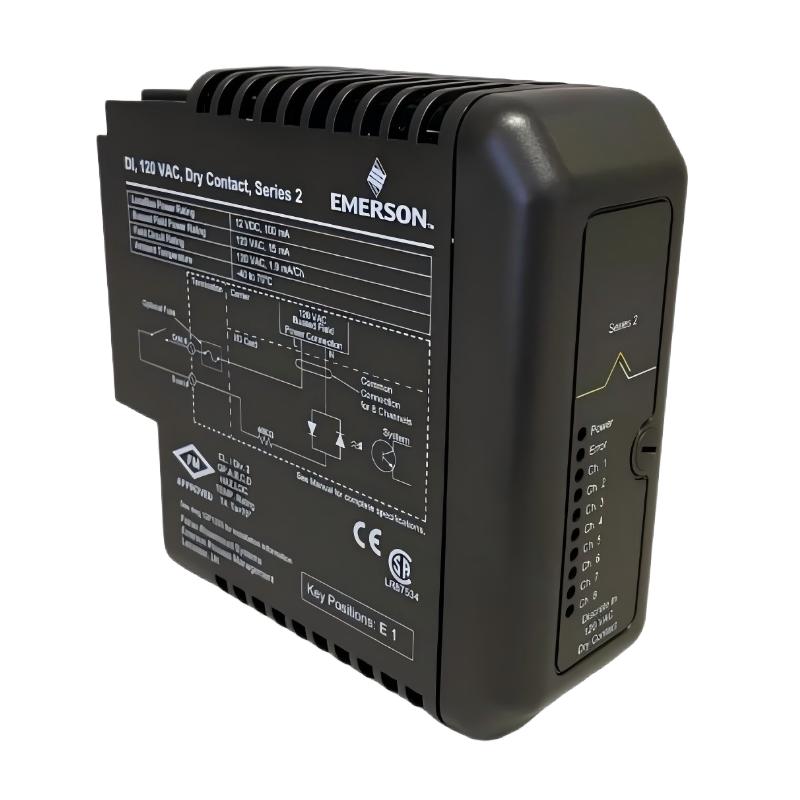
The Emerson VE4001S4T2B2 Discrete Input Card is an industrial process-control I/O component designed to acquire discrete field signals and transfer reliable binary status information into an Emerson automation system. Discrete inputs are essential in process plants because many important operating conditions are represented by simple two-state signals, including equipment running status, valve position, switch activation, alarm contacts, and permissive conditions.
As part of the VE4001S4T2B2 product family, this discrete input card provides a practical interface between field-level devices and the control-system environment. It allows physical changes occurring in pumps, motors, valves, switches, protective devices, and other process equipment to become usable information within control logic and operator monitoring applications.
The card is specified at 107 × 41 × 105 mm with a weight of 0.25 kg, giving it a compact and lightweight form factor suitable for industrial control-system installations. Its physical characteristics are particularly useful when maintaining existing automation cabinets where available space, replacement compatibility, and organized I/O arrangement are important considerations.
A properly functioning discrete input system provides more than basic status indication. It can support automatic sequences, equipment permissives, alarm handling, interlocks, shutdown logic, and operator awareness. For this reason, the VE4001S4T2B2 can play an important role in maintaining dependable communication between the physical process and the supervisory control environment.
Technical Data
| Specification | Description |
|---|---|
| Manufacturer | Emerson |
| Model | VE4001S4T2B2 |
| Product Type | Discrete Input Card |
| Product Family | VE4001S Series |
| Main Function | Discrete field signal acquisition |
| Signal Category | Digital / Binary |
| Application | Industrial Process Control |
| Dimensions | 107 × 41 × 105 mm |
| Weight | 0.25 kg |
| Typical Field Devices | Switches, contacts, status devices, permissive signals |
| System Role | Field-to-controller signal interface |
| Typical Uses | Status monitoring, alarms, interlocks and sequencing |
| Installation Environment | Industrial automation/control cabinet |
| Integration | Emerson process control architecture |
Exact electrical characteristics, channel configuration, terminal assignments, isolation specifications, and compatible carrier or terminal arrangements should be verified against the particular system configuration and hardware revision before installation.
Understanding the VE4001S4T2B2 Discrete Input Card
The function of a discrete input card is straightforward in concept but extremely important in an automation system.
Industrial equipment constantly generates binary status information. A motor may be running or stopped. A valve may be open or closed. A pressure switch may be normal or activated. A limit switch may indicate that a mechanical assembly has reached a defined position.
These conditions can be represented as discrete electrical signals.
The VE4001S4T2B2 receives such signals and makes their logical states available to the control system.
A typical signal chain is:
Process Equipment → Field Contact/Switch → Wiring → Terminal Interface → VE4001S4T2B2 → Controller → Control Logic → HMI/Alarm System
This means that the card is positioned at an important boundary between the physical plant and the software-based control environment.
If the input card, wiring, or field device does not operate correctly, the controller may receive incorrect information. A seemingly small I/O problem can therefore affect equipment sequencing or operator decisions.
How a Discrete Input Signal Works
A discrete input represents a defined electrical state rather than a continuously changing measurement.
For example, a motor auxiliary contact can provide feedback indicating whether the motor starter has reached its expected state.
When the physical equipment changes condition:
- The field contact changes state.
- The electrical condition on the input circuit changes.
- The VE4001S4T2B2 detects the corresponding input condition.
- The control system receives the digital status.
- The programmed control logic evaluates the status.
- The HMI or supervisory system can display the condition.
- Alarms or interlocks may respond when configured conditions are met.
This process allows physical events to become meaningful information within the automation system.
Role in Process Automation
The Emerson VE4001S4T2B2 can contribute to several layers of process automation.
Equipment Monitoring
Discrete feedback allows the control system to determine whether equipment is operating in the expected state.
Examples include:
- Pump running feedback
- Motor starter status
- Valve open indication
- Valve closed indication
- Breaker position
- Local/remote selector status
- Equipment fault contact
Alarm Processing
A discrete input can be associated with an alarm condition.
Examples include:
- Motor overload
- High-level switch activation
- Low-level switch activation
- Equipment fault
- Valve position disagreement
- Auxiliary protection contact
Sequence Control
Sequential processes often depend on confirmation signals.
For example:
Start Command → Motor Starts → Running Feedback → Continue Sequence
If the expected feedback does not arrive, the control system can prevent the sequence from continuing or generate an appropriate alarm.
Interlock Logic
Discrete inputs can also be used to establish permissive and interlock conditions.
For example:
Valve Closed + Pump Available + Pressure Normal → Pump Start Permitted
The actual logic depends on the application, but reliable input acquisition is fundamental to this type of control strategy.
Typical Field Devices
The VE4001S4T2B2 may be associated with a wide range of discrete field devices.
Mechanical Switches
Limit switches and position switches can provide binary information based on mechanical movement.
Auxiliary Contacts
Motor starters, contactors, breakers, and protection devices can provide auxiliary status contacts to the control system.
Pressure Switches
A pressure switch can change state when process pressure crosses a defined threshold.
Level Switches
Discrete level switches are commonly used for high-level, low-level, or equipment-protection functions.
Valve Position Contacts
Actuated valves may provide open and closed position feedback to verify that commanded movement has occurred.
Equipment Fault Contacts
External protective devices can provide a fault or trip indication to the automation system.
Application in Pump and Motor Systems
Pump and motor applications are common examples of why reliable discrete inputs matter.
Consider a process pump.
The controller sends a start command to the motor-control equipment. After the motor starts, an auxiliary contact provides running feedback.
The control system may use this feedback to determine whether:
- The motor successfully started.
- The pump is operating.
- A start timeout has occurred.
- A process sequence may continue.
- An equipment alarm should be generated.
If the input signal is incorrect, the controller may incorrectly conclude that the pump has failed or stopped.
Therefore, troubleshooting should always distinguish between an actual equipment failure and a feedback-signal problem.
Valve Position Monitoring
Valve position feedback is another important application.
A control system may issue an open command to a process valve and then wait for an open-position input.
The logic may operate as:
Open Command → Valve Movement → Open Feedback → Confirm Position
If the open feedback does not appear, possible causes include:
- Valve actuator problem
- Position switch problem
- Damaged cable
- Terminal problem
- Input configuration issue
- Discrete input channel fault
The VE4001S4T2B2 is therefore one part of a larger diagnostic chain.
Installation Guidelines
Correct installation is essential for dependable operation.
Before installation, confirm the exact identification:
Emerson VE4001S4T2B2 Discrete Input Card
A similar-looking module should not be substituted without confirming electrical and system compatibility.
Mechanical Installation
The card should be installed in the correct location within the associated Emerson control-system hardware.
Before inserting the module:
- Inspect the card for physical damage.
- Check connectors for contamination.
- Verify the installation position.
- Confirm that the mounting or carrier interface is clean.
- Observe appropriate ESD handling practices.
The card should be properly seated without excessive force.
Electrical and Wiring Verification
Before energizing the system, verify the associated field wiring.
Important checks include:
- Correct terminal assignment
- Correct signal identification
- Secure terminal connections
- Proper common connections
- Cable integrity
- Correct field-device operation
- Absence of unintended shorts
- Absence of open circuits
Field wiring should be checked against approved plant documentation rather than relying only on memory or the appearance of the previous installation.
Commissioning Procedure
After installation, commissioning should verify the complete signal chain.
1. Confirm Card Installation
Verify that the VE4001S4T2B2 is mechanically installed and correctly connected.
2. Verify System Recognition
Check the control system for appropriate module or hardware status information.
3. Check Field Signals
Operate or simulate the relevant field devices according to the plant commissioning procedure.
4. Observe Input Status
Confirm that the expected input state changes in the control system.
5. Check Software Tagging
Verify that the physical input corresponds to the correct software tag.
6. Verify HMI Indication
Confirm that the operator interface displays the correct condition.
7. Test Alarm Logic
Where applicable, verify that configured alarm conditions respond correctly.
8. Verify Interlocks
For critical equipment, verify that permissive and interlock behavior matches the approved control philosophy.
Troubleshooting the VE4001S4T2B2
A systematic approach is more effective than immediately replacing the card.
The most useful diagnostic principle is:
Start at the field device and work toward the controller.
Fault 1: Input Remains OFF
If the control system shows an input as OFF when the field device should be ON, investigate the complete signal path.
Possible causes include:
- Failed field switch
- Open cable
- Loose terminal
- Incorrect wiring
- Missing field signal
- Incorrect channel assignment
- Configuration problem
- Faulty input channel
Recommended procedure:
- Confirm the physical field condition.
- Check the field device.
- Verify the signal at the terminal interface.
- Check wiring continuity where appropriate.
- Confirm the input channel.
- Review system diagnostics.
- Compare the physical signal with the software indication.
Fault 2: Input Remains ON
A permanently active input can result from:
- A switch stuck in the active state
- Shorted field wiring
- Incorrect terminal connection
- Incorrect common connection
- Input circuit problem
- Incorrect software interpretation
The first objective is to determine whether the unexpected signal exists physically or only appears within the software.
If the physical input condition is correct but the software status remains incorrect, investigate the I/O and control-system configuration.
Fault 3: Intermittent Input
Intermittent faults are often related to field wiring rather than the input card.
Potential causes include:
- Loose terminals
- Vibration
- Aging mechanical contacts
- Damaged cables
- Corrosion
- Poor connector contact
- Electrical interference
- Unstable field equipment
Observe when the fault occurs.
If the input changes unexpectedly whenever a motor starts, a valve moves, or nearby high-power equipment operates, the relationship may provide an important diagnostic clue.
Fault 4: Multiple Inputs Become Abnormal
If several unrelated inputs change state simultaneously, replacing individual field devices may not solve the problem.
Instead, investigate common causes such as:
- Shared wiring
- Common supply problems
- Terminal interfaces
- Carrier connections
- Communication or system-level faults
- Grounding issues
- Power disturbances
A common-mode problem can affect several channels at the same time.
Fault Diagnosis Workflow
A practical troubleshooting sequence is:
Stage 1 – Process
Is the physical equipment actually in the expected state?
Stage 2 – Field Device
Is the switch, relay, contact, or sensor operating correctly?
Stage 3 – Wiring
Does the expected electrical signal reach the input interface?
Stage 4 – VE4001S4T2B2
Does the input card detect the signal correctly?
Stage 5 – Controller
Does the controller receive the expected input status?
Stage 6 – Logic
Is the signal assigned to the correct control function?
Stage 7 – HMI
Is the status displayed correctly to the operator?
This layered method reduces unnecessary hardware replacement and makes troubleshooting easier to document.
Preventive Maintenance
Preventive maintenance is particularly important for discrete input systems used in continuous process operations.
Recommended maintenance activities include:
- Inspect input-card connections.
- Inspect terminal blocks.
- Check for loose wiring.
- Inspect cable insulation.
- Monitor recurring input faults.
- Review unexpected input transitions.
- Keep control cabinets clean.
- Check for excessive environmental conditions.
- Verify critical field devices periodically.
- Maintain current wiring documentation.
Maintenance personnel should pay particular attention to inputs associated with safety-related process sequences, equipment protection, shutdown logic, and critical permissives.
Replacement and Compatibility
When replacing an Emerson VE4001S4T2B2, the replacement should be checked against the existing control-system configuration.
Important factors include:
- Exact model number
- Hardware revision
- Associated I/O architecture
- Terminal arrangement
- Field signal characteristics
- Controller configuration
- Software database
- Application logic
The model should be clearly identified in maintenance records as:
Emerson VE4001S4T2B2 Discrete Input Card
This helps prevent confusion with other VE4001-series discrete input cards that may have similar physical appearances but different configurations.
Spare Parts Strategy
Maintaining an appropriate spare inventory can significantly reduce downtime in process plants.
The importance of keeping a spare VE4001S4T2B2 depends on:
- Number of installed cards
- Process criticality
- Replacement lead time
- Historical failure rate
- Production impact
- Availability of qualified repair or replacement resources
Critical control-system components should be clearly labeled and stored under suitable environmental conditions.
A spare card should remain protected from moisture, contamination, mechanical impact, and electrostatic discharge.
Integration With Control Logic
A discrete input rarely operates independently.
For example, a motor-running input may be used by multiple control functions:
Motor Running Feedback
↓
Status Confirmation
↓
Start Sequence Validation
↓
Alarm Logic
↓
Operator Display
This means an input-card fault can sometimes produce several symptoms simultaneously.
An engineer may observe an equipment alarm, a sequence timeout, and an incorrect HMI indication even though the underlying problem is a single missing discrete input.
Understanding these dependencies makes system-level troubleshooting considerably more efficient.
Engineering Recommendations
For reliable operation of the VE4001S4T2B2 within an industrial control system, several practices are recommended.
Maintain Accurate Documentation
Keep electrical drawings, I/O lists, terminal schedules, and software tag information synchronized.
Avoid Unnecessary Hardware Replacement
Always confirm whether the fault originates from the field device, wiring, configuration, or card before replacing the module.
Verify Real Field Conditions
A software-forced input can help with certain diagnostic procedures, but it should not replace functional verification of the actual field device.
Monitor Recurring Problems
Repeated faults on the same input may indicate a field-device or wiring issue rather than repeated card failures.
Protect Critical Signals
Inputs associated with important interlocks and shutdown conditions should receive appropriate inspection and functional testing.
Physical Characteristics
The specified physical characteristics of the Emerson VE4001S4T2B2 are:
Dimensions: 107 × 41 × 105 mm
Weight: 0.25 kg
The compact dimensions make the card practical for densely arranged industrial automation hardware. Its 0.25 kg weight also simplifies handling during maintenance and replacement operations.
For cabinet design, replacement planning, and mechanical installation, these dimensions should be considered together with the dimensions and clearances of the associated carrier, terminal assembly, wiring, and neighboring modules.
Key Benefits
The Emerson VE4001S4T2B2 provides several practical benefits in process automation applications:
- Reliable discrete field-status acquisition
- Compact industrial form factor
- Suitable for process control applications
- Supports equipment status monitoring
- Useful for alarm and interlock logic
- Suitable for sequence-control applications
- Supports field-to-controller signal integration
- Practical for maintenance and replacement
- Compact 107 × 41 × 105 mm dimensions
- Lightweight 0.25 kg design
Its primary function is simple but critical: accurately transferring discrete information from the physical process into the automation system.
Frequently Asked Questions
What is the Emerson VE4001S4T2B2?
The Emerson VE4001S4T2B2 is a Discrete Input Card designed for acquiring binary field signals in industrial process automation systems.
What is the main purpose of a discrete input card?
Its main purpose is to detect ON/OFF or other two-state field conditions and make those states available to the control system.
What devices can be connected to discrete inputs?
Typical devices include switches, relay contacts, limit switches, valve-position contacts, motor auxiliary contacts, pressure switches, level switches, and equipment fault contacts.
What are the dimensions of the VE4001S4T2B2?
The specified dimensions are 107 × 41 × 105 mm.
What is the weight of the VE4001S4T2B2?
The specified weight is 0.25 kg.
Can the VE4001S4T2B2 be used for alarms?
Yes. Discrete field conditions can be used by the control system as alarm inputs when correctly configured within the application.
Can it be used for interlocks?
Discrete input signals are commonly used as conditions within equipment permissives and interlock logic. The exact implementation depends on the process-control configuration.
What should be checked if an input is not responding?
Check the field device, wiring, terminal connections, input channel, system configuration, controller status, and associated software logic before determining that the card itself has failed.
Why is troubleshooting the complete signal path important?
Because a faulty field switch, broken cable, loose terminal, configuration error, or controller mapping issue can produce symptoms that look like a defective input card.
Conclusion
The Emerson VE4001S4T2B2 Discrete Input Card provides an important interface between industrial field devices and process-control logic. By acquiring binary status information from switches, contacts, equipment feedback devices, and other discrete sources, it enables automation systems to monitor equipment conditions and execute alarms, sequences, permissives, and interlocks.
With specified dimensions of 107 × 41 × 105 mm and a weight of 0.25 kg, the VE4001S4T2B2 offers a compact solution for industrial control-system installations and maintenance applications.
Reliable performance depends on the complete signal chain rather than the input card alone. Correct installation, accurate field wiring, proper system configuration, disciplined commissioning, and systematic troubleshooting are therefore essential. When integrated and maintained correctly, the Emerson VE4001S4T2B2 can contribute to stable equipment monitoring and dependable process-control operation.