

ProductPRODUCT
Featured products
Contact Us
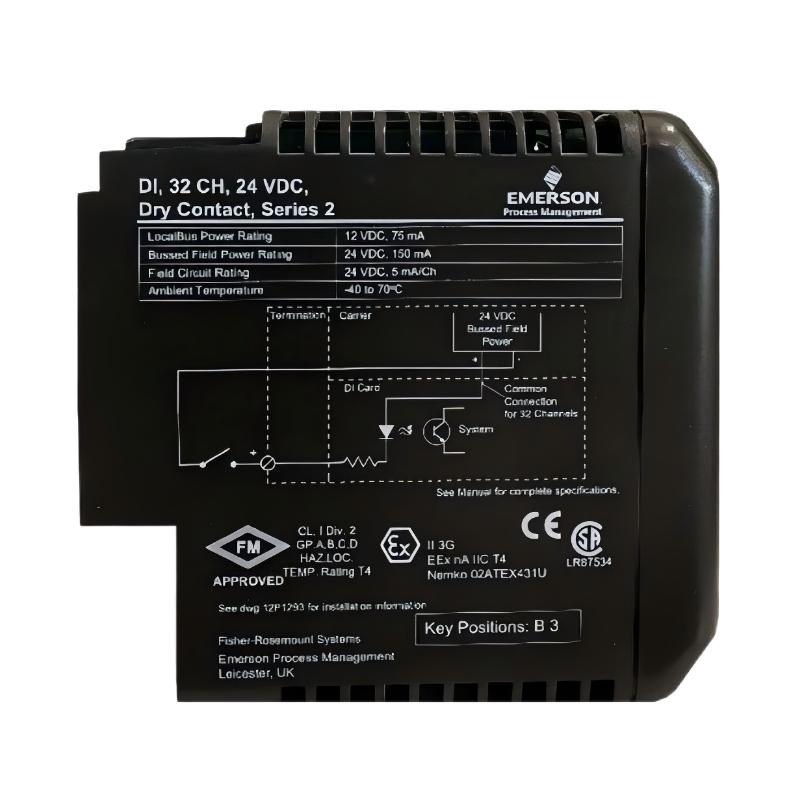
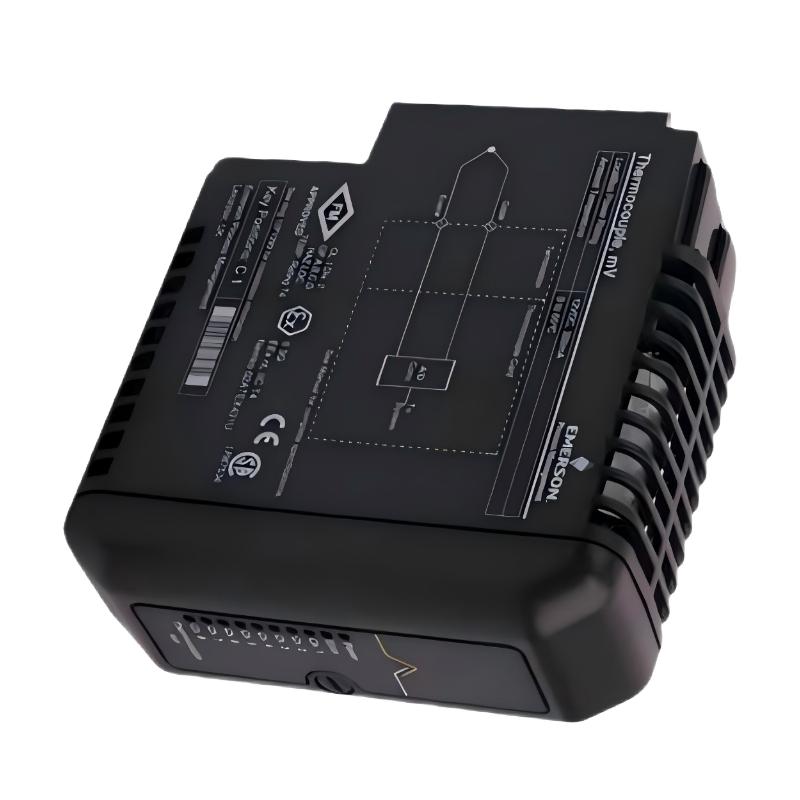
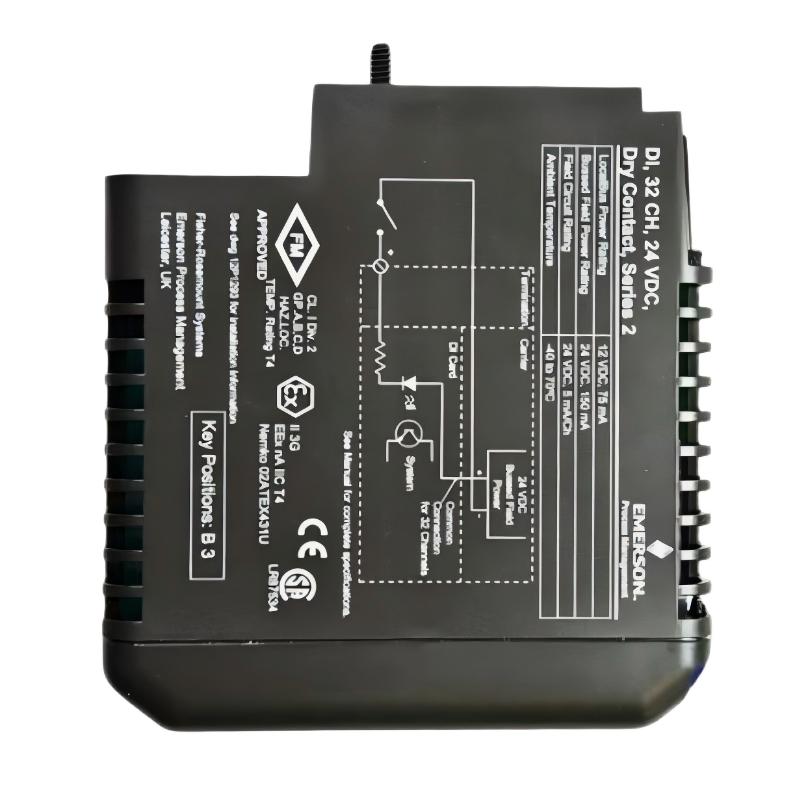
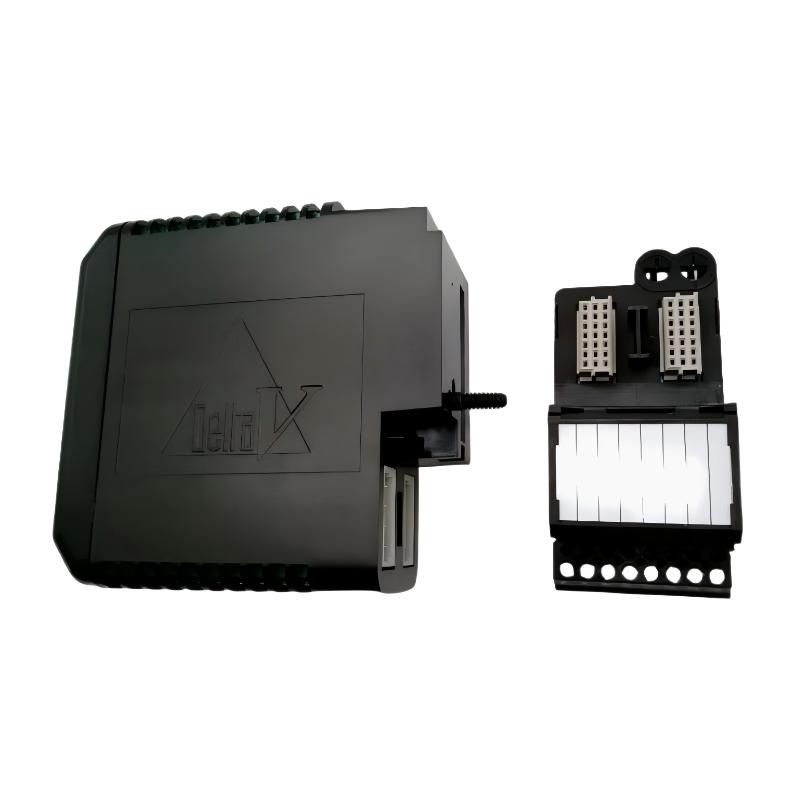
- Emerson
- VE4001S4T2B1
- Discrete Input Card
- USA
- 107 x 41 x 105 mm
- 0.29 kg
- Xiamen, China
- New & In Stock
- T/T, PayPal, Western Union
- 1 Year
- 1-3 Working Days
- DHL, UPS, TNT, FedEx and EMS.
- 24-Hour Service
- COO
- 5
Our advantage

Global Logistics
We have a 10-year logistics and express cooperation agreement, so our products can be shipped to any place in the world.

Brand new and original
Our products are imported in bulk from the place of origin. Because of the cooperative relationship, our products are all original and 100% new.

24-hour service
We provide 7*24 hours service to our customers. We will be there whenever you need us.

Price advantage
All our products are priced very favorably because we have our own warehouse and supply.
| Company Information | |||
| [email protected] | |||
| Mobile | +8615980777398 | ||
| +8615980777398 | |||
| 15980777398 |
Product Overview
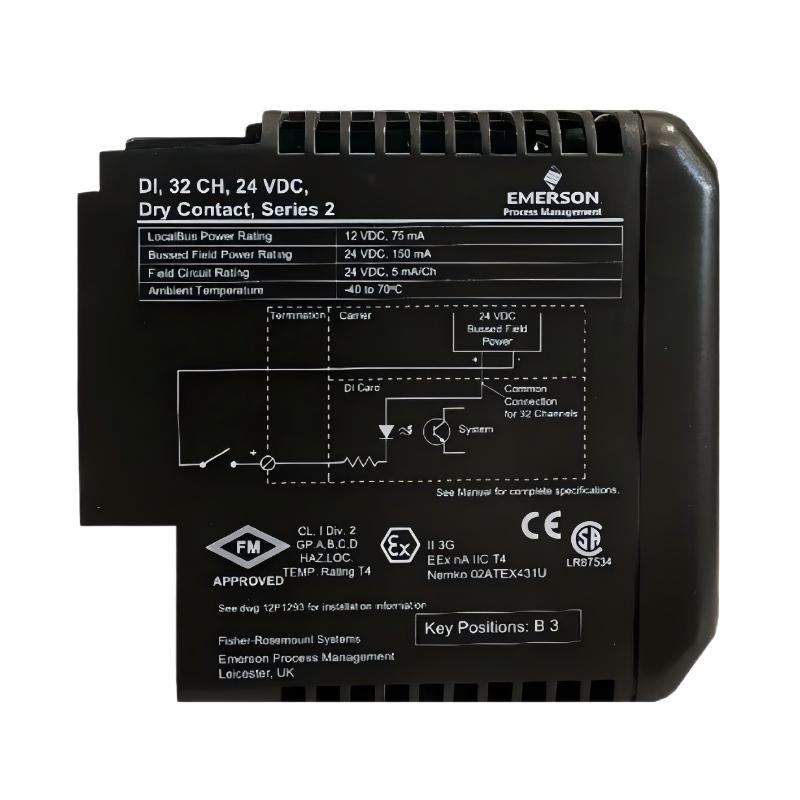
The Emerson VE4001S4T2B1 Discrete Input Card is an industrial automation I/O component designed for reliable acquisition of discrete field signals within Emerson process control architectures. As part of the VE4001S series of discrete input cards, the module provides an interface between field-level switching devices and the control system, allowing binary process conditions to be monitored and used by control logic, alarms, sequences, and operator displays.
Discrete input signals are fundamental to many process automation applications. Devices such as limit switches, pushbuttons, pressure switches, level switches, motor auxiliary contacts, valve position contacts, circuit-breaker contacts, and other two-state field devices generate simple ON/OFF information. The VE4001S4T2B1 receives these field conditions and makes the corresponding status available to the control system for processing and monitoring.
With dimensions of 107 × 41 × 105 mm and a weight of 0.29 kg, the Emerson VE4001S4T2B1 provides a compact solution for control cabinets and distributed I/O installations where space utilization and dependable signal acquisition are important. Its compact form factor also makes it practical as a replacement module when maintaining existing Emerson automation installations.
In a process plant, the performance of a discrete input card directly affects the visibility of field equipment. A correctly operating input card ensures that changes in switch states and equipment status are transferred to the control system consistently. This makes the VE4001S4T2B1 an important component in applications involving equipment permissives, interlocks, alarm monitoring, sequence control, and process status indication.
Technical Specifications
| Parameter | Details |
|---|---|
| Manufacturer | Emerson |
| Model | VE4001S4T2B1 |
| Product Type | Discrete Input Card |
| Series | VE4001S Series |
| Function | Discrete field signal acquisition |
| Signal Type | Digital / Binary Input |
| Application | Industrial Process Automation |
| Dimensions | 107 × 41 × 105 mm |
| Weight | 0.29 kg |
| Installation | Control System / I/O Carrier or Associated Assembly |
| Primary Function | Monitoring ON/OFF field conditions |
| Typical Signals | Switches, contacts, status signals, permissives and interlocks |
| System Integration | Emerson process control architecture |
| Typical Applications | Process plants, utilities, manufacturing and industrial control |
Electrical ratings, channel count, signal thresholds, isolation characteristics, and terminal assignments should be matched to the exact hardware revision and associated Emerson system configuration before installation.
What Is the Emerson VE4001S4T2B1?
The VE4001S4T2B1 is a discrete input card used to collect binary information from field devices. Unlike analog input modules, which measure continuously varying signals such as temperature or pressure, a discrete input card deals primarily with two-state conditions.
For example, a field switch may indicate whether a pump is running, a valve is open, a tank level switch has been activated, or a protective contact has changed state. The input card provides the interface needed to bring these conditions into the control system.
The VE4001S4T2B1 therefore sits between the field instrumentation layer and the control logic layer.
A simplified signal path can be represented as:
Field Device → Wiring / Terminal Interface → VE4001S4T2B1 → Control System → Logic / Alarm / HMI
This arrangement allows engineers and operators to observe equipment status and use discrete conditions as inputs to automatic control strategies.
Function and Working Principle
The basic operating principle of the Emerson VE4001S4T2B1 is based on detecting discrete electrical states.
A field device changes the state of its electrical circuit when a process condition changes. Depending on the application, the field device may be a mechanical contact, auxiliary relay contact, limit switch, pressure switch, selector switch, or another binary signal source.
The input interface detects the electrical condition presented by the field circuit and converts it into a logical input state that can be processed by the control system.
The general process consists of several stages:
1. Field Condition Changes
A physical process event occurs.
For example:
- A pump starts.
- A valve reaches its open position.
- A tank level switch changes state.
- A motor protection contact operates.
- A limit switch is activated.
- An emergency-related permissive changes condition.
2. Electrical Signal Changes
The associated field contact or switching device changes the electrical state of its input circuit.
3. Input Card Detects the State
The VE4001S4T2B1 monitors the connected discrete input and determines the corresponding logical condition.
4. Control System Processes the Input
The control system uses the input status within configured logic, sequences, permissives, alarms, or interlocks.
5. Operator Interface Displays the Condition
The resulting status can be made available to operator displays, diagnostic screens, alarm systems, or supervisory applications.
This process happens continuously during normal operation, allowing the control system to track changes in field equipment status.
Role in an Emerson Process Control System
A discrete input card is more than a simple signal interface. It forms an important connection between physical plant equipment and software-based control logic.
The VE4001S4T2B1 can be used to provide status information required for:
- Equipment sequencing
- Start/stop permissives
- Motor status monitoring
- Valve position confirmation
- Alarm generation
- Interlock logic
- Equipment protection
- Process status monitoring
- Operator indications
- Maintenance diagnostics
For example, consider a pump controlled by the automation system.
The control logic may issue a start command to the pump. A separate auxiliary contact from the motor starter or motor control equipment can provide running feedback. The discrete input card receives this feedback, allowing the controller to determine whether the pump actually reached the expected operating state.
This distinction between a command and a confirmed status is extremely important in industrial automation.
Typical Discrete Input Applications
The Emerson VE4001S4T2B1 can be applied wherever binary field information must be acquired by the process control system.
Pumping Systems
Typical signals may include:
- Pump running status
- Pump stopped status
- Motor auxiliary contacts
- Local/remote selector position
- Protection relay status
- Valve position feedback
Valve Control Systems
Discrete signals may be used to confirm:
- Valve fully open
- Valve fully closed
- Actuator fault
- Local control mode
- Remote control mode
Motor Control Centers
The input card can be associated with status signals such as:
- Motor running
- Motor stopped
- Overload trip
- Starter available
- Local/remote state
- Breaker status
Process Equipment
Other applications include:
- Pressure switch status
- Level switch status
- Flow switch status
- Equipment permissives
- Safety-related auxiliary contacts
- Mechanical position switches
Importance of Signal Reliability
A discrete input may appear simple because it generally represents only an ON or OFF condition. However, incorrect input information can produce significant consequences in an industrial control system.
For example, if a control system incorrectly detects that a valve is closed when the valve is actually open, subsequent process logic may operate incorrectly.
Similarly, if a motor running feedback signal is lost, the control system may interpret a healthy motor as stopped.
For this reason, reliable discrete signal acquisition is essential for:
- Accurate equipment status
- Correct sequence execution
- Reliable alarm handling
- Proper permissive logic
- Interlock operation
- Operator awareness
- Maintenance troubleshooting
The VE4001S4T2B1 should therefore be considered an integral part of the overall signal chain rather than an isolated electronic component.
System Integration
The VE4001S4T2B1 is normally used as part of a larger Emerson control-system architecture.
A typical architecture may include:
Field Instruments → Terminal Interface → Discrete Input Card → Controller → Engineering Database / Logic → Operator Interface
Each layer has a specific responsibility.
The field device detects a physical condition. Wiring carries the electrical signal. The discrete input card acquires the signal. The controller interprets it according to configured logic. Finally, the operator interface presents the resulting information to plant personnel.
Correct integration therefore requires consistency between:
- Field device type
- Wiring arrangement
- Terminal assignment
- Input configuration
- Controller database
- Control logic
- Alarm configuration
- HMI indication
A problem at any point in this chain can appear to be an input-card problem even when the card itself is functioning correctly.
Installation Guidelines
Installation should be performed by qualified industrial automation personnel familiar with Emerson control systems and the specific plant wiring architecture.
Before installation, verify the exact model:
VE4001S4T2B1
Do not substitute a visually similar input card without checking system compatibility.
Recommended Installation Procedure
- Confirm the control system is in the appropriate maintenance state.
- Isolate power where required by the plant’s maintenance procedure.
- Identify the existing input card and associated wiring.
- Record terminal assignments and field signal identification.
- Remove the existing card according to the applicable hardware procedure.
- Inspect connectors and terminals for contamination or physical damage.
- Install the VE4001S4T2B1 correctly.
- Verify mechanical seating.
- Reconnect field wiring according to the approved documentation.
- Confirm signal identification and polarity where applicable.
- Restore system power according to plant procedures.
- Verify card recognition and diagnostic status.
- Test individual field inputs.
- Confirm the corresponding control-system indications.
Because discrete inputs may participate in interlocks and equipment protection logic, commissioning should not be limited to checking whether an LED or software status changes. The complete signal path should be verified.
Field Wiring Considerations
Field wiring is one of the most common sources of problems in discrete input systems.
Before troubleshooting the card itself, engineers should inspect:
- Loose terminal connections
- Broken conductors
- Incorrect terminal assignment
- Damaged cables
- Short circuits
- Open circuits
- Poor grounding
- Incorrect common connections
- Corroded terminals
- Incorrect field-device configuration
A useful troubleshooting method is to divide the signal chain into sections.
Field Device → Cable → Terminal Interface → Input Card → Controller → HMI
Testing each section separately is generally more efficient than immediately replacing the input card.
Commissioning Procedure
After installation, commissioning should confirm both hardware operation and application behavior.
Step 1: Verify Hardware
Check:
- Correct model
- Correct installation position
- Mechanical seating
- Connector condition
- Terminal connections
- Power availability
Step 2: Check System Diagnostics
Review the control system for:
- Module communication status
- Hardware diagnostics
- Channel faults
- Configuration mismatches
- System alarms
Step 3: Test Field Signals
Operate the associated field device and observe whether the input state changes correctly.
For example, if a limit switch is used as a valve-position signal, physically changing the valve position should produce the expected input transition.
Step 4: Verify Control Logic
Confirm that the input is connected to the correct logic function.
An input may be electrically correct but assigned to the wrong software tag.
Step 5: Verify HMI Indication
Check that the operator display accurately represents the field condition.
Step 6: Test Interlocks Carefully
If the input participates in an interlock or permissive, perform the test under an approved commissioning procedure.
Troubleshooting the Emerson VE4001S4T2B1
When a discrete input does not behave correctly, troubleshooting should proceed systematically.
Problem 1: Input Does Not Change State
Possible causes include:
- Field device failure
- Open wiring
- Loose terminal
- Incorrect wiring
- Missing field voltage
- Incorrect input configuration
- Faulty input channel
- Incorrect common connection
Recommended checks:
- Inspect the field device.
- Verify the electrical state at the terminal interface.
- Check cable continuity where appropriate.
- Confirm the correct channel.
- Compare the actual field state with the controller indication.
- Check system diagnostics.
Problem 2: Input Is Permanently ON
Possible causes include:
- Shorted wiring
- Field contact stuck closed
- Incorrect wiring
- Incorrect common connection
- Input circuit problem
First determine whether the signal is already present at the card’s input terminal.
If the input remains active after the field wiring is isolated according to the approved maintenance procedure, further hardware-level investigation may be required.
Problem 3: Input Is Permanently OFF
Possible causes include:
- Open field circuit
- Failed switch
- Broken cable
- Missing supply
- Incorrect terminal connection
- Incorrect channel configuration
- Input hardware failure
Testing the signal at multiple points in the circuit helps identify where the signal disappears.
Intermittent Input Problems
Intermittent faults are often more difficult to diagnose than permanent failures.
Typical causes include:
- Loose terminal screws
- Vibration
- Aging switches
- Cable damage
- Oxidized contacts
- Electromagnetic interference
- Poor connector contact
- Intermittent field-device operation
If an input changes state unexpectedly, maintenance personnel should compare the event with:
- Equipment operation
- Motor starting
- Valve movement
- Relay switching
- Nearby high-power equipment
- Mechanical vibration
Trend and event information from the control system can be particularly useful when investigating intermittent signals.
Diagnostic Strategy
A structured diagnostic approach can significantly reduce unnecessary module replacement.
Level 1 – Process Check
Determine whether the field device is actually changing state.
Level 2 – Wiring Check
Confirm that the expected electrical signal reaches the terminal interface.
Level 3 – Input Card Check
Verify whether the VE4001S4T2B1 correctly detects the signal.
Level 4 – Controller Check
Confirm that the controller receives the correct input status.
Level 5 – Logic Check
Verify that the input is associated with the correct software logic.
Level 6 – HMI Check
Confirm that the operator display represents the actual state.
This approach prevents engineers from replacing a functioning card when the real problem is located in the field wiring or configuration.
Replacement Considerations
When replacing a VE4001S4T2B1, the replacement should be matched carefully to the existing system.
Important considerations include:
- Exact model number
- Hardware revision
- System compatibility
- Input characteristics
- Terminal arrangement
- Configuration requirements
- Application-specific wiring
- Controller database configuration
The replacement process should also consider whether the input card is associated with critical alarms, permissives, or interlocks.
For critical process applications, replacement work should be coordinated with plant operations and maintenance procedures to avoid unintended equipment operation.
Preventive Maintenance
Preventive maintenance can reduce unexpected discrete input failures.
Recommended activities include:
- Inspect terminal connections
- Check connectors
- Inspect cabinet cleanliness
- Verify field wiring condition
- Monitor system diagnostics
- Review recurring input alarms
- Check unusual input transitions
- Inspect for excessive temperature
- Investigate intermittent signals
- Maintain accurate wiring documentation
Particular attention should be given to input signals that are involved in critical process sequences.
An input that rarely changes state may remain unnoticed when faulty until a specific operating condition occurs. Periodic functional testing can therefore be valuable for important equipment-status signals.
Storage and Handling
The VE4001S4T2B1 should be handled as an industrial electronic module.
During storage and handling:
- Keep the module in a clean and dry environment.
- Protect it from excessive moisture.
- Avoid unnecessary mechanical shock.
- Protect connectors from contamination.
- Use appropriate electrostatic discharge precautions.
- Keep identification labels readable.
- Avoid placing heavy objects on the module.
Electronic cards should be handled by their designated edges where practical, minimizing unnecessary contact with electronic circuitry.
Spare-Part Management
For plants using Emerson control systems, maintaining suitable spare input cards can reduce recovery time following an unexpected failure.
A spare-parts strategy should consider:
Criticality + Failure History + Replacement Lead Time + Process Impact
For a critical production line, an input card supporting essential equipment may deserve a higher spare-stock priority than a card associated with non-critical monitoring.
The model number should be clearly recorded as:
Emerson VE4001S4T2B1 Discrete Input Card
Maintenance records should also distinguish the card from similar VE4001S-series models because visually similar modules may not necessarily have identical electrical characteristics or system compatibility.
Integration With Alarms and Interlocks
Discrete inputs frequently provide the conditions used by process alarms and interlocks.
For example:
Input Signal → Status Detection → Control Logic → Alarm / Interlock → Operator Response
A single input can therefore have consequences beyond simple status indication.
Typical applications include:
- High-level switch alarms
- Low-level switch alarms
- Motor trip indications
- Valve-position verification
- Equipment permissives
- Start permissives
- Shutdown conditions
- Auxiliary contact monitoring
When replacing or commissioning the VE4001S4T2B1, these relationships should be verified so that the physical input, software tag, alarm message, and control response remain consistent.
Engineering Best Practices
Several practices improve long-term reliability when working with discrete input systems.
Use Accurate Tagging
Every field input should have a clear identification corresponding to the plant documentation and control-system database.
Verify Signal Meaning
An ON state should have a clearly defined process meaning. Engineers should avoid assumptions about whether ON means “running,” “healthy,” “open,” or “closed.”
Document Changes
Any wiring or configuration change should be documented.
Test Real Equipment Conditions
Where practical, commissioning should verify actual field conditions rather than only forcing software values.
Investigate Repeated Faults
If an input card repeatedly develops problems on the same channel, replacing the card alone may not solve the underlying issue. Field wiring, switching devices, environmental conditions, and electrical interference should also be investigated.
Key Advantages
The Emerson VE4001S4T2B1 offers several practical benefits for process automation installations:
- Reliable discrete signal acquisition
- Compact industrial form factor
- Suitable for process-control environments
- Direct interface between field devices and control logic
- Useful for equipment-status monitoring
- Supports alarm and interlock applications
- Suitable for replacement and maintenance activities
- Compact 107 × 41 × 105 mm dimensions
- Lightweight 0.29 kg construction
- Supports structured diagnostic and maintenance strategies
Its primary value lies in providing dependable digital information from the physical process to the control system.
Technical FAQs
What is the Emerson VE4001S4T2B1?
The Emerson VE4001S4T2B1 is a Discrete Input Card used to acquire binary field signals for industrial process automation and control-system applications.
What type of signals does it handle?
It is intended for discrete or binary conditions, where field devices represent states such as ON/OFF, open/closed, running/stopped, or healthy/faulted.
What are the dimensions of the VE4001S4T2B1?
The dimensions provided for the Emerson VE4001S4T2B1 are 107 × 41 × 105 mm.
How much does the VE4001S4T2B1 weigh?
The specified weight is 0.29 kg.
Where is the VE4001S4T2B1 used?
It is used in industrial process-control applications where discrete field conditions need to be acquired and made available to control logic, alarms, interlocks, sequences, and operator interfaces.
What devices can provide signals to a discrete input card?
Typical sources include switches, relay contacts, limit switches, motor auxiliary contacts, valve position contacts, pressure switches, level switches, and equipment status contacts.
What should be checked before replacing the card?
Engineers should verify the field device, wiring, terminal connections, channel assignment, system configuration, diagnostics, and control logic before concluding that the input card has failed.
Can an input-card fault actually be caused by field wiring?
Yes. Open circuits, short circuits, loose terminals, damaged cables, incorrect wiring, and failed field devices can all produce symptoms that appear to be input-card problems.
Conclusion
The Emerson VE4001S4T2B1 Discrete Input Card is an important interface component for acquiring binary field information in industrial process automation systems. By connecting field-level switches and equipment-status contacts with control-system logic, it enables reliable monitoring of equipment states, permissives, alarms, sequences, and interlocks.
With a compact size of 107 × 41 × 105 mm and a specified weight of 0.29 kg, the VE4001S4T2B1 is well suited to control-system installations where dependable discrete signal acquisition and efficient cabinet utilization are important.
For maintenance and replacement applications, successful deployment depends on more than simply installing the hardware. Engineers should verify the complete signal path from the field device through wiring and the VE4001S4T2B1 to the controller and operator interface. Proper commissioning, accurate configuration, systematic troubleshooting, and preventive maintenance help ensure that discrete process signals remain dependable throughout the operating life of the automation system.