

ProductPRODUCT
Featured products

Contact Us
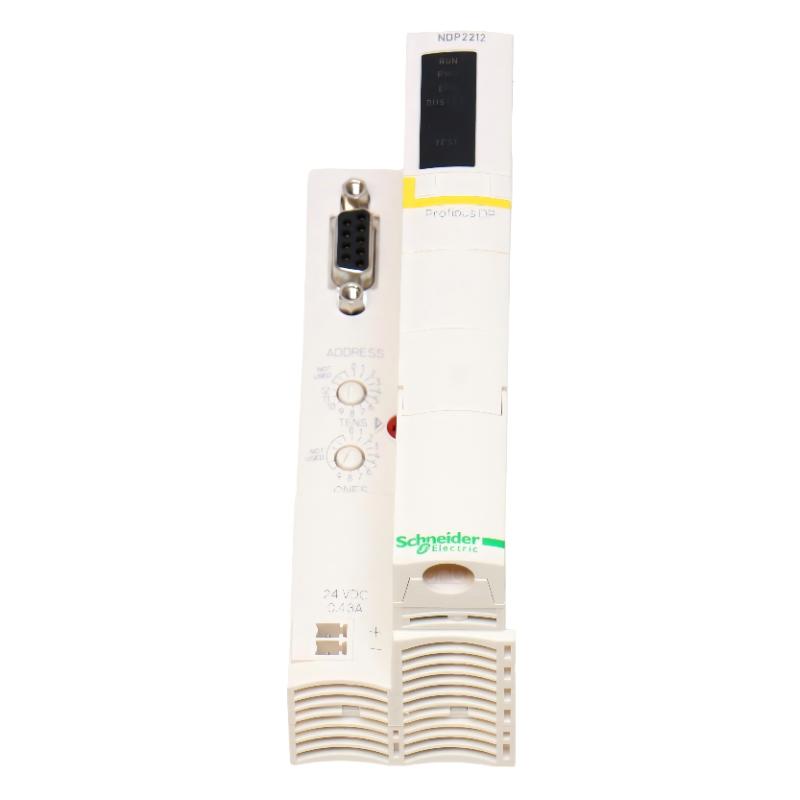
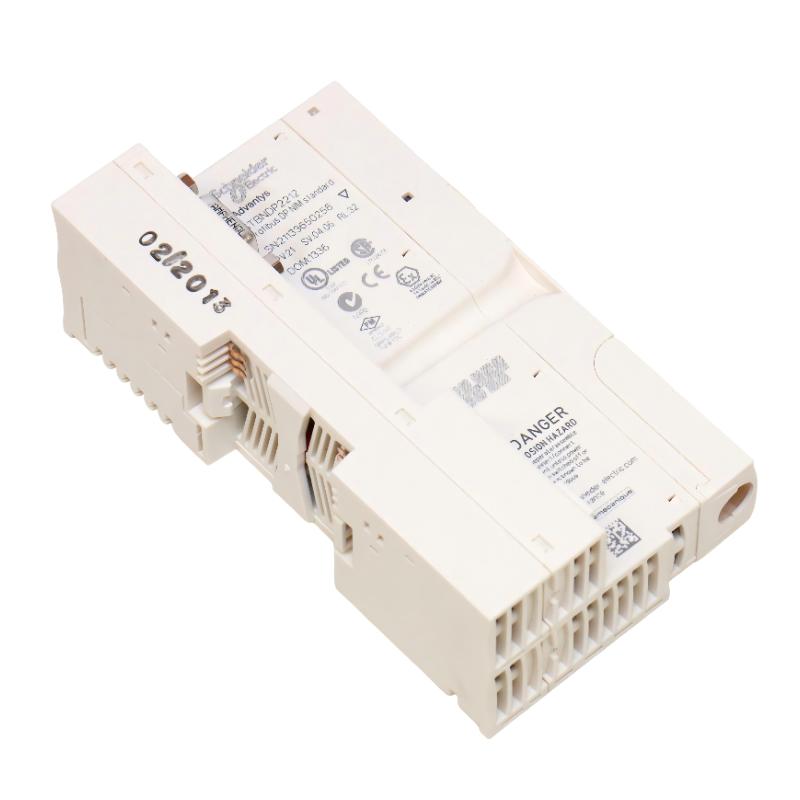
- Schneider
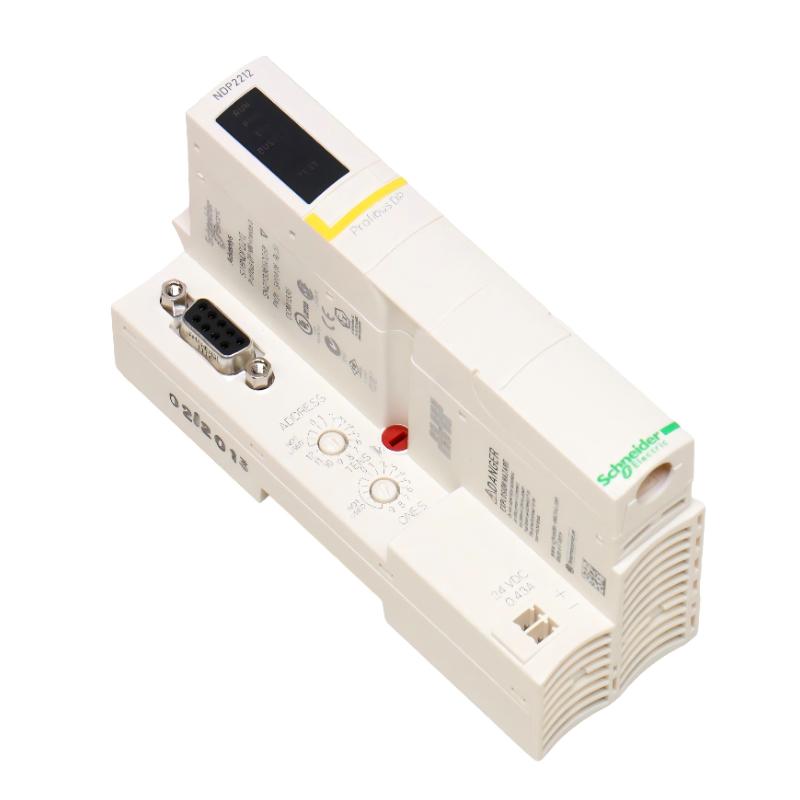
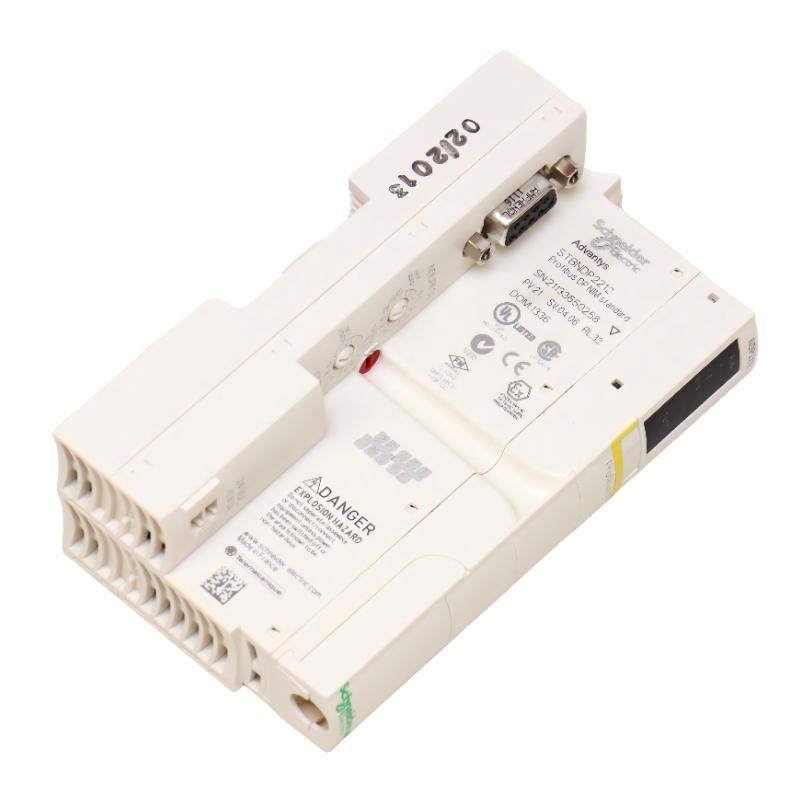
- STBNDP2212
- Network Interface Module
- France
- 128.3 × 40 × 70 mm
- 0.17 kg
- Xiamen, China
- New & In Stock
- T/T, PayPal, Western Union
- 1 Year
- 1-3 Working Days
- DHL, UPS, TNT, FedEx and EMS.
- 24-Hour Service
- COO
- 46
Our advantage

Global Logistics
We have a 10-year logistics and express cooperation agreement, so our products can be shipped to any place in the world.

Brand new and original
Our products are imported in bulk from the place of origin. Because of the cooperative relationship, our products are all original and 100% new.

24-hour service
We provide 7*24 hours service to our customers. We will be there whenever you need us.

Price advantage
All our products are priced very favorably because we have our own warehouse and supply.
| Company Information | |||
| [email protected] | |||
| Mobile | +8615980777398 | ||
| +8615980777398 | |||
| 15980777398 |
Product Overview
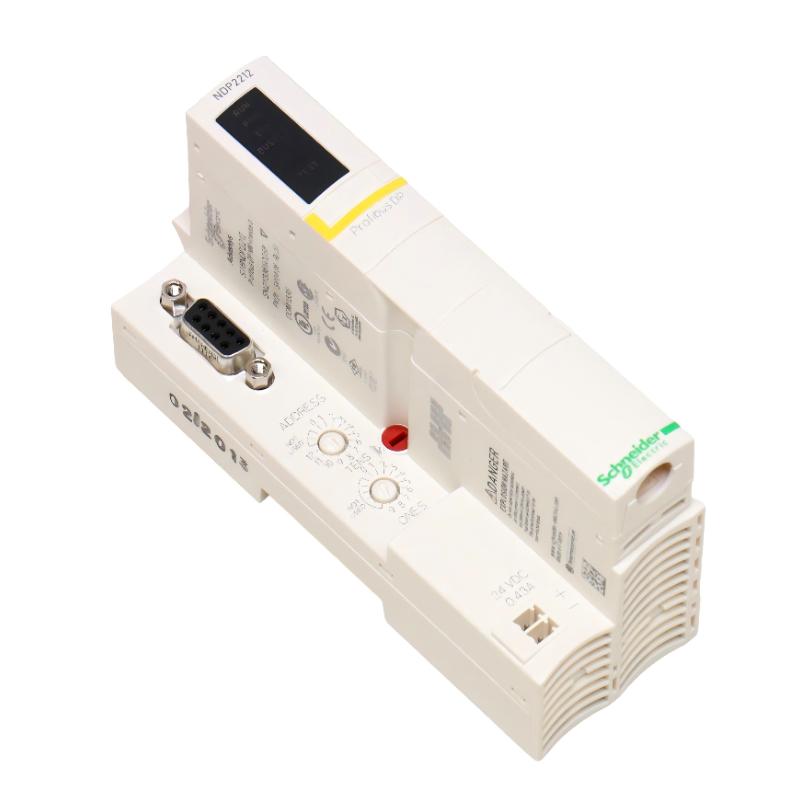
The Schneider STBNDP2212 Modicon STB Network Interface Module is a network interface component used in the Modicon STB distributed I/O system. Its primary purpose is to connect an STB island to the plant-level or machine-level communication network so that distributed I/O information can be exchanged with the main controller.
In a conventional centralized PLC cabinet, most I/O modules are installed close to the CPU. With a distributed STB architecture, I/O can instead be positioned closer to sensors and actuators. This can reduce long field-wiring runs and make it easier to divide a large machine into functional I/O sections.
The STBNDP2212 sits at the communication boundary of an STB island. Digital and analog I/O modules installed on the island collect field information or control local equipment, while the network interface transfers the relevant I/O data between the island and the supervisory PLC or controller.
A typical machine may have an STB island located near a conveyor, packaging station, motor-control area, or process skid. Local sensors connect to the STB I/O modules, and the network interface connects that group of modules to the wider control system.
For maintenance engineers, the distinction between network fault, island fault, I/O fault, and field-device fault matters. If an entire STB island disappears from the controller, the network interface and its communication path deserve attention. If only one input channel is abnormal, the problem may instead be located in the individual I/O module or field wiring.
Technical Specifications
| Parameter | Specification |
|---|---|
| Manufacturer | Schneider Electric |
| Model | STBNDP2212 |
| Product Family | Modicon STB |
| Product Type | Network Interface Module |
| System Role | Distributed I/O Network Interface |
| Application | Industrial Automation |
| Architecture | Modicon STB Distributed I/O |
| Installation | STB Island |
| Function | Network Communication for Distributed I/O |
| Dimensions | 128.3 × 40 × 70 mm |
| Weight | 0.17 kg |
Product Features
The STBNDP2212 forms the communication entry point for a Modicon STB distributed I/O island.
- Schneider Electric Modicon STB Network Interface Module
- Model STBNDP2212
- Intended for Modicon STB distributed I/O architectures
- Connects an STB island with the automation network
- Supports distributed I/O communication
- Suitable for machine-level and plant-level control architectures
- Allows I/O modules to be positioned closer to field equipment
- Useful for distributed sensor and actuator arrangements
- Suitable for modular machine-control architectures
- Relevant to STB system expansion and replacement work
The network interface should be selected according to the controller, communication network, STB island architecture, and existing project configuration.
Working Principle
The STBNDP2212 can be viewed as the communication gateway between the STB island and the main control system.
A simplified arrangement is:
Field Devices → STB I/O Modules → STBNDP2212 → Network → PLC / Controller
For output information, the path works in the opposite direction:
PLC / Controller → Network → STBNDP2212 → STB I/O Modules → Field Devices
The local STB modules handle the actual field signals. The network interface gathers the island’s I/O data and exchanges it with the upstream controller through the configured communication network.
Consider a conveyor system with sensors, motor-status signals, and actuator outputs. The sensors connect to local STB input modules rather than running every signal directly back to the main PLC cabinet. The STBNDP2212 connects that local I/O island to the controller, allowing the PLC program to use the collected status information and send commands back to the local outputs.
This architecture separates field-level I/O wiring from the longer-distance controller communication link.
When troubleshooting, the distinction is useful:
Field Device → I/O Module → STB Island → Network Interface → Network → Controller
A failure affecting the entire island points toward the common communication or power path, while an isolated channel problem is more likely to be associated with a particular I/O module, sensor, actuator, or field connection.
Role in a Modicon STB Distributed I/O Architecture
The STBNDP2212 is positioned at the head of the STB island and links the local I/O assembly with the wider automation system.
A simplified architecture is:
Main PLC / Controller → Industrial Network → STBNDP2212 → STB I/O Modules → Field Equipment
| System Element | Function |
|---|---|
| STBNDP2212 | Connects the STB island to the network |
| STB I/O Modules | Acquire field inputs and control outputs |
| STB Island | Groups distributed I/O modules into a local I/O station |
| PLC / Controller | Executes the machine or process-control program |
| Industrial Network | Transfers I/O data between controller and island |
| Digital Input Modules | Acquire ON/OFF field signals |
| Digital Output Modules | Control discrete equipment |
| Analog Input Modules | Acquire process measurements |
| Analog Output Modules | Send analog control signals |
| Sensors | Generate field measurements or status signals |
| Actuators | Execute control commands |
This arrangement is useful when the physical location of the I/O is separated from the main PLC cabinet.
Distributed I/O Architecture Considerations
One of the practical benefits of an STB island is the ability to place I/O close to the equipment being controlled.
For example, a large production machine may contain several physical zones:
- Material feeding
- Conveying
- Processing
- Inspection
- Packaging
- Product discharge
Instead of routing every field signal to one central cabinet, individual STB islands can be positioned closer to the relevant machine sections. The network connection then carries the consolidated I/O information back to the controller.
This approach can simplify cabinet layouts and field wiring, particularly where a large number of discrete signals are distributed across a wide machine.
The network interface consequently becomes a key diagnostic point. If communication to the island is lost, multiple local I/O channels may appear unavailable at the controller even though the individual field devices remain physically operational.
Industrial Applications
| Application | Typical Use |
|---|---|
| Packaging Machinery | Distributed sensors and actuator control |
| Conveyor Systems | Local I/O near motors and sensors |
| Material Handling | Distributed equipment-status monitoring |
| Manufacturing Lines | Zone-based machine I/O |
| Assembly Equipment | Localized sensor and actuator connections |
| Process Machinery | Distributed process signal acquisition |
| Automated Warehousing | Conveyor and handling-system I/O |
| Machine Building | Modular distributed control architectures |
The actual application depends on the STB island configuration and communication network used by the machine.
Installation and Maintenance
Installation work should consider the complete STB island rather than treating the network interface as an independent module.
Before replacement:
- Confirm the complete STBNDP2212 model.
- Record the existing STB island arrangement.
- Identify the upstream PLC or controller.
- Document the communication network configuration.
- Check the network cable and connector.
- Inspect the network interface for physical damage.
- Check the STB island power supply.
- Inspect connections between the network interface and adjacent modules.
- Review controller diagnostics.
- Determine whether the fault affects the entire island or only individual channels.
- Back up relevant configuration information.
- Follow the approved electrical isolation procedure.
- Remove the existing module according to the maintenance procedure.
- Install the replacement module.
- Reconnect the network and island connections.
- Restore the applicable configuration.
- Restart or reinitialize the island as required.
- Confirm network communication.
- Check the status of connected I/O modules.
- Test representative input and output points.
- Verify the PLC application receives and processes the expected data.
If the complete STB island disappears from the controller, checking the network interface, island power, network connection, and upstream controller is generally more useful than testing individual sensors one by one.
Compatible System Components
The STBNDP2212 is normally used together with the other modules that form an STB island and the controller-side communication infrastructure.
| Component | Function |
|---|---|
| STBNDP2212 | Network interface for the STB island |
| STB I/O Modules | Field signal acquisition and output control |
| STB Power Components | Supply the island’s electrical requirements |
| Digital Input Modules | Collect discrete field states |
| Digital Output Modules | Control discrete devices |
| Analog Input Modules | Collect analog process signals |
| Analog Output Modules | Send analog control signals |
| PLC / Controller | Executes control logic |
| Network Infrastructure | Connects the STB island to the controller |
| Field Sensors | Generate process and equipment signals |
| Actuators | Perform machine-control actions |
The precise combination should be matched to the existing STB island and network architecture.
Recommended Related Models
For this product, the recommendations focus on Modicon STB distributed I/O components and network-related hardware that can be relevant when expanding or maintaining an STB architecture.
| Model / Product Family | Product Type | Typical Application |
|---|---|---|
| Schneider STBNDP2212 | Modicon STB Network Interface Module | STB distributed I/O network connection |
| Schneider STBNIP2212 | Modicon STB Network Interface Module | Ethernet-based STB communication applications |
| Schneider STB NCO 2212 | Modicon STB Network Interface Module | Distributed I/O communication |
| Schneider STBDDI3610 | Modicon STB Digital Input Module | Discrete field signal acquisition |
| Schneider STBDDO3610 | Modicon STB Digital Output Module | Discrete actuator control |
| Schneider STBACI0320 | Modicon STB Analog Input Module | Analog process signal acquisition |
| Schneider STBACO0220 | Modicon STB Analog Output Module | Analog control outputs |
| Schneider STBXBA3000 | Modicon STB Terminal Base | STB module installation and field wiring |
Key Advantages
- Schneider Electric Modicon STB Network Interface Module.
- Model STBNDP2212.
- Connects an STB island to the automation network.
- Supports distributed I/O architectures.
- Allows I/O to be positioned closer to field equipment.
- Suitable for modular machine-control systems.
- Useful for distributed sensor and actuator applications.
- Relevant to STB system expansion and replacement projects.
Technical FAQs
What does the STBNDP2212 do if the individual STB I/O modules already handle field signals?
The I/O modules handle the local field signals, while the STBNDP2212 handles the connection between that local STB island and the upstream automation network. It therefore serves a different function from the individual input and output modules.
What does it mean if all STB I/O points appear unavailable at the PLC?
When an entire island becomes unavailable simultaneously, the common communication path should be checked first. The network interface, network connection, island power, and upstream controller are more likely starting points than individual field sensors.
Why is distributed I/O useful on large machines?
Placing I/O close to sensors and actuators can reduce the amount of long field wiring returning to a central control cabinet. It can also divide a large machine into logical I/O zones, making the physical architecture easier to organize and maintain.
What should be tested after replacing an STBNDP2212?
First confirm that the STB island reconnects to the controller and that the expected I/O modules are recognized. Then test representative input and output points and verify that the PLC application receives the correct status information and can command the relevant field devices.