
NewsNEWCENTER
Featured products
Contact Us
Allen Bradley 1606-XLE120EE Power Supply Installation Guide
2026-08-29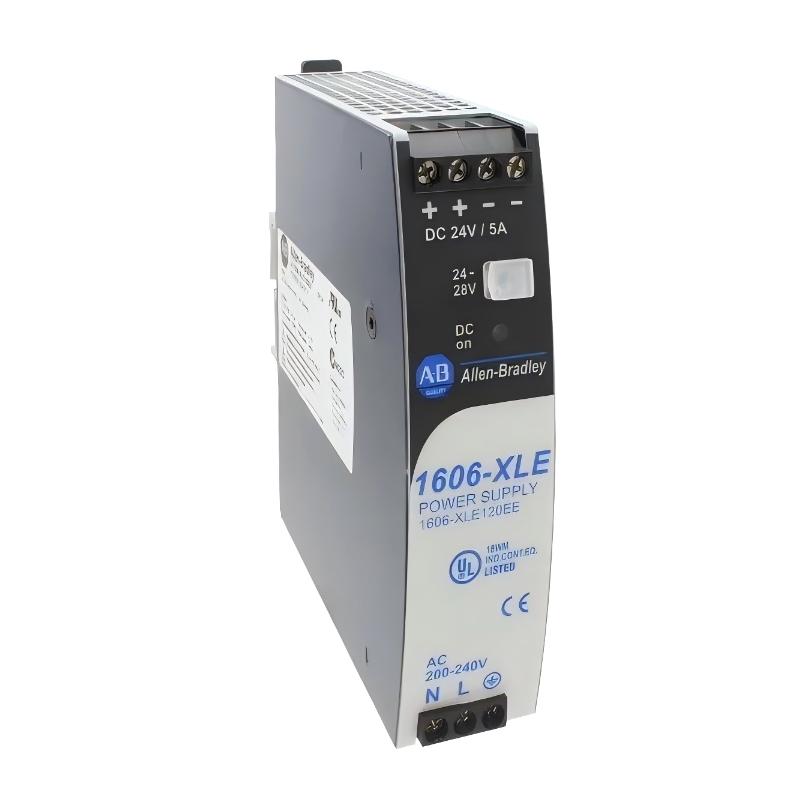
Table of Contents
- Allen Bradley 1606-XLE120EE Power Supply Installation Overview
- Allen Bradley 1606-XLE120EE Installation Design Considerations
- Allen Bradley 1606-XLE120EE Installation Preparation
- Allen Bradley 1606-XLE120EE Wiring and Electrical Connections
- Allen Bradley 1606-XLE120EE Setup and Commissioning Procedure
- Allen Bradley 1606-XLE120EE Installation Validation
- Allen Bradley 1606-XLE120EE Field Engineering Case
- Allen Bradley 1606-XLE120EE Installation FAQ
- Allen Bradley 1606-XLE120EE Technical Summary
Allen Bradley 1606-XLE120EE Power Supply Installation Overview
Allen Bradley 1606-XLE120EE Power Supply installation begins with proper electrical planning rather than cabinet wiring. In industrial automation projects, unstable control voltage is more often caused by incorrect wiring practices, overloaded DC circuits, inadequate grounding, or excessive voltage drop than by an actual power supply failure. A professional Installation Guide should therefore verify the complete power distribution system before commissioning starts.
The Allen Bradley 1606-XLE120EE Power Supply is designed to provide regulated DC power for PLC Controller systems, distributed I/O Modules, Sensors, industrial communication equipment, operator interfaces and auxiliary control devices. Reliable Setup and Commissioning depend on correct installation practices throughout the control cabinet.
Allen Bradley 1606-XLE120EE Installation Design Considerations
Before mounting the power supply, engineers should verify the complete System Configuration and expected power demand.
- Calculate total DC current consumption.
- Include future expansion capacity.
- Separate control power from high-current loads.
- Verify grounding continuity.
- Review branch protection devices.
- Identify critical automation equipment.
- Check cabinet ventilation.
Many commissioning delays occur because additional PLC Modules or communication devices are installed after the original design without updating the DC load calculation.
Allen Bradley 1606-XLE120EE Installation Preparation
Prior to energizing the system, verify that all incoming AC connections, protective earth conductors, DC distribution wiring and terminal markings correspond to the electrical drawings.
Inspect conductor routing carefully. Power wiring should be separated from low-level signal wiring whenever practical to reduce electrical interference affecting Sensors and communication equipment.
Allen Bradley 1606-XLE120EE Wiring and Electrical Connections
The wiring process should follow a logical sequence to reduce commissioning risks.
- Confirm incoming AC voltage.
- Connect protective earth.
- Verify input terminals.
- Connect regulated DC output.
- Inspect polarity.
- Torque terminals according to project specifications.
- Label all outgoing circuits.
Incoming AC Supply
        │
        ▼
1606-XLE120EE
        │
        ▼
24VDC Distribution
        │
 ┌──────┼─────────┐
 │      │         │
PLC    I/O     Sensors
 │      │         │
HMI   Network   Relays
After wiring is complete, perform continuity and insulation checks before applying power.
Allen Bradley 1606-XLE120EE Setup and Commissioning Procedure
Successful Commissioning should introduce system loads progressively rather than energizing every connected device simultaneously.
- Measure incoming AC voltage.
- Measure DC output with no load.
- Connect the PLC Controller.
- Add communication equipment.
- Connect remote I/O Modules.
- Enable Sensors and field devices.
- Verify stable voltage during full production operation.
Record voltage measurements at each stage. These baseline values become essential references during future Troubleshooting and Fault Diagnosis.
Allen Bradley 1606-XLE120EE Installation Validation
Installation should not be considered complete until the entire automation system has been verified.
- Stable DC output.
- No PLC restart events.
- Reliable communication.
- No abnormal Sensor readings.
- No unexpected I/O faults.
- Acceptable cabinet temperature.
- Minimal voltage drop at remote equipment.
Measure voltage at the power supply terminals and again at the most distant control device. Comparing these values provides a practical assessment of the entire distribution network.
Allen Bradley 1606-XLE120EE Field Engineering Case
During commissioning of a palletizing system, engineers observed intermittent communication failures affecting several remote Ethernet I/O stations. Initial inspection suggested a possible power supply issue because every affected device shared the same DC source.
Instead of replacing the Allen Bradley 1606-XLE120EE immediately, measurements were taken at multiple locations. The power supply maintained approximately 24.2 VDC while a remote junction box experienced voltage reductions to approximately 22.0 VDC whenever conveyor motors accelerated.
Further investigation revealed a loose terminal connection inside the DC distribution block. After re-terminating the conductor and tightening adjacent connections, voltage at the remote cabinet stabilized above 23.9 VDC during repeated production cycles.
The communication faults disappeared without replacing the power supply. This field experience demonstrates that engineers should always verify downstream distribution before assuming a hardware failure.
Allen Bradley 1606-XLE120EE Installation FAQ
Should all field devices be connected before commissioning?
No. Progressive loading simplifies Fault Diagnosis and helps identify wiring problems before the complete system is energized.
Why should voltage be measured at remote equipment?
Voltage drop caused by cable resistance or loose terminals may not be visible at the power supply output terminals.
How important is grounding?
Correct grounding improves EMC performance, communication stability and long-term equipment reliability.
Should installation measurements be documented?
Yes. Commissioning records provide valuable baseline information for future maintenance and troubleshooting.
Allen Bradley 1606-XLE120EE Technical Summary
The Allen Bradley 1606-XLE120EE Power Supply Installation Guide should emphasize engineering verification rather than simple wiring instructions. Correct electrical planning, systematic Setup, staged Commissioning, accurate System Configuration validation and detailed measurement records significantly improve the reliability of PLC Controllers, I/O Modules, Sensors and industrial communication systems while reducing future maintenance time.