

ProductPRODUCT
Featured products
Contact Us
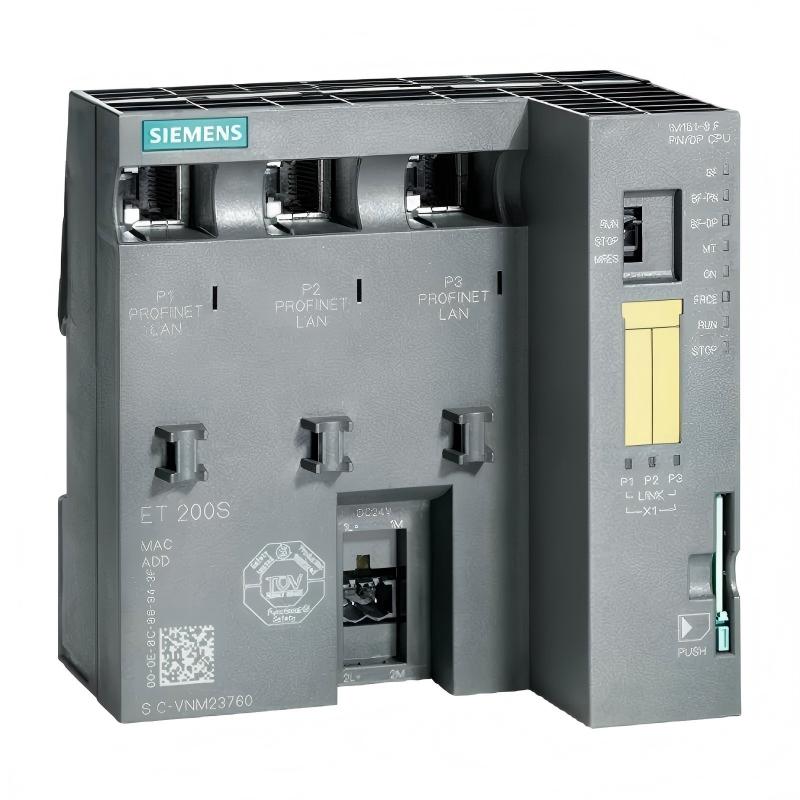
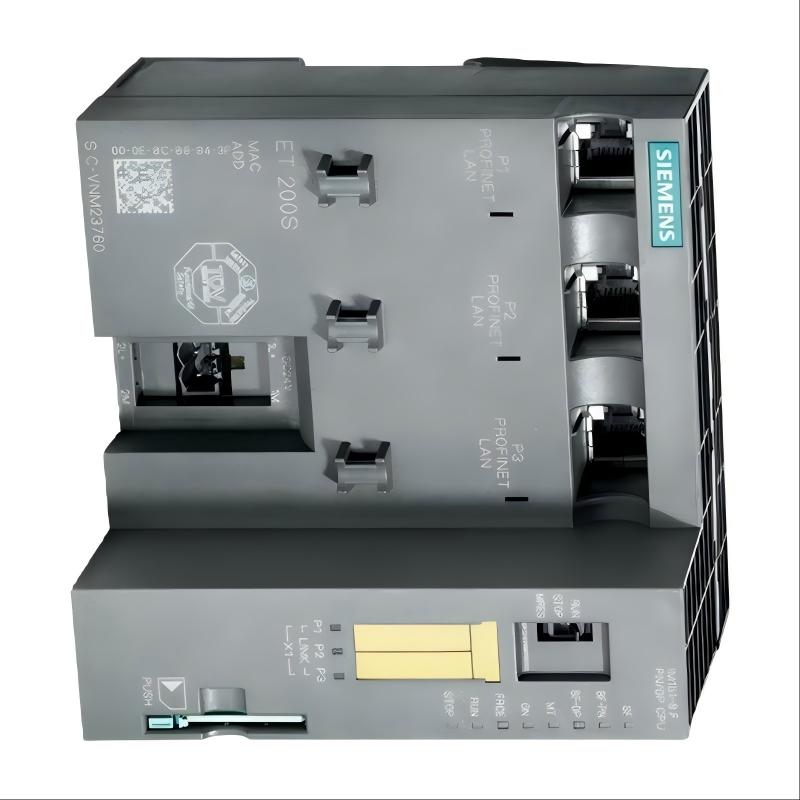
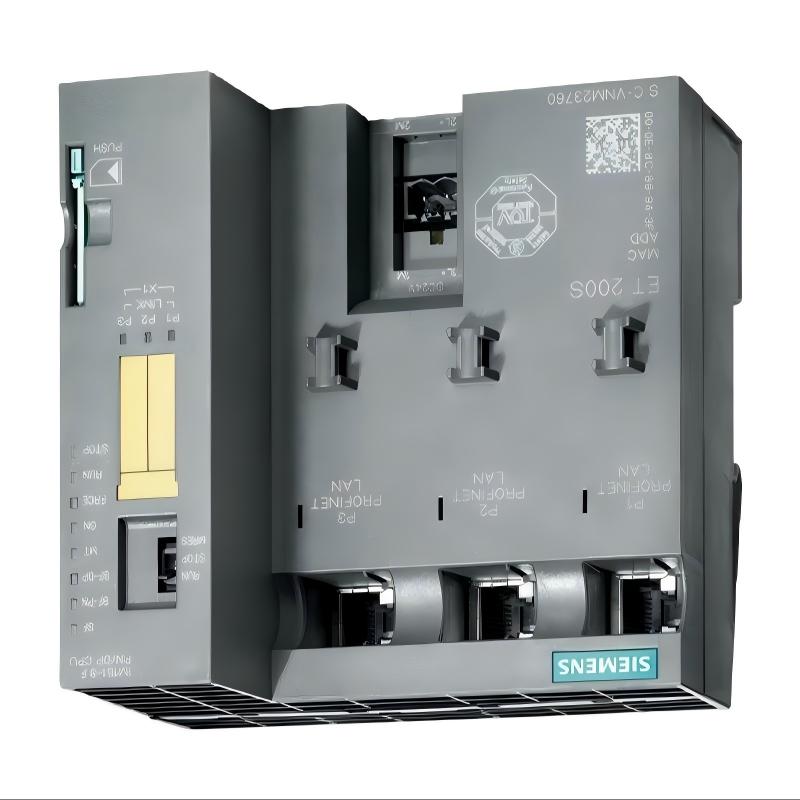
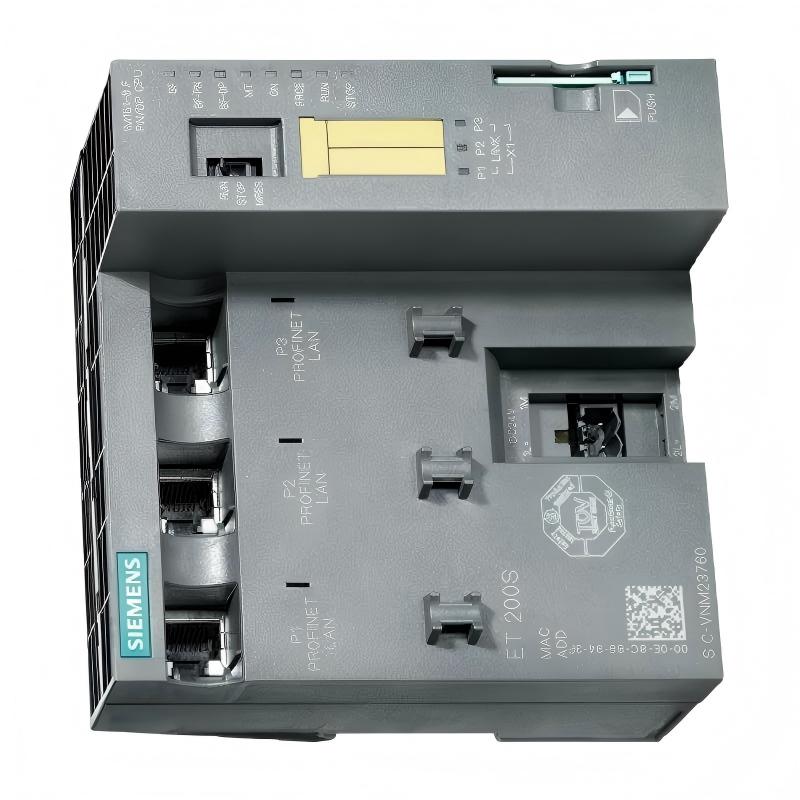
- Siemens
- 6AG1151-8FB01-2AB0
- Interface Module
- Germany
- 120 × 119.5 × 75 mm
- 0.32 kg
- Xiamen, China
- New & In Stock
- T/T, PayPal, Western Union
- 1 Year
- 1-3 Working Days
- DHL, UPS, TNT, FedEx and EMS.
- 24-Hour Service
- COO
- 44
Our advantage

Global Logistics
We have a 10-year logistics and express cooperation agreement, so our products can be shipped to any place in the world.

Brand new and original
Our products are imported in bulk from the place of origin. Because of the cooperative relationship, our products are all original and 100% new.

24-hour service
We provide 7*24 hours service to our customers. We will be there whenever you need us.

Price advantage
All our products are priced very favorably because we have our own warehouse and supply.
| Company Information | |||
| [email protected] | |||
| Mobile | +8615980777398 | ||
| +8615980777398 | |||
| 15980777398 |
Product Overview
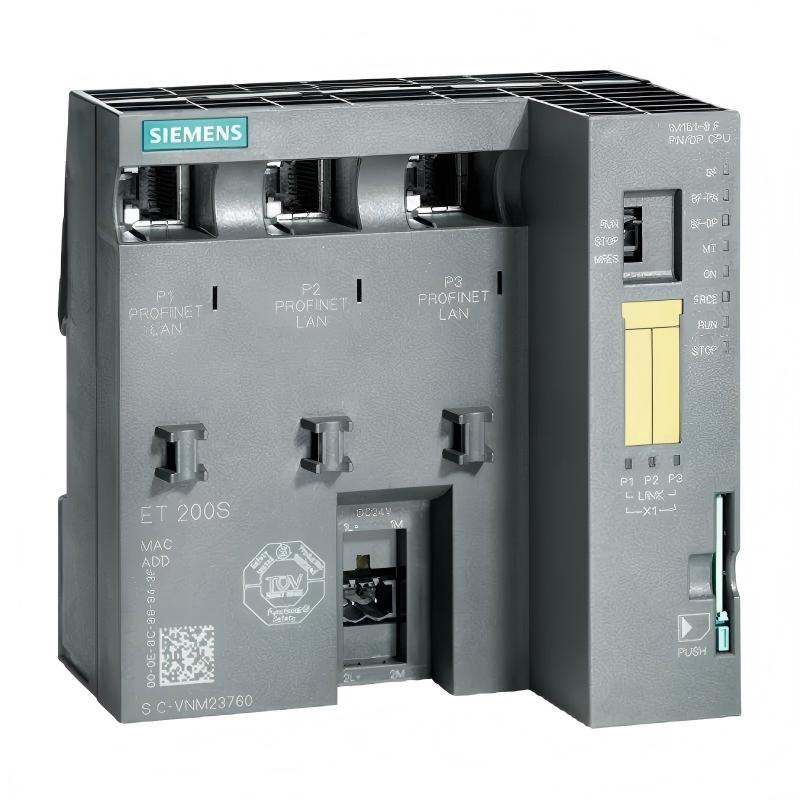
The Siemens 6AG1151-8FB01-2AB0 Interface Module is an industrial interface component designed for compatible SIPLUS ET 200S distributed I/O systems. It provides the communication and system interface required to connect a distributed ET 200S station with a higher-level automation controller.
In a distributed PLC architecture, the central controller and field-level I/O modules are often installed in different physical locations. An interface module provides the essential connection between these two levels, allowing process data, diagnostic information, and system status to be exchanged between the controller and the remote I/O station.
The 6AG1151-8FB01-2AB0 belongs to the SIPLUS product family and is intended for industrial installations where equipment may need to operate under demanding environmental conditions. Its ruggedized design makes it suitable for applications in which temperature, humidity, vibration, or other environmental factors may be more challenging than those found in conventional office environments.
Unlike a digital input or output module, this device does not primarily process individual sensor or actuator signals. Instead, it provides the interface between the distributed station and the control system, enabling the individual ET 200S modules to function as an integrated remote I/O station.
With dimensions of 120 × 119.5 × 75 mm and a specified weight of approximately 0.32 kg, the module provides a relatively compact solution for distributed control installations.
Typical applications include manufacturing automation, process control, machine building, water treatment, energy systems, transportation infrastructure, and other industrial automation environments.
Technical Specifications
| Parameter | Details |
|---|---|
| Manufacturer | Siemens |
| Product Family | SIPLUS ET 200S |
| Model | 6AG1151-8FB01-2AB0 |
| Product Type | Interface Module |
| Main Function | Distributed I/O system interface |
| System Architecture | Remote / Distributed I/O |
| Compatible Platform | ET 200S |
| Installation | Modular ET 200S Station |
| Communication Role | Controller-to-station communication |
| Primary Application | Industrial Automation |
| Data Function | Process and diagnostic data exchange |
| Module Construction | Industrial modular design |
| Dimensions | 120 × 119.5 × 75 mm |
| Weight | 0.32 kg |
| Installation Environment | Industrial Control Cabinet |
| Maintenance | Modular Replacement |
| Typical Application | Distributed I/O Communication |
Function and Working Principle
The 6AG1151-8FB01-2AB0 acts as the interface between a higher-level controller and the ET 200S distributed I/O station.
A simplified communication architecture is:
PLC / Controller → Interface Module → ET 200S Backplane → I/O Modules → Field Devices
During operation, the interface module manages communication between the controller and the local ET 200S station.
Its functions may include:
- Establishing communication with the central controller
- Transferring input data to the PLC
- Delivering output commands to the distributed I/O modules
- Managing station-level communication
- Reporting diagnostic information
- Monitoring communication status
- Supporting distributed I/O operation
- Coordinating data exchange between system components
For example, a temperature sensor connected to a remote analog input module can send its measurement through the ET 200S station and interface module to the PLC. The PLC then evaluates the measurement and sends a control command back through the same architecture to an appropriate output device.
This communication structure allows field-level devices to remain physically close to the equipment they control while the main PLC can be installed in a centralized control cabinet.
Role in Industrial Control Systems
The interface module is an important element of a distributed automation architecture.
A typical arrangement can be represented as:
Central PLC
↓
6AG1151-8FB01-2AB0 Interface Module
↓
ET 200S Distributed I/O Station
↓
Digital / Analog Modules
↓
Sensors and Actuators
This architecture separates control processing from field signal handling.
The central PLC performs tasks such as:
- Program execution
- Sequence control
- Process calculations
- Alarm management
- Machine coordination
The distributed I/O station performs field-level tasks such as:
- Sensor signal acquisition
- Actuator control
- Analog measurement
- Local equipment interfacing
The interface module provides the communication path that connects these two functional levels.
This approach can significantly simplify wiring in large machines and industrial plants.
Industrial Applications
Factory Automation
The module can be integrated into distributed I/O architectures used for:
- Assembly lines
- Packaging machinery
- Conveyor systems
- Automated inspection
- Robotic production cells
- Material handling equipment
Remote I/O stations can be positioned near production equipment, reducing the amount of field wiring routed back to the main PLC cabinet.
Process Automation
Distributed I/O systems are frequently used in large industrial facilities where instruments and actuators are distributed throughout a process area.
Applications may include:
- Chemical processing
- Pharmaceutical manufacturing
- Food and beverage production
- Water treatment
- Petrochemical systems
- Industrial utilities
Machine Building
OEM manufacturers can use an interface-module-based distributed architecture to organize machine control more efficiently.
The ET 200S station can be installed near:
- Motors
- Sensors
- Valves
- Pneumatic equipment
- Limit switches
- Actuators
This can reduce wiring length and simplify machine construction.
Infrastructure Systems
Distributed automation is also useful in:
- Pumping stations
- Transportation systems
- Energy facilities
- Utility infrastructure
- Environmental monitoring systems
Harsh Industrial Applications
The SIPLUS platform is intended for demanding industrial conditions, making this interface-module architecture suitable for installations where environmental resistance is an important consideration.
Installation and System Integration
Correct installation is essential for stable communication between the controller and distributed I/O station.
Before installation, engineers should verify:
- Exact module part number
- ET 200S compatibility
- Controller compatibility
- Communication architecture
- Station configuration
- Power supply requirements
- Module arrangement
- Environmental conditions
- Grounding
- Network and communication wiring
- Cabinet ventilation
Recommended Installation Procedure
- Switch off the relevant system power.
- Verify the ET 200S station configuration.
- Confirm controller and interface compatibility.
- Install the interface module in the designated station position.
- Check the mechanical connection.
- Connect the communication interface.
- Verify all power and signal connections.
- Restore system power.
- Check module status indicators.
- Configure the station using the appropriate engineering environment.
- Download the hardware configuration.
- Verify communication with the PLC.
- Check distributed I/O diagnostics.
- Test input and output signals.
- Perform complete system commissioning.
During installation, all electrical work should be performed with the appropriate power isolation and according to the electrical design of the control system.
System Integration
The interface module operates as part of a complete distributed automation architecture rather than as an independent controller.
A representative system includes:
PLC → Interface Module → ET 200S I/O Station → Field Devices
Additional system components may include:
- Siemens SIMATIC PLCs
- ET 200S digital input modules
- ET 200S digital output modules
- Analog input modules
- Analog output modules
- Power modules
- Communication modules
- HMI panels
- SCADA systems
- Engineering workstations
- Industrial power supplies
- Sensors
- Actuators
- Variable frequency drives
The exact configuration depends on the process, number of I/O points, communication requirements, and environmental conditions.
Compatible System Components
| Component | Function |
|---|---|
| ET 200S Interface System | Distributed I/O communication |
| 6AG1151-8FB01-2AB0 | Controller-to-station interface |
| ET 200S Base Modules | Module installation and electrical integration |
| Digital Input Modules | Discrete signal acquisition |
| Digital Output Modules | Discrete equipment control |
| Analog Input Modules | Process measurement |
| Analog Output Modules | Analog control |
| Power Modules | Station power distribution |
| Communication Modules | Industrial network communication |
| SIMATIC PLC | Central control processing |
| HMI | Operator monitoring |
| Engineering Workstation | Hardware configuration and diagnostics |
| Industrial Power Supply | Electrical power source |
| Sensors | Process and machine monitoring |
| Actuators | Physical process control |
Recommended Alternative Models
| Model | Product Type | Key Feature | Typical Application |
|---|---|---|---|
| 6AG1151-8FB01-2AB0 | Interface Module | Distributed I/O system interface | ET 200S Automation |
| 6AG1137-6BD00-2BA0 | Communication Module | Industrial communication | Distributed Networks |
| 6AG1137-6AA00-2BA0 | Communication Module | Automation communication | Factory Automation |
| 6AG1137-6AA01-7BA0 | Communication Module | Distributed communication | Process Control |
| 6AG1138-4CA01-2AA0 | Power Module | Station power distribution | ET 200S Systems |
| 6AG1138-4CA50-2AB0 | Power Module | Modular power management | Industrial Automation |
| 6AG1138-4CB11-2AB0 | Power Module | Distributed power architecture | ET 200S Stations |
| 6AG1136-6DC00-2CA0 | Digital Output Module | Digital field output | Machine Automation |
When choosing a replacement interface module, engineers should verify the complete communication architecture rather than selecting a model based only on physical dimensions. Controller compatibility, ET 200S configuration, communication requirements, firmware, and environmental specifications should all be considered.
Key Advantages
- Designed for compatible Siemens SIPLUS ET 200S systems
- Provides a connection between PLC controllers and distributed I/O
- Supports remote I/O architectures
- Helps reduce centralized field wiring
- Suitable for modular automation systems
- Compact industrial design
- Supports process and diagnostic data exchange
- Suitable for machine automation
- Applicable to process-control installations
- Supports scalable distributed I/O configurations
- Suitable for demanding industrial environments
- Simplifies modular system maintenance
- Supports centralized and distributed control architectures
- Dimensions 120 × 119.5 × 75 mm
- Approximate weight 0.32 kg
Technical FAQs
What is the Siemens 6AG1151-8FB01-2AB0?
The 6AG1151-8FB01-2AB0 is a Siemens SIPLUS Interface Module designed for compatible ET 200S distributed I/O systems.
What is the main purpose of the interface module?
Its main purpose is to provide the interface between a higher-level PLC controller and the distributed ET 200S I/O station.
Is the 6AG1151-8FB01-2AB0 a PLC CPU?
No. It is an interface module. The central automation program is executed by a compatible PLC controller.
Does it directly process sensor signals?
The interface module itself is not a conventional digital or analog I/O module. Field signals are handled by the corresponding I/O modules installed in the distributed station.
What are its dimensions?
The specified dimensions are 120 × 119.5 × 75 mm.
What is the module weight?
The specified weight is approximately 0.32 kg.
Which Siemens platform is associated with this module?
The model is associated with the SIPLUS ET 200S distributed I/O platform.
What modules can be used with it?
Depending on the system configuration, compatible digital I/O, analog I/O, power, communication, and other ET 200S modules can form part of the same distributed station.
Why use an interface module in a distributed control system?
It allows field I/O stations to be installed closer to machines or process equipment while maintaining communication with the central PLC. This can reduce wiring complexity and improve system modularity.
What should be checked before replacement?
Engineers should verify the exact part number, controller compatibility, ET 200S station architecture, communication configuration, firmware requirements, power supply, wiring, and environmental conditions.
Conclusion
The Siemens 6AG1151-8FB01-2AB0 Interface Module is an important component for compatible SIPLUS ET 200S distributed automation architectures. It provides the interface between the central control system and remote I/O hardware, allowing field-level modules to exchange process and diagnostic information with the PLC.
With specified dimensions of 120 × 119.5 × 75 mm and an approximate weight of 0.32 kg, the module offers a compact solution for distributed industrial control installations.
By positioning I/O stations closer to machines and process equipment, an interface-module-based architecture can reduce field wiring requirements while improving modularity and maintenance flexibility. The 6AG1151-8FB01-2AB0 can therefore form an important part of automation systems used in manufacturing, process industries, infrastructure, utilities, and OEM machinery.
For replacement or modernization projects, compatibility should be evaluated across the complete automation system, including the PLC, communication architecture, ET 200S modules, power supply, hardware configuration, and environmental requirements.