

ProductPRODUCT
Featured products
Contact Us
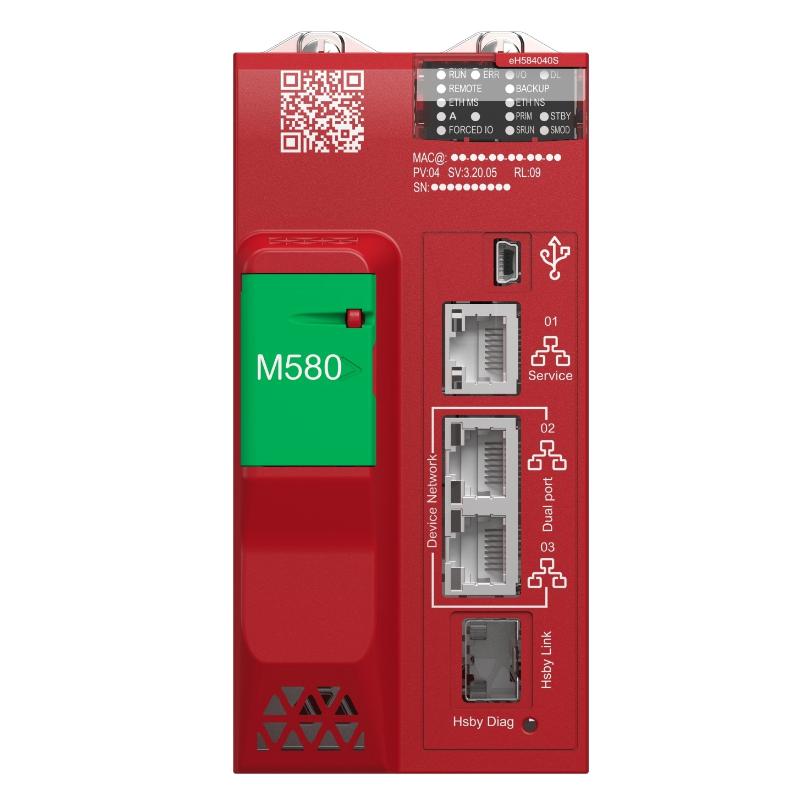
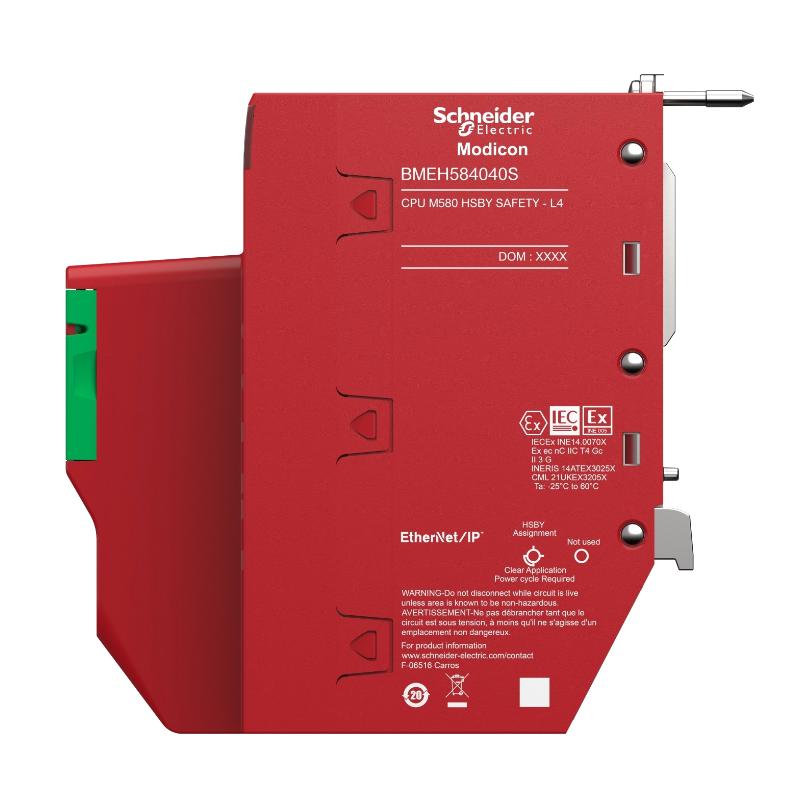
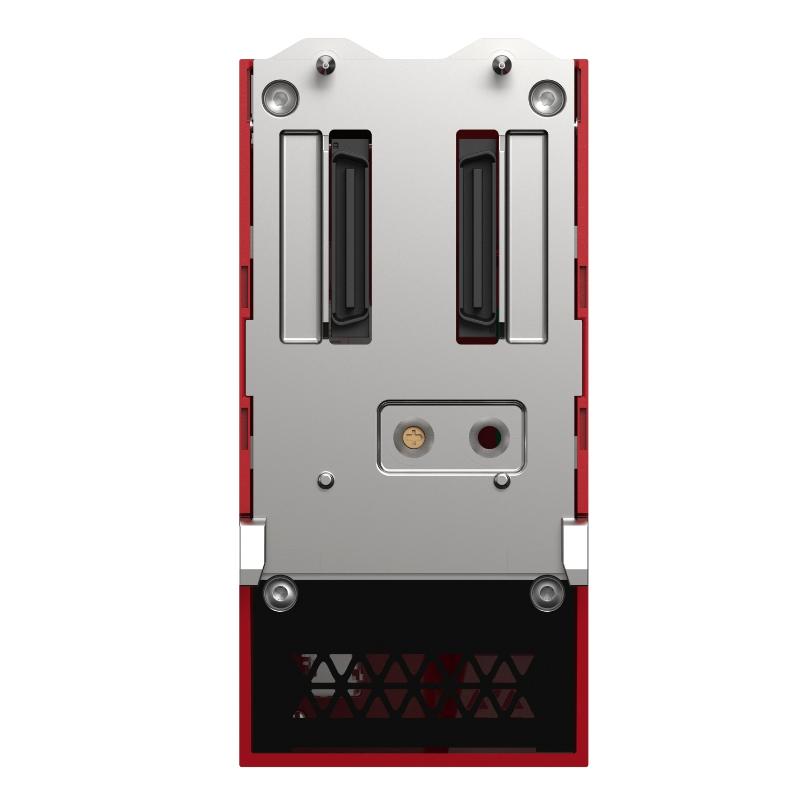
- Schneider
- BMEH584040S
- Hot Standby Safety CPU Module
- France
- 134.6 × 64.6 × 130.3 mm
- 0.849 kg
- Xiamen, China
- New & In Stock
- T/T, PayPal, Western Union
- 1 Year
- 1-3 Working Days
- DHL, UPS, TNT, FedEx and EMS.
- 24-Hour Service
- COO
- 53
Our advantage

Global Logistics
We have a 10-year logistics and express cooperation agreement, so our products can be shipped to any place in the world.

Brand new and original
Our products are imported in bulk from the place of origin. Because of the cooperative relationship, our products are all original and 100% new.

24-hour service
We provide 7*24 hours service to our customers. We will be there whenever you need us.

Price advantage
All our products are priced very favorably because we have our own warehouse and supply.
| Company Information | |||
| [email protected] | |||
| Mobile | +8615980777398 | ||
| +8615980777398 | |||
| 15980777398 |
Product Overview
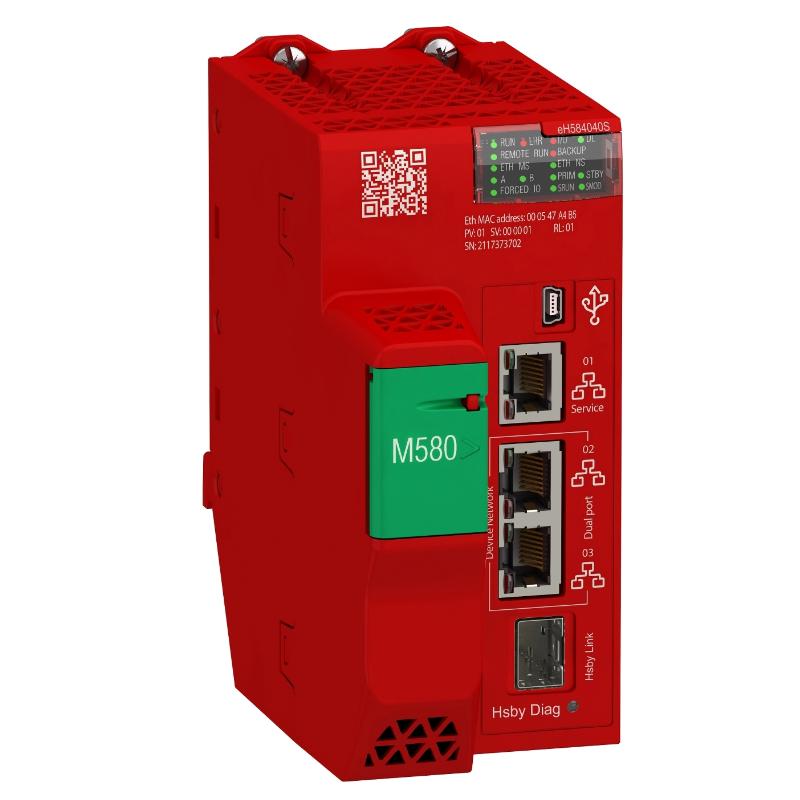
The Schneider BMEH584040S Modicon M580 Hot Standby Safety CPU Module is a controller component for M580 architectures where redundancy and safety-oriented control need to be considered together. It combines the Hot Standby concept with a safety-focused CPU role, making it relevant to automation systems where controller availability and controlled process behavior are both important.
Compared with a conventional M580 CPU, the BMEH584040S is intended for applications requiring a more structured approach to controller redundancy and safety functions. In a Hot Standby architecture, redundant CPUs work together so that the control system has an alternative controller available when the active controller becomes unavailable or a planned transfer is required.
The module operates as part of a larger safety automation architecture rather than as an independent safety device. Its actual application depends on the configured M580 safety system, I/O architecture, application program, network arrangement, and associated safety equipment.
For replacement projects, engineers should verify the exact BMEH584040S model, controller pairing, safety configuration, firmware compatibility, rack position, and application status before commissioning.
Technical Specifications
| Parameter | Specification |
|---|---|
| Manufacturer | Schneider Electric |
| Model | BMEH584040S |
| Product Family | Modicon M580 |
| Product Type | Hot Standby Safety CPU Module |
| Primary Function | Redundant Safety Control |
| System Role | Safety Controller / High-Availability Controller |
| Application | Safety Automation / Industrial Control |
| Architecture | M580 Hot Standby |
| Dimensions | 134.6 × 64.6 × 130.3 mm |
| Weight | 0.849 kg |
Product Features
The BMEH584040S combines controller redundancy with the requirements of an M580 safety-oriented control architecture.
Key characteristics include:
- Schneider Electric Modicon M580 Hot Standby Safety CPU
- Model BMEH584040S
- Supports redundant controller architectures
- Intended for safety-related automation applications
- Suitable for high-availability control environments
- Designed to operate within an M580 safety architecture
- Supports coordinated operation of redundant controllers
- Integrates with compatible M580 I/O and network infrastructure
- Suitable for critical industrial control applications
- Useful for replacement and maintenance of established M580 safety systems
The Safety CPU and Hot Standby functions address different requirements. Safety functionality concerns controlled and deterministic handling of safety-related tasks, while Hot Standby focuses on maintaining controller availability through redundancy.
Working Principle
The BMEH584040S operates as part of a redundant safety-control architecture.
A simplified relationship is:
Safety Inputs → M580 Safety CPU → Safety Logic → Safety Outputs
with redundancy represented by:
Primary Safety CPU ↔ Synchronization / Redundancy ↔ Standby Safety CPU
During normal operation, the active CPU executes the configured control and safety application. The redundant CPU maintains the corresponding system state required by the Hot Standby architecture.
The operating sequence can be summarized as follows:
-
Safety Input Acquisition
Safety-related input information is obtained through compatible safety I/O and associated field devices.
-
Application Processing
The active CPU executes the configured control and safety logic.
-
Redundant State Management
The standby controller maintains the required synchronized relationship with the active controller.
-
Continuous Monitoring
Controller status, communication, I/O conditions, and system diagnostics are monitored.
-
Transfer Condition
When an applicable controller fault or planned transfer occurs, the Hot Standby architecture manages the transition between controller roles.
-
Control Continuity
The redundant controller assumes the active role according to the configured system behavior.
-
System Recovery
Once the original controller is restored or replaced, the redundant arrangement can be re-established following the applicable commissioning procedure.
The important point is that the module does not achieve safety simply through redundancy. Safety integrity depends on the complete certified system architecture, application logic, safety I/O, configuration, and implementation.
Role in a Modicon M580 Safety Architecture
The BMEH584040S occupies the central controller position within a safety-oriented M580 system.
A simplified architecture is:
Safety Field Devices → Safety I/O → BMEH584040S → Safety Logic → Safety Outputs
For a redundant installation:
Primary BMEH584040S ↔ Hot Standby Relationship ↔ Standby BMEH584040S
The surrounding hardware performs different functions:
| System Element | Function |
|---|---|
| BMEH584040S | Executes the configured safety/control application |
| Redundant CPU | Provides standby controller capability |
| Safety I/O | Interfaces with safety-related field signals |
| EIO Network | Connects distributed I/O where applicable |
| Safety Sensors | Detect hazardous or abnormal process conditions |
| Safety Actuators | Execute the required safety response |
| Engineering System | Supports application configuration and maintenance |
| Field Equipment | Provides the physical process interface |
This architecture is appropriate for applications where the control system must address both safety requirements and controller availability.
Industrial Applications
| Application | Typical Use |
|---|---|
| Process Automation | Safety-oriented process control |
| Manufacturing Plants | Machine and process safety |
| Oil and Gas | Critical process protection |
| Chemical Processing | Safety-related shutdown functions |
| Power and Energy | High-availability control architectures |
| Water Infrastructure | Critical automated process control |
| Material Handling | Safety-related equipment control |
| Large Industrial Plants | Redundant safety automation |
The precise safety function depends on the risk assessment, safety architecture, application design, and certified system configuration.
Installation and Maintenance
Because this module combines safety and redundancy considerations, replacement should be handled more carefully than a routine PLC module swap.
Recommended practices include:
- Confirm the complete BMEH584040S part number.
- Verify the intended Hot Standby controller position.
- Record the existing controller and rack configuration.
- Document redundancy and network connections.
- Verify the paired CPU configuration.
- Confirm application and firmware compatibility.
- Check the installed safety configuration before replacement.
- Inspect connectors and communication wiring.
- Verify the rack and power supply condition.
- Follow the applicable controlled maintenance procedure.
- Confirm the active and standby controller status.
- Verify controller synchronization after installation.
- Check safety I/O communication.
- Review controller and system diagnostics.
- Perform the required safety validation after replacement.
- Verify representative safety functions before returning the system to service.
A controller replacement should not be considered complete simply because the CPU starts successfully. The safety application, redundant state, I/O communication, diagnostics, and required safety functions must be verified according to the site’s approved commissioning procedure.
Related Components
| Component | Function |
|---|---|
| Schneider BMEH584040S | M580 Hot Standby Safety CPU |
| Redundant Safety CPU | Provides controller redundancy |
| M580 Safety I/O | Interfaces safety-related field signals |
| M580 EIO Components | Connect distributed I/O |
| Safety Sensors | Detect hazardous or abnormal conditions |
| Safety Actuators | Carry out safety responses |
| M580 Rack | Provides the controller installation platform |
| Power Supply | Provides system operating power |
| Ethernet Infrastructure | Supports controller and I/O communication |
Recommended Related Models
| Model / Product Family | Product Type | Typical Application |
|---|---|---|
| Schneider BMEH584040S | M580 Hot Standby Safety CPU | Redundant safety control |
| Schneider BMEH584040 | M580 Hot Standby CPU | High-availability control |
| Schneider Modicon M580 | PAC Platform | Industrial automation |
| Schneider M580 Safety I/O | Safety I/O Hardware | Safety field signal processing |
| Schneider BMECRA Series | EIO Drop Adapter | Distributed I/O communication |
Key Advantages
- Schneider Electric Modicon M580 Hot Standby Safety CPU.
- Model BMEH584040S.
- Combines safety-oriented control with controller redundancy.
- Suitable for high-availability safety automation architectures.
- Supports redundant controller operation.
- Integrates with compatible M580 safety I/O.
- Suitable for critical industrial processes.
- Supports distributed M580 automation architectures.
- Useful for safety-system maintenance and CPU replacement.
- Dimensions: 134.6 × 64.6 × 130.3 mm.
- Weight: 0.849 kg.
Technical FAQs
What is the difference between the BMEH584040S and a conventional M580 CPU?
The BMEH584040S belongs to a safety-oriented M580 controller architecture and also supports Hot Standby operation. A conventional M580 CPU does not automatically provide the same safety-system role simply because it operates in a redundant configuration.
Does Hot Standby redundancy by itself make a control system safety-rated?
No. Redundancy and functional safety address different engineering objectives. The safety capability depends on the complete approved architecture, compatible safety hardware, safety application, configuration, diagnostics, and implementation—not simply on having two CPUs.
What happens if synchronization between the redundant safety CPUs is lost?
The Hot Standby relationship may become degraded, meaning the standby controller may no longer be in the expected state for a seamless transfer. The controller diagnostics, redundancy connection, configuration, communication path, and system conditions should be investigated before normal operation is resumed.
What validation is important after replacing a BMEH584040S?
In addition to checking normal CPU operation, engineers should verify controller synchronization, safety I/O communication, application status, diagnostics, and the required safety functions. The final validation should follow the site’s approved safety commissioning and change-management procedures.