

ProductPRODUCT
Featured products
Contact Us
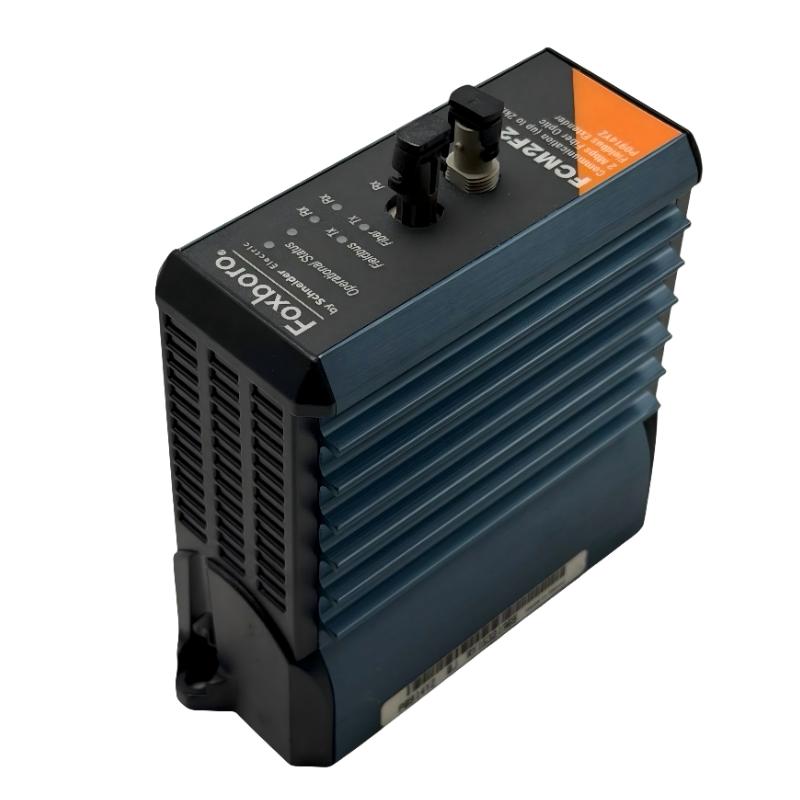
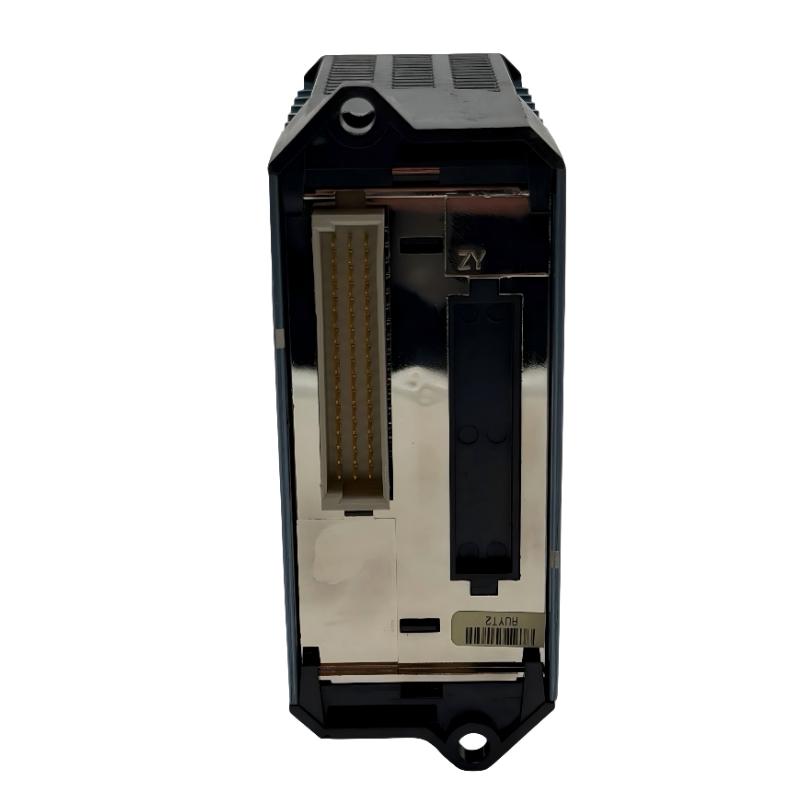
- Foxboro
- FCM2F2 P0914YZ
- Fiber Optic Fieldbus Extender
- USA
- 114 x 45 x 104 mm
- 0.284 kg
- Xiamen, China
- New & In Stock
- T/T, PayPal, Western Union
- 1 Year
- 1-3 Working Days
- DHL, UPS, TNT, FedEx and EMS.
- 24-Hour Service
- COO
- 46
Our advantage

Global Logistics
We have a 10-year logistics and express cooperation agreement, so our products can be shipped to any place in the world.

Brand new and original
Our products are imported in bulk from the place of origin. Because of the cooperative relationship, our products are all original and 100% new.

24-hour service
We provide 7*24 hours service to our customers. We will be there whenever you need us.

Price advantage
All our products are priced very favorably because we have our own warehouse and supply.
| Company Information | |||
| [email protected] | |||
| Mobile | +8615980777398 | ||
| +8615980777398 | |||
| 15980777398 |
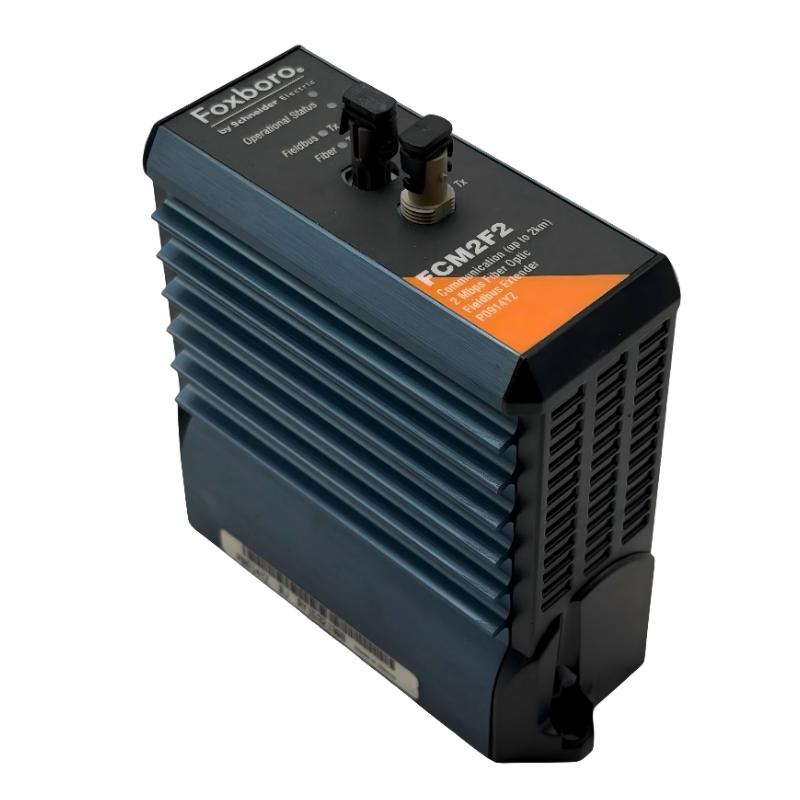
Product Overview
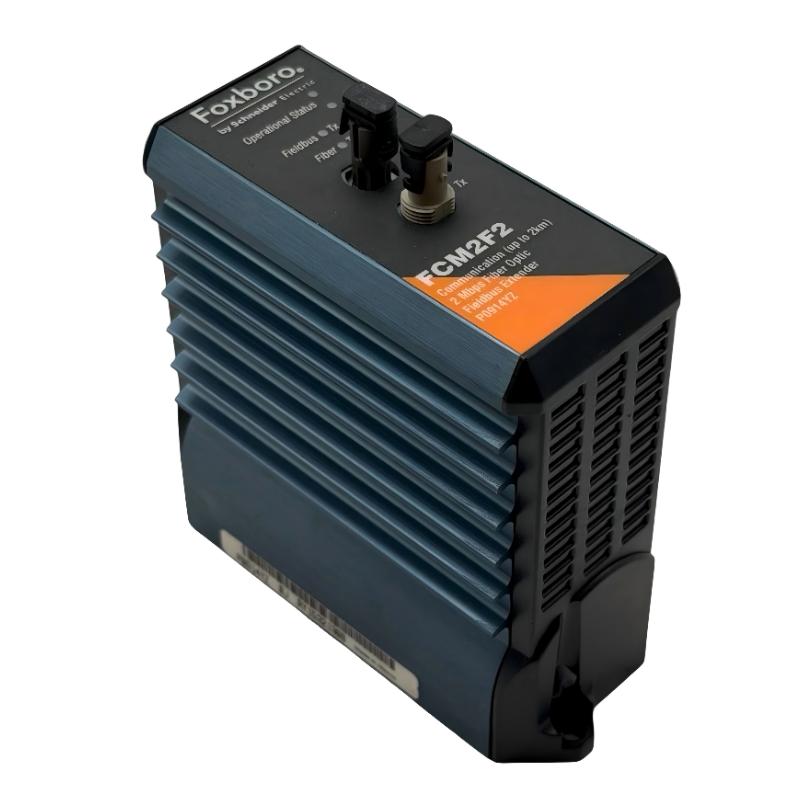
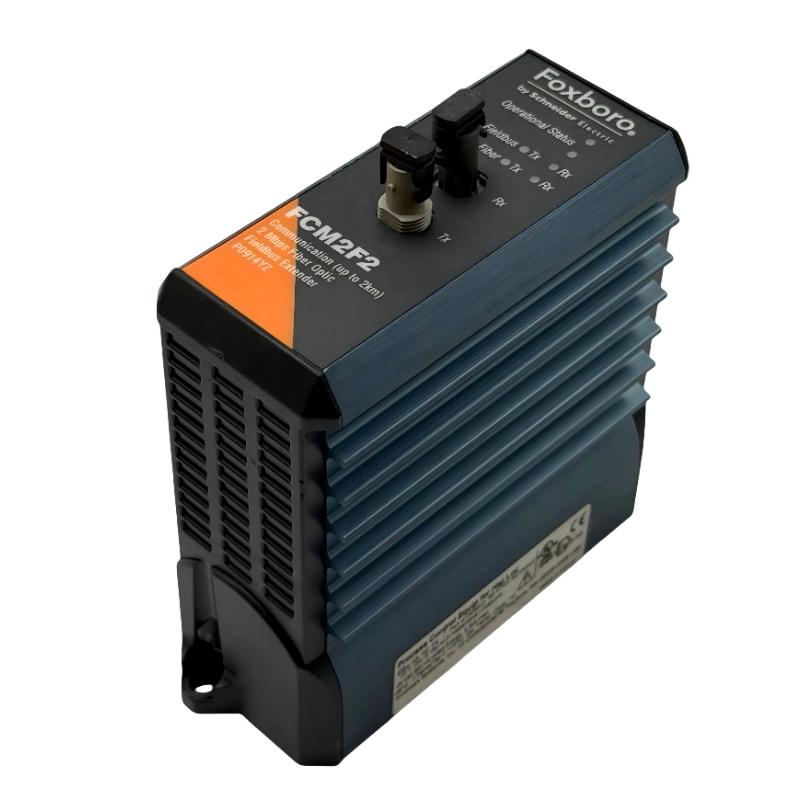
The Foxboro FCM2F2 P0914YZ Fiber Optic Fieldbus Extender is an industrial communication component designed to extend fieldbus communication through fiber-optic transmission within Distributed Control Systems (DCS) and process automation networks.
In a conventional fieldbus installation, communication distance, electromagnetic interference, grounding differences, and the physical layout of an industrial facility can create challenges for reliable data transmission. A fiber-optic fieldbus extender helps overcome these limitations by providing an optical communication path between separated sections of a control network.
The FCM2F2 P0914YZ is particularly useful in industrial environments where control cabinets, field equipment, and network nodes are distributed across large production areas. By using fiber-optic communication, the extender can help isolate communication circuits from electrical interference while providing a practical way to connect remote fieldbus segments.
The supplied dimensions of the module are 114 × 45 × 104 mm, with an approximate weight of 0.284 kg. Its compact form factor makes it suitable for installation in industrial control cabinets and DCS equipment assemblies where space efficiency is important.
The FCM2F2 should be considered a communication infrastructure component, rather than a conventional PLC or control processor. Its primary role is to extend and maintain fieldbus communication between separated network sections so that distributed automation equipment can continue exchanging data reliably.
Technical Specifications
| Parameter | Details |
|---|---|
| Manufacturer | Foxboro |
| Model | FCM2F2 |
| Part Number | P0914YZ |
| Product Type | Fiber Optic Fieldbus Extender |
| Primary Function | Fieldbus Communication Extension |
| Communication Medium | Fiber Optic |
| Network Function | Fieldbus Segment Extension |
| Signal Transmission | Electrical / Optical Communication |
| Application | DCS and Industrial Automation |
| Installation | Control Cabinet / System Assembly |
| Dimensions | 114 × 45 × 104 mm |
| Weight | Approx. 0.284 kg |
| Operating Environment | Industrial |
| Typical Application | Distributed Fieldbus Networks |
| System Role | Communication Infrastructure |
Function and Working Principle
The primary function of the Foxboro FCM2F2 P0914YZ is to extend fieldbus communication by using fiber-optic transmission between network segments.
The basic operating principle involves converting the electrical communication signal into an optical signal, transmitting that signal through fiber, and then converting it back into the appropriate electrical communication format at the remote end.
A simplified architecture is:
Fieldbus Device
↓
FCM2F2
↓
Fiber-Optic Cable
↓
FCM2F2 / Remote Fiber Interface
↓
Fieldbus Network
This architecture allows fieldbus segments that are physically separated to communicate while benefiting from the characteristics of fiber-optic transmission.
The extender can provide several important benefits:
- Longer communication distances
- Reduced electromagnetic interference
- Electrical isolation between network sections
- Improved communication stability
- Flexible network installation
- Separation of electrically noisy environments
- Connection between remote control cabinets
The FCM2F2 therefore functions as an important link between the fieldbus network and the optical communication infrastructure.
What Is the Foxboro FCM2F2 Used For?
The Foxboro FCM2F2 P0914YZ is used when a fieldbus communication network needs to be extended through fiber optics.
It can be useful when:
- Field devices are located far from the control room
- Multiple control cabinets are physically separated
- The plant contains high levels of electrical noise
- Copper fieldbus transmission is difficult to route
- Electrical isolation is required
- Network segments need to be connected through fiber
- A process plant covers a large geographical area
For example, a refinery may have control cabinets located hundreds of meters apart. Instead of relying entirely on copper communication infrastructure, fiber can be used between the separated areas.
The FCM2F2 provides the interface needed to integrate the fieldbus communication with the optical link.
Role in Industrial Control Systems
Reliable communication is fundamental to a DCS because field devices and control processors must continuously exchange process information.
The FCM2F2 can occupy an intermediate position within this communication architecture.
A simplified system can be represented as:
Field Instruments
↓
Fieldbus Segment
↓
Fiber Optic Extender
↓
Fiber Network
↓
Remote Fieldbus Segment
↓
DCS Controller
This configuration allows fieldbus devices located in different physical areas to participate in the same overall control architecture.
Typical information transmitted through the network may include:
- Process measurements
- Device status
- Diagnostic information
- Control commands
- Configuration information
- Alarm-related data
- Equipment status
- Field device parameters
The extender itself does not replace the DCS controller. Instead, it supports the communication infrastructure required for the controller and field devices to exchange information.
Why Use Fiber Optics for Fieldbus Communication?
Industrial facilities often contain electrical equipment that generates significant electromagnetic interference.
Examples include:
- Large motors
- Variable-frequency drives
- Transformers
- Generators
- Welding equipment
- High-current switching equipment
- Power distribution systems
Traditional electrical communication cables can be affected by this environment.
Fiber-optic communication provides several important advantages.
Electromagnetic Interference Immunity
Optical signals are not affected by electromagnetic fields in the same way as electrical communication signals.
Electrical Isolation
Fiber does not create a conductive electrical path between two network locations, which can help reduce grounding-related problems.
Long-Distance Communication
Fiber can be used to connect remote areas of a large industrial facility.
Improved Network Reliability
Properly installed fiber communication can provide stable transmission between separated fieldbus segments.
Flexible Plant Layout
Optical cables can be routed between buildings, control rooms, process units, and remote equipment areas.
Industrial Applications
The Foxboro FCM2F2 is suitable for industrial environments where fieldbus networks need to span longer distances or pass through electrically challenging areas.
Oil and Gas
The extender can support communication between field instrumentation and control equipment in:
- Refineries
- Gas processing facilities
- Oil terminals
- Pipeline facilities
- Offshore installations
Petrochemical Plants
Large petrochemical facilities often contain multiple process units separated by significant distances. Fiber communication can help connect these distributed fieldbus networks.
Chemical Processing
Chemical plants may contain high-power equipment and electrically noisy production areas. Fiber-based communication can improve isolation between network sections.
Power Generation
Power plants have extensive electrical infrastructure, making fiber-optic communication especially useful for communication between remote control cabinets and central control equipment.
Water and Wastewater
Remote pumping stations, treatment systems, and process equipment can be connected using distributed fieldbus and fiber communication architectures.
Manufacturing
Large manufacturing plants can use optical fieldbus connections between production areas and centralized control equipment.
Installation and System Integration
The FCM2F2 P0914YZ should be installed according to the applicable Foxboro control-system architecture and fieldbus network design.
A general installation sequence includes:
- Verify the complete module identification.
- Confirm fieldbus compatibility.
- Inspect the extender for physical damage.
- Install the module in the designated control cabinet position.
- Connect the required power supply.
- Connect the fieldbus interface.
- Connect the fiber-optic communication cable.
- Verify optical connection polarity where applicable.
- Check communication indicators.
- Configure the associated network equipment.
- Test communication between the two fieldbus segments.
- Verify connected device status.
- Confirm DCS communication.
- Record the completed configuration.
The exact installation procedure depends on the fieldbus architecture and the specific network topology.
Fiber Optic Installation Considerations
Fiber-optic communication requires careful handling.
Before commissioning the system, engineers should check:
- Fiber connector cleanliness
- Fiber cable condition
- Correct connector type
- Cable routing
- Minimum bending radius
- Optical link status
- Transmitter and receiver connections
- Optical signal quality
A contaminated fiber connector can cause increased optical loss or intermittent communication.
Fiber cables should also be protected from excessive bending, crushing, pulling, and mechanical damage.
Compatible System Components
The Foxboro FCM2F2 P0914YZ can operate as part of a larger industrial communication system.
| Component | Function |
|---|---|
| Foxboro DCS Controller | Process Control |
| Fieldbus I/O Modules | Field Signal Processing |
| Fieldbus Devices | Measurement and Control |
| Pressure Transmitters | Pressure Measurement |
| Temperature Transmitters | Temperature Measurement |
| Flow Transmitters | Flow Measurement |
| Control Valves | Final Control Elements |
| Fiber Optic Cables | Optical Communication |
| Fieldbus Cables | Electrical Fieldbus Communication |
| Industrial Ethernet Switches | Network Infrastructure |
| Communication Modules | System Data Exchange |
| Engineering Workstations | System Configuration |
| Operator Workstations | Process Monitoring |
| Control Cabinets | Equipment Installation |
The exact components required depend on the fieldbus protocol, network topology, and DCS configuration.
Fieldbus Network Architecture
A fiber-optic fieldbus extender can be particularly valuable in distributed network architectures.
A simplified configuration may look like this:
Central Control Room
↓
DCS Controller
↓
Fieldbus Communication Interface
↓
FCM2F2
↓
Fiber-Optic Cable
↓
Remote FCM2F2
↓
Remote Fieldbus Segment
↓
Field Instruments
This approach allows remote field devices to communicate with the central DCS without requiring a long continuous electrical fieldbus cable between the two areas.
Routine Maintenance
Preventive maintenance should focus primarily on communication integrity and physical connections.
| Inspection Item | Purpose |
|---|---|
| Fiber Connectors | Check cleanliness |
| Fiber Cable | Inspect physical condition |
| Fieldbus Cable | Check connection integrity |
| Module Status | Confirm normal operation |
| Power Supply | Verify stable voltage |
| Communication Indicators | Check network activity |
| Cabinet Temperature | Prevent overheating |
| Grounding | Verify system installation |
| Network Diagnostics | Identify communication errors |
| Configuration Backup | Preserve system settings |
Regular inspection can reduce unexpected communication failures.
Common Troubleshooting Symptoms
| Symptom | Possible Cause |
|---|---|
| Fieldbus Communication Lost | Network connection problem |
| Fiber Link Down | Damaged fiber or connector |
| Intermittent Communication | Contaminated optical interface |
| Remote Devices Offline | Fiber communication failure |
| Communication Timeout | Network interruption |
| High Communication Error Rate | Optical signal degradation |
| Module Not Operating | Power supply problem |
| One Segment Offline | Local fieldbus fault |
| Multiple Devices Offline | Extender or backbone issue |
| Unstable Communication | Fiber or configuration problem |
When troubleshooting, engineers should first determine whether the problem affects one device, one fieldbus segment, or the complete communication path.
Troubleshooting Procedure
Step 1: Check Module Power
Verify that the FCM2F2 is receiving stable power.
Step 2: Check Status Indicators
Inspect the module’s available operating and communication indicators.
Step 3: Inspect the Fiber Connection
Check both optical connectors and the fiber cable for contamination or physical damage.
Step 4: Check the Fieldbus Segment
If the optical link is operating normally, inspect the fieldbus cable and connected devices.
Step 5: Check the Remote End
Fiber-based fieldbus extension normally involves communication equipment at both ends of the optical link. Verify the remote communication device as well.
Step 6: Check Network Configuration
Confirm that the connected fieldbus components are configured correctly.
Step 7: Test Communication
Verify whether individual field devices can communicate with the DCS.
Step 8: Review Diagnostics
Use the available DCS diagnostic information to identify the location of the communication fault.
Recommended Alternative Models
| Model | Product Type | Key Feature | Typical Application |
|---|---|---|---|
| FCM2F2 P0914YZ | Fiber Optic Fieldbus Extender | Fieldbus-to-Fiber Extension | Foxboro DCS |
| FCM100Et P0926GS | Communication Module | DCS Communication Interface | Process Automation |
| Foxboro Fiber Communication Module | Communication Device | Optical Network Extension | Industrial Networks |
| Industrial Fieldbus Fiber Extender | Network Device | Long-Distance Fieldbus | Process Plants |
| Fiber Optic Communication Module | Network Module | EMI-Resistant Communication | Chemical Plants |
| Industrial Fieldbus Repeater | Communication Device | Network Segment Extension | Manufacturing |
| Managed Industrial Fiber Switch | Ethernet Switch | Fiber Network Backbone | DCS Infrastructure |
| Redundant Fiber Communication Module | Communication Device | High Availability | Critical Process Systems |
Alternative models should be evaluated according to fieldbus protocol, optical interface requirements, network topology, power configuration, communication distance, and system compatibility.
Key Advantages
- Designed for industrial fieldbus communication
- Provides fiber-optic network extension
- Helps extend fieldbus communication over longer distances
- Provides electrical isolation between network sections
- Strong resistance to electromagnetic interference
- Suitable for electrically noisy industrial environments
- Supports distributed fieldbus architectures
- Compact installation footprint
- Dimensions of 114 × 45 × 104 mm
- Approximate weight of 0.284 kg
- Suitable for industrial control cabinets
- Useful in DCS and process automation applications
- Helps connect remote fieldbus segments
Technical FAQs
What is the Foxboro FCM2F2 P0914YZ?
The Foxboro FCM2F2 P0914YZ is a fiber-optic fieldbus extender designed to extend fieldbus communication through an optical communication link.
What is the main function of the FCM2F2?
Its main function is to connect separated fieldbus network sections using fiber-optic communication.
Is the FCM2F2 a PLC or DCS controller?
No. It is a communication infrastructure device, not a conventional PLC or primary DCS control processor.
Why is fiber used?
Fiber provides long-distance communication, electrical isolation, and excellent immunity to electromagnetic interference.
What are the dimensions?
The supplied dimensions are:
114 × 45 × 104 mm
What is the weight?
The approximate weight is:
0.284 kg
Where is the FCM2F2 installed?
It is generally installed in an industrial control cabinet or the applicable DCS/fieldbus equipment assembly.
What equipment works with the FCM2F2?
Depending on the system design, it can operate with fieldbus interfaces, DCS controllers, I/O modules, field instruments, fiber-optic cables, and other compatible communication equipment.
What industries can use a fiber-optic fieldbus extender?
Typical applications include:
- Oil and Gas
- Petrochemical
- Chemical Processing
- Power Generation
- Water Treatment
- Manufacturing
- Process Automation
What should be checked before replacing the FCM2F2?
Engineers should verify the exact model and part number, fieldbus compatibility, optical interface requirements, network topology, power arrangement, and compatibility with the existing DCS architecture.
Conclusion
The Foxboro FCM2F2 P0914YZ Fiber Optic Fieldbus Extender is an important communication infrastructure component for industrial Distributed Control Systems and process automation networks. Its primary purpose is to extend fieldbus communication through fiber optics, allowing separated network segments to exchange information while benefiting from the long-distance and EMI-resistant characteristics of optical transmission.
With supplied dimensions of 114 × 45 × 104 mm and an approximate weight of 0.284 kg, the FCM2F2 provides a compact solution for installation within industrial control cabinets and fieldbus communication assemblies.
The module can be especially useful in oil and gas, petrochemical, chemical, power generation, water treatment, and manufacturing facilities where control equipment and field devices may be distributed over large areas or exposed to significant electrical interference.
When integrated with compatible fieldbus interfaces, DCS controllers, I/O modules, fiber-optic cables, field instruments, communication modules, and industrial network infrastructure, the FCM2F2 helps create a reliable communication path between remote fieldbus segments and the central control system.
For system integrators and maintenance engineers, the key identification is Foxboro FCM2F2 / P0914YZ. Before installation or replacement, the complete fieldbus protocol, optical interface, network topology, communication distance, power requirements, and DCS compatibility should be verified.
Overall, the Foxboro FCM2F2 P0914YZ provides a compact and practical solution for extending fieldbus networks through fiber-optic communication, helping industrial control systems maintain reliable data exchange across distributed and electrically demanding operating environments.