Product Overview
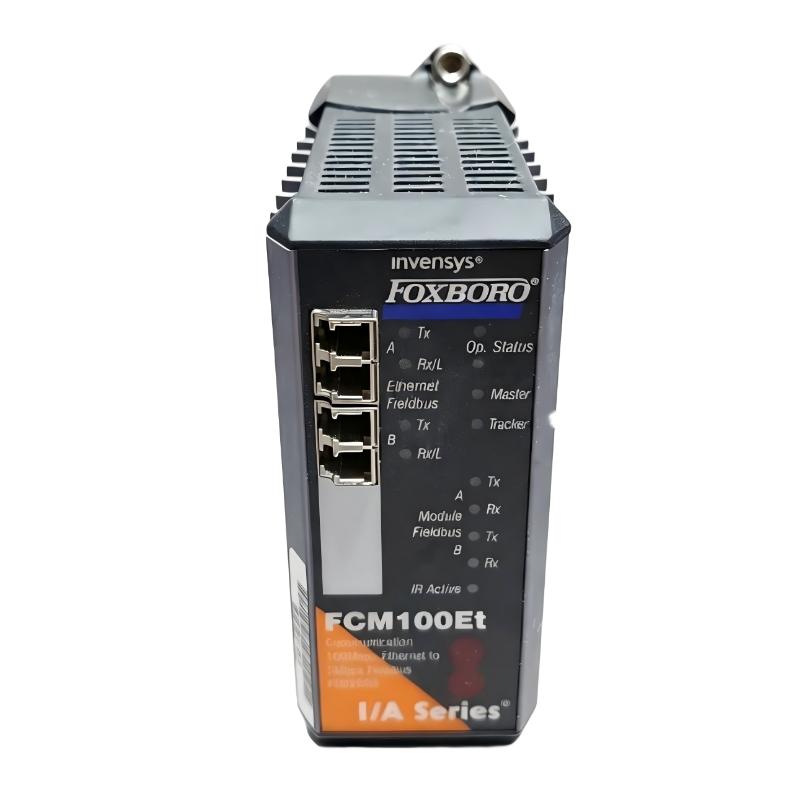
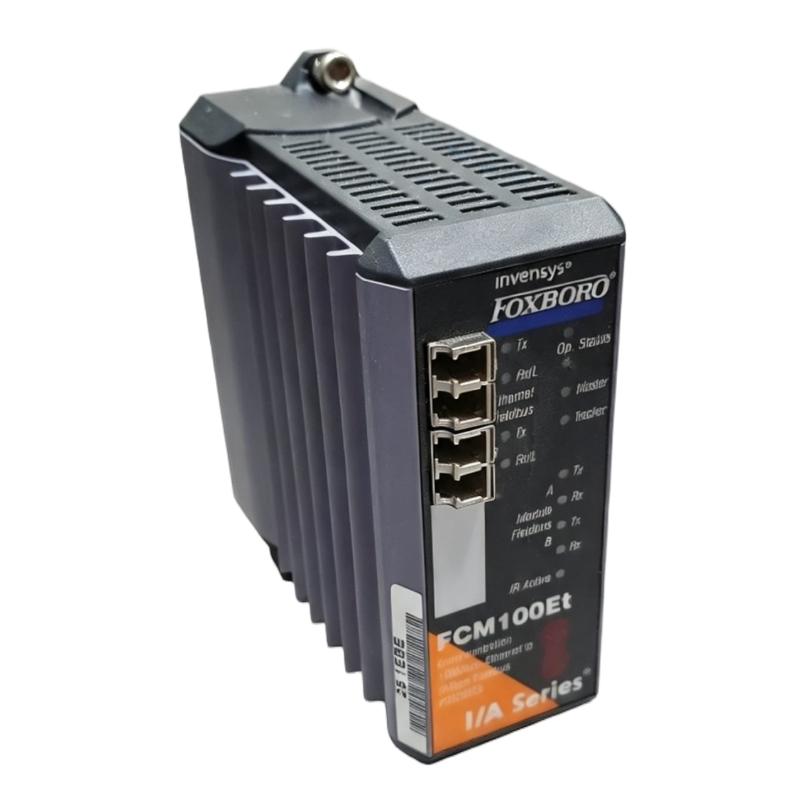
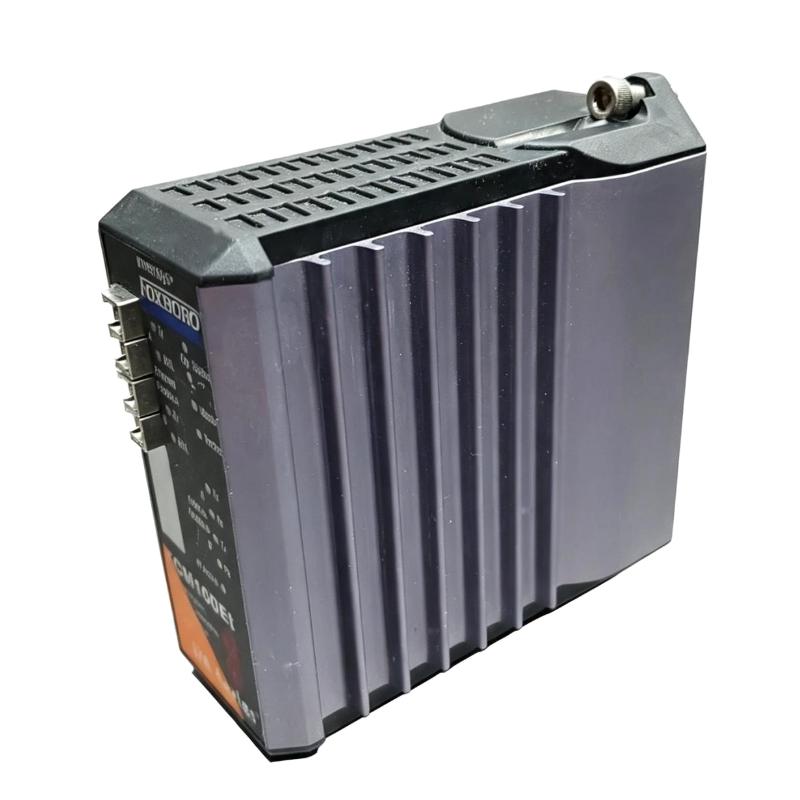
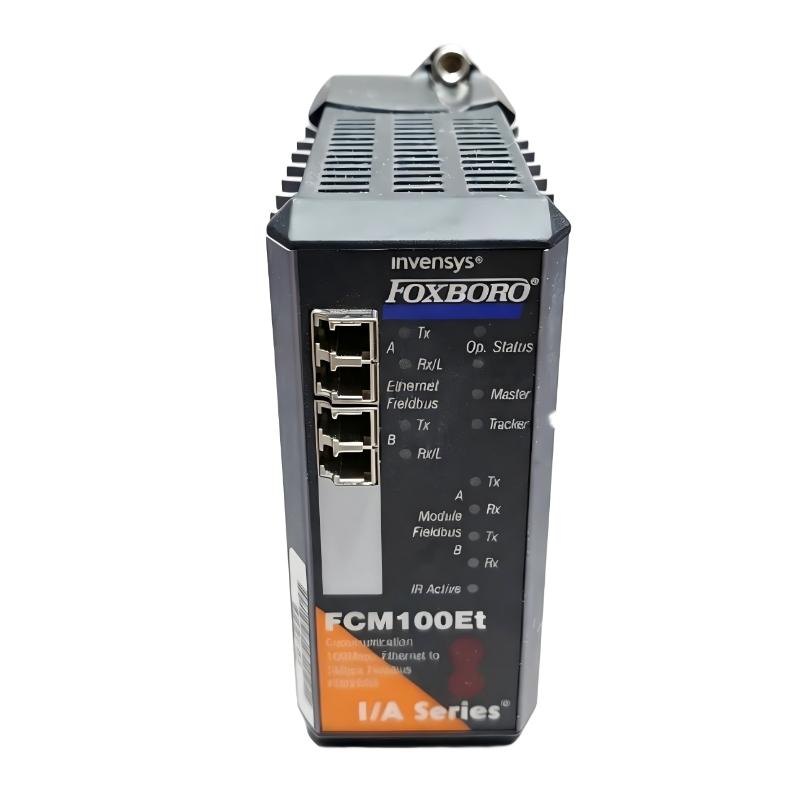
The Foxboro FCM100Et P0926GS Communication Module is an industrial communication component designed to support data exchange within Foxboro Distributed Control Systems (DCS) and industrial automation architectures. Communication modules such as the FCM100Et provide an important connection between control-system components, allowing process data, diagnostic information, configuration information, and system status to move between different parts of the automation network.
In a distributed control environment, reliable communication is essential because controllers, I/O subsystems, operator stations, engineering workstations, and network devices must continuously exchange information. The FCM100Et is designed to operate within this type of architecture, helping connect control-level equipment with the applicable industrial communication infrastructure.
The module is particularly useful where a DCS requires a dedicated communication interface rather than relying solely on the processing capabilities of the main control processor. By separating communication functions from control execution, the overall architecture can be organized into clearly defined control, I/O, and network layers.
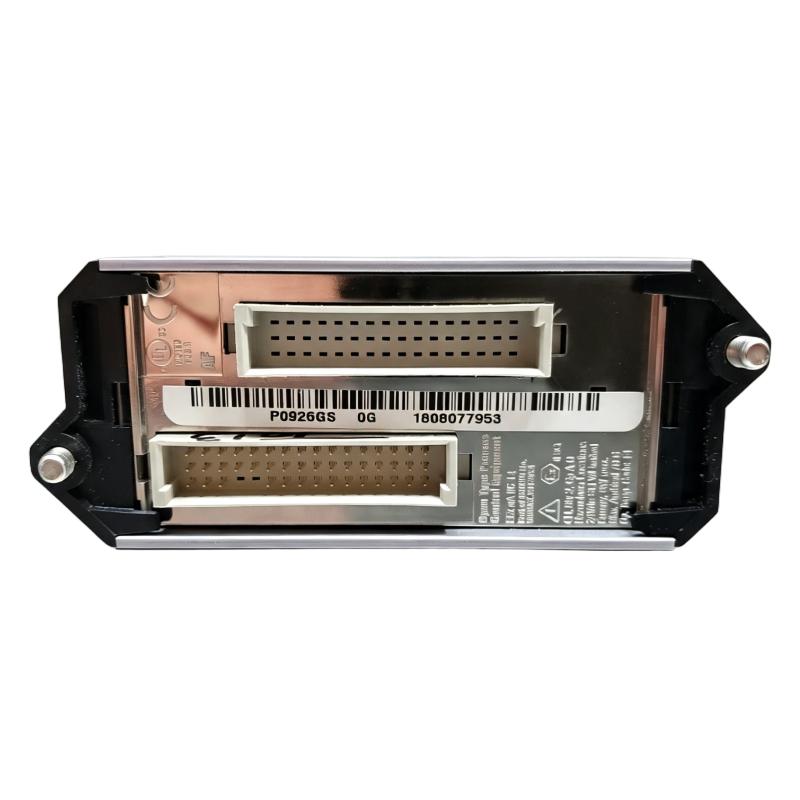
The supplied physical dimensions of the Foxboro FCM100Et P0926GS are 114 × 45 × 104 mm, with an approximate weight of 0.284 kg. Its compact form factor allows it to be installed within industrial control equipment and communication assemblies where cabinet space must be used efficiently.
Technical Specifications
| Parameter |
Details |
| Manufacturer |
Foxboro |
| Model |
FCM100Et |
| Part Number |
P0926GS |
| Product Type |
Communication Module |
| Primary Function |
Industrial Control System Communication |
| System Type |
Distributed Control System |
| Communication Role |
Data Exchange Between Control-System Components |
| Installation |
Control Cabinet / System Assembly |
| Dimensions |
114 × 45 × 104 mm |
| Weight |
Approx. 0.284 kg |
| Application |
DCS and Industrial Automation |
| Operating Environment |
Industrial |
| Typical Duty |
Continuous Industrial Communication |
| System Integration |
Control, I/O and Network Architecture |
Function and Working Principle
The primary function of the Foxboro FCM100Et P0926GS is to provide a communication interface between components within an industrial control architecture.
A DCS contains many different equipment types. Controllers process control strategies, I/O modules handle field signals, operator stations display process information, and engineering workstations are used for system configuration.
All of these components require reliable communication.
A simplified architecture can be represented as:
Engineering Workstation
↓
Industrial Control Network
↓
FCM100Et Communication Module
↓
Control Processor / I/O System
↓
Field Devices
The communication module helps organize the exchange of information between these system layers.
Depending on the system configuration, communication traffic may include:
- Process data
- Control-system status
- Diagnostic information
- Configuration information
- I/O-related information
- System alarms
- Device status
- Network communication
The module therefore acts as an important communication interface rather than performing the main process-control calculations itself.
What Is the Foxboro FCM100Et Used For?
The FCM100Et is used to provide communication capability within a Foxboro industrial control system.
Its applications can include communication between:
- Control processors
- I/O subsystems
- DCS communication networks
- Engineering workstations
- Operator stations
- Industrial network equipment
- Other compatible control-system modules
In a process plant, the communication module can help transfer information between distributed system components so that operators can monitor the process and control applications can receive the required process information.
This is particularly important in large installations where control equipment may be distributed across multiple cabinets or plant areas.
Role in Industrial Control Systems
Communication is one of the fundamental layers of a modern DCS.
A typical architecture can be represented as:
Field Instruments
↓
I/O Modules
↓
Communication Infrastructure
↓
FCM100Et
↓
Control Processor
↓
Operator and Engineering Systems
The FCM100Et can therefore contribute to the communication path between field-level data and higher-level control and monitoring functions.
A reliable communication architecture allows:
- Controllers to receive process measurements
- Operator stations to display current values
- Engineering stations to communicate with control equipment
- Diagnostic information to reach maintenance personnel
- System status to be monitored
- Process data to be transferred to higher-level applications
Without reliable communication, even correctly functioning controllers and I/O modules cannot operate as an integrated automation system.
Communication Architecture
The FCM100Et should be considered as part of a complete communication architecture rather than as an isolated component.
A typical structure may include several levels.
Field Level
Sensors and actuators interact directly with the physical process.
I/O Level
Input and output modules convert field signals into information that can be processed by the control system.
Control Level
Control processors execute configured strategies and determine the required control actions.
Communication Level
Communication modules and network equipment provide the data paths between different system components.
Supervisory Level
Operator stations, engineering workstations, servers, and historian systems provide monitoring, configuration, and data-management functions.
The FCM100Et can contribute to the communication layer that links these different levels.
Industrial Applications
The Foxboro FCM100Et can be used in industrial environments where distributed control and reliable system communication are required.
Typical industries include:
Oil and Gas
Communication between control processors, remote I/O systems, operator stations, and process equipment is essential in oil and gas facilities.
Petrochemical
Large petrochemical plants require distributed communication architectures to coordinate multiple process units.
Chemical Processing
Communication modules can support data exchange between control and I/O equipment throughout chemical production facilities.
Power Generation
Power plants depend on reliable communication for process monitoring, equipment control, alarms, and system diagnostics.
Water Treatment
Water treatment facilities can use DCS communication infrastructure to coordinate pumps, valves, treatment systems, and monitoring equipment.
Manufacturing
Industrial manufacturing facilities can use distributed communication architectures to connect control equipment across production areas.
Installation and System Integration
The FCM100Et P0926GS should be installed according to the hardware architecture of the applicable Foxboro control system.
A general installation procedure includes:
- Verify the module model and part number.
- Confirm compatibility with the existing DCS architecture.
- Inspect the module for physical damage.
- Identify the correct installation position.
- Install the module securely.
- Connect the required power infrastructure.
- Connect the applicable communication interfaces.
- Verify network addressing and configuration.
- Check communication status.
- Test communication with connected control equipment.
- Verify system diagnostics.
- Record the final configuration.
The exact installation procedure depends on the particular rack, network, power arrangement, and DCS configuration.
System Integration Considerations
Several factors should be evaluated before installing or replacing an FCM100Et communication module.
Hardware Compatibility
Confirm that the communication module is intended for the existing rack and control-system architecture.
Communication Compatibility
Check that the connected devices and network infrastructure support the required communication arrangement.
Configuration
Verify module addressing and communication parameters before commissioning.
Network Topology
The communication module should be installed according to the designed network topology.
Power Requirements
The associated power system should provide stable power within the requirements of the control-system hardware.
Redundancy
If the application requires high availability, the complete communication architecture should be evaluated for applicable redundancy arrangements.
Compatible System Components
The Foxboro FCM100Et P0926GS normally operates as part of a larger DCS architecture.
| Component |
Function |
| Foxboro Control Processor |
Control Strategy Execution |
| Foxboro I/O Modules |
Field Signal Processing |
| Analog Input Modules |
Process Measurement Acquisition |
| Analog Output Modules |
Process Control Outputs |
| Digital Input Modules |
Equipment Status Monitoring |
| Digital Output Modules |
Equipment Switching and Control |
| Industrial Ethernet Switches |
Network Communication |
| Fiber Optic Network Components |
Long-Distance Communication |
| Operator Workstations |
Process Monitoring |
| Engineering Workstations |
System Configuration |
| Historian Servers |
Process Data Storage |
| Power Supply Modules |
System Power |
| Control Cabinets |
Equipment Installation |
The exact combination depends on the DCS architecture and the communication requirements of the application.
Communication Module Maintenance
Communication modules generally require limited mechanical maintenance, but preventive inspection is important in continuously operating industrial systems.
| Inspection Item |
Purpose |
| Module Status |
Confirm normal operation |
| Communication Indicators |
Check network activity |
| Connectors |
Inspect physical condition |
| Network Cables |
Check for damage |
| Power Supply |
Verify stable power |
| Cabinet Temperature |
Prevent overheating |
| Cooling System |
Maintain proper airflow |
| Diagnostic Information |
Identify communication problems |
| Configuration Backup |
Preserve system settings |
| Network Logs |
Identify recurring faults |
Regular maintenance helps prevent small communication problems from becoming system-wide failures.
Common Troubleshooting Symptoms
| Symptom |
Possible Cause |
| Communication Loss |
Network or module problem |
| Module Offline |
Power or configuration issue |
| Intermittent Communication |
Loose connection |
| Communication Timeout |
Network interruption |
| Diagnostic Alarm |
Module or communication fault |
| Multiple Devices Offline |
Network infrastructure problem |
| Incorrect Data Transfer |
Configuration mismatch |
| Network Link Failure |
Cable or interface problem |
| Module Not Recognized |
Hardware compatibility issue |
| Communication Instability |
Network topology or connection problem |
When troubleshooting, engineers should determine whether the fault is isolated to the FCM100Et or affects other components on the same communication network.
Recommended Troubleshooting Procedure
1. Check Module Power
Confirm that the communication module receives stable power.
2. Inspect Status Indicators
Check the available status and communication indicators for abnormal conditions.
3. Check Physical Connections
Inspect communication cables, connectors, and mounting connections.
4. Check Network Equipment
If multiple devices have lost communication, inspect associated Ethernet switches and network infrastructure.
5. Verify Configuration
Confirm that the module configuration matches the DCS engineering configuration.
6. Check Connected Equipment
Determine whether the problem originates from the control processor, I/O subsystem, or another communication device.
7. Review Diagnostics
Use available DCS diagnostic functions to identify communication errors or module status problems.
8. Test the Communication Path
After correcting the suspected problem, verify communication between the module and the affected system components.
Recommended Alternative Models
| Model |
Product Type |
Key Feature |
Typical Application |
| FCM100Et P0926GS |
Communication Module |
DCS Communication Interface |
Foxboro DCS |
| Foxboro FCM Series |
Communication Module |
Control-System Networking |
Process Automation |
| Foxboro Control Communication Module |
Network Module |
Controller Communication |
Industrial DCS |
| Industrial Ethernet Communication Module |
Communication Device |
Network Integration |
Process Plants |
| DCS Network Interface Module |
Communication Module |
System-Level Communication |
Automation Systems |
| Fiber Communication Module |
Network Module |
Long-Distance Communication |
Industrial Networks |
| Managed Industrial Ethernet Switch |
Network Device |
Central Network Communication |
DCS Infrastructure |
| Redundant Communication Module |
Communication Device |
High Availability |
Critical Process Control |
Alternative models should be selected based on communication protocol, rack compatibility, network architecture, software support, power requirements, and system generation rather than physical dimensions alone.
Key Advantages
- Designed for industrial DCS communication
- Provides an interface between control-system components
- Supports distributed automation architectures
- Suitable for process automation applications
- Compact industrial form factor
- Supports continuous system communication
- Integrates with control and I/O architectures
- Can operate as part of a larger network infrastructure
- Dimensions of 114 × 45 × 104 mm
- Approximate weight of 0.284 kg
- Suitable for industrial control cabinets
- Useful for distributed control and monitoring applications
Technical FAQs
What is the Foxboro FCM100Et P0926GS?
The Foxboro FCM100Et P0926GS is a communication module designed to support data exchange within Foxboro Distributed Control System architectures.
What is the main purpose of the FCM100Et?
Its primary purpose is to provide communication between compatible DCS components and the associated control-system communication infrastructure.
Is the FCM100Et a control processor?
No. The FCM100Et is a communication module. The main control calculations are performed by the applicable control processor, while the FCM100Et supports communication between system components.
What are the dimensions of the FCM100Et?
The supplied dimensions are:
114 × 45 × 104 mm
How much does it weigh?
The approximate weight is:
0.284 kg
Where is the module installed?
It is generally installed within the applicable Foxboro control-system cabinet, rack, or hardware assembly.
What components can work with the FCM100Et?
Depending on the system configuration, it may work with control processors, I/O modules, network switches, engineering workstations, operator stations, and other compatible DCS communication equipment.
What industries can use this communication module?
Typical applications include:
- Oil and Gas
- Petrochemical
- Chemical Processing
- Power Generation
- Water Treatment
- Manufacturing
- Process Automation
What should be checked before replacing the module?
Engineers should verify the complete part number, DCS architecture, rack compatibility, communication configuration, software requirements, power arrangement, and connected network equipment.
What can cause communication failure?
Possible causes include power problems, damaged cables, incorrect configuration, network failures, module faults, or compatibility problems between connected components.
Conclusion
The Foxboro FCM100Et P0926GS Communication Module is an important communication component for industrial Distributed Control Systems and process automation architectures. Rather than performing the primary control calculations, it supports the reliable exchange of information between control processors, I/O subsystems, network infrastructure, engineering systems, and operator-level equipment.
With supplied dimensions of 114 × 45 × 104 mm and an approximate weight of 0.284 kg, the FCM100Et offers a compact solution for installation within industrial control cabinets and DCS hardware assemblies.
The module can contribute to communication architectures used in oil and gas, petrochemical, chemical, power generation, water treatment, and manufacturing applications. When integrated with compatible control processors, I/O modules, industrial Ethernet infrastructure, operator workstations, engineering stations, and power-system components, it helps create a structured communication environment for continuous process automation.
For maintenance engineers and system integrators, the key identification is Foxboro FCM100Et / P0926GS. Before installing, replacing, or commissioning the module, the complete DCS architecture and communication configuration should be verified to ensure correct compatibility.
Overall, the Foxboro FCM100Et P0926GS provides a compact and practical communication interface for distributed industrial control systems, supporting the reliable exchange of information required for stable monitoring, control, diagnostics, and long-term plant operation.