Product Overview
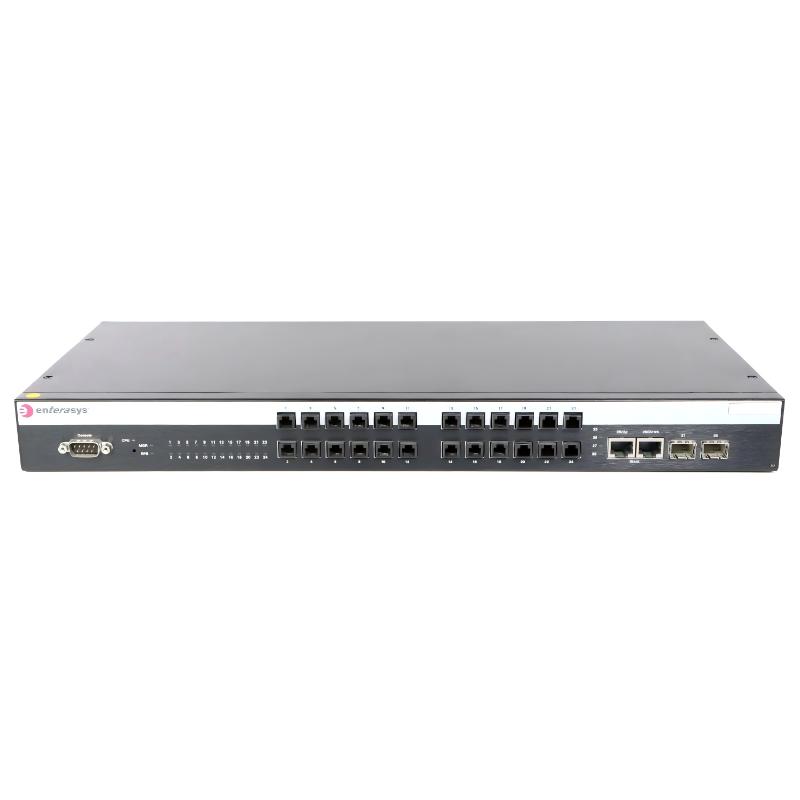
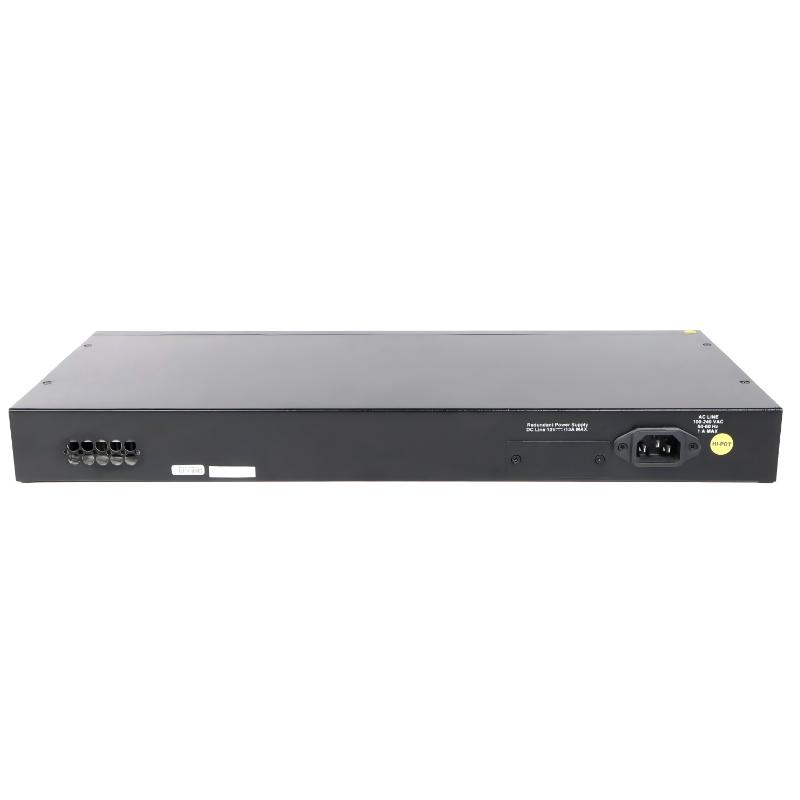
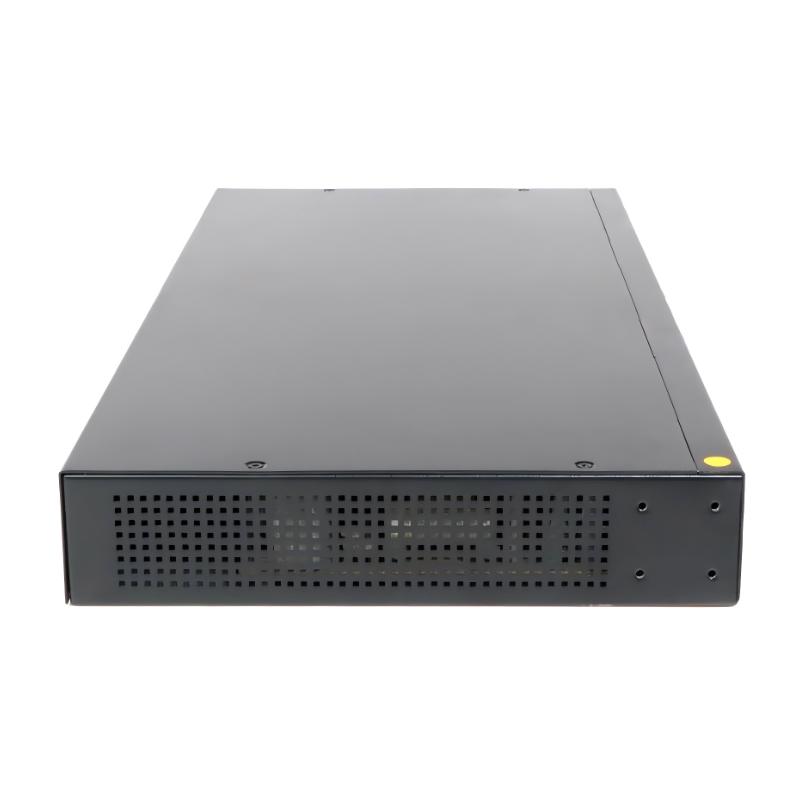
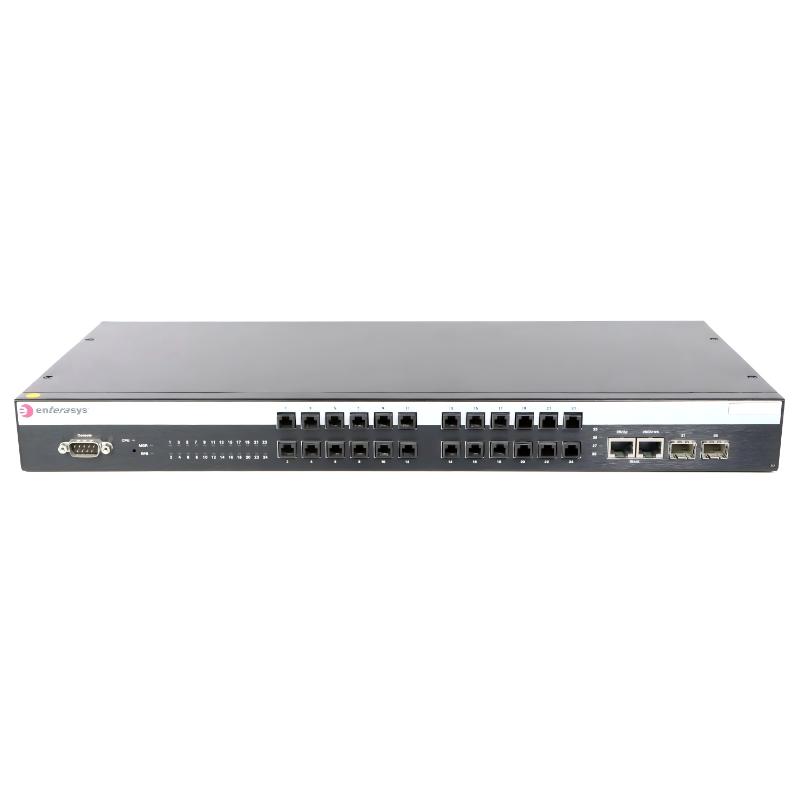
The Foxboro A2H124-24FX P0973BJ Ethernet Switch is a high-performance industrial managed Ethernet switch designed for mission-critical automation networks. It serves as a communication hub within Distributed Control Systems (DCS), connecting controllers, engineering workstations, operator stations, servers, remote I/O devices, and industrial communication equipment through a reliable Ethernet infrastructure.
Designed for industrial environments where network stability is essential, the A2H124-24FX utilizes fiber-optic communication technology to provide high-speed data transmission over long distances while maintaining excellent resistance to electromagnetic interference (EMI). Its managed switching capabilities enable administrators to configure network topology, optimize traffic, improve network security, and enhance communication reliability.
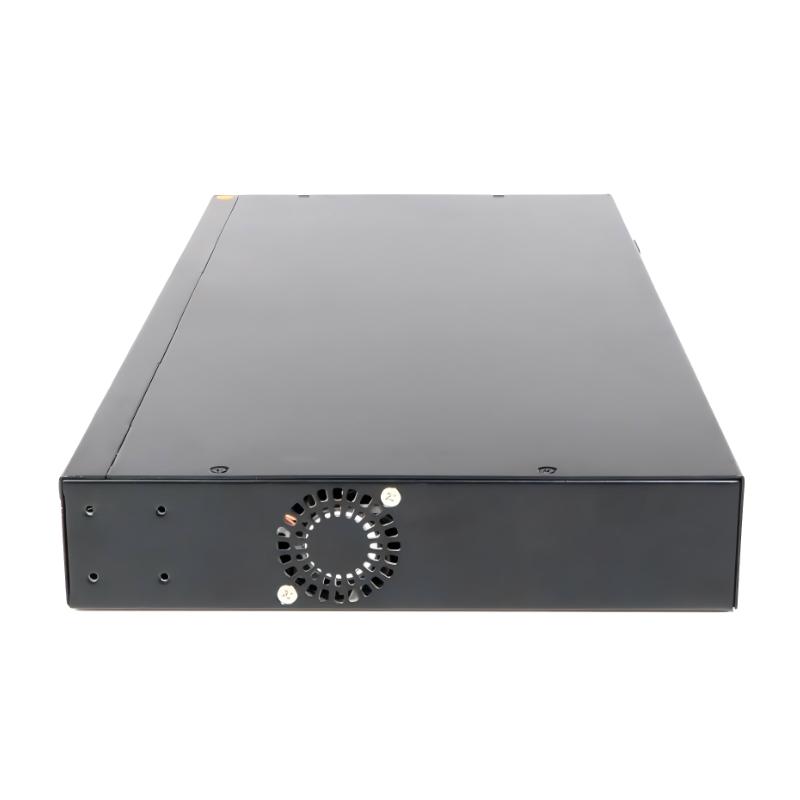
With dimensions of 350 × 45 × 120 mm and an approximate weight of 2.8 kg, the switch is suitable for installation in industrial control cabinets, communication racks, and centralized network rooms.
As part of industrial Ethernet architecture, the A2H124-24FX helps build a stable, scalable, and highly available communication platform for modern process automation systems.
Technical Specifications
| Parameter |
Details |
| Manufacturer |
Foxboro |
| Model |
A2H124-24FX |
| Part Number |
P0973BJ |
| Product Type |
Industrial Managed Ethernet Switch |
| Switching Layer |
Layer 2 Managed Switch |
| Communication Medium |
Fiber Optic Ethernet |
| Primary Function |
Industrial Network Communication |
| Fiber Ports |
24 × 100BASE-FX Fiber Ports |
| Gigabit Uplink Ports |
2 × SFP Slots |
| Copper Ports |
2 × 10/100/1000Base-T RJ45 Ports |
| Network Management |
Managed |
| Installation |
Rack Mount / Control Cabinet |
| Dimensions |
350 × 45 × 120 mm |
| Weight |
Approx. 2.8 kg |
| Operating Environment |
Industrial |
| Typical Applications |
Distributed Control Systems, Industrial Ethernet Networks |
Function and Working Principle
The Foxboro A2H124-24FX is responsible for forwarding Ethernet packets between industrial network devices while ensuring reliable and efficient communication throughout the automation system.
Unlike standard commercial switches, industrial managed switches are designed to operate continuously in demanding environments with higher requirements for stability and availability.
The communication process can be simplified as follows:
Engineering Workstation
↓
Industrial Ethernet Switch
↓
Process Controllers
↓
Remote I/O Stations
↓
Field Devices
The switch learns MAC addresses from connected devices and intelligently forwards Ethernet frames only to the appropriate destination ports. This minimizes unnecessary network traffic while maximizing communication efficiency.
Its fiber-optic interfaces provide several operational benefits:
- Long-distance communication
- High bandwidth
- Excellent EMI immunity
- Low transmission loss
- Stable industrial communication
- Continuous network availability
Managed functions also allow network engineers to configure VLANs, Quality of Service (QoS), port security, redundancy protocols, and network monitoring for optimized industrial communication.
Role in Industrial Control Systems
Within a Foxboro Distributed Control System, the Ethernet switch acts as the communication backbone linking all networked devices.
Typical communication architecture:
Operator Station
↓
Engineering Station
↓
Foxboro Ethernet Switch
↓
Control Processor
↓
Remote I/O Modules
↓
Sensors & Actuators
The switch provides reliable communication for:
- Controller synchronization
- Process monitoring
- Historical data collection
- Alarm management
- Operator interface communication
- Engineering configuration
- Remote diagnostics
- Network redundancy
Its fiber-optic connectivity makes it particularly suitable for large industrial plants where communication distances may extend across multiple buildings or production units.
Industrial Applications
The Foxboro A2H124-24FX is widely used in industrial automation environments requiring dependable Ethernet communication.
Typical applications include:
- Distributed Control Systems (DCS)
- Oil & Gas Processing Plants
- Petrochemical Facilities
- Chemical Plants
- Power Generation Stations
- Water & Wastewater Treatment
- Pharmaceutical Manufacturing
- Food & Beverage Processing
- Steel Production
- General Industrial Automation
Its robust communication performance makes it suitable for both centralized and distributed network architectures.
Installation and System Integration
The Ethernet switch should be installed inside an industrial control cabinet or communication rack where proper ventilation and cable management are available.
General installation procedure:
- Disconnect system power.
- Mount the switch securely.
- Connect the power supply.
- Install fiber-optic communication cables.
- Connect Ethernet devices.
- Configure IP addressing.
- Configure VLANs if required.
- Configure network redundancy.
- Verify link indicators.
- Test communication with connected equipment.
- Backup switch configuration.
- Document network settings.
Proper fiber cable routing and connector cleanliness are important for maintaining reliable communication performance.
Compatible System Components
The Foxboro A2H124-24FX P0973BJ commonly operates together with the following industrial components:
| Component |
Function |
| Foxboro DCS Controllers |
Process Control |
| Operator Workstations |
System Operation |
| Engineering Workstations |
Configuration & Programming |
| Remote I/O Modules |
Field Signal Collection |
| Industrial Fiber Optic Cables |
Communication Transmission |
| SFP Fiber Modules |
Gigabit Fiber Connectivity |
| Industrial Firewalls |
Network Security |
| SCADA Servers |
Supervisory Monitoring |
| Industrial HMIs |
Human-Machine Interface |
| Network Time Servers |
Time Synchronization |
| Redundant Power Supplies |
System Reliability |
| Industrial Network Cabinets |
Equipment Installation |
Together, these devices create a highly reliable industrial communication network capable of supporting continuous production.
Advantages of Fiber Optic Communication
Fiber-optic Ethernet offers significant advantages in industrial environments compared to conventional copper networks.
These advantages include:
- Long-distance communication
- Immunity to electromagnetic interference
- Electrical isolation
- Stable signal quality
- High communication bandwidth
- Low transmission loss
- Enhanced network reliability
- Reduced maintenance requirements
These characteristics make fiber-based industrial switches particularly valuable in process automation applications.
Routine Maintenance
To ensure long-term communication reliability, regular preventive maintenance is recommended.
| Inspection Item |
Purpose |
| Fiber Connectors |
Clean optical interfaces |
| RJ45 Ports |
Check physical condition |
| LED Indicators |
Verify communication status |
| Power Supply |
Confirm stable operation |
| Cooling Vents |
Remove accumulated dust |
| Cabinet Temperature |
Prevent overheating |
| Fiber Cables |
Inspect for damage |
| Configuration Backup |
Preserve network settings |
| Network Performance |
Monitor communication quality |
| Event Logs |
Review system status |
Routine inspection helps minimize unexpected communication interruptions.
Common Troubleshooting Symptoms
| Symptom |
Possible Cause |
| Communication Failure |
Cable or switch issue |
| Fiber Link Loss |
Damaged optical connection |
| Device Offline |
Configuration or network problem |
| Slow Data Transmission |
Network congestion |
| Port Not Active |
Hardware or configuration issue |
| Intermittent Communication |
Loose fiber connector |
| Network Loop Alarm |
Improper topology |
| High Broadcast Traffic |
Network configuration problem |
| Power Indicator Off |
Power supply issue |
| Communication Timeout |
Network interruption |
System troubleshooting should include inspection of controllers, cables, power supplies, fiber modules, and network configuration.
Recommended Alternative Models
| Model |
Product Type |
Key Feature |
Typical Application |
| A2H124-24FX P0973BJ |
Managed Ethernet Switch |
24 Fiber Ports |
Foxboro DCS Networks |
| A2H124-24FX |
Industrial Ethernet Switch |
Fiber Communication |
Industrial Automation |
| Managed Layer 2 Ethernet Switch |
Communication Device |
Network Management |
Process Control |
| Industrial Fiber Switch |
Ethernet Switch |
Long-Distance Transmission |
Power Industry |
| Gigabit Industrial Switch |
Managed Switch |
High-Speed Backbone |
Manufacturing |
| Industrial Communication Switch |
Managed Switch |
Stable Industrial Networking |
Chemical Plants |
| Rack-Mount Ethernet Switch |
Communication Equipment |
Centralized Network Control |
Process Industries |
| Fiber Network Switch |
Managed Ethernet Device |
High Reliability |
Automation Networks |
Alternative models should always be selected according to network topology, communication requirements, port configuration, and system compatibility rather than physical dimensions alone.
Key Advantages
- Designed for industrial Ethernet communication
- Supports managed Layer 2 switching
- High-density fiber-optic connectivity
- Excellent resistance to electromagnetic interference
- Reliable long-distance communication
- Supports industrial network redundancy
- Suitable for continuous operation
- Simplifies industrial network management
- Rack-mounted industrial design
- Dimensions of 350 × 45 × 120 mm
- Approximate weight of 2.8 kg
- Compatible with Foxboro industrial automation systems
- Suitable for large-scale industrial Ethernet infrastructures
Technical FAQs
What is the Foxboro A2H124-24FX P0973BJ?
It is an industrial managed Ethernet switch designed for communication within Distributed Control Systems and industrial Ethernet networks.
What is its primary function?
Its primary function is to provide reliable communication between industrial controllers, workstations, remote I/O devices, and other Ethernet-enabled automation equipment.
Does it support fiber communication?
Yes. It is designed primarily for industrial fiber-optic Ethernet communication while also supporting Gigabit uplink connectivity.
What are the dimensions?
The product dimensions are:
350 × 45 × 120 mm
What is the weight?
Approximately:
2.8 kg
Where is it typically installed?
It is generally installed inside industrial control cabinets, communication racks, or network cabinets.
What industries commonly use this switch?
Typical industries include:
- Oil & Gas
- Power Generation
- Chemical Processing
- Water Treatment
- Manufacturing
- Pharmaceutical Production
- Food Processing
- Petrochemical Plants
Is it suitable for continuous industrial operation?
Yes. It is designed for long-term operation in industrial automation environments.
Conclusion
The Foxboro A2H124-24FX P0973BJ Ethernet Switch is a professional industrial networking device developed to provide reliable Ethernet communication for modern automation systems. As a managed Layer 2 switch with high-density fiber connectivity, it serves as the communication backbone for Distributed Control Systems, enabling efficient data exchange between controllers, operator stations, engineering workstations, remote I/O modules, and industrial servers.
With dimensions of 350 × 45 × 120 mm and an approximate weight of 2.8 kg, the switch is well suited for rack-mounted installation in industrial control cabinets and communication rooms. Its fiber-optic architecture supports long-distance transmission while minimizing the effects of electromagnetic interference, making it an excellent choice for harsh industrial environments.
When integrated with compatible Foxboro controllers, industrial fiber infrastructure, SCADA platforms, and network management systems, the A2H124-24FX P0973BJ helps establish a stable, scalable, and secure communication network capable of supporting continuous industrial production and long-term operational reliability.