

ProductPRODUCT
Featured products
Contact Us
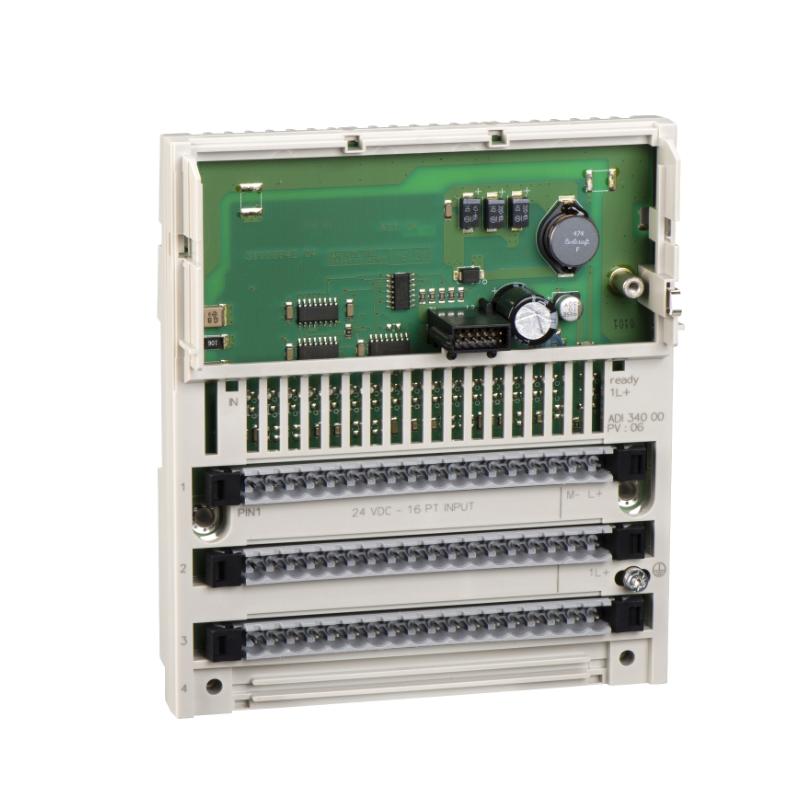
- Schneider
- 170ADI54050
- Discrete Input Module
- France
- 141.5 × 47.5 × 125 mm
- 0.284 kg
- Xiamen, China
- New & In Stock
- T/T, PayPal, Western Union
- 1 Year
- 1-3 Working Days
- DHL, UPS, TNT, FedEx and EMS.
- 24-Hour Service
- COO
- 51
Our advantage

Global Logistics
We have a 10-year logistics and express cooperation agreement, so our products can be shipped to any place in the world.

Brand new and original
Our products are imported in bulk from the place of origin. Because of the cooperative relationship, our products are all original and 100% new.

24-hour service
We provide 7*24 hours service to our customers. We will be there whenever you need us.

Price advantage
All our products are priced very favorably because we have our own warehouse and supply.
| Company Information | |||
| [email protected] | |||
| Mobile | +8615980777398 | ||
| +8615980777398 | |||
| 15980777398 |
Product Overview
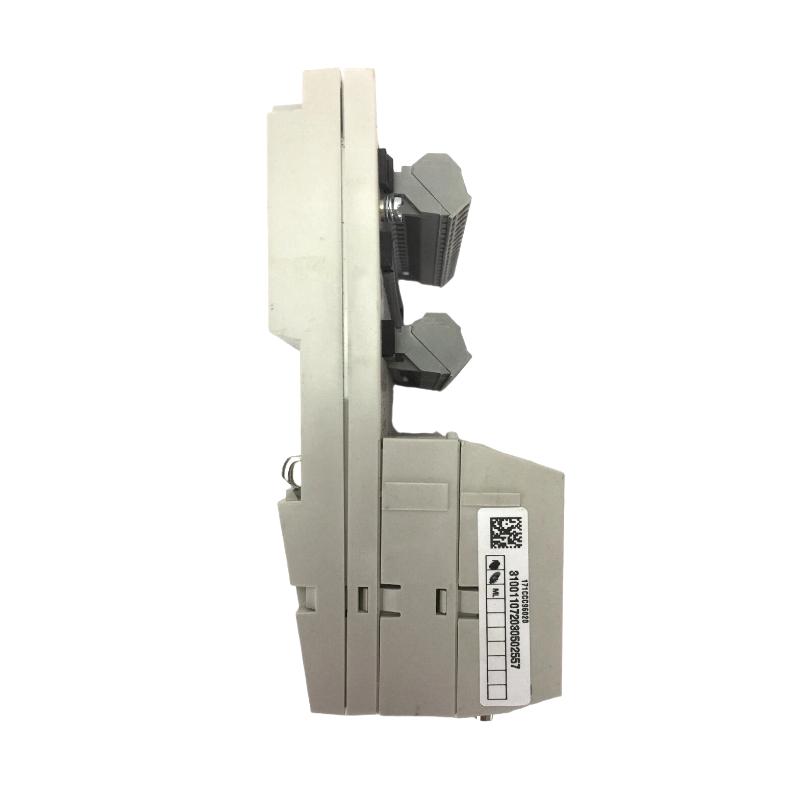
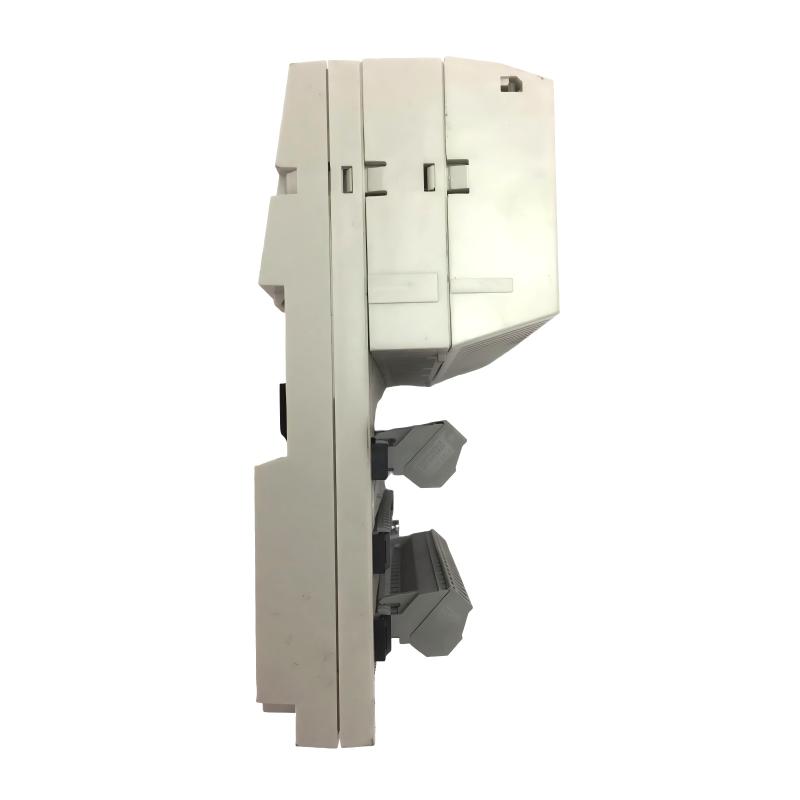
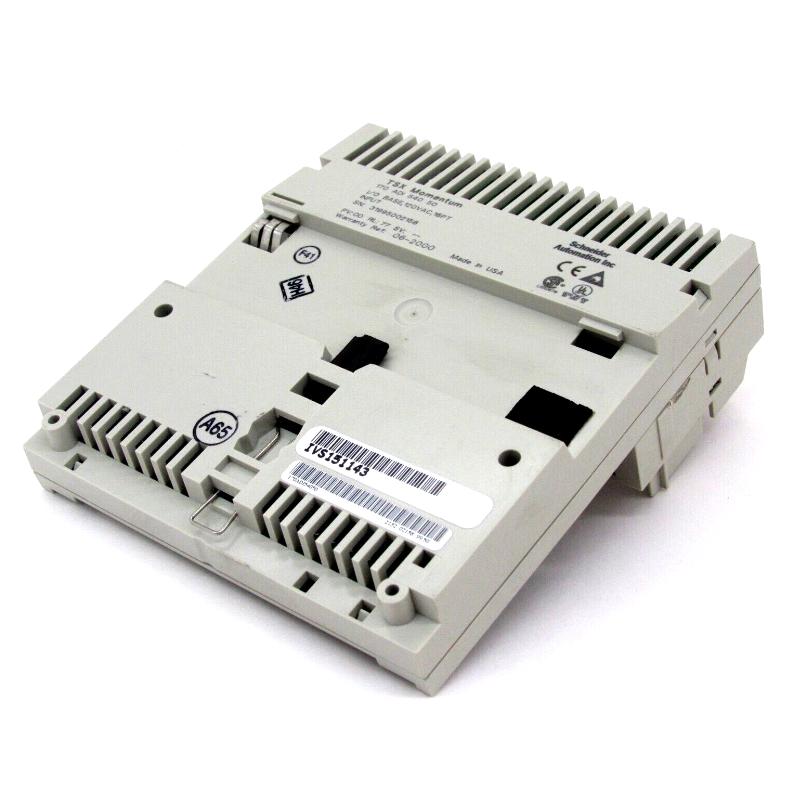
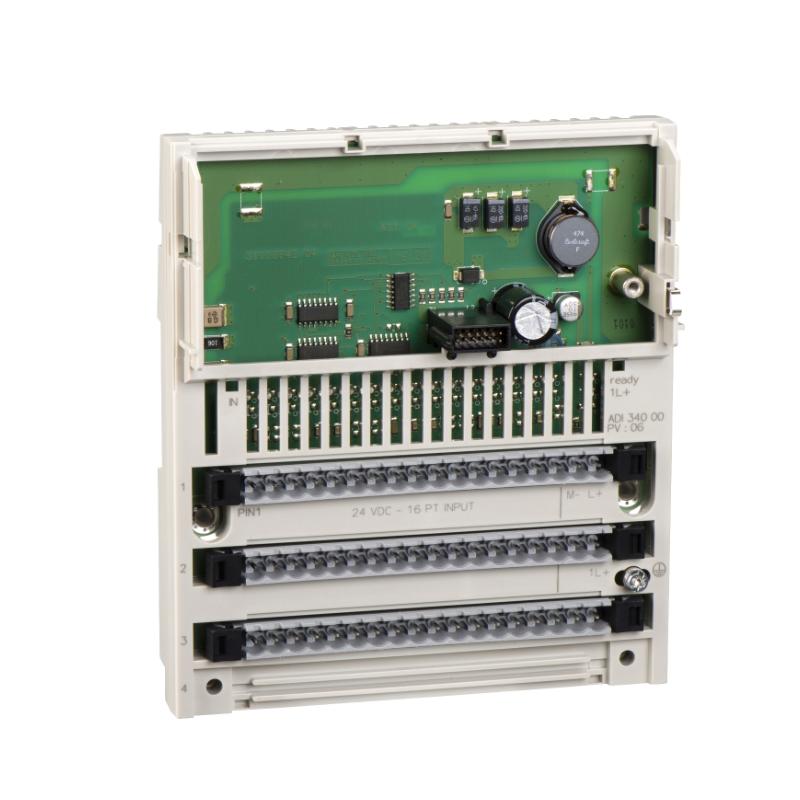
The Schneider 170ADI54050 Discrete Input Module is an industrial automation I/O component designed to receive discrete electrical signals from field devices and make those signals available to a control system.
Discrete input modules are commonly used when an automation controller needs to determine whether a field device is in an ON or OFF state. Typical signals can come from push buttons, limit switches, proximity sensors, contactors, relays, and other digital field devices.
The 170ADI54050 provides the interface between field-level switching devices and the automation control system. Instead of connecting field wiring directly to the controller’s processing circuitry, the input module receives the external signals and transfers their status to the control architecture.
This type of module is particularly useful in distributed I/O applications where field devices are installed close to machines or process equipment. It helps organize field wiring while providing a practical interface between sensors and the controller.
With dimensions of 141.5 × 47.5 × 125 mm and a stated weight of 0.284 kg, the 170ADI54050 provides a compact solution for industrial control panel and distributed I/O installations.
Technical Specifications
| Parameter | Details |
|---|---|
| Manufacturer | Schneider Electric |
| Model | 170ADI54050 |
| Product Type | Discrete Input Module |
| I/O Type | Digital Input |
| Signal Type | Discrete / ON-OFF Signals |
| Application | Industrial Automation |
| Main Function | Field Signal Acquisition |
| Interface Function | Field Device to Control System |
| Typical Devices | Switches, Sensors, Relays, Contact Devices |
| Installation | Industrial Control System |
| Dimensions | 141.5 × 47.5 × 125 mm |
| Weight | 0.284 kg |
| Application Area | Machine and Process Automation |
Product Features
The Schneider 170ADI54050 is designed to provide a practical digital signal interface between field devices and an industrial automation system.
Key features include:
- Discrete input signal processing
- Digital ON/OFF field signal acquisition
- Interface between field devices and control systems
- Suitable for industrial automation applications
- Supports organized field wiring
- Compact module construction
- Suitable for machine and process control
- Designed for integration into distributed I/O architectures
- Lightweight industrial automation design
The module can be used wherever a controller needs reliable status information from field-level switching or sensing devices.
Working Principle
A discrete input module works by receiving electrical states from field devices and making those states available to the control system.
For example, when a limit switch changes state because a machine reaches a particular position, the resulting electrical signal is sent to the input module. The module detects the input condition and transfers the corresponding status to the controller.
The basic operating process includes:
- A field device generates an ON or OFF electrical signal.
- The signal enters the discrete input module.
- The input circuit detects the electrical state.
- The module processes the incoming field signal.
- The corresponding input status is made available to the control system.
- The controller uses the status as part of its control logic.
This arrangement separates field-level signal acquisition from the controller’s main processing functions and makes larger automation systems easier to organize.
Role in Industrial Control Systems
The 170ADI54050 serves as an input interface within an automation system.
| Function | Description |
| Digital Signal Acquisition | Receives discrete signals from field devices |
| Field Interface | Connects sensors and switching devices to the control system |
| Status Monitoring | Provides ON/OFF status information |
| Machine Feedback | Allows the controller to monitor equipment states |
| Process Monitoring | Receives discrete process conditions |
| I/O Expansion | Adds digital input capability to the automation architecture |
The module does not normally execute the main machine control program. Instead, it supplies field status information that the controller can use when executing its control strategy.
Industrial Applications
Discrete input modules are widely used in machines and process systems that depend on digital field signals.
| Industry | Typical Applications |
| Manufacturing | Machine status and limit switch monitoring |
| Automotive | Production line position detection |
| Packaging | Sensor and actuator status monitoring |
| Material Handling | Conveyor position and equipment feedback |
| Water Treatment | Pump and valve status monitoring |
| Energy | Equipment status acquisition |
| Process Industry | Discrete process condition monitoring |
| Infrastructure | Equipment alarm and status signals |
The 170ADI54050 can be useful in systems where multiple field devices need to be brought into a centralized or distributed automation architecture.
Installation and System Integration
Correct wiring and installation are important when integrating a discrete input module into an industrial control system.
Recommended installation steps include:
- Verify the complete module model before installation.
- Confirm the required input signal characteristics.
- Install the module in the designated automation enclosure.
- Connect field devices to the appropriate input terminals.
- Separate signal wiring from high-power cables where appropriate.
- Check terminal connections and wiring polarity.
- Configure the input channels in the control system.
- Test each field input before placing the machine into normal operation.
Care should be taken when troubleshooting unexpected input states. A problem may originate from the field sensor, wiring, terminal connection, input circuit, or controller configuration rather than from the input module itself.
Compatible System Components
The 170ADI54050 normally works together with several types of automation components.
| Compatible Component | Function |
| PLC or Controller | Executes the control program |
| Discrete Sensors | Provide ON/OFF field signals |
| Limit Switches | Detect mechanical position |
| Proximity Sensors | Detect the presence or position of objects |
| Relays and Contacts | Provide switching status signals |
| Terminal Blocks | Organize field wiring |
| Communication Interface | Transfers I/O information within the automation system |
| Power Supply | Provides required system and field power |
These components form the signal path from the physical machine to the automation controller. Proper electrical compatibility should be confirmed before connecting field devices.
Recommended Alternative Models
| Model | Type | Key Feature | Application |
| Schneider 170ADI54050 | Discrete Input Module | Digital field signal acquisition | Industrial automation |
| Schneider 170ADI Series | Discrete Input Module | Digital input interface | Machine and process control |
| Schneider 170 Digital I/O Modules | Distributed I/O | Modular field signal handling | Distributed automation |
| Schneider Discrete Input Modules | Digital Input | ON/OFF signal monitoring | General PLC systems |
| Schneider Distributed I/O Systems | Remote I/O | Field-level signal integration | Large automation architectures |
When selecting a replacement, the input signal characteristics, number of channels, wiring arrangement, system architecture, mounting requirements, and controller compatibility should be checked rather than relying only on the physical dimensions of the module.
Key Advantages
- Provides a dedicated interface for discrete field signals
- Suitable for industrial digital input applications
- Connects field devices with automation controllers
- Supports machine status monitoring
- Suitable for process condition monitoring
- Helps organize field-level wiring
- Compact 141.5 × 47.5 × 125 mm form factor
- Lightweight 0.284 kg construction
- Suitable for distributed automation architectures
- Useful for continuous industrial control applications
Technical FAQs
What types of field devices can be connected to a discrete input module?
Typical devices include limit switches, proximity sensors, push buttons, relay contacts, machine position switches, and other devices that provide a defined discrete electrical state. The exact device compatibility depends on the module’s input electrical requirements.
How does a discrete input module differ from an analog input module?
A discrete input is primarily concerned with defined states such as ON and OFF, while an analog input is designed to acquire continuously varying electrical signals representing values such as pressure, temperature, level, or flow. The two module types serve different signal-acquisition requirements.
What should be checked when a discrete input remains permanently ON or OFF?
The field device, wiring, terminal connections, input power, channel configuration, and module status should all be checked. A constant input condition does not automatically indicate a defective I/O module because the source device or field wiring may be responsible.
Why is electrical compatibility important when replacing a discrete input module?
The replacement must match the field signal characteristics and the requirements of the automation system. Differences in input voltage, wiring configuration, channel arrangement, isolation, or system compatibility can prevent a replacement module from operating correctly even when its physical size appears suitable.