
NewsNEWCENTER
Featured products
Contact Us
Allen-Bradley 1440-SDM02-01RA XM-124 Dynamic Measurement Module Fault Diagnosis Guide
2026-06-29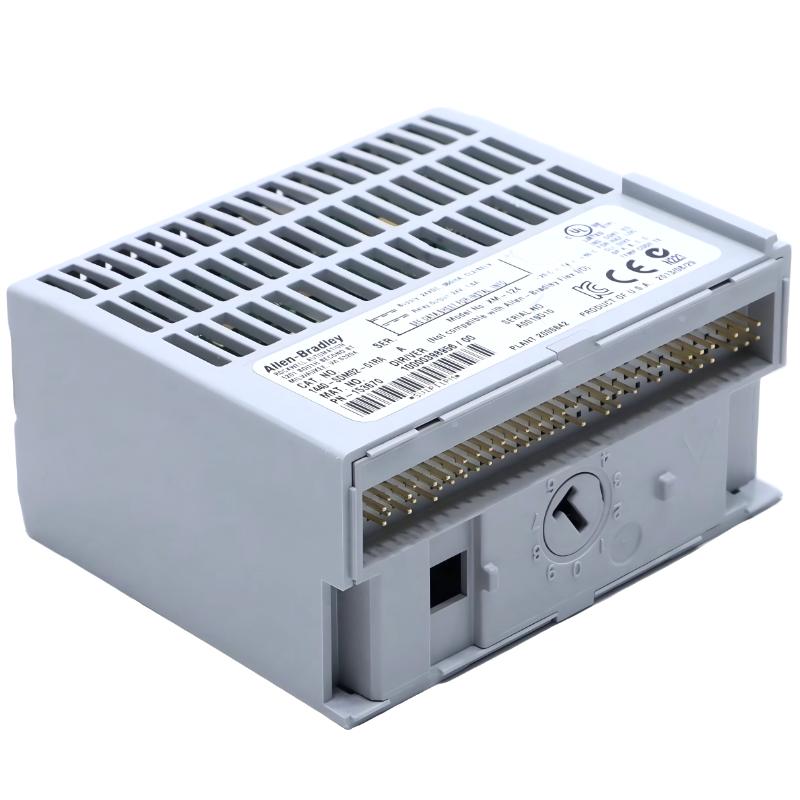
Table of Contents
- Field Case: False High Vibration Alarm on Critical Pump
- Fault Symptoms of XM-124 Module
- Observed Signal Instability & Noise Pattern
- Root Cause Analysis (EMI, Ground Loop & Sensor Degradation)
- Diagnostic Workflow for XM-124 System
- Repair & Recovery Actions
- Prevention Strategy for Condition Monitoring Systems
- FAQs on XM-124 Faults
- Engineering Summary
Field Case: Sudden Vibration Spike Without Mechanical Change
Allen-Bradley 1440-SDM02-01RA XM-124 dynamic measurement module faults are often misinterpreted as mechanical failures. In one compressor station, operators observed a sudden vibration spike on Channel 1 exceeding alarm threshold, despite no change in mechanical load or operating conditions.
Fault Symptoms of XM-124 Module
Typical field symptoms include:
- Unexpected vibration spikes without process change
- Unstable RMS and peak value fluctuations
- Intermittent sensor signal dropouts
- False alarm triggering at constant machine speed
Observed Signal Instability & Noise Pattern
During analysis, engineers recorded abnormal signal behavior:
CHANNEL_1_RMS = fluctuating (0.8 → 5.2 mm/s)
CHANNEL_2_RMS = stable
TACH_SIGNAL = normal
NOISE_FLOOR = elevated intermittently
FFT_SPECTRUM = random high-frequency spikes
ALARM_STATUS = intermittent HIGH VIBRATION
The inconsistency between channels indicated electrical noise rather than mechanical vibration changes.
Root Cause Analysis (EMI, Ground Loop & Sensor Degradation)
The XM-124 module is highly sensitive to low-level analog signal distortion. Common failure mechanisms include:
- Electromagnetic interference from nearby VFD power cables
- Ground loop currents affecting sensor reference stability
- Loose or corroded sensor connectors
- Accelerometer aging causing sensitivity drift
In one field case, rerouting sensor cables away from a VFD cabinet reduced noise spikes by over 80%, confirming EMI coupling as the root cause.
Diagnostic Workflow for XM-124 System
A structured signal-level diagnosis approach is required:
- Compare vibration trends across both channels
- Inspect sensor cable shielding continuity
- Measure ground potential difference between cabinet points
- Test accelerometer output using known reference excitation
- Analyze FFT spectrum for electrical noise signatures
XM124_DIAG /MODEL=1440-SDM02-01RA /NOISE_ANALYSIS /GROUND_CHECK /SENSOR_VERIFY
Repair & Recovery Actions
- Re-routed sensor cables away from VFD and high-power conductors
- Re-established single-point grounding system
- Replaced degraded accelerometer sensor
- Re-tightened all signal connectors and shielding terminals
After correction, vibration readings stabilized and false alarms disappeared completely during continuous operation.
Prevention Strategy for Condition Monitoring Systems
- Maintain strict separation between power and sensor cabling
- Use single-point grounding for all measurement systems
- Perform periodic sensor calibration checks
- Inspect shielding integrity during maintenance cycles
- Avoid routing analog signals near switching power devices
FAQs on XM-124 Faults
Why does vibration spike without mechanical change?
Because electrical noise or grounding issues can distort low-level sensor signals.
Can one bad sensor affect all readings?
Yes. A degraded or noisy sensor can cause false alarms even if machinery is healthy.
Is XM-124 itself often faulty?
No. Most issues are caused by installation, wiring, or environmental interference rather than module failure.
Engineering Summary
The Allen-Bradley XM-124 (1440-SDM02-01RA) dynamic measurement module is a high-sensitivity vibration monitoring device. Field faults are most commonly caused by EMI interference, grounding issues, or sensor degradation rather than internal module failure. Proper signal integrity management is essential for reliable condition monitoring performance.