
NewsNEWCENTER
Featured products
Contact Us
Siemens and Procter & Gamble Expand AI-Based Quality Inspection Worldwide
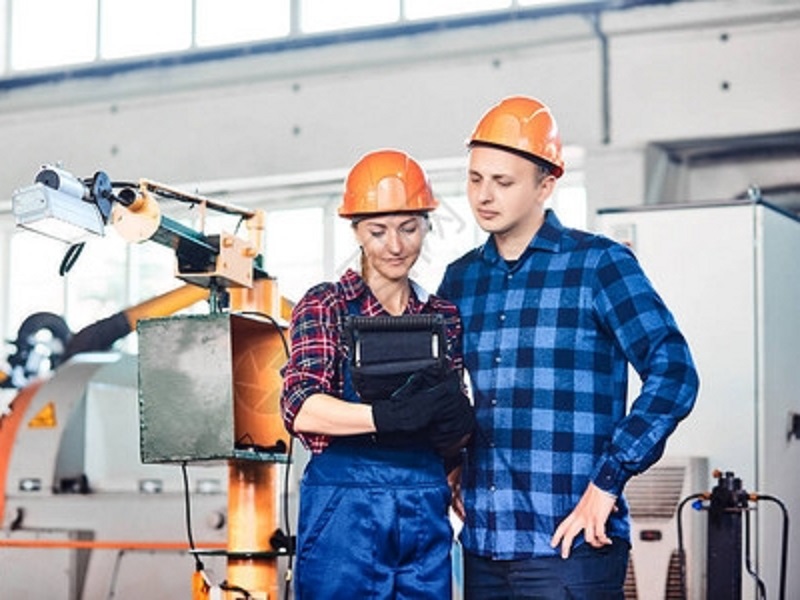
2026-09-23Siemens and Procter & Gamble (P&G) are expanding the deployment of an AI-based quality inspection solution across P&G manufacturing operations worldwide. The system combines industrial AI, edge computing and machine vision to inspect products in real time while production lines continue operating at full speed.
Industrial AI for Real-Time Quality Inspection
The solution, known as the Visual Inspection Cockpit (VIC), was developed jointly by Siemens and P&G for high-speed consumer goods manufacturing.
Traditional machine-vision systems can require extensive engineering and reconfiguration when products, packaging materials or production conditions change. This can become a challenge for manufacturers producing large numbers of different products.
VIC uses Industrial AI to handle variations in products and production conditions more effectively. The system can inspect products continuously and identify defects while they are moving through the production line.
Siemens Industrial Edge Platform
A key part of the solution is Siemens Industrial Edge, which provides the computing and software environment for processing inspection data close to the production equipment.
Industrial PCs equipped with NVIDIA GPUs run the AI workloads, while inspection results can be processed locally rather than relying entirely on remote computing infrastructure.
This edge architecture is particularly important for high-speed manufacturing because inspection decisions need to be made within very short time windows.
When a defect is detected, the system can automatically generate an alert or trigger the removal of the affected product from the production line.
Integration with PLC-Based Production Lines
The AI inspection system is also designed to integrate directly with manufacturing automation.
Real-time PLC integration allows inspection results to be associated with individual products and production events. This makes it possible to coordinate machine-vision decisions with automated production equipment.
For industrial automation engineers, this demonstrates how AI vision, PLC control, Industrial Edge and production equipment can operate as part of a connected automation architecture.
Instead of treating machine vision as an isolated inspection station, manufacturers can integrate quality information directly into the production process.
Reducing Scrap and Improving Production Efficiency
According to Siemens, the solution has reduced scrap rates by 10% to 20% depending on the product, while new deployments can be commissioned five to ten times faster than traditional customized vision systems.
These improvements can be particularly valuable for high-volume manufacturing environments where even a small reduction in defective products can produce significant operational benefits.
Continuous inspection can also provide production teams with additional data for identifying recurring quality problems and improving manufacturing processes.
Scaling AI Across Multiple Plants
One of the important objectives of the collaboration is scalability.
Rather than developing a completely different inspection system for every production line, the Siemens Industrial Edge infrastructure provides a common platform that can be deployed across multiple manufacturing locations.
This creates a more standardized approach to industrial AI deployment.
Manufacturers can potentially reuse AI models, computing infrastructure and engineering processes while adapting individual inspection applications to different products and production lines.
AI and the Future of Smart Manufacturing
The Siemens and P&G project illustrates the growing role of AI-powered machine vision in smart manufacturing.
Industrial AI is increasingly being combined with PLCs, robotics, sensors, edge computing and MES platforms to create more intelligent production environments.
Quality inspection is an especially important application because it requires rapid analysis of physical products while maintaining production speed.
As AI models become easier to deploy at the edge, manufacturers can use real-time data to improve quality control without significantly slowing production.
Outlook for Industrial Automation
The expansion of the Siemens and P&G solution demonstrates a broader transition from conventional rule-based machine vision toward adaptive industrial AI.
For automation engineers, the combination of Industrial Edge, AI vision, NVIDIA computing hardware, PLC integration and real-time production data provides a model for deploying intelligent quality-control systems at scale.
As more manufacturers adopt this approach, AI-based inspection is likely to become an increasingly important component of modern automated production lines.