

ProductPRODUCT
Featured products
Contact Us
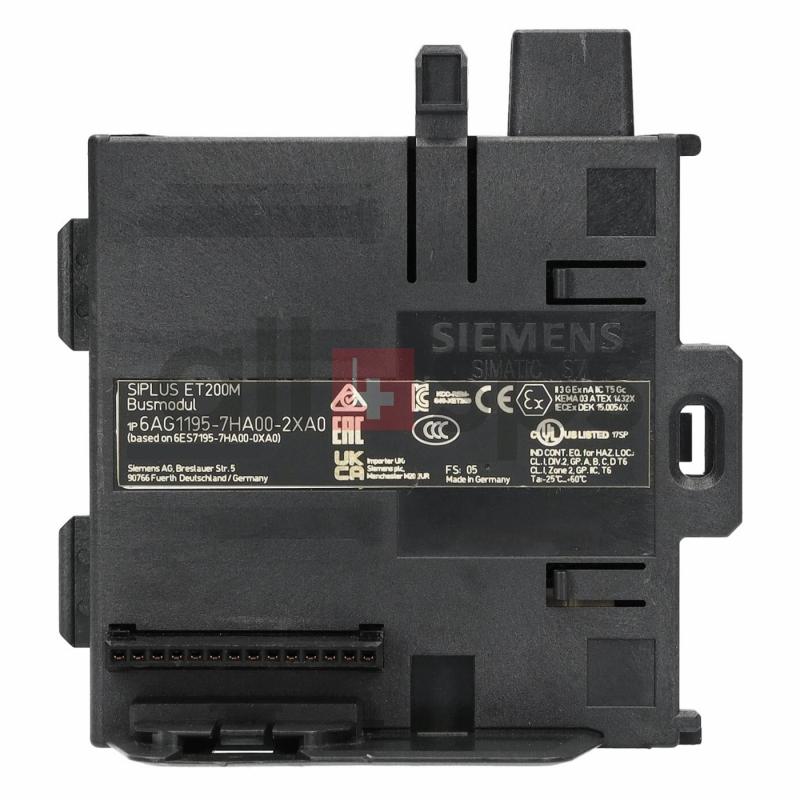
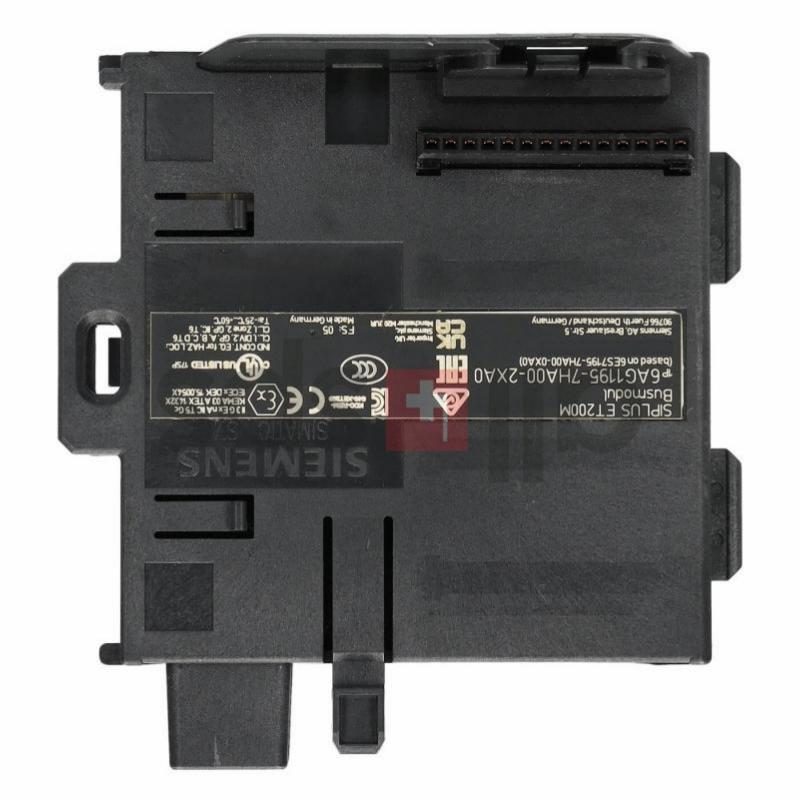
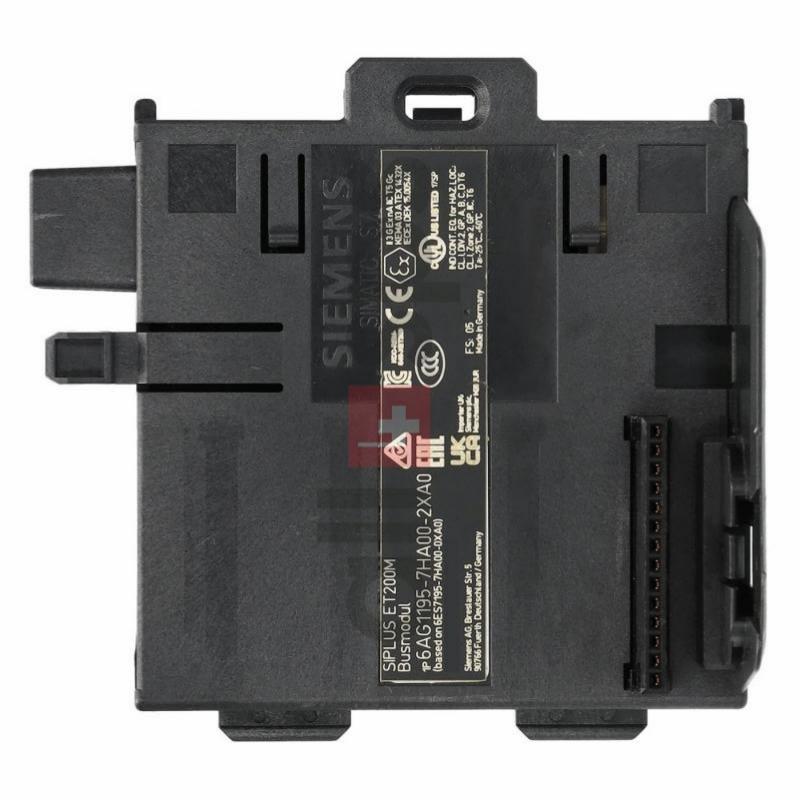
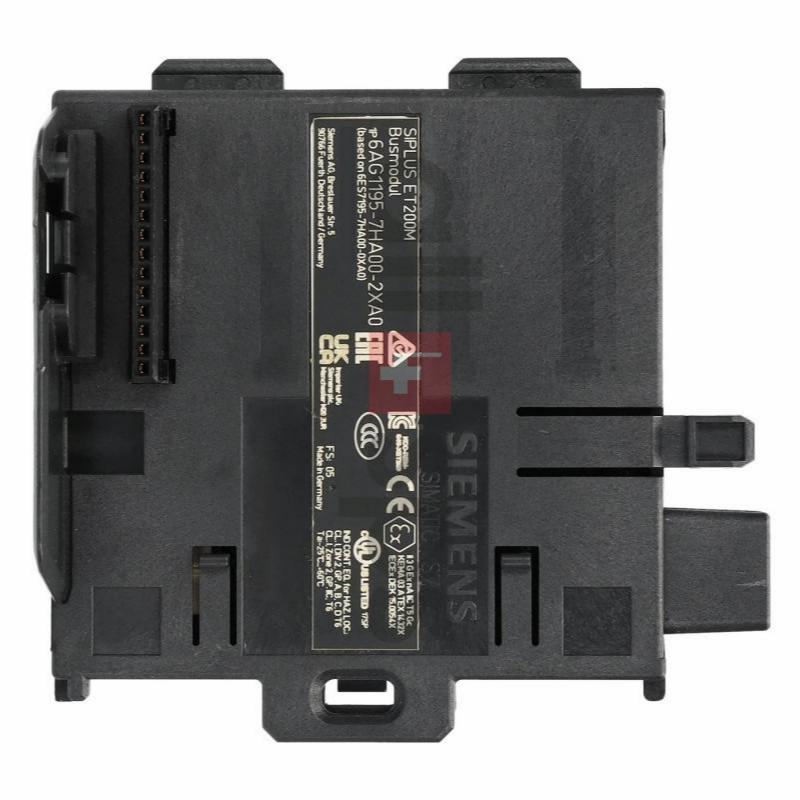
- Siemens
- 6AG1195-7HA00-2XA0
- Active Bus Module
- Germany
- 97 × 92 × 30 mm
- 0.111 kg
- Xiamen, China
- New & In Stock
- T/T, PayPal, Western Union
- 1 Year
- 1-3 Working Days
- DHL, UPS, TNT, FedEx and EMS.
- 24-Hour Service
- COO
- 5
Our advantage

Global Logistics
We have a 10-year logistics and express cooperation agreement, so our products can be shipped to any place in the world.

Brand new and original
Our products are imported in bulk from the place of origin. Because of the cooperative relationship, our products are all original and 100% new.

24-hour service
We provide 7*24 hours service to our customers. We will be there whenever you need us.

Price advantage
All our products are priced very favorably because we have our own warehouse and supply.
| Company Information | |||
| [email protected] | |||
| Mobile | +8615980777398 | ||
| +8615980777398 | |||
| 15980777398 |
Product Overview
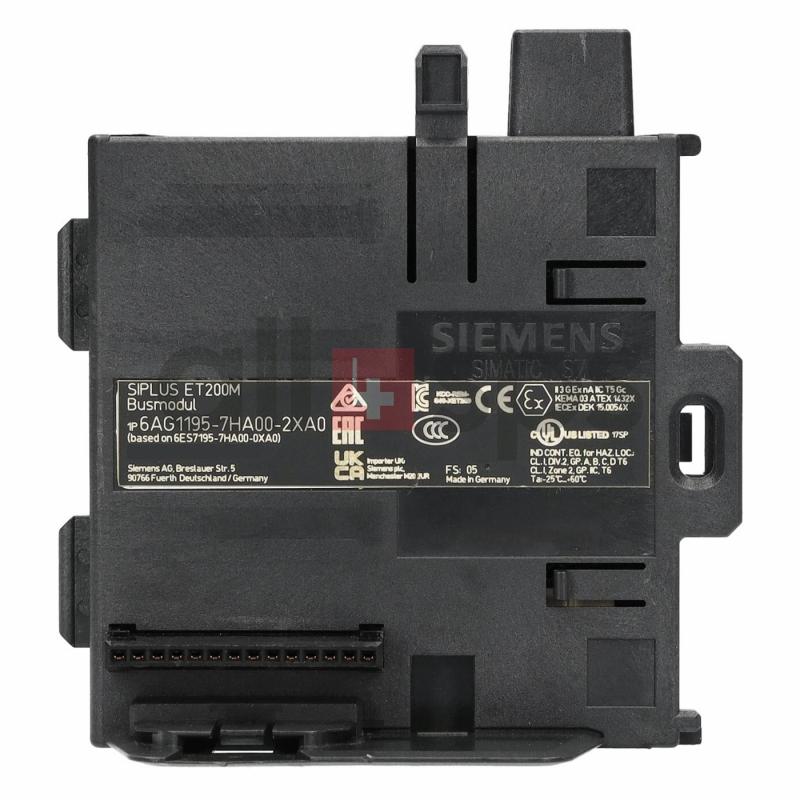
The Siemens 6AG1195-7HA00-2XA0 Active Bus Module is a specialized interface component designed for modular distributed I/O architectures within Siemens industrial automation systems. As part of the SIPLUS ET 200 product family, the active bus module supports the physical and electrical organization of modular I/O stations, allowing individual automation modules to be arranged in a structured and maintainable configuration.
Unlike a conventional passive mounting accessory, an active bus module plays an important role in maintaining the system bus connection between installed modules. This type of architecture is especially valuable in industrial environments where modularity, serviceability, and reliable distributed I/O communication are important. The Siemens 6AG1195-7HA00-2XA0 is therefore suitable for automation cabinets and distributed control stations that require a well-organized modular I/O structure.
The supplied dimensions are 97 × 92 × 30 mm, with a weight of approximately 0.111 kg. Its compact construction allows it to be integrated into space-efficient control cabinets while supporting the modular structure of the associated ET 200 system.
For system integrators and maintenance engineers, the 6AG1195-7HA00-2XA0 is best understood as a system-level infrastructure component. It works together with compatible Siemens I/O modules, interface components, power-related components, and controller infrastructure rather than functioning as a standalone PLC or signal-processing device.
Technical Specifications
| Parameter | Details |
|---|---|
| Manufacturer | Siemens |
| Model | 6AG1195-7HA00-2XA0 |
| Product Type | Active Bus Module |
| Product Family | SIPLUS ET 200 |
| System Role | Modular I/O bus and module interconnection |
| Dimensions (H × W × D) | 97 × 92 × 30 mm |
| Weight | 0.111 kg |
| Installation | Modular distributed I/O station |
| Application | Industrial automation and distributed I/O |
| System Architecture | Modular Siemens automation system |
| Typical Use | I/O station expansion, module interconnection, distributed control |
| Mounting Environment | Industrial control cabinets and automation panels |
What Is the Siemens 6AG1195-7HA00-2XA0?
The Siemens 6AG1195-7HA00-2XA0 is an Active Bus Module intended to support the modular architecture of Siemens distributed I/O systems.
A distributed I/O station normally contains multiple electronic modules installed next to each other. These modules must share a defined system infrastructure so that power, internal bus signals, and module-level communication can be distributed correctly through the station.
The active bus module is part of that infrastructure.
Its purpose is not to execute a PLC program or directly control a machine. Instead, it helps create the physical and electrical conditions required for compatible I/O modules to operate together as a coordinated station.
This distinction is important when troubleshooting an ET 200 installation. If an entire group of I/O modules becomes unavailable, the technician should consider not only the electronic I/O modules themselves but also the supporting bus infrastructure.
Understanding the Active Bus Module Concept
The term active bus module describes a component that participates in maintaining the internal modular bus structure.
In a conventional I/O rack, modules may plug directly into a backplane. In a distributed modular architecture, the physical arrangement can be implemented using dedicated bus and mounting components.
The advantages of this approach include:
- Modular station construction
- Easier system expansion
- More organized module arrangement
- Improved maintenance access
- Reduced need to redesign the entire station
- Greater flexibility during equipment replacement
- Better separation between mechanical mounting and electronic functionality
For industrial automation designers, these characteristics are particularly useful when developing systems that may require future I/O expansion.
Function and Working Principle
The Siemens 6AG1195-7HA00-2XA0 contributes to the internal architecture of a distributed I/O station.
Its main functions can be considered from several perspectives.
Internal Bus Interconnection
The module provides part of the infrastructure needed to maintain communication between compatible modules installed in the same station.
The internal bus architecture allows the automation system to treat multiple modules as a coordinated I/O station rather than as completely independent devices.
Modular Expansion
A modular bus architecture makes it possible to add or replace compatible components without reconstructing the entire automation system.
This is particularly useful in production equipment where I/O requirements can change during machine upgrades.
Electrical Continuity
The active bus infrastructure helps maintain the required internal connections between the modules that form the distributed I/O station.
This means that a failure or incorrect installation of a bus-related component can potentially affect multiple downstream modules.
System-Level Integration
The active bus module works together with the rest of the ET 200 architecture. It should therefore be selected and installed according to the requirements of the complete station rather than treated as an independent universal bus adapter.
Role in a Distributed I/O System
A typical industrial control architecture can be represented as:
PLC Controller → Industrial Network → Interface Module → Distributed I/O Station → I/O Modules → Field Devices
Within the distributed I/O station, the active bus infrastructure provides the internal connection between individual components.
For example, a production machine may use:
- Digital input modules for sensors
- Digital output modules for actuators
- Analog input modules for process measurements
- Analog output modules for control signals
- Technology modules for specialized functions
- Interface components for controller communication
- Bus infrastructure components for internal module connectivity
The 6AG1195-7HA00-2XA0 belongs to this infrastructure layer.
This makes it an important supporting component even though it does not normally provide direct field signal processing itself.
Why Bus Infrastructure Is Important
In industrial automation, system reliability depends on much more than the PLC and I/O electronics.
A distributed I/O system can contain hundreds of signal channels. The communication path between the controller and each signal must remain stable.
A simplified signal path is:
Sensor → Field Wiring → I/O Module → Internal Bus → Interface → Network → PLC
If the internal bus connection is interrupted, multiple I/O channels may become unavailable simultaneously.
This is why bus modules and related infrastructure should be treated as critical system components.
A technician diagnosing a communication problem should therefore consider whether the problem affects:
- One channel
- One I/O module
- Several adjacent modules
- An entire station
- Multiple remote stations
The scope of the failure provides useful information about the likely cause.
Industrial Applications
The Siemens 6AG1195-7HA00-2XA0 Active Bus Module can be used as part of distributed automation systems built around compatible SIPLUS ET 200 architecture.
Typical applications include:
Factory Automation
Distributed I/O stations can be positioned close to production equipment, reducing field wiring distances.
Typical equipment includes:
- Assembly machines
- Packaging systems
- Conveyor lines
- Robotic work cells
- Material handling systems
- Automated inspection equipment
Process Automation
Distributed I/O is useful for collecting signals from process instruments and controlling field equipment.
Examples include:
- Pumps
- Valves
- Temperature instruments
- Pressure transmitters
- Flow instruments
- Level measurement devices
Machine Building
Machine manufacturers can use modular I/O architectures to create standardized control cabinets.
The modular structure makes it easier to adapt the I/O configuration to different machine variants.
Water and Wastewater
Remote I/O stations can support monitoring and control of:
- Pump stations
- Valves
- Level systems
- Water treatment equipment
- Motor status signals
Energy and Utility Systems
Distributed automation architectures can be used for equipment monitoring and control in utility installations and infrastructure.
Installation Considerations
Correct installation of an active bus module is important because it participates in the internal structure of the I/O station.
Before installation, engineers should verify:
- Exact order number
- Compatible ET 200 system architecture
- Correct module arrangement
- Mechanical mounting position
- Adjacent module compatibility
- Electrical configuration
- System documentation
The specified dimensions of the 6AG1195-7HA00-2XA0 are 97 × 92 × 30 mm, so the available cabinet space should be checked before installation.
The component weighs approximately 0.111 kg, making it relatively lightweight. Nevertheless, the complete mounting assembly must be mechanically secure.
Mechanical Installation
During installation, the following practices are recommended:
- Switch off the relevant equipment before mechanical work.
- Confirm that the correct replacement component has been selected.
- Inspect the module for visible damage.
- Verify the intended mounting position.
- Ensure proper mechanical engagement with adjacent components.
- Check that the module is correctly aligned.
- Confirm that neighboring modules are securely installed.
- Inspect the complete station before restoring power.
A poorly seated bus component can create intermittent or complete communication problems.
Mechanical inspection is therefore an important part of commissioning and maintenance.
Electrical and System Integration
The active bus module should be considered part of the complete ET 200 station.
A properly designed system normally includes:
- PLC or automation controller
- Network infrastructure
- ET 200 interface equipment
- Bus components
- I/O modules
- Power supply
- Field wiring
- Sensors
- Actuators
The final configuration must correspond to the engineering project used by the controller.
When replacing or modifying the bus architecture, technicians should compare the physical station with the approved hardware configuration before returning the system to production.
Commissioning Procedure
A structured commissioning process can help identify bus-related problems before the equipment enters normal operation.
Step 1: Hardware Verification
Check the complete station and confirm that the installed 6AG1195-7HA00-2XA0 corresponds to the intended configuration.
Step 2: Mechanical Inspection
Verify that the active bus module is correctly positioned and firmly installed.
Step 3: Module Inspection
Check adjacent I/O modules and associated components for:
- Incorrect positioning
- Mechanical damage
- Improper seating
- Contamination
- Loose connections
Step 4: Power Verification
Confirm that the station receives the correct power and that the overall grounding arrangement is suitable.
Step 5: Network Verification
Check communication between the PLC and the distributed I/O station.
Step 6: Diagnostic Review
Use the controller engineering environment to review station diagnostics and identify missing or inaccessible modules.
Step 7: I/O Testing
Test representative input and output channels.
Step 8: Functional Testing
Run the machine or process through normal operating sequences and confirm that all distributed I/O functions correctly.
Troubleshooting the 6AG1195-7HA00-2XA0
Troubleshooting an active bus module requires a system-level approach.
The most important question is:
How many modules are affected by the fault?
If only one field device is malfunctioning, the problem may be related to the field device or its I/O channel.
If an entire group of modules becomes unavailable, the internal bus infrastructure becomes a more important diagnostic target.
Fault Scenario 1: Multiple I/O Modules Become Unavailable
Possible causes include:
- Bus infrastructure problem
- Incorrect module installation
- Power interruption
- Communication problem
- Hardware configuration mismatch
- Damaged component
- Poor mechanical connection
Recommended diagnostic sequence:
- Check station power.
- Check the PLC diagnostic information.
- Determine which modules are affected.
- Inspect the active bus module.
- Check adjacent modules.
- Verify the physical hardware configuration.
- Restart the station only after appropriate safety procedures have been followed.
- Replace the suspected component if testing confirms a hardware fault.
Fault Scenario 2: Intermittent Communication
Intermittent faults can be more difficult to identify than complete failures.
Potential causes include:
- Mechanical instability
- Poor module seating
- Vibration
- Contamination
- Damaged connectors
- Power instability
- Electrical interference
- Aging components
Maintenance personnel should inspect the physical installation carefully and review historical diagnostic events.
If the fault appears when machinery vibrates or during certain operating conditions, mechanical integrity should receive particular attention.
Fault Scenario 3: Station Is Not Recognized
If the PLC cannot correctly recognize the distributed I/O station, possible causes include:
- Incorrect hardware configuration
- Communication interruption
- Power problem
- Incorrect module arrangement
- Faulty interface equipment
- Internal bus problem
The technician should compare the actual station against the engineering configuration.
Preventive Maintenance
Although an active bus module does not normally require routine adjustment, preventive maintenance of the complete I/O station can significantly improve reliability.
Recommended maintenance activities include:
- Inspect the station during scheduled shutdowns.
- Check module seating.
- Inspect for contamination.
- Check for signs of overheating.
- Inspect surrounding wiring.
- Review controller diagnostics.
- Record recurring communication events.
- Maintain accurate hardware documentation.
- Keep replacement components correctly identified.
- Check cabinet environmental conditions.
Industrial vibration and contamination can gradually affect mechanical connections, particularly in demanding production environments.
Replacement Strategy
When replacing a Siemens 6AG1195-7HA00-2XA0, the complete order number should be verified.
Important identification data includes:
| Identification Item | Value |
|---|---|
| Manufacturer | Siemens |
| Order Number | 6AG1195-7HA00-2XA0 |
| Product Type | Active Bus Module |
| Dimensions | 97 × 92 × 30 mm |
| Weight | 0.111 kg |
| Product Family | SIPLUS ET 200 |
Technicians should not select a replacement solely because another bus component looks physically similar.
Different ET 200 components may have different electrical, mechanical, or system-level functions.
Spare-Part Management
For critical production systems, maintaining appropriate spare parts can shorten recovery time after a hardware failure.
A recommended inventory strategy should consider:
- Active bus modules
- Interface modules
- I/O modules
- Power components
- Terminal or mounting components
- Communication equipment
The spare 6AG1195-7HA00-2XA0 should be stored in a controlled environment and protected from:
- Moisture
- Dust
- Mechanical impact
- Electrostatic discharge
- Excessive temperature
The original part number should remain visible on the inventory record to prevent accidental substitution with an incompatible component.
System-Level Diagnostic Strategy
A useful diagnostic method is to divide the automation system into layers.
Layer 1: Field Device
Check whether the sensor or actuator is operating correctly.
Layer 2: Field Wiring
Check cables, terminals, continuity, and signal levels.
Layer 3: I/O Module
Check whether the individual input or output channel is functioning.
Layer 4: Internal Bus
Check the active bus infrastructure and module interconnection.
Layer 5: Interface and Network
Check communication between the remote I/O station and PLC.
Layer 6: PLC Configuration
Verify that the hardware configuration and software project match the physical system.
This layered approach prevents technicians from replacing an expensive module when the actual problem is a loose connection or configuration error.
Engineering Advantages
The Siemens 6AG1195-7HA00-2XA0 Active Bus Module provides several advantages as part of a modular distributed I/O architecture.
Modular Design
The component supports an architecture in which automation stations can be assembled from individual modules.
Space Efficiency
Its compact 97 × 92 × 30 mm dimensions are suitable for control cabinets where efficient space utilization is important.
Low Weight
At only 0.111 kg, the component is easy to handle during installation and maintenance.
Improved Serviceability
Modular system components can simplify fault isolation and replacement.
Flexible I/O Architecture
Distributed systems can place I/O closer to machines and process equipment.
Scalable Automation
The modular approach allows automation systems to be expanded as application requirements increase.
Compatibility with Siemens Automation Systems
The active bus module should be integrated according to the architecture of the corresponding Siemens distributed I/O system.
A larger automation installation may include:
- Siemens SIMATIC PLC controllers
- SIPLUS ET 200 distributed I/O
- Digital input modules
- Digital output modules
- Analog input modules
- Analog output modules
- Interface modules
- Industrial Ethernet
- PROFINET-based communication
- HMI systems
- SCADA systems
- SINAMICS drive systems
The exact combination of modules should always be determined by the actual system design and engineering requirements.
Recommended Engineering Practices
For long-term reliability, engineers should avoid treating the active bus module as an isolated component.
Instead, the complete station should be documented as a system.
Useful documentation includes:
- Hardware configuration
- Module order numbers
- Station layout
- Field wiring diagrams
- PLC configuration
- Network topology
- Spare-part list
- Maintenance records
- Fault history
When a fault occurs, this information allows technicians to quickly identify which section of the system is affected.
Technical FAQs
What is the Siemens 6AG1195-7HA00-2XA0?
The 6AG1195-7HA00-2XA0 is a Siemens Active Bus Module used as part of a modular SIPLUS ET 200 distributed I/O architecture.
What are the dimensions of the 6AG1195-7HA00-2XA0?
The specified dimensions are 97 × 92 × 30 mm.
What is the weight of the Siemens 6AG1195-7HA00-2XA0?
The specified weight is 0.111 kg.
Is the 6AG1195-7HA00-2XA0 a PLC?
No. It is an Active Bus Module and functions as part of the distributed I/O infrastructure rather than as a standalone PLC controller.
What is the purpose of an active bus module?
An active bus module supports the internal modular bus architecture of a compatible distributed I/O station, helping maintain the required interconnection between installed automation modules.
Can an active bus module cause multiple I/O faults?
A problem within