
NewsNEWCENTER
Featured products
Contact Us
GE IS200TGENH1A Terminal Board Fault Diagnosis Guide
2026-05-29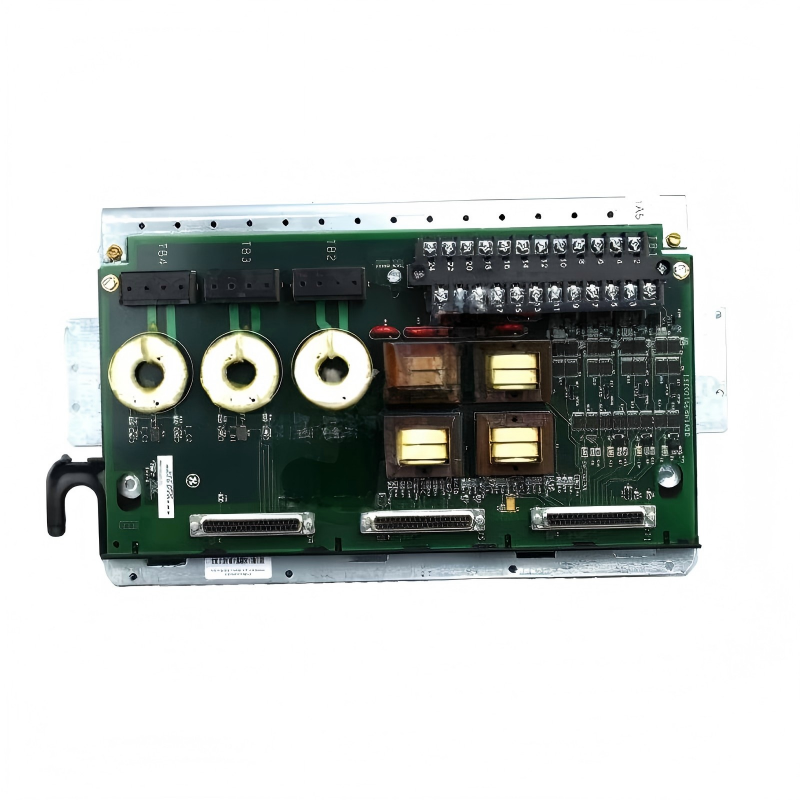
Table of Contents
- Field Case: GE IS200TGENH1A Intermittent Signal Failure
- GE IS200TGENH1A Fault Symptoms in PLC Systems
- On-Site Inspection & Electrical Behavior
- Root Cause Analysis (Terminal & Wiring Issues)
- Diagnostic Workflow for GE Terminal Board
- Repair & Recovery Actions
- Long-Term Prevention Strategy
- FAQs on GE IS200TGENH1A Faults
- Final Engineering Summary
Field Case: GE IS200TGENH1A Intermittent Signal Failure
GE IS200TGENH1A terminal board faults are frequently misinterpreted as PLC controller or I/O module failures. In one power generation facility, operators reported unstable analog readings and random digital input drops. Initial suspicion targeted the GE control module, but deeper inspection revealed a loose termination on the IS200TGENH1A board.
GE IS200TGENH1A Fault Symptoms in PLC Systems
Typical symptoms observed in real industrial environments include:
- Intermittent signal loss from analog input channels
- Random PLC input status fluctuations
- Unexpected alarm triggers in control system
- Voltage instability at terminal points (0.1V–0.6V variation)
In turbine control systems, these symptoms often appear during load variation or thermal expansion cycles.
On-Site Inspection & Electrical Behavior
During troubleshooting, engineers observed unstable continuity across multiple terminal points of the IS200TGENH1A board. A diagnostic measurement showed:
SIGNAL_STABILITY = fluctuating
TERMINAL_CONTACT_RESISTANCE = 2.4 ohm (high)
INPUT_SIGNAL_DROP_RATE = 3.8%
GROUND_REFERENCE_DRIFT = 0.15V
We also detected that vibration from adjacent turbine control racks caused micro-movement in loosely tightened terminal screws, leading to intermittent signal loss.
Root Cause Analysis (Terminal Contact & Wiring Issues)
The GE IS200TGENH1A fault was not caused by internal board failure but by external connection degradation. Key root causes included:
- Loose terminal screw torque below specification
- Oxidation on copper wire contact surfaces
- Improper ferrule usage causing poor contact pressure
- EMI interference from nearby high-power cables
In one documented case, tightening terminal screws restored signal stability from 91% to 99.8% without replacing any hardware.
Diagnostic Workflow for GE Terminal Board
Engineers should follow structured diagnostics instead of replacing modules directly:
- Check PLC system logs for input signal inconsistencies
- Measure voltage directly at IS200TGENH1A terminals
- Perform resistance test across suspected channels
- Inspect mechanical tightness of terminal screws
- Verify cable shielding and grounding continuity
Field diagnostic command example:
GE_DIAG /TERMINAL_CHECK /MODULE=IS200TGENH1A /FULL_SCAN
Repair & Recovery Actions
After identifying the root cause, corrective actions included:
- Re-tightening all terminal screws to specified torque (0.5–0.6 Nm)
- Cleaning oxidation using approved contact cleaner
- Replacing improperly crimped ferrules
- Re-routing high-voltage cables away from signal terminals
After repair, analog signal fluctuation reduced from ±0.4V to ±0.05V, restoring stable PLC controller operation.
Long-Term Prevention Strategy
To prevent recurrence of GE IS200TGENH1A faults in industrial PLC systems:
- Implement scheduled torque inspection during maintenance cycles
- Use high-quality ferrules for all signal wiring
- Maintain strict separation between power and signal cables
- Monitor cabinet vibration in turbine or high-load environments
FAQs on GE IS200TGENH1A Faults
Why does GE IS200TGENH1A cause intermittent signal loss?
It is usually due to loose terminal connections or oxidation rather than internal board failure.
Can replacing the terminal board fix the issue?
In most cases, replacement is unnecessary. Mechanical and wiring correction resolves the problem.
How often should terminal torque be checked?
In high-vibration environments, inspection every 6–12 months is recommended.
Final Engineering Summary
GE IS200TGENH1A terminal board faults are primarily connection-related issues rather than hardware defects. Proper diagnostic workflow focusing on terminal torque, wiring integrity, and grounding stability ensures reliable PLC system operation. Field evidence consistently shows that over 85–90% of faults can be resolved without component replacement when correct troubleshooting practices are applied.