
NewsNEWCENTER
Featured products








Contact Us
China–Europe Railway Express (Changsha) Launches First Cross-Border E-Commerce Dedicated Train, Strengthening Industrial Export Logistics
2026-05-29Logistics Breakthrough: Changsha Expands China–Europe Railway Trade Capacity
In 2026, the China–Europe Railway Express (Changsha) officially launched its first cross-border e-commerce dedicated train, marking a new milestone in China’s international logistics and trade infrastructure development.
The new service is designed to improve the efficiency of cross-border e-commerce shipments and industrial exports, providing faster, more stable, and more cost-effective rail freight solutions between China and European markets.
This development reflects China’s continued effort to strengthen land-based trade corridors under the Belt and Road Initiative, enhancing connectivity for manufacturing and industrial supply chains.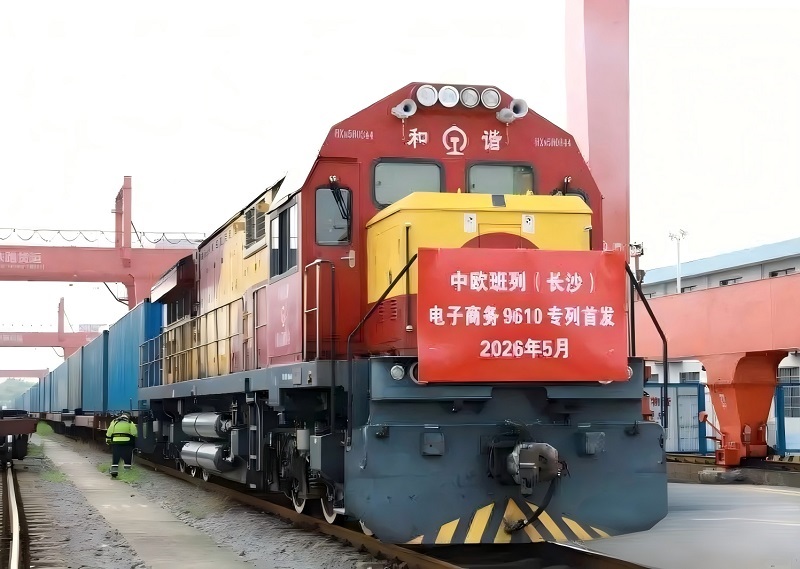
A New Channel for Industrial Equipment and Manufacturing Exports
The dedicated train service is expected to significantly benefit exporters in sectors such as:
- Industrial automation and control equipment
- Mechanical and electrical machinery
- Electronic components and instrumentation
- Construction and infrastructure materials
- Cross-border e-commerce industrial goods
Compared with traditional sea freight, the China–Europe Railway Express offers a shorter transit time and more predictable delivery schedule, making it particularly suitable for high-value industrial products and time-sensitive shipments.
Efficiency Gains in Global Supply Chain Logistics
The launch of the dedicated cross-border e-commerce train highlights several key advantages:
1. Faster Transit Time
Rail transport between China and Europe typically takes 12–18 days, significantly faster than maritime shipping routes.
2. Improved Supply Chain Stability
Rail logistics are less affected by weather conditions and port congestion, ensuring more reliable delivery cycles.
3. Cost-Effective Alternative
Compared with air freight, rail transport offers a balanced solution between speed and cost for medium and heavy industrial goods.
4. Support for Cross-Border E-Commerce Growth
The dedicated service enhances logistics support for online B2B and B2C export platforms.
Strategic Impact on Industrial Export Supply Chains
For industrial manufacturers and exporters, including suppliers of industrial control systems, automation components, and mechanical equipment, the new railway service provides a more efficient logistics pathway to European markets.
Key benefits include:
- Reduced lead times for overseas customers
- Improved inventory turnover efficiency
- Enhanced competitiveness in global procurement cycles
- Greater flexibility in supply chain planning
This is particularly important for industries where delivery precision and supply continuity are critical, such as energy, manufacturing, and infrastructure projects.
China–Europe Railway Express: Strengthening Global Trade Connectivity
The China–Europe Railway Express has become a key pillar of China’s international logistics network, connecting major Chinese industrial hubs with cities across Europe.
The Changsha route expansion and the introduction of a cross-border e-commerce dedicated train further enhance:
- Multimodal transport integration (rail + sea + air)
- Regional export capacity in central China
- Cross-border trade efficiency for SMEs and industrial suppliers
- Digital logistics and customs clearance optimization
This reflects a broader trend toward digitalized and diversified global supply chain systems.
Industry Outlook: Rail Freight Becomes a Strategic Trade Channel
As global trade complexity increases, rail freight is emerging as a strategic middle-ground logistics solution between air and sea transport.
Industry experts note that China–Europe rail corridors will continue to expand due to:
- Growing demand for supply chain resilience
- Expansion of cross-border e-commerce platforms
- Increasing industrial exports from China
- Policy support for Belt and Road logistics infrastructure
For industrial exporters, this creates a more stable and scalable international logistics framework.
Conclusion
The launch of the China–Europe Railway Express (Changsha) cross-border e-commerce dedicated train represents a significant advancement in China’s international logistics capabilities. By improving speed, reliability, and cost efficiency, it strengthens global trade connectivity and provides new opportunities for industrial equipment exporters and manufacturing supply chains.
As global trade continues to evolve, rail-based logistics is expected to play an increasingly important role in supporting high-quality, value-driven international industrial commerce.