

ProductPRODUCT
Featured products
Contact Us
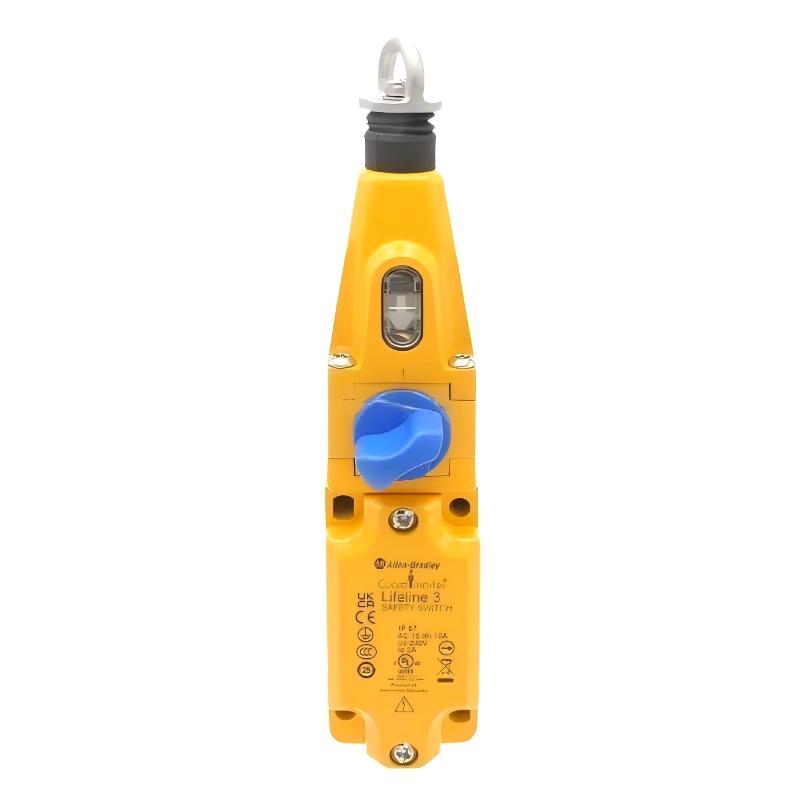
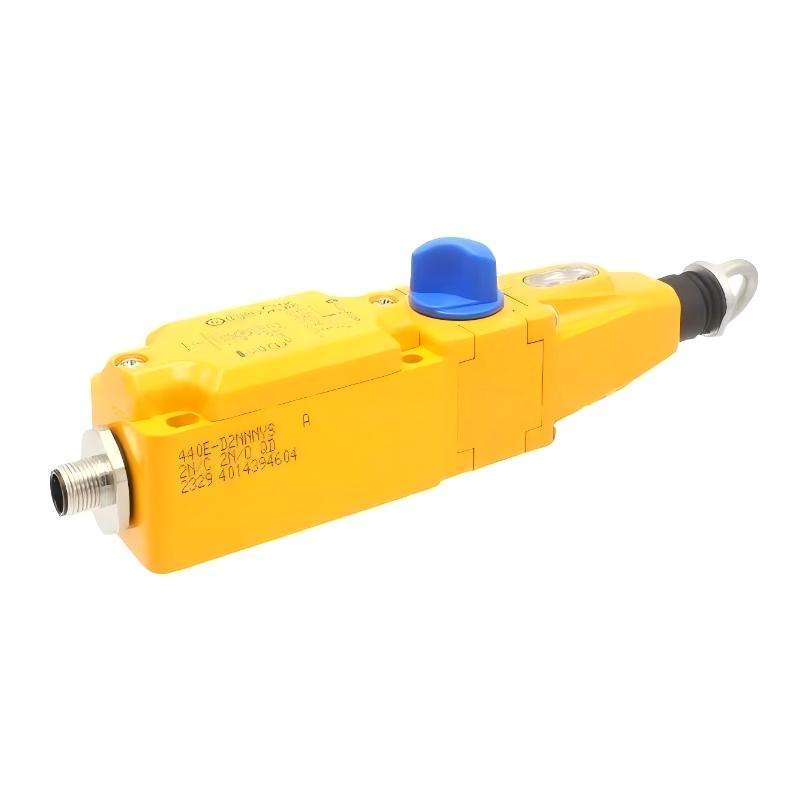
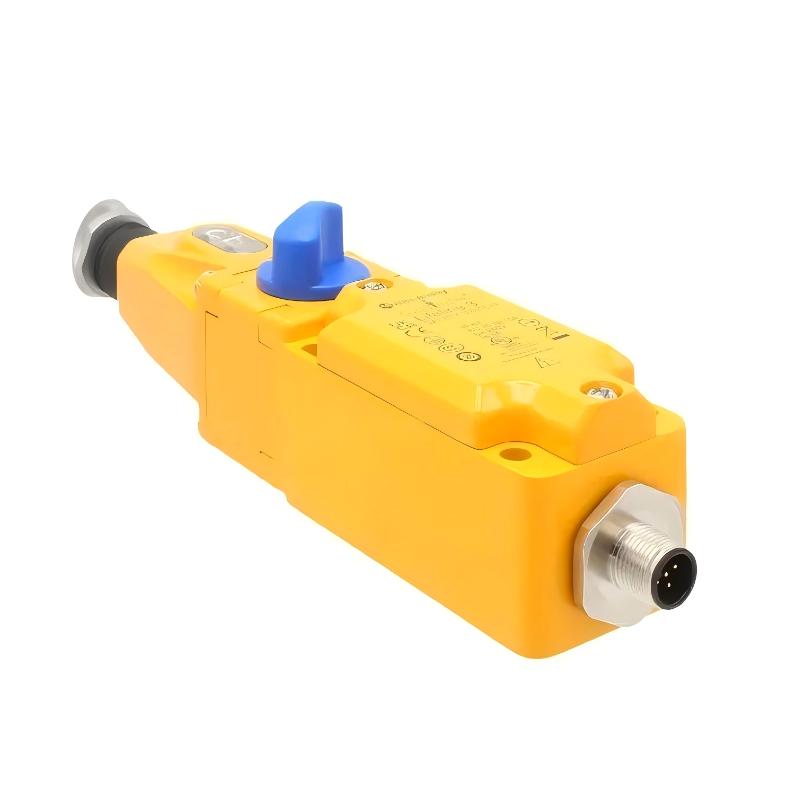
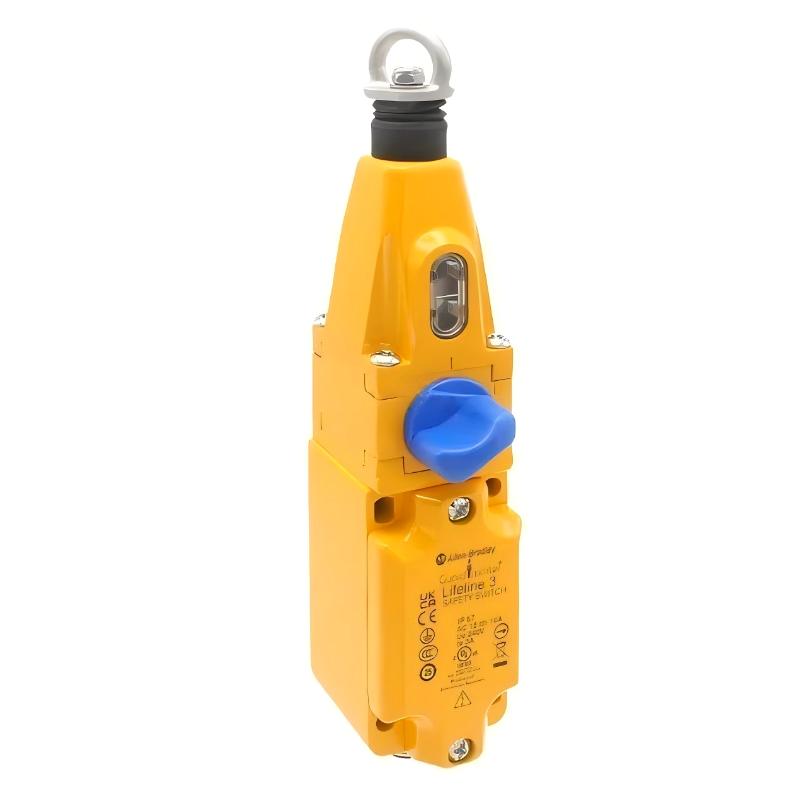
- Allen Bradley
- 440E-D2NNNYS
- Cable Pull Switch
- USA
- 204 × 40 × 56 mm
- 0.92 kg
- Xiamen, China
- New & In Stock
- T/T, PayPal, Western Union
- 1 Year
- 1-3 Working Days
- DHL, UPS, TNT, FedEx and EMS.
- 24-Hour Service
- COO
- 4
Our advantage

Global Logistics
We have a 10-year logistics and express cooperation agreement, so our products can be shipped to any place in the world.

Brand new and original
Our products are imported in bulk from the place of origin. Because of the cooperative relationship, our products are all original and 100% new.

24-hour service
We provide 7*24 hours service to our customers. We will be there whenever you need us.

Price advantage
All our products are priced very favorably because we have our own warehouse and supply.
| Company Information | |||
| [email protected] | |||
| Mobile | +8615980777398 | ||
| +8615980777398 | |||
| 15980777398 |
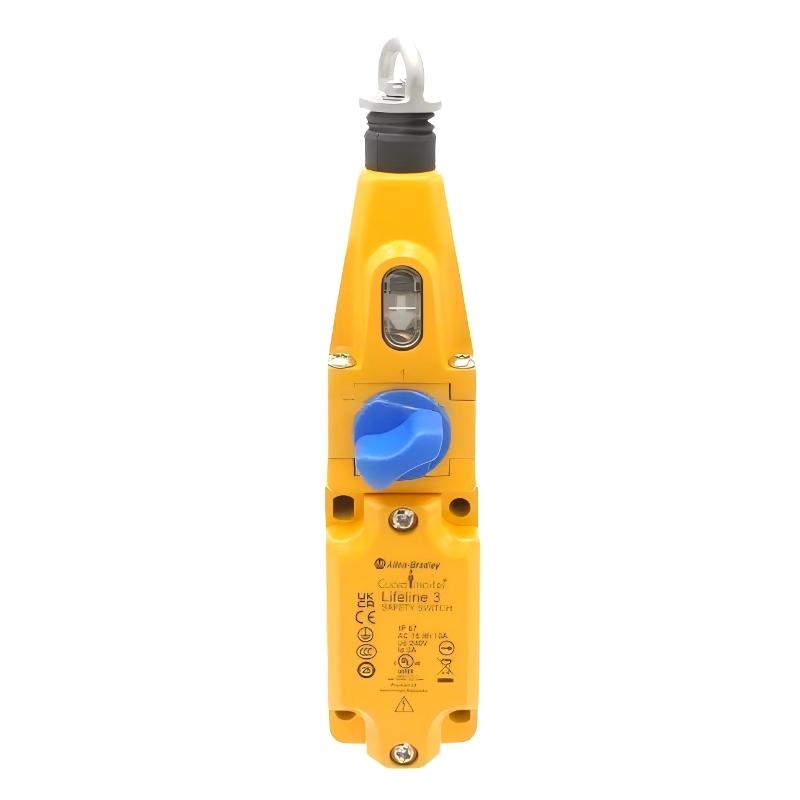
Product Overview
The Allen Bradley 440E-D2NNNYS Guardmaster Lifeline 3 Cable Pull Switch is a safety switch used for emergency stopping and access-to-stop functions along conveyors, production lines, and other machinery where operators need to stop equipment from a distance.
Unlike a conventional pushbutton emergency stop, a cable pull switch can monitor a cable installed along the length of a machine or conveyor. Pulling the cable activates the switching mechanism, while the mechanical arrangement can also detect conditions such as cable breakage or loss of proper cable tension, depending on the configured installation.
The Lifeline 3 is typically mounted alongside the guarded area or conveyor. Its role is to provide a local emergency-stop interface that can be reached from different positions along the machine, making it useful on extended equipment where a single pushbutton would not provide convenient access.
Technical Specifications
| Parameter | Value |
|---|---|
| Manufacturer | Allen Bradley |
| Model / Part Number | 440E-D2NNNYS |
| Product Type | Guardmaster Lifeline 3 Cable Pull Switch |
| Series | Guardmaster Lifeline 3 |
| Application | Emergency stop and cable-pull safety monitoring |
| Dimensions | 204 × 40 × 56 mm |
| Weight | 0.92 kg |
Product Features
- Guardmaster Lifeline 3 cable pull safety switch for machinery applications.
- Provides emergency-stop access along conveyors and extended machine sections.
- Uses a tensioned safety cable as the operator interface.
- Suitable for applications where emergency-stop devices must be accessible from multiple positions.
- Mechanical cable monitoring helps identify abnormal cable conditions.
- Can be integrated into a machine safety circuit through its switching contacts.
- Suitable for industrial conveyors, production machinery, and material-handling equipment.
- Designed for installation directly alongside the protected machine or conveyor.
Working Principle
The 440E-D2NNNYS operates through a mechanically tensioned safety cable connected to the switch mechanism. Under normal conditions, the cable remains correctly tensioned and the internal switching mechanism maintains the intended operating state.
When an operator pulls the cable, the mechanism changes state and the safety contacts can signal the machine safety system to initiate a stop. The switch can also respond to abnormal cable conditions, allowing the safety circuit to detect situations where the cable is no longer correctly maintained.
A typical safety signal path is:
Safety Cable → Lifeline 3 Cable Pull Switch → Safety Relay / Safety Controller → Machine Control System → Stop Command
After an emergency stop, the machine should remain stopped until the cause of the activation has been investigated and the safety system has been properly reset according to the machine’s safety procedure.
Role in a Machine Safety Control Architecture
The Lifeline 3 acts as a field-level emergency-stop device within the machine safety architecture. It provides a switching interface between the physical emergency-stop cable and the safety control system.
Emergency-Stop Cable → 440E-D2NNNYS → Safety Input → Safety Relay / Safety Controller → Contactor / Drive Enable → Machine Stop
| System Element | Function |
|---|---|
| Emergency-Stop Cable | Provides a continuous operator-accessible emergency-stop interface |
| 440E-D2NNNYS | Detects cable activation and changes the safety switching state |
| Safety Relay / Safety Controller | Evaluates the safety input and manages the stop function |
| Contactors / Drive Safety Circuit | Removes or inhibits machine energy according to the safety design |
| PLC / HMI | Provides machine status, diagnostics, and operator information where applicable |
| Machine Actuators | Bring the equipment to the required safe state |
The switch itself should be treated as one component of the complete safety function. The final safety performance depends on the complete circuit, connected safety components, installation, reset arrangement, and machine risk assessment.
Industrial Applications
| Application | Typical Use |
|---|---|
| Conveyor Systems | Emergency stopping along long conveyor sections |
| Material Handling | Providing accessible emergency-stop points around handling equipment |
| Production Lines | Stopping machinery from different operator positions |
| Packaging Equipment | Emergency intervention around extended machine sections |
| Bulk Material Handling | Cable-operated emergency stopping along transport systems |
| Assembly Lines | Providing distributed emergency-stop access along production equipment |
| Industrial Processing Equipment | Monitoring cable activation around machinery with extended operating zones |
Installation and Maintenance
- Install the switch in an accessible position
Mount the Lifeline 3 where the emergency-stop cable can be reached from the intended operator areas. - Use the correct cable arrangement
Install the safety cable according to the applicable machine design and the manufacturer’s installation requirements. - Maintain appropriate cable tension
Correct tension is essential for proper operation and cable-status monitoring. - Check cable routing
Keep the cable clear of obstructions, sharp edges, moving machine parts, and other conditions that could interfere with operation. - Inspect cable supports
Verify that cable support points and associated hardware remain secure during machine operation. - Verify switch operation during commissioning
Pull the cable from different accessible positions and confirm that the safety circuit responds correctly. - Test the reset procedure
Confirm that the machine cannot restart unexpectedly following cable activation and that the intended reset sequence operates correctly. - Inspect safety contacts
Check contact operation and wiring connections during scheduled safety maintenance. - Check for mechanical damage
Inspect the switch housing, actuator mechanism, mounting hardware, and cable connection points for damage or excessive wear. - Verify the complete safety circuit
Do not test the switch in isolation. Confirm that activation produces the intended machine stop through the connected safety control system. - Keep the cable system properly maintained
Replace damaged or excessively worn cable components and correct any changes in cable alignment or tension. - Document safety tests
Record periodic functional tests and maintenance activities in accordance with the machine’s safety procedures.
Compatible System Components
| Component | Role in the System |
|---|---|
| Allen Bradley Guardmaster Safety Relays | Evaluate safety-switch signals and control safety outputs |
| Allen Bradley Safety Controllers | Process safety inputs and coordinate machine safety functions |
| Allen Bradley Contactors | Interrupt machine power when required by the safety circuit |
| Allen Bradley Safety I/O | Provide safety-rated input and output interfaces |
| Allen Bradley PowerFlex Drives | Can be incorporated into machine stopping architectures where the drive safety design supports the required function |
| Emergency Stop Circuit Components | Complete the emergency-stop circuit associated with the cable pull switch |
| Conveyor Control System | Coordinates normal conveyor operation with the safety stop function |
Recommended Related Models
| Model | Product Type | Typical Relationship |
|---|---|---|
| Allen Bradley 440E-L13041 | Guardmaster Lifeline Cable Pull Switch | Related cable pull safety switch |
| Allen Bradley 440E-L13141 | Guardmaster Lifeline Cable Pull Switch | Related Lifeline safety switch option |
| Allen Bradley 440E-L22041 | Guardmaster Lifeline Cable Pull Switch | Related cable-operated emergency-stop device |
| Allen Bradley 440E-D23163 | Guardmaster Lifeline 3 Cable Pull Switch | Related Lifeline 3 configuration |
| Allen Bradley 440K Series | Guardmaster Safety Interlock Switch | Used for machine guard monitoring |
| Allen Bradley 440R Series | Guardmaster Safety Relay | Used for safety signal evaluation |
Key Advantages
- Provides emergency-stop access along extended machinery and conveyors.
- Allows one safety device to monitor a cable-operated emergency-stop interface.
- Suitable for distributed emergency-stop arrangements.
- Can be integrated with Guardmaster safety relays and safety controllers.
- Provides a practical field-level interface for machine safety systems.
- Supports safety maintenance through functional cable and switch testing.
Technical FAQs
Where is a cable pull switch preferable to a conventional emergency-stop pushbutton?
A cable pull switch is particularly useful on long conveyors and extended machinery where operators may need to initiate an emergency stop from multiple locations along the equipment.
What happens when the emergency-stop cable is pulled?
Pulling the cable actuates the internal switching mechanism and changes the safety circuit state. The connected safety relay or safety controller can then initiate the configured machine stopping function.
Why is cable tension important during installation?
The cable must remain within the intended operating condition so that the switch can correctly detect both an emergency pull and abnormal cable conditions. Incorrect tension or poor cable routing can affect the operation of the safety function.
Can the 440E-D2NNNYS be connected directly to a standard PLC input?
The safety function should be evaluated according to the complete machine safety architecture. A safety-rated input, safety relay, or safety controller is normally used where the cable pull switch forms part of a safety-related stop function; a standard PLC input alone should not be assumed to provide the required safety function.