

ProductPRODUCT
Featured products
Contact Us
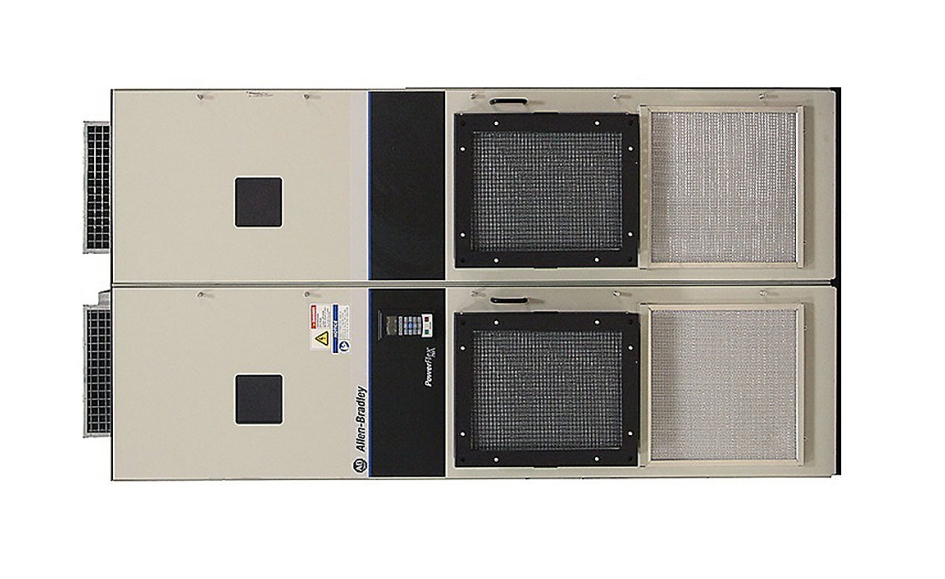
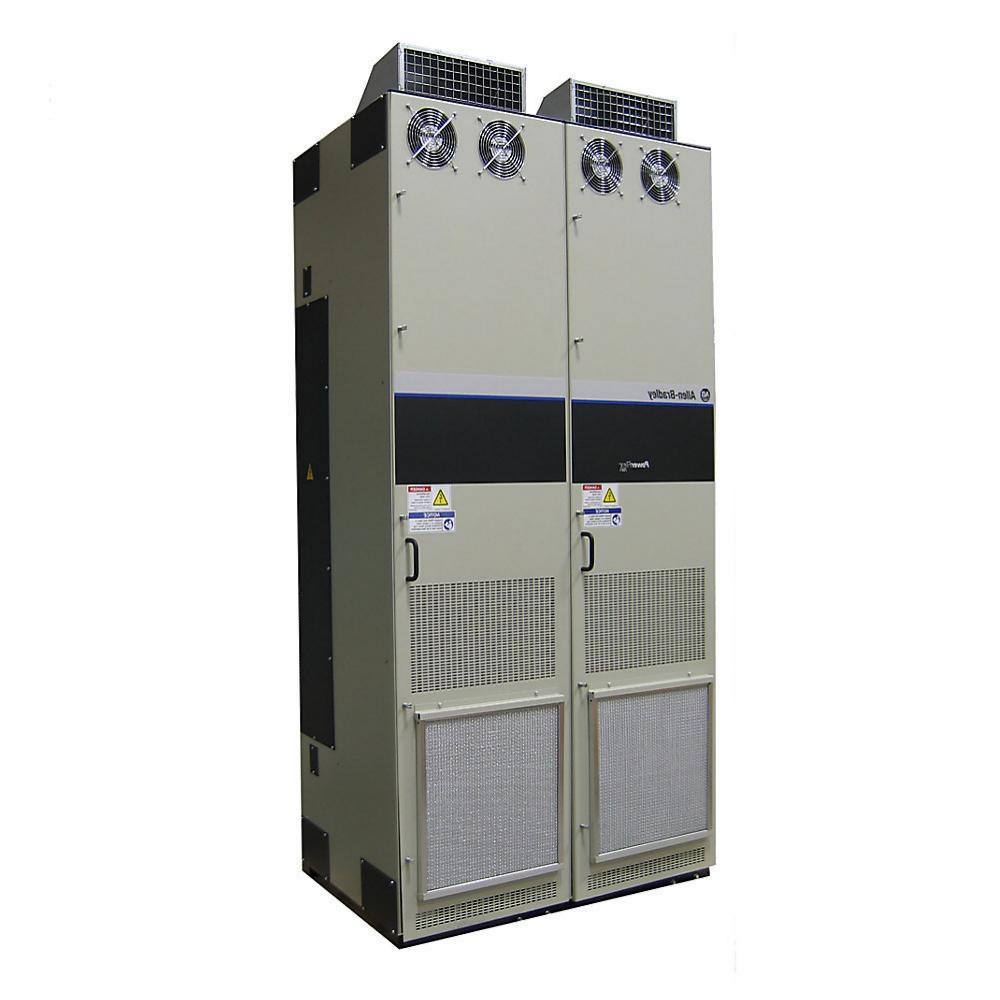
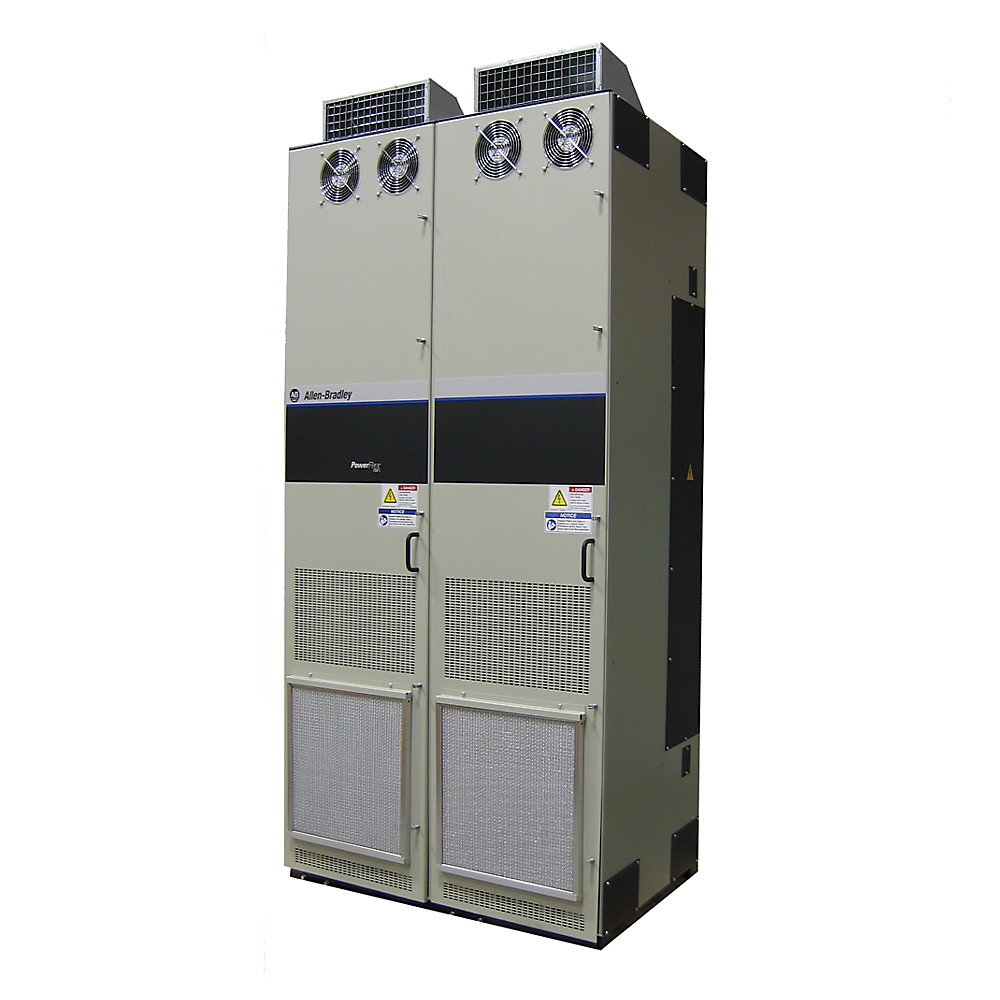
- Allen Bradley
- 20G1G3F370LNANNNNN
- PowerFlex AC Drive
- USA
- 2,200 H × 1,000 W × 1,000 D mm
- 700kg
- Xiamen, China
- New & In Stock
- T/T, PayPal, Western Union
- 1 Year
- 1-3 Working Days
- DHL, UPS, TNT, FedEx and EMS.
- 24-Hour Service
- COO
- 1
Our advantage

Global Logistics
We have a 10-year logistics and express cooperation agreement, so our products can be shipped to any place in the world.

Brand new and original
Our products are imported in bulk from the place of origin. Because of the cooperative relationship, our products are all original and 100% new.

24-hour service
We provide 7*24 hours service to our customers. We will be there whenever you need us.

Price advantage
All our products are priced very favorably because we have our own warehouse and supply.
| Company Information | |||
| [email protected] | |||
| Mobile | +8615980777398 | ||
| +8615980777398 | |||
| 15980777398 |
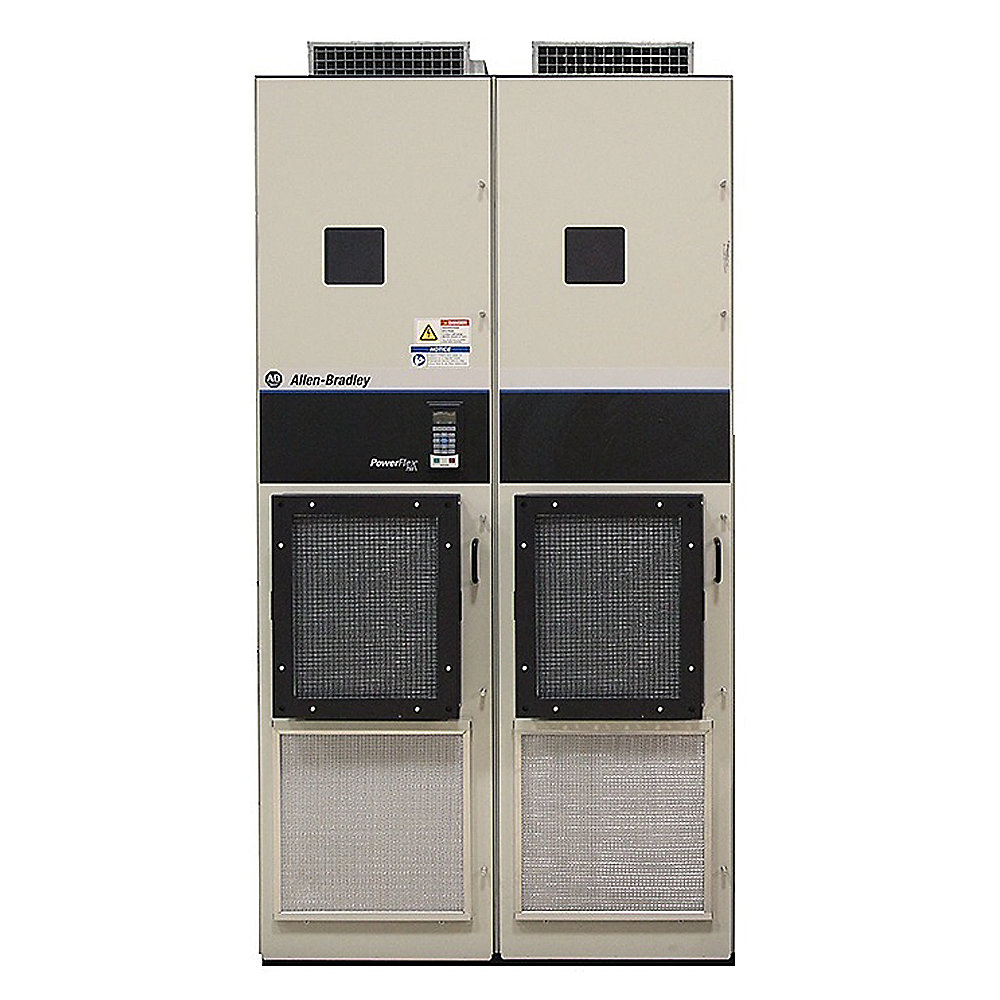
Allen-Bradley 20G1G3F370LNANNNNN PowerFlex 755 Series AC Drive
1. Product Overview
The Allen-Bradley 20G1G3F370LNANNNNN is a high-power industrial AC drive belonging to the PowerFlex 755 family. It is designed for demanding variable-frequency motor control applications where high output power, precise speed regulation, reliable torque control, and integration with modern industrial automation systems are required.
This model is associated with the high-power 690 V three-phase PowerFlex 755T/755TL low-harmonic drive configuration. It uses forced-air cooling and is intended for large industrial motor applications where conventional low-power variable-frequency drives are not suitable.
The catalog configuration is designed around a large-frame, floor-mounted installation. The combination of a high-power rating, low-harmonic input architecture, advanced motor-control functions, and TotalFORCE control technology makes this type of drive particularly suitable for large pumps, fans, conveyors, compressors, process equipment, material-handling systems, and other heavy industrial machinery.
The model number contains a number of configuration codes that identify the voltage class, current rating, cooling arrangement, enclosure style, input topology, and control/interface configuration. For engineering purposes, the complete catalog number should always be treated as a complete configuration rather than interpreting only the 370 current designation.
The 370-class designation corresponds to approximately 370 A normal-duty output current in the 690 V configuration. Depending on the duty class and motor application, the corresponding power rating can be different, so motor selection should not be based only on the current number contained in the catalog number.
This particular product family is now considered a legacy/discontinued PowerFlex 755 configuration, so it is especially important to distinguish the original catalog number from newer replacement or successor configurations when preparing a new project.
2. Basic Product Parameters
| Parameter | Specification |
|---|---|
| Model | 20G1G3F370LNANNNNN |
| Brand | Allen-Bradley |
| Product Family | PowerFlex |
| Product Series | PowerFlex 755 |
| Related Platform | PowerFlex 755T / 755TL |
| Product Type | High-power AC variable-frequency drive |
| Drive Function | AC motor speed and torque control |
| Input Voltage | 690 V AC class |
| Input Phase | Three-phase |
| Rated Current Class | Approximately 370 A normal-duty class |
| Cooling Method | Forced-air / air cooled |
| Input Technology | Low-harmonic AFE configuration |
| Installation | Floor mounted |
| Enclosure Class | IP21 / UL Type 1 class configuration |
| Mounting Style | Large-frame cabinet / floor-standing |
| Motor Type | Primarily three-phase AC motors |
| Control Technology | TotalFORCE control platform |
| Application Level | Heavy industrial / high-power machinery |
| Typical Motor Range | Approximately 355 kW class under normal-duty conditions |
| Frequency Control | Variable-frequency operation |
| Speed Regulation | Closed-loop or open-loop control depending on feedback configuration |
| Torque Control | Available through advanced motor-control functions |
| Regenerative Capability | Depends on the specific PowerFlex 755T configuration |
| Harmonic Performance | Low-harmonic input architecture |
| Communication | Industrial automation network options available depending on configuration |
| Operator Interface | Configuration-dependent |
| Frame Class | Large PowerFlex 755T frame |
| Dimensions | Large floor-mounted cabinet; approximately 2,000–2,200 mm H × 600–1,000 mm W × 800–1,000 mm D, configuration dependent |
| Weight | Approximately 500–700 kg, configuration dependent |
| Installation Environment | Industrial electrical room / control room / equipment room |
| Product Status | Legacy / discontinued configuration |
| Primary Function | High-power variable-speed motor control |
The dimensions and weight above should be treated as engineering estimates for the large floor-mounted configuration, not as a substitute for the mechanical drawing of a specific cabinet build. Options, incoming and outgoing cable arrangements, enclosure construction, disconnect equipment, filters, auxiliary components, and other factory configurations can change the final dimensions and shipping weight.
For a machine design, switchgear layout, transportation plan, or foundation design, the final mechanical drawing and nameplate information should be used.
3. Understanding the Model Number
The model number 20G1G3F370LNANNNNN is not simply a product number. It is a configuration code that identifies several important characteristics of the drive.
The 20G prefix identifies the PowerFlex 755T/755-related drive platform.
The following configuration characters identify the cooling method, input topology, enclosure arrangement, voltage class, current rating, and other factory options.
The F voltage designation corresponds to the 690 V AC three-phase class used by this high-power configuration.
The 370 portion identifies the approximate current class associated with the drive configuration. In the 690 V family, this is approximately the 370 A normal-duty level.
The L and following option characters identify additional configuration characteristics. These characters should not be ignored when ordering replacement equipment because two drives with similar current ratings may have completely different input structures, enclosure configurations, filtering arrangements, operator-interface options, or application functions.
For replacement projects, the complete catalog number should therefore be matched character by character.
4. Product Introduction
The PowerFlex 755 series was developed for industrial applications requiring considerably more control capability than a basic general-purpose inverter.
The 20G1G3F370LNANNNNN is intended for large motor systems where motor power can reach the hundreds of kilowatts. It is particularly suited to equipment that operates continuously or under changing loads and where the drive needs to maintain stable motor speed and torque over a wide operating range.
The drive can control motor speed by changing the output frequency and voltage supplied to the motor. Depending on the control configuration, it can also provide sophisticated torque regulation, acceleration and deceleration control, current limiting, motor protection, speed feedback, and application-specific control functions.
One of the most important characteristics of this class of drive is its use of a low-harmonic input architecture. Large conventional six-pulse drives can introduce significant harmonic current into an electrical distribution system. For large installations, this can affect transformers, generators, power-factor correction equipment, cables, and other electrical loads.
A low-harmonic architecture is intended to reduce these unwanted input-current components and make the drive more suitable for installations where power quality is an important engineering requirement.
The drive is also designed for integration into larger automation systems. It can operate as part of a coordinated system involving programmable controllers, distributed I/O, operator interfaces, supervisory systems, motor feedback devices, and plant-level communication networks.
5. Main Technical Characteristics
5.1 High-Power Motor Control
The 370 A class places this drive in the high-power industrial category.
It is suitable for large motors used in equipment such as pumps, fans, compressors, conveyors, crushers, mills, mixers, extruders, and other heavy machinery.
The drive provides controlled acceleration and deceleration rather than simply connecting the motor directly to the electrical supply.
This can significantly improve the mechanical behavior of a large machine, especially where sudden starting torque could place stress on shafts, couplings, gearboxes, belts, pumps, or other mechanical components.
5.2 690 V Three-Phase Operation
The 690 V three-phase configuration is widely associated with high-power industrial motor systems.
Compared with lower-voltage systems, a higher motor voltage allows large motor power to be transmitted at a lower current for the same approximate power level.
This can be beneficial for large industrial installations because cable size, switchgear current rating, and some distribution-system requirements can be optimized for high-power equipment.
The 690 V class also makes this type of drive particularly relevant to large machinery used in mining, metals, marine-related equipment, process plants, water infrastructure, and other heavy industrial environments.
5.3 Low-Harmonic Input Technology
The low-harmonic architecture is one of the most important features of this class of drive.
Large variable-frequency drives can have a substantial influence on the electrical distribution network. Harmonic currents may create additional heating, electrical losses, voltage distortion, and interference with sensitive equipment.
A low-harmonic active-front-end configuration is designed to provide much better control of the input current waveform than a conventional passive rectifier.
This is particularly valuable in plants where several large drives operate simultaneously.
Typical applications include facilities with large transformers, generator supplies, multiple high-power drives, sensitive instrumentation, or strict electrical-power-quality requirements.
5.4 Advanced Motor Control
The PowerFlex 755 platform supports advanced motor-control functions rather than simple scalar frequency control.
Depending on the configuration and feedback hardware, the drive can support sophisticated control of motor speed and torque.
This is useful when the machine needs stable speed under changing load conditions.
For example, a conveyor carrying changing material loads may need to maintain a relatively constant speed even when the motor torque requirement changes substantially.
Similarly, a pump or fan can benefit from controlled acceleration, controlled deceleration, and adjustable operating speed.
5.5 Forced-Air Cooling
The drive uses forced-air cooling to remove heat generated by the power electronics.
At this power level, thermal management becomes a major engineering consideration.
The installation must provide suitable airflow, sufficient ventilation, appropriate ambient temperature, and adequate clearance around the equipment.
The cooling fans and airflow path should also be included in the preventive-maintenance plan.
Dust accumulation, blocked ventilation paths, excessive ambient temperature, and deteriorated cooling components can reduce drive reliability.
6. Product Applications
6.1 Industrial Pumps
Large pumps are one of the most common applications for high-power variable-frequency drives.
The drive can adjust pump motor speed according to the required flow or pressure.
Instead of operating the motor continuously at full speed and using mechanical throttling, the drive can reduce motor speed when demand is lower.
This can provide substantial operating flexibility and can reduce mechanical stress during starting and stopping.
Typical applications include water treatment, industrial water systems, cooling-water systems, irrigation, process pumping, wastewater systems, and large circulation systems.
6.2 Large Industrial Fans
Large ventilation and process fans often require considerable motor power.
A variable-frequency drive allows the fan speed to be adjusted to match actual process demand.
This is useful in ventilation systems, dust extraction, combustion-air systems, cooling towers, furnaces, mining ventilation, and industrial process plants.
Fan applications can also benefit from controlled acceleration because large rotating fan assemblies can have substantial inertia.
6.3 Conveyors
The drive is well suited to heavy-duty conveyors.
Conveyors in mining, ports, logistics, cement plants, steel plants, warehouses, and bulk-material handling facilities may use very large motors.
Variable-speed control can provide controlled starting and stopping and can help coordinate multiple conveyor sections.
For long conveyors, controlled acceleration can reduce belt tension and mechanical shock.
6.4 Compressors
Large compressors often require accurate motor control and stable operation.
The drive can regulate motor speed according to process requirements.
Applications can include industrial air compressors, process-gas equipment, refrigeration-related machinery, and other high-power rotating equipment.
The exact control strategy depends on compressor design and process requirements.
6.5 Mining Equipment
Mining machinery frequently operates under severe mechanical and environmental conditions.
High-power drives can be used for conveyors, crushers, pumps, fans, mills, hoists, and other rotating equipment.
The ability to control acceleration and torque can be especially valuable where machines have large inertial loads or where mechanical shock must be minimized.
6.6 Cement and Building-Material Equipment
Cement plants and other mineral-processing facilities use many large motors.
Typical equipment includes mills, fans, conveyors, crushers, separators, pumps, and material-handling systems.
The high-power capacity and low-harmonic design make this class of drive suitable for large centralized industrial electrical systems.
6.7 Steel and Metals Processing
Steel mills and metal-processing plants often require precise control of large motors.
Applications can include rolling equipment, cooling systems, pumps, fans, conveyors, and auxiliary machinery.
The ability to regulate speed and torque is particularly important when the machine needs coordinated operation with other production equipment.
6.8 Marine and Heavy Infrastructure Equipment
Large industrial drives can also be used in heavy infrastructure and marine-related systems.
Typical applications may include large pumps, fans, compressors, propulsion-related auxiliary systems, and other high-power rotating machinery.
Actual suitability depends on the environmental, certification, cooling, and system requirements of the installation.
7. Main Advantages
7.1 High Power Capability
The biggest advantage of this model class is its ability to control large motors.
A 370 A class drive is intended for applications far beyond the range of small machine drives.
This makes it appropriate for large industrial equipment where motor power is measured in hundreds of kilowatts.
7.2 Low-Harmonic Electrical Performance
The low-harmonic input configuration is particularly useful in large industrial facilities.
Reducing harmonic current can help improve overall power-system performance and reduce the impact of large variable-frequency drives on the electrical network.
This becomes increasingly important as the number and size of installed drives increase.
7.3 Smooth Motor Starting
Direct-on-line starting of a large motor can result in a substantial starting current and mechanical shock.
A variable-frequency drive can gradually increase motor frequency and voltage.
This allows the motor to accelerate smoothly and can reduce mechanical stress on the motor, coupling, gearbox, belt, pump, fan, or conveyor.
7.4 Adjustable Operating Speed
Instead of operating the motor at one fixed speed, the drive allows the machine speed to be adjusted.
This is useful when production demand changes throughout the day.
For pumps and fans, variable-speed operation can also provide a more efficient way to match motor output to process demand.
7.5 Advanced Torque Control
Heavy machinery often requires more than simple speed adjustment.
Torque control is important for conveyors, hoists, mixers, crushers, mills, and other machines where the mechanical load can change rapidly.
The PowerFlex 755 platform provides advanced motor-control capabilities that can be configured for demanding applications.
7.6 Industrial Automation Integration
This class of drive can be incorporated into larger control architectures.
It can work together with controllers, operator interfaces, remote I/O, industrial communication systems, sensors, and plant-level supervisory systems.
This allows motor status, alarms, speed references, current, torque, and other operating information to become part of the overall automation strategy.
7.7 Suitable for Large Centralized Installations
The floor-mounted cabinet arrangement is appropriate for large industrial electrical rooms.
Instead of treating the drive as a small standalone component, the installation can be integrated into a larger motor-control and power-distribution system.
This is particularly appropriate for large factories, process plants, water facilities, mining operations, and infrastructure projects.
8. Installation Considerations
Because this is a large high-power drive, installation requirements are significantly more demanding than those of a small general-purpose inverter.
The electrical installation should consider incoming power, grounding, motor cables, protective equipment, short-circuit characteristics, cable routing, EMC considerations, and motor insulation requirements.
Mechanical installation should provide adequate clearance for ventilation, maintenance, cable entry, and access to service components.
The floor and supporting structure must also be suitable for the weight of the cabinet.
Because the drive uses forced-air cooling, ventilation and heat removal are particularly important.
The equipment should not be installed in an area where dust, corrosive gases, excessive humidity, or abnormal ambient temperature exceeds the applicable environmental limits.
9. Maintenance Considerations
Preventive maintenance is important for large industrial drives.
Cooling fans should be inspected regularly because fan failure or restricted airflow can increase semiconductor temperatures.
Air passages should be kept clean.
Electrical connections should be inspected according to the applicable maintenance procedure.
DC-bus and power-electronic components should be serviced only by appropriately qualified personnel.
For older installations, replacement of aging fans, capacitors, contactors, cooling components, and control hardware may become increasingly important.
Because this model is a legacy/discontinued configuration, spare-parts planning is also worth considering when the drive is used in a critical production line.
10. Five Related Models in the Same Series
The following models are closely related to the same high-power PowerFlex 755T/755TL family. They are useful reference points when comparing current ratings and motor-power requirements.
| Model | Voltage Class | Normal-Duty Current | Approx. Normal-Duty Power | Configuration | Cooling | Installation |
|---|---|---|---|---|---|---|
| 20G1G3F370LNDNNNNN | 690 V AC | 370 A class | Approx. 355 kW | Low-harmonic | Air cooled | Floor mounted |
| 20G1G3F415LNDNNNNN | 690 V AC | 415 A class | Approx. 400 kW | Low-harmonic | Air cooled | Floor mounted |
| 20G1G3F505LNDNNNNN | 690 V AC | 505 A class | Approx. 500 kW | Low-harmonic | Air cooled | Floor mounted |
| 20G1G3F565LNDNNNNN | 690 V AC | 565 A class | Approx. 560 kW | Low-harmonic | Air cooled | Floor mounted |
| 20G1G3F650LNDNNNNN | 690 V AC | 650 A class | Approx. 630 kW | Low-harmonic | Air cooled | Floor mounted |
These models follow the same general high-power architecture but differ primarily in current and motor-power capability.
The larger-current models naturally require greater electrical capacity and may also have different mechanical and thermal requirements.
The dimensions and weights of these large-frame drives can vary according to the exact enclosure, factory options, cabinet arrangement, input/output equipment, and auxiliary components.
For preliminary engineering, they can be considered large floor-standing equipment. A practical planning allowance is generally around 2,000–2,200 mm in height, with cabinet width and depth depending strongly on the specific configuration.
Typical equipment weight can be several hundred kilograms, and approximately 500–700 kg is a reasonable preliminary planning range for this class. Final mechanical drawings should be used for transportation and foundation calculations.
11. Comparison of the Related Models
| Parameter | 20G1G3F370LNDNNNNN | 20G1G3F415LNDNNNNN | 20G1G3F505LNDNNNNN | 20G1G3F565LNDNNNNN | 20G1G3F650LNDNNNNN |
|---|---|---|---|---|---|
| Voltage | 690 V | 690 V | 690 V | 690 V | 690 V |
| Phase | 3 Phase | 3 Phase | 3 Phase | 3 Phase | 3 Phase |
| Current | 370 A | 415 A | 505 A | 565 A | 650 A |
| Approx. ND Power | 355 kW | 400 kW | 500 kW | 560 kW | 630 kW |
| Drive Type | Low Harmonic | Low Harmonic | Low Harmonic | Low Harmonic | Low Harmonic |
| Cooling | Forced Air | Forced Air | Forced Air | Forced Air | Forced Air |
| Mounting | Floor Mount | Floor Mount | Floor Mount | Floor Mount | Floor Mount |
| Enclosure Class | IP21 / Type 1 class | IP21 / Type 1 class | IP21 / Type 1 class | IP21 / Type 1 class | IP21 / Type 1 class |
| Typical Size Class | Large Frame | Large Frame | Large Frame | Large Frame | Large Frame |
| Approx. Height | 2,000–2,200 mm | 2,000–2,200 mm | 2,000–2,300 mm | 2,000–2,300 mm | 2,000–2,400 mm |
| Approx. Weight | 500–700 kg | 500–750 kg | 550–800 kg | 600–850 kg | 650–900 kg |
| Typical Application | Large motors | Larger motors | Heavy industrial | Heavy industrial | Very high-power equipment |
The weight and dimensions in this comparison are planning-level estimates, not guaranteed mechanical specifications. High-power cabinet systems can change significantly when optional disconnects, filters, reactors, bypass equipment, special terminals, or other factory-installed components are added.
12. Five Popular Models from the Same Brand
The following models are representative products from the same brand and are useful when comparing different drive classes.
| Model | Product Series | Voltage Class | Current / Power Class | Cooling | Typical Application |
|---|---|---|---|---|---|
| 20G1ANF082JN0NNNNN | PowerFlex 755 | 690 V AC | 82 A class | Air cooled | Medium/large industrial machinery |
| 20G1ANF098JN0NNNNN | PowerFlex 755 | 690 V AC | 98 A class | Air cooled | Pumps, fans, conveyors |
| 20G1ALE295AN0NNNNN | PowerFlex 755 | 600 V AC class | 295 A class | Air cooled | Large industrial machinery |
| 25B-D6P0N104 | PowerFlex 525 | 480 V AC class | 6 A class | Air cooled | Compact machinery and automation |
| 20F11NC011JA0NNNNN | PowerFlex 753 | 480 V AC class | Approx. 11 A class | Air cooled | General industrial motor control |
The PowerFlex 525 and PowerFlex 753 belong to different performance and application levels from the high-power 755 family.
The PowerFlex 525 is generally aimed at smaller machines and compact automation systems, while the PowerFlex 753 is positioned toward broader industrial motor-control applications.
The PowerFlex 755 family occupies the higher-performance end of the range and is particularly suitable when advanced motor control, high power, extensive configuration options, and system-level integration are important.
13. Brand and Series Information
| Item | Information |
|---|---|
| Brand | Allen-Bradley |
| Product Family | PowerFlex |
| Main Series | PowerFlex 755 |
| Related Series | PowerFlex 755T |
| Related Configuration | PowerFlex 755TL low-harmonic drive |
| Product Category | Industrial AC Drive / Variable Frequency Drive |
| Application Class | High-power industrial |
| Control Platform | TotalFORCE |
| Voltage Family | 690 V AC |
| Cooling | Forced air |
| Mounting | Floor mounted |
| Typical Frame Category | Large frame |
| Target Equipment | Large AC motors |
14. Suitable Industries
The 20G1G3F370LNANNNNN class of drive is suitable for a wide range of industries where large electric motors are used.
Mining
Large conveyors, crushers, pumps, fans, mills, and material-handling systems.
Cement
Raw-material conveyors, mills, fans, crushers, pumps, and process machinery.
Steel
Cooling systems, process pumps, fans, conveyors, rolling-related machinery, and auxiliary equipment.
Water and Wastewater
Large pumping stations, circulation pumps, intake systems, wastewater pumps, and treatment equipment.
Oil and Gas
Large pumps, compressors, fans, and process equipment where variable-speed operation is required.
Marine and Port Facilities
Large pumps, ventilation systems, conveyors, cargo-handling equipment, and auxiliary machinery.
Chemical Processing
Process pumps, fans, mixers, compressors, and other high-power rotating equipment.
Manufacturing
Large production lines, conveyors, compressors, fans, pumps, and material-processing machinery.
15. Typical Motor-Control Functions
Depending on the complete configuration and installed options, the PowerFlex 755 platform can provide functions such as:
- Variable-speed motor operation.
- Controlled acceleration and deceleration.
- Adjustable speed references.
- Torque control.
- Current limiting.
- Motor overload protection.
- Motor thermal management.
- Fault monitoring.
- Alarm monitoring.
- Speed feedback.
- Encoder feedback when configured.
- Start/stop control.
- Preset speed functions.
- Ramp control.
- Process-oriented speed regulation.
- Communication with automation controllers.
- Drive diagnostic information.
- Parameter-based commissioning.
These functions make the drive much more than a simple frequency converter.
It can become an active component of the machine-control architecture.
16. Advantages Compared with a Conventional Fixed-Speed Starter
A traditional motor starter essentially connects the motor to the electrical supply and allows the motor to operate at approximately its designed speed.
A variable-frequency drive provides a much greater degree of control.
The motor can accelerate gradually rather than starting abruptly.
The motor can operate at reduced speed when full capacity is unnecessary.
The drive can respond to process requirements.
The control system can monitor drive status and operating parameters.
The machine can also use programmed acceleration and deceleration profiles to reduce mechanical stress.
For large industrial equipment, these functions can have a significant impact on machine operation and process control.
17. Why the 690 V Version Is Important
At high motor power, voltage selection becomes increasingly important.
For the same approximate power level, increasing the motor voltage can reduce the required operating current.
This can simplify certain aspects of large motor installations and can make 690 V systems attractive for high-power industrial equipment.
The 690 V configuration also fits naturally into large European-style industrial motor systems and many international heavy-industry applications.
However, the motor, transformer, switchgear, cable system, grounding arrangement, protection equipment, and drive must all be designed as one coordinated electrical system.
18. Selection Notes for Engineers
When selecting a replacement or equivalent for 20G1G3F370LNANNNNN, current rating alone should not be used.
The following information should be checked:
- Motor rated voltage.
- Motor rated current.
- Motor rated power.
- Motor speed.
- Motor frequency.
- Normal-duty load characteristics.
- Heavy-duty overload requirements.
- Starting torque.
- Acceleration time.
- Deceleration time.
- Regenerative energy.
- Required braking method.
- Harmonic requirements.
- Required enclosure rating.
- Cooling conditions.
- Ambient temperature.
- Communication requirements.
- Encoder or feedback requirements.
- Input short-circuit rating.
- Motor cable length.
- EMC requirements.
- Required operator interface.
- Available spare parts.
- Existing cabinet dimensions.
- Existing wiring and terminal arrangement.
This is particularly important for legacy equipment because an apparently similar drive may not be a direct electrical or mechanical replacement.
19. Dimension and Weight Planning
For project planning, the 20G1G3F370LNANNNNN should be treated as large floor-mounted industrial electrical equipment rather than a conventional wall-mounted inverter.
A preliminary mechanical allowance of approximately 2,000–2,200 mm high is reasonable for layout planning.
The width can vary significantly depending on cabinet configuration, options, and the exact high-power package.
A preliminary cabinet footprint can be planned around approximately 600–1,000 mm wide × 800–1,000 mm deep, but this should not be treated as a final mechanical specification.
For weight planning, approximately 500–700 kg can be used as a preliminary equipment-class estimate.
Transportation and installation planning should use the actual factory shipping dimensions and shipping weight because packaging, cabinet options, filters, disconnect equipment, and auxiliary components can increase the final mass considerably.
20. Summary of the Main Specifications
| Specification | 20G1G3F370LNANNNNN |
|---|---|
| Brand | Allen-Bradley |
| Series | PowerFlex 755 |
| Related Series | PowerFlex 755T / 755TL |
| Product Type | High-Power AC Drive |
| Voltage | 690 V AC |
| Phase | Three Phase |
| Current Class | 370 A |
| Approx. ND Motor Power | 355 kW |
| Input Type | Low-Harmonic AFE |
| Cooling | Forced Air |
| Enclosure | IP21 / UL Type 1 class |
| Mounting | Floor Mount |
| Application | Heavy Industrial Motor Control |
| Control Platform | TotalFORCE |
| Motor Type | Three-Phase AC Motor |
| Typical Application | Pump, Fan, Conveyor, Compressor, Mill, Crusher |
| Approx. Dimensions | 2,000–2,200 H × 600–1,000 W × 800–1,000 D mm |
| Approx. Weight | 500–700 kg |
| Installation Environment | Industrial Electrical Room |
| Product Status | Legacy / Discontinued |
| Primary Advantage | High-power, low-harmonic variable-speed motor control |
21. Final Product Description
The Allen-Bradley 20G1G3F370LNANNNNN is a high-power 690 V three-phase AC drive designed for demanding industrial motor-control applications.
Its approximately 370 A normal-duty current class places it in the large industrial drive category, with a normal-duty motor-power level of approximately 355 kW.
The drive is associated with the PowerFlex 755 family and the high-power PowerFlex 755T/755TL low-harmonic architecture. Its forced-air cooling, floor-mounted cabinet construction, advanced motor-control capabilities, and low-harmonic input technology make it suitable for large pumps, fans, conveyors, compressors, mills, crushers, process machinery, and other heavy-duty rotating equipment.
One of its most important characteristics is its ability to combine high motor power with advanced control and improved input-power characteristics.
For large industrial plants, this can be valuable because motor control is not only about changing speed. The drive also becomes part of the electrical power system, machine-control system, protection system, and plant automation architecture.
The model is particularly appropriate for applications where a simple compact inverter is insufficient and where the motor system requires high power, controlled acceleration, adjustable speed, torque regulation, industrial communications, and low-harmonic operation.
Because the specific catalog number represents a large configured drive package, dimensions and weight should be regarded as configuration-dependent. For preliminary engineering, approximately 2.0–2.2 m in height and 500–700 kg can be used as a planning reference, while the final mechanical drawing should be used for cabinet layout, transportation, lifting, and foundation work.
Overall, the 20G1G3F370LNANNNNN represents a large-capacity industrial variable-frequency drive intended for high-power motor applications where reliable speed control, advanced motor performance, electrical power quality, and integration with a wider automation system are important considerations.