
NewsNEWCENTER
Featured products
Contact Us
Allen Bradley 1606-XLE240EN Power Supply Troubleshooting Guide
2026-09-09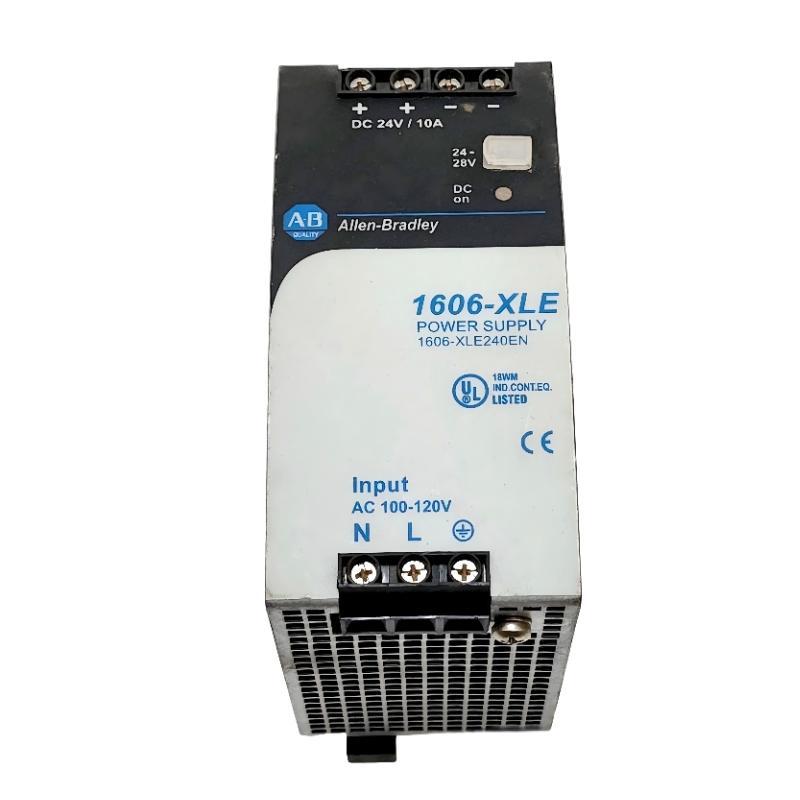
Table of Contents
- Allen Bradley 1606-XLE240EN Fault Diagnosis Strategy
- Allen Bradley 1606-XLE240EN Common Fault Patterns
- Allen Bradley 1606-XLE240EN Troubleshooting Logic
- Allen Bradley 1606-XLE240EN Electrical Measurement Procedure
- Allen Bradley 1606-XLE240EN Repair Strategy
- Allen Bradley 1606-XLE240EN Real Maintenance Case
- Allen Bradley 1606-XLE240EN Troubleshooting FAQ
- Allen Bradley 1606-XLE240EN Technical Summary
Allen Bradley 1606-XLE240EN Fault Diagnosis Strategy
Allen Bradley 1606-XLE240EN Power Supply faults should be diagnosed using measured electrical data rather than replacing the unit immediately. In many industrial automation systems, unstable PLC Controllers, communication interruptions and abnormal Sensor signals originate from downstream wiring, overloaded DC distribution or poor grounding instead of an internal power supply failure.
An effective Troubleshooting process follows the complete electrical path from the AC input through the DC distribution network to the affected automation equipment.
Allen Bradley 1606-XLE240EN Common Fault Patterns
- Unexpected PLC Controller reboot.
- Remote I/O communication loss.
- Industrial Ethernet instability.
- HMI restart during production.
- Sensor signal fluctuation.
- Voltage drop during heavy load.
- Intermittent machine shutdown.
Recording the exact operating conditions under which the faults occur greatly improves Fault Diagnosis accuracy.
Allen Bradley 1606-XLE240EN Troubleshooting Logic
Incoming AC
      │
      ▼
Verify Input Voltage
      │
      ▼
Measure DC Output
      │
      ▼
Inspect Distribution Wiring
      │
      ▼
Check PLC Controller
      │
      ▼
Inspect Remote I/O
      │
      ▼
Verify Sensors
      │
      ▼
Determine Root Cause
This engineering workflow helps isolate faults while avoiding unnecessary component replacement.
Allen Bradley 1606-XLE240EN Electrical Measurement Procedure
Electrical measurements should always be taken while the machine operates under the same conditions that produce the reported failure.
- Incoming AC voltage.
- Power supply DC output.
- Main distribution voltage.
- Remote PLC voltage.
- Remote I/O voltage.
- Ground continuity.
- Cabinet temperature.
Comparing these measurements frequently reveals voltage loss outside the power supply itself.
Allen Bradley 1606-XLE240EN Repair Strategy
- Verify incoming AC supply.
- Measure regulated DC output.
- Inspect protective devices.
- Check distribution terminals.
- Review connected load.
- Compare with commissioning records.
- Replace the power supply only after eliminating external electrical causes.
Following this structured engineering approach minimizes unnecessary downtime and spare-part costs.
Allen Bradley 1606-XLE240EN Real Maintenance Case
At a pharmaceutical packaging facility, operators reported repeated communication alarms affecting multiple remote I/O stations during shift changes when all conveyors started simultaneously.
The Allen Bradley 1606-XLE240EN Power Supply was initially suspected because several automation devices lost communication at the same time.
Engineers monitored the DC voltage throughout the distribution system. The power supply maintained approximately 24.1 VDC, while measurements at the remote control cabinet periodically decreased to approximately 21.8 VDC.
Detailed inspection identified corrosion inside a DC terminal block together with an overloaded distribution branch that had been expanded during a previous machine upgrade.
After replacing the damaged terminal block and redistributing the connected loads, remote voltage stabilized above 23.9 VDC. Communication faults disappeared immediately without replacing the power supply.
This maintenance experience confirms that systematic electrical measurements are significantly more effective than replacing hardware based solely on fault symptoms.
Allen Bradley 1606-XLE240EN Troubleshooting FAQ
Why does the PLC restart while the power supply output appears normal?
The voltage loss often occurs within downstream wiring or overloaded distribution circuits rather than inside the power supply itself.
Which measurement provides the most useful diagnostic information?
Compare the power supply output voltage with measurements taken directly at the affected PLC Controller or remote I/O Module during machine operation.
Can additional automation equipment overload the DC system?
Yes. System expansion without recalculating the DC load is a common source of intermittent automation faults.
Why should commissioning records be retained?
Baseline measurements allow engineers to identify electrical changes quickly and accelerate future Fault Diagnosis.
Allen Bradley 1606-XLE240EN Technical Summary
The Allen Bradley 1606-XLE240EN Power Supply Troubleshooting Guide combines systematic electrical measurement, practical field experience and engineering analysis. By evaluating input voltage, regulated DC output, downstream wiring and the complete System Configuration, maintenance engineers can accurately identify root causes, reduce unnecessary component replacement and improve the long-term reliability of PLC Controllers, I/O Modules, Sensors and industrial automation equipment.