
NewsNEWCENTER
Featured products
Contact Us
Allen-Bradley 1440-TB-C Screw Clamp Terminal Base Fault Diagnosis Guide
2026-07-03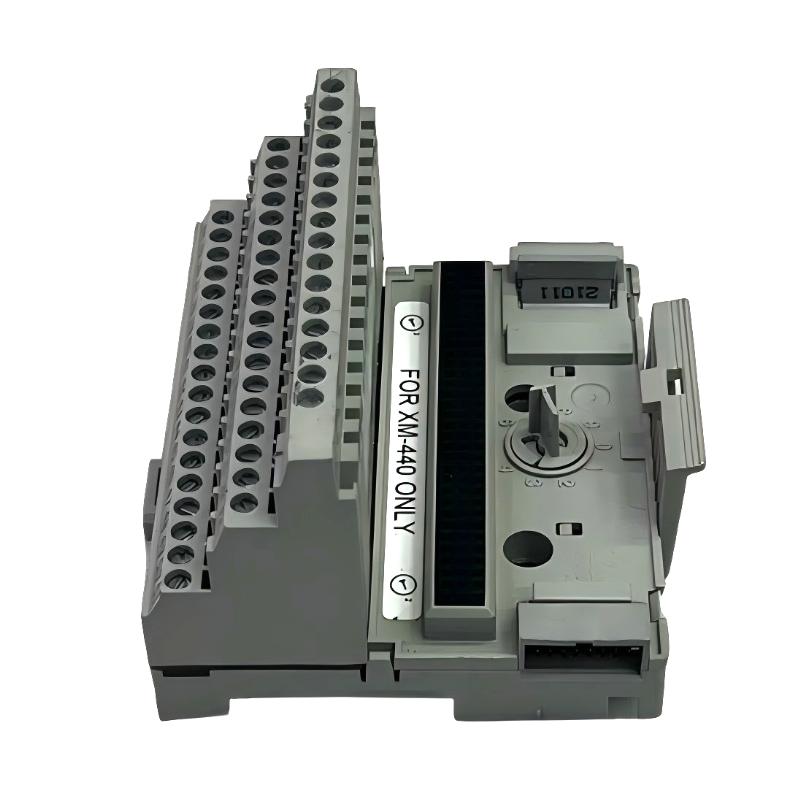
Table of Contents
- Field Case: Intermittent Vibration Signal Drop in XM Monitoring System
- Fault Symptoms of 1440-TB-C Terminal Base
- Observed Signal Instability Patterns
- Root Cause Analysis (Mechanical Loosening & Shield Failure)
- Diagnostic Workflow for Terminal Base Issues
- Repair & Recovery Actions
- Prevention Strategy for Signal Stability
- FAQs on 1440-TB-C Faults
- Engineering Summary
Field Case: Random Channel Drop in Compressor Vibration System
The Allen-Bradley 1440-TB-C screw clamp terminal base is widely used in XM condition monitoring systems. In one compressor station, engineers observed intermittent dropout on Channel 4 vibration input while other channels remained stable under identical operating conditions, indicating a localized termination issue.
Fault Symptoms of 1440-TB-C Terminal Base
Typical field symptoms include:
- Intermittent signal loss on specific channels
- Random spikes or flat-line readings in vibration data
- Signal recovery after cabinet vibration or movement
- Unstable RMS values despite steady machine operation
Observed Signal Instability Patterns
During diagnostics, engineers recorded inconsistent behavior:
CHANNEL_1 = stable (2.0 mm/s RMS)
CHANNEL_2 = stable (2.2 mm/s RMS)
CHANNEL_3 = stable (2.1 mm/s RMS)
CHANNEL_4 = intermittent dropout / zero signal
NOISE_SPIKES = random during vibration events
CONTINUITY_TEST = unstable at terminal group C
GROUND_REFERENCE = fluctuating potential
The pattern clearly indicates mechanical or electrical termination instability rather than sensor failure.
Root Cause Analysis (Mechanical Loosening & Shield Failure)
The 1440-TB-C relies on screw clamp pressure and shield integrity to maintain signal stability. Common failure mechanisms include:
- Loose screw clamp causing intermittent contact resistance
- Stranded wire fatigue without ferrule protection
- Shield termination failure leading to EMI ingress
- Oxidation at terminal contact surfaces increasing impedance
In one field case, a slightly loose shield drain wire caused intermittent noise spikes that were misinterpreted as mechanical vibration anomalies.
Diagnostic Workflow for Terminal Base Issues
A structured electrical and mechanical inspection approach is required:
- Perform continuity test while flexing cable harness gently
- Inspect screw clamp torque using calibrated driver
- Check shield termination integrity and grounding point
- Measure noise levels across all channels
- Swap channel wiring to isolate terminal base fault
TB_C_FAULT_CHECK /MODEL=1440-TB-C /CONTINUITY_SWEEP /SHIELD_TEST /GROUND_LOOP_ANALYSIS
Repair & Recovery Actions
- Re-torqued all screw clamp terminals
- Re-terminated shield drain wires properly
- Replaced fatigued conductors with ferrule protection
- Re-established single-point grounding architecture
After correction, vibration signals stabilized and intermittent channel loss disappeared completely.
Prevention Strategy for Signal Stability
- Perform periodic torque inspection during maintenance cycles
- Ensure proper shield termination practices
- Use ferrules for all stranded conductors
- Avoid routing signal cables near high-power switching equipment
- Maintain single-point grounding system design
FAQs on 1440-TB-C Faults
Can terminal base wiring really cause false vibration alarms?
Yes. Poor termination or shield failure can introduce noise that mimics real vibration signals.
Why does signal recover when cables are moved?
Because mechanical movement temporarily restores broken or loose electrical contact.
Is replacement necessary for TB-C faults?
Not always. Most issues are resolved by re-termination and torque correction.
Engineering Summary
The Allen-Bradley 1440-TB-C terminal base is a critical signal interface in XM condition monitoring systems. Field issues are most commonly caused by mechanical loosening, shielding failure, or grounding problems rather than module defects. Proper wiring discipline and torque control are essential for long-term measurement stability.