

ProductPRODUCT
Featured products
Contact Us
- Allen Bradley
- 1769-CRR3
- CompactLogix I/O Module
- USA
- 118 mm × 87 mm × 50 mm
- 0.34kg
- Xiamen, China
- New & In Stock
- T/T, PayPal, Western Union
- 1 Year
- 1-3 Working Days
- DHL, UPS, TNT, FedEx and EMS.
- 24-Hour Service
- COO
- 107
Our advantage

Global Logistics
We have a 10-year logistics and express cooperation agreement, so our products can be shipped to any place in the world.

Brand new and original
Our products are imported in bulk from the place of origin. Because of the cooperative relationship, our products are all original and 100% new.

24-hour service
We provide 7*24 hours service to our customers. We will be there whenever you need us.

Price advantage
All our products are priced very favorably because we have our own warehouse and supply.
| Company Information | |||
| [email protected] | |||
| Mobile | +8615980777398 | ||
| +8615980777398 | |||
| 15980777398 |
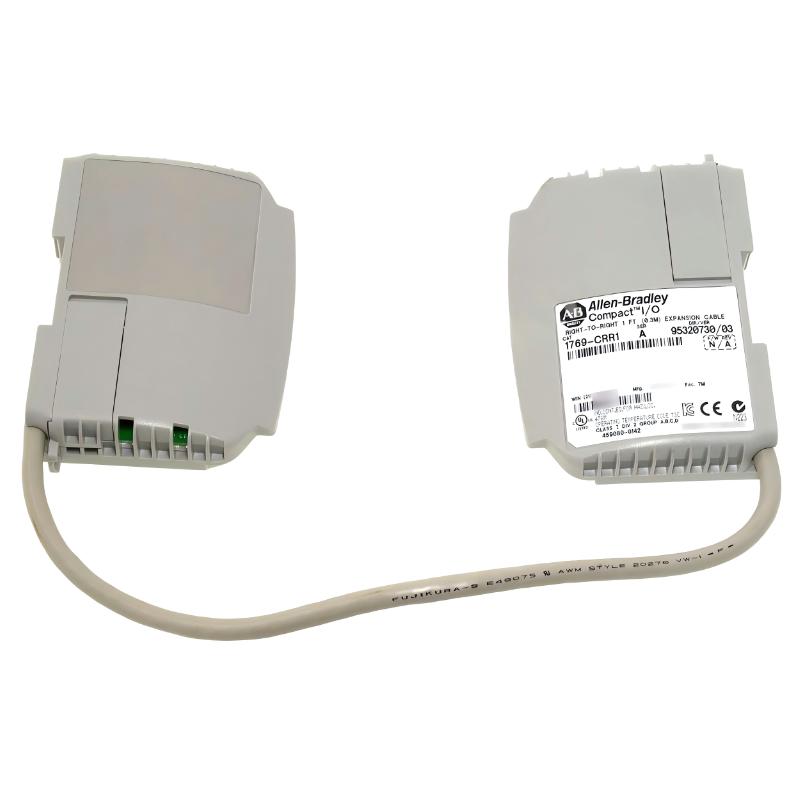
Technical Report: 1769-CRR3 Compact I/O Right-to-Right Bus Expansion Cable
1. Product Overview
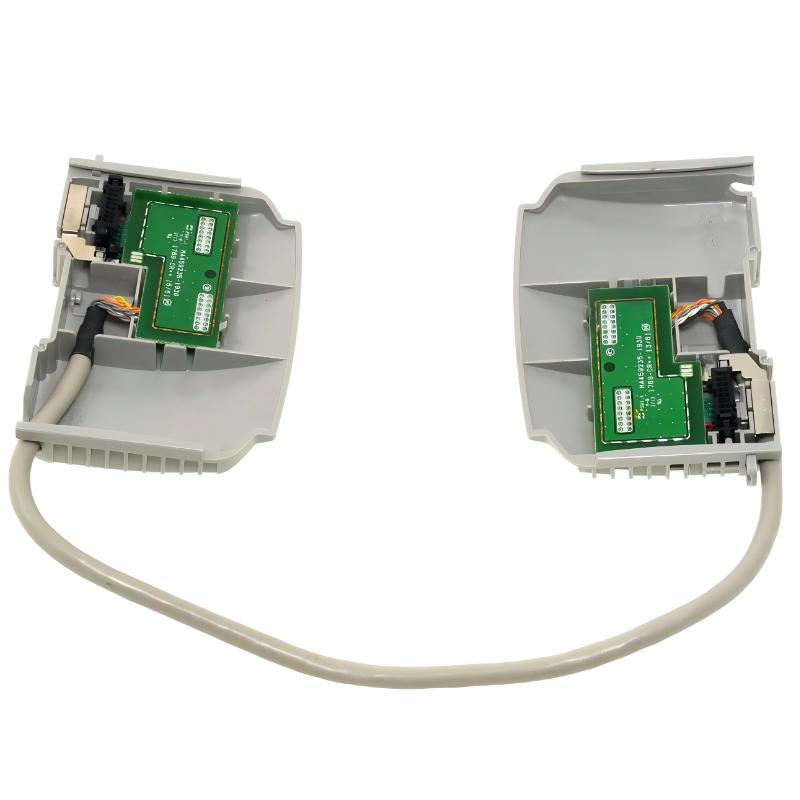
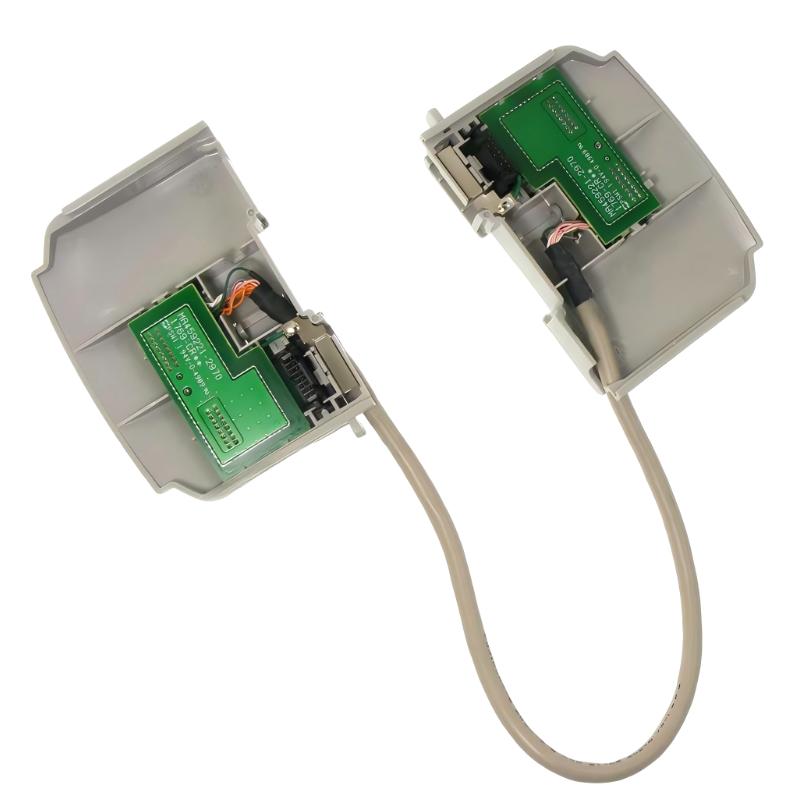
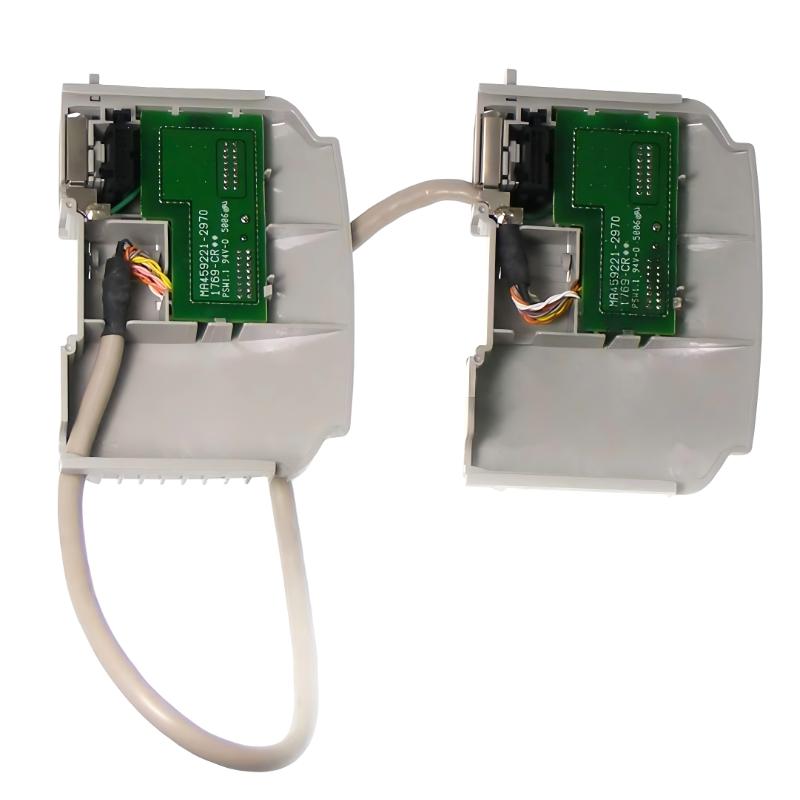
The 1769-CRR3 is a right-to-right bus expansion cable developed for Compact I/O industrial automation systems. It is used to connect separate I/O banks within a CompactLogix or Compact I/O architecture, enabling continuous backplane communication between distributed module groups.
This product is not a controller, communication processor, or signal module. Instead, it serves as a system infrastructure component responsible for maintaining synchronized data exchange across physically separated I/O assemblies.
The 1769-CRR3 is commonly installed in industrial control cabinets where multiple DIN rail sections are required due to space limitations, power segmentation, or modular machine architecture.
Its extended cable length provides additional flexibility for cabinet design compared with shorter expansion cable variants.
2. Brand and Series Information
Brand: Allen-Bradley
Series: 1769 Compact I/O Series
Product Family: Compact I/O Expansion Accessories
Module Type: Right-to-Right Bus Expansion Cable
3. Product Function Description
The 1769-CRR3 functions as an inter-bank backplane communication cable for Compact I/O systems.
Main functions include:
- Extending Compact I/O backplane communication between module groups
- Connecting two right-side Compact I/O banks
- Supporting multi-bank distributed system architecture
- Maintaining synchronized communication across separated I/O sections
- Allowing independent power supplies for different I/O banks
- Supporting scalable industrial control cabinet layouts
The cable ensures that all connected I/O banks operate as part of a unified PLC system while allowing flexible physical separation.
4. Technical Parameters
Electrical and Communication Specifications
| Parameter | Value |
|---|---|
| Product Type | Compact I/O expansion cable |
| Communication Function | Backplane bus extension |
| Compatible Platform | 1769 Compact I/O systems |
| Maximum Supported Banks | Up to 3 I/O banks |
| Maximum Expansion Cables | 2 cables per system |
| Signal Transmission | Parallel backplane communication |
| Isolation Voltage | 30 V continuous |
| Communication Purpose | Inter-bank synchronization and expansion |
Mechanical Specifications
| Parameter | Value |
|---|---|
| Cable Length | 1 m (3.28 ft) |
| Connector Orientation | Right-to-right |
| Mounting Method | Plug-in backplane connector |
| Physical Dimensions (reference installation size) | Approx. 118 mm × 87 mm × 50 mm |
| Cable Construction | Industrial shielded expansion cable |
| Weight | 0.30 kg – 0.34 kg |
| Housing Material | Industrial reinforced polymer |
Environmental Specifications
| Parameter | Value |
|---|---|
| Operating Temperature | 0°C to 60°C |
| Storage Temperature | -40°C to 85°C |
| Relative Humidity | 5% – 95% non-condensing |
| Vibration Resistance | IEC industrial vibration standard |
| Shock Resistance | Industrial control cabinet rated |
| EMC Compatibility | Industrial automation environment compliant |
5. Product Advantages
1. Long-Distance Cabinet Flexibility
The 1-meter cable length allows greater separation between I/O banks, improving control cabinet layout flexibility.
2. Reliable Backplane Communication
Ensures stable and synchronized communication between distributed Compact I/O sections.
3. Scalable System Architecture
Supports modular system expansion without requiring redesign of the PLC platform.
4. Independent Power Segmentation
Different I/O banks can operate with separate power supplies, improving electrical stability and maintenance flexibility.
5. Reduced Cabinet Congestion
Allows module groups to be installed in different cabinet zones, reducing wiring congestion and improving heat management.
6. Industrial Durability
Designed for long-term operation in industrial environments with vibration, temperature variation, and electrical noise.
6. Application Areas
The 1769-CRR3 is widely used in:
- CompactLogix automation systems
- Manufacturing production lines
- Conveyor and logistics systems
- Automotive assembly equipment
- Packaging and filling machinery
- Process automation cabinets
- Distributed machine control systems
- Modular factory automation installations
It is especially useful in systems where I/O modules must be physically separated due to cabinet size or machine structure requirements.
7. Recommended Models (Same Series or Related Models)
| Model | Type | Key Parameters | Application |
|---|---|---|---|
| 1769-CRR1 | Right-to-Right Expansion Cable | 0.3 m cable length | Compact cabinet expansion |
| 1769-CRL1 | Right-to-Left Expansion Cable | Mixed-side connector design | Flexible bank connection |
| 1769-CRL3 | Right-to-Left Expansion Cable | 1 m cable length | Extended cabinet layouts |
| 1769-CLL1 | Left-to-Left Expansion Cable | Short-distance bank connection | Modular segmentation |
| 1769-CLL3 | Left-to-Left Expansion Cable | 1 m cable length | Large multi-bank systems |
8. Other Popular Models (Same Brand – Widely Used)
| Model | Type | Key Parameters | Application |
|---|---|---|---|
| 1769-L33ER | PLC Controller | Integrated EtherNet/IP, 2 MB memory | Machine automation |
| 1769-L36ERM | PLC Controller | High-performance motion control processor | Advanced automation systems |
| 1769-AENTR | EtherNet/IP Adapter Module | Dual Ethernet ports, DLR support | Distributed remote I/O |
| 1769-SDN | DeviceNet Scanner Module | DeviceNet master communication | Legacy fieldbus integration |
| 1769-IF8 | Analog Input Module | 8-channel analog input | Process monitoring |
9. Structural Role in Automation Systems
Within Compact I/O architecture, the 1769-CRR3 serves as a structural communication link rather than an active control component.
Its primary role is to maintain uninterrupted backplane communication while enabling modular cabinet organization. Engineers often use this cable in large automation cabinets where separate I/O banks are grouped according to machine zones, power sections, or maintenance access requirements.
The longer cable length compared with the CRR1 variant provides additional installation freedom in large-scale control systems.
10. Summary
The 1769-CRR3 is an important infrastructure accessory for Compact I/O automation systems. It enables reliable communication expansion between distributed I/O banks while supporting scalable and modular cabinet design.
Its major strengths include long-distance installation flexibility, stable backplane communication, support for independent power segmentation, and suitability for large industrial control systems.
Although it does not directly process control signals or execute PLC logic, it plays a critical role in maintaining communication integrity and scalable system architecture within industrial automation environments.