

ProductPRODUCT
Featured products
Contact Us
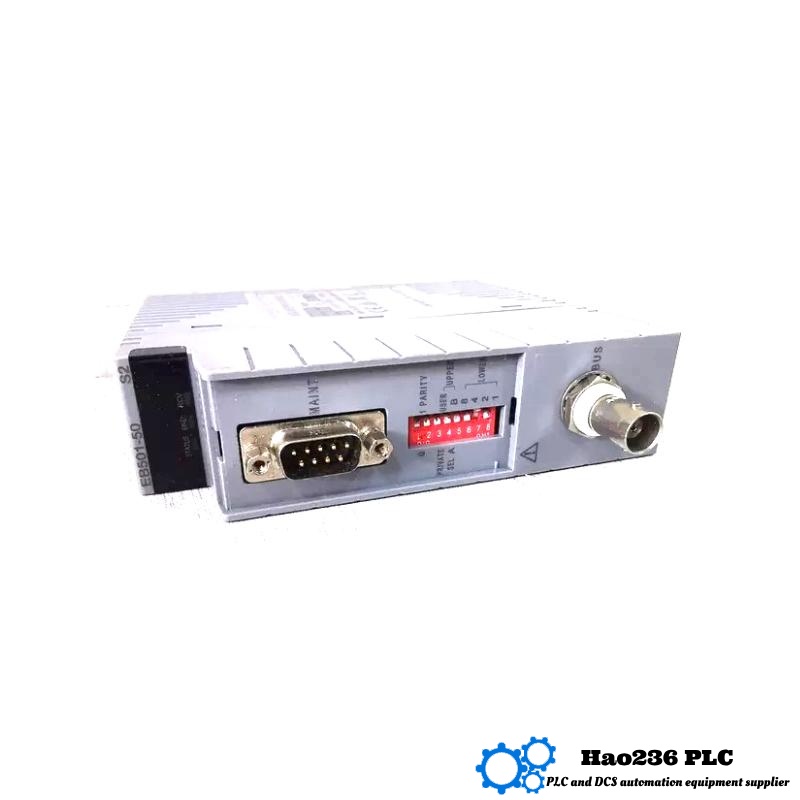
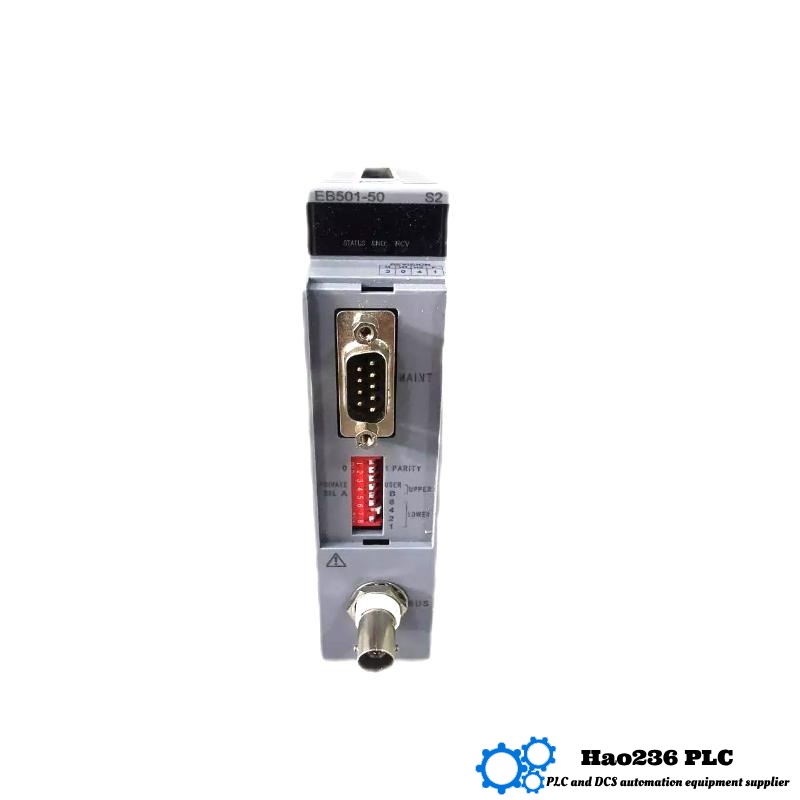
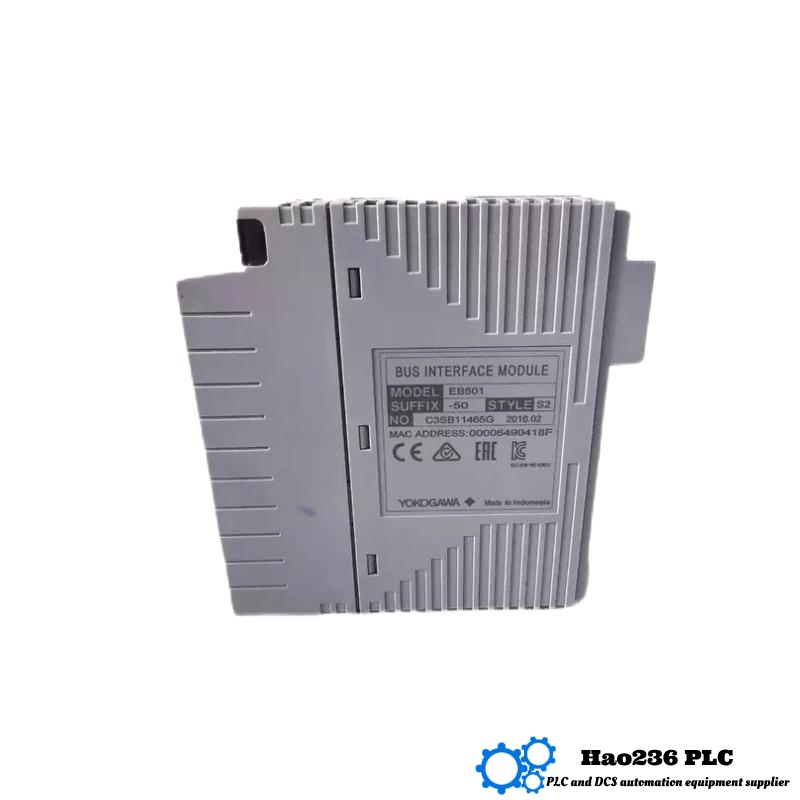
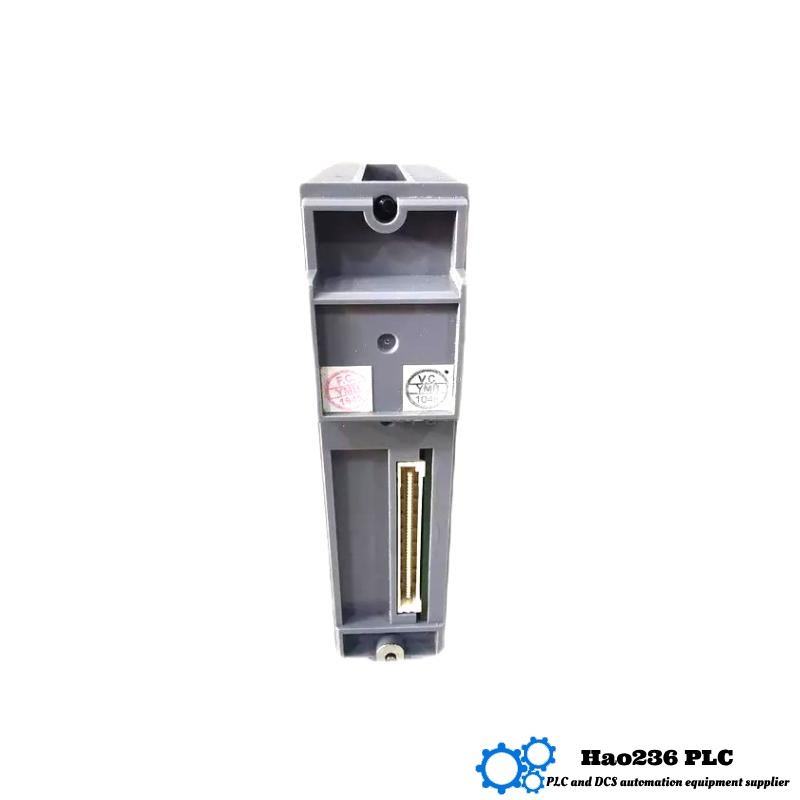
- Yokogawa
- EB501-50
- Bus Interface Slave Module
- Japan
- 157 × 25 × 203 mm
- 2kg
- Xiamen, China
- New & In Stock
- T/T, PayPal, Western Union
- 1 Year
- 1-3 Working Days
- DHL, UPS, TNT, FedEx and EMS.
- 24-Hour Service
- COO
- 400
Our advantage

Global Logistics
We have a 10-year logistics and express cooperation agreement, so our products can be shipped to any place in the world.

Brand new and original
Our products are imported in bulk from the place of origin. Because of the cooperative relationship, our products are all original and 100% new.

24-hour service
We provide 7*24 hours service to our customers. We will be there whenever you need us.

Price advantage
All our products are priced very favorably because we have our own warehouse and supply.
| Company Information | |||
| [email protected] | |||
| Mobile | +8615980777398 | ||
| +8615980777398 | |||
| 15980777398 |
Product Overview – EB501‑50
Introduction
The EB501‑50 is a bus interface module engineered for system communication within distributed control systems (DCS). Installed as a slave on the ESB or equivalent bus, it connects field nodes and modules to the central control network, enabling reliable data exchange and system coordination.
Brand & Series
-
Brand: Yokogawa
-
Series: EB series – bus interface modules in CENTUM and VP architectures
Key Specifications
| Parameter | Specification |
|---|---|
| Model | EB501‑50 |
| Function | ESB bus interface (slave module) |
| Power Supply | 24 V DC |
| Operating Temperature | –10 °C to +55 °C |
| Humidity | 10 % to 90 % RH (non-condensing) |
| Dimensions (W×H×D) | 88 × 58 × 75 mm |
| Weight | 0.4 kg (standard version) |
| Alternate Dimensions (S2) | 157 × 25 × 203 mm (larger housing) |
| Alternate Weight (S2) | 2 kg |
| Communication Interface | ESB bus (electrical/optical) |
| Fieldbus Support (alt source) | PROFIBUS DP, FOUNDATION Fieldbus, HART |
| Environmental Ruggedness | Vibration, shock spec typical for industrial use |
Applications
-
Integral bus interface in CENTUM VP/CS DCS setups
-
Linking field I/O modules and control nodes to central system via ESB
-
Suitable for industries like petrochemical, power, manufacturing, paper, textile, and electronics
-
Applications requiring robust, compact bus communication in tight control panels
Advantages
-
Compact and efficient form factor saves panel space
-
Reliable ESB bus integration ensures structured, scalable system layout
-
Wide operating range supports varied environmental conditions
-
Industry-standard connectivity allows seamless replacements and upgrades
-
Durable construction suitable for industrial field and control room environments
Related or Series-Compatible Models
| Model | Key Features & Differences | Dimensions (approx.) | Weight (kg) |
|---|---|---|---|
| EB501‑50 S2 | Extended version; larger housing, higher weight | 157 × 25 × 203 mm | 2.0 |
| EB501‑10 | EB bus slave with minimal I/O and compact footprint | ~96 × 48 × 25 mm | ~0.02 |
| EB401‑50 | Similar interface module for different fieldbus systems | Moderate module form | ~0.3 |
| ANB10D | ESB bus node unit combining interface and power modules | Rack unit size | ~0.5 |
| ANT10U | Optical ESB repeater module for network extension | Slim module | ~0.2 |
Popular Yokogawa Modules
| Model | Functionality | Size (approx.) | Weight (kg) |
|---|---|---|---|
| AAI143‑S50 | 16-channel analog input module | Slim DIN-like module | ~0.3 |
| AAI543‑S50 | 16-channel analog output module | Slim DIN-like module | ~0.4 |
| ADV151‑P00 | Fast-response digital output module | Compact panel module | ~0.35 |
| SDV144‑S53 | 16-channel digital input with LED indication | Slim DIN-like module | ~0.3 |
| PW402 | Power supply module for DCS chassis | Mid-height module | ~0.9 |
FAQ (10 Q&A)
Q1: What is the primary function of EB501‑50?
A1: It acts as a slave interface to the ESB bus, linking field devices to the controller.
Q2: What are its key dimensions and weight?
A2: Standard size is 88 × 58 × 75 mm, weighing 0.4 kg; the S2 variant is larger at 157 × 25 × 203 mm and 2 kg.
Q3: What power does it require?
A3: It operates on 24 V DC, supplied through the rack backplane.
Q4: What temperature and humidity range can it handle?
A4: It works from –10 °C to +55 °C, with 10–90 % non‑condensing humidity tolerance.
Q5: Can it support fieldbuses like PROFIBUS or HART?
A5: Some module variants support PROFIBUS DP, FOUNDATION Fieldbus, and HART.
Q6: What distinguishes the S2 variant?
A6: It has a larger housing and greater weight; form factor changes likely reflect enhanced functionality.
Q7: Is it durable enough for industrial environments?
A7: Yes—its solid construction and design indicate rugged industrial suitability.
Q8: Is it easy to install and maintain?
A8: Yes—modular design and standard rack mounting simplify installation and servicing.
Q9: Why choose EB501‑50 over earlier modules?
A9: Its compact design and compatibility with the modern ESB system make it efficient and future-ready.
Q10: What industries typically use it?
A10: Commonly found in sectors like oil & gas, chemicals, power, manufacturing, and utility control systems.