

ProductPRODUCT
Featured products
Contact Us
- Schneider
- BMECRA31310
- Redundant Communication Adapter
- France
- 131 x 86.05 x 32 mm
- 0.396 kg
- Xiamen, China
- New & In Stock
- T/T, PayPal, Western Union
- 1 Year
- 1-3 Working Days
- DHL, UPS, TNT, FedEx and EMS.
- 24-Hour Service
- COO
- 12
Our advantage

Global Logistics
We have a 10-year logistics and express cooperation agreement, so our products can be shipped to any place in the world.

Brand new and original
Our products are imported in bulk from the place of origin. Because of the cooperative relationship, our products are all original and 100% new.

24-hour service
We provide 7*24 hours service to our customers. We will be there whenever you need us.

Price advantage
All our products are priced very favorably because we have our own warehouse and supply.
| Company Information | |||
| [email protected] | |||
| Mobile | +8615980777398 | ||
| +8615980777398 | |||
| 15980777398 |
Introduction
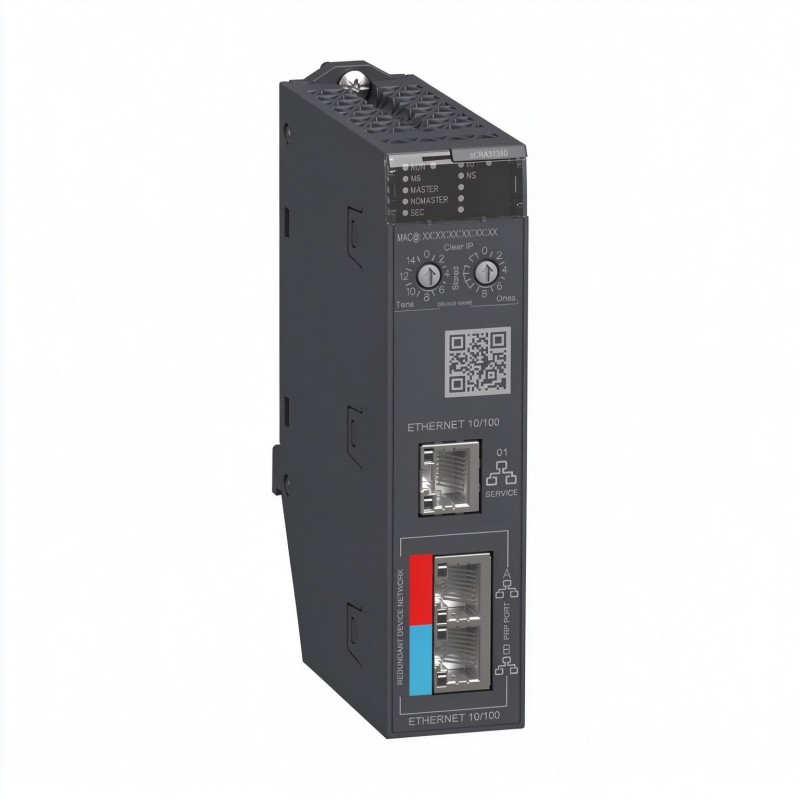
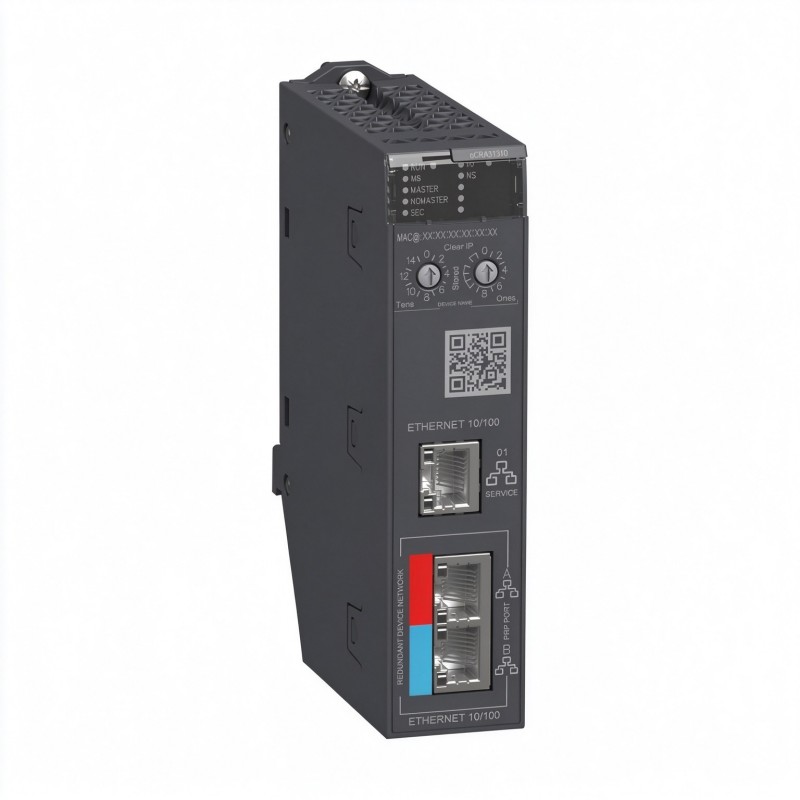
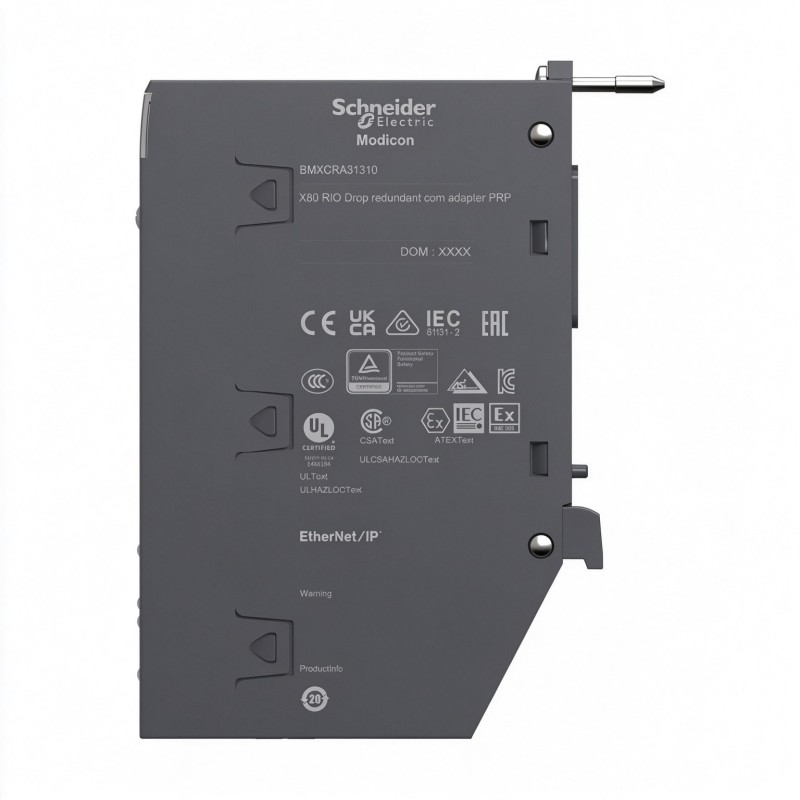
The Schneider Electric BMECRA31310 is a Modicon X80 Remote I/O (RIO) redundant communication adapter designed for high-availability industrial automation systems. It serves as the Ethernet I/O head module for remote I/O drops, enabling communication between distributed I/O modules and a Modicon M580 automation controller.
In large industrial installations, remote I/O stations are often distributed across different production areas. These stations collect signals from field instruments and transmit process information to the central controller. If communication between the controller and a remote I/O station is interrupted, the affected equipment may lose access to important process data.
The BMECRA31310 addresses this requirement through Parallel Redundancy Protocol (PRP). It provides two dedicated Ethernet network connections, allowing communication over independent LAN A and LAN B paths. Its redundancy functions are designed to support high availability and reduce communication recovery time when a network path fails.
The module also supports module redundancy, hot swapping, and operation in simplex or redundant configurations. These capabilities make it suitable for demanding process automation and distributed control applications.
Technical Specifications
| Parameter | Specification |
|---|---|
| Brand | Schneider Electric |
| Model | BMECRA31310 |
| Product Family | Modicon X80 |
| Product Type | Redundant Communication Adapter |
| Module Category | Ethernet I/O Head Module |
| Application | X80 Ethernet Remote I/O Drop Adapter |
| Controller Compatibility | Modicon M580 |
| Network Protocol | EtherNet/IP over PRP |
| Redundancy Technology | Parallel Redundancy Protocol (PRP) |
| Ethernet Ports | 3 × RJ45 |
| Service Port | 1 × Ethernet Service Port |
| Redundant Network Ports | 1 × PRP LAN A, 1 × PRP LAN B |
| Transmission Rate | 10/100 Mbps |
| Communication Mode | Half Duplex / Full Duplex / Auto-Negotiation |
| Input Voltage | 24 V DC |
| Current Consumption | 155 mA |
| Protection Rating | IP20 |
| Operating Temperature | 0–60°C |
| Storage Temperature | -40–85°C |
| Relative Humidity | Up to 95%, non-condensing |
| Mounting | Rack-Mounted |
| Fixing Method | By Screws |
| Dimensions | 131 × 86.05 × 32 mm |
| Weight | 0.396 kg |
Functional Design and Communication Architecture
1. Remote I/O Head Module
The BMECRA31310 functions as the communication head of a Modicon X80 remote I/O station. It connects the remote I/O backplane to the Ethernet communication network and manages data exchange between the remote modules and the control system.
Input information collected from the remote I/O modules is transmitted through the adapter to the controller. Output data received from the controller is distributed to the corresponding output modules.
This arrangement allows field devices to be installed closer to the equipment they monitor or control, reducing the need to route every field signal directly to a central control cabinet.
2. Parallel Redundancy Protocol (PRP)
PRP is the central redundancy technology supported by the BMECRA31310.
The module provides two dedicated network connections:
- LAN A: Connects to the first independent redundant Ethernet network.
- LAN B: Connects to the second independent redundant Ethernet network.
In a correctly configured PRP architecture, communication frames are transmitted through both networks. The receiving equipment processes the first valid frame and handles the duplicate according to the PRP mechanism.
If one network path becomes unavailable, communication can continue through the other path without waiting for conventional network reconvergence.
For this architecture to provide its intended availability benefits, LAN A and LAN B should be designed as independent communication paths. Shared switches, power sources, cable routes, or other common failure points can reduce the effectiveness of redundancy.
3. Module Redundancy
The BMECRA31310 supports module redundancy, allowing a redundant remote I/O head architecture to be implemented where required by the system design.
This is particularly important in process control installations where loss of a single communication adapter could affect an entire remote I/O station.
The redundancy arrangement must follow Schneider Electric’s supported hardware configuration and system design requirements. Engineers should verify the required backplane, power supply, controller, firmware, and adapter configuration before installation.
4. Hot-Swap Capability
Hot swapping is one of the functions that distinguishes the BMECRA31310 from standard remote I/O adapter configurations.
It supports replacement procedures within compatible system architectures without requiring a complete shutdown of the remote I/O installation. However, the actual replacement procedure must follow the manufacturer’s instructions and the redundancy configuration in use.
Maintenance personnel should verify module status and system conditions before removing or installing hardware.
5. Simplex and Redundant Operating Modes
The module supports both simplex and redundant operating modes.
In simplex operation, a single adapter provides the remote I/O communication interface. In redundant operation, the system uses a supported redundant arrangement to improve communication availability.
The selected mode depends on the application requirements, hardware configuration, and controller architecture.
Communication Interfaces and Diagnostic Functions
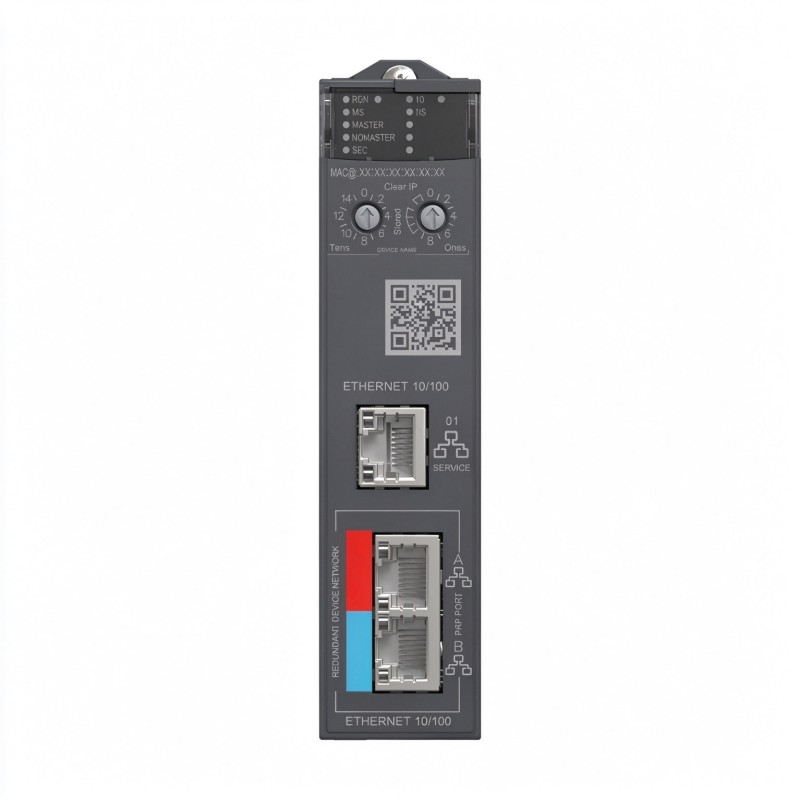
The BMECRA31310 includes three RJ45 Ethernet ports, each serving a specific purpose.
| Port | Function |
|---|---|
| ETH 1 | Service port for engineering tools, PC, or HMI connection |
| ETH 2 | PRP LAN A network connection |
| ETH 3 | PRP LAN B network connection |
The adapter supports several communication services and diagnostic functions, including:
- EtherNet/IP adapter communication.
- Modbus TCP server for module diagnostics.
- DHCP client.
- TFTP and FTP client services.
- FDR client.
- NTP version 4 client.
- SNMP version 3 agent.
- Quality of Service (QoS).
- CIP explicit messaging server.
- Port mirroring and remote I/O diagnostics.
The module also includes cybersecurity-related functions such as communication-port enable/disable control, Syslog support, firmware signature verification, and secure firmware upgrades through HTTPS.
These functions support network administration and maintenance, although they should be configured as part of an overall industrial cybersecurity strategy.
Typical Industrial Applications
Process Automation
Chemical plants, petrochemical facilities, and other continuous-process installations often use distributed I/O stations to collect signals from field instruments.
The BMECRA31310 can provide a redundant communication interface for compatible Modicon X80 remote I/O stations, helping maintain data exchange with the central controller when a network path fails.
Power and Energy Systems
Power generation and energy facilities depend on communication networks for monitoring equipment status, collecting measurements, and coordinating control operations.
A PRP-based remote I/O architecture can improve network availability in applications where communication interruptions need to be minimized.
Water and Wastewater Treatment
Water treatment plants typically have distributed pumping stations, filtration equipment, valves, and instrumentation.
Remote I/O stations allow field signals to be collected locally and transmitted to the central control system. The BMECRA31310 can support redundant communication arrangements for compatible installations.
Manufacturing and Production Lines
Large manufacturing facilities may have several remote I/O stations distributed across production areas. A redundant Ethernet architecture can help reduce the impact of a single network-path failure on machine monitoring and control communication.
Distributed Control Systems
The module is particularly relevant to distributed control architectures using Modicon M580 controllers and Modicon X80 I/O equipment.
Its role is to provide the remote I/O communication interface rather than function as a standalone PLC CPU or an independent Ethernet switch.
Installation and System Integration
1. Verify Hardware Compatibility
Before installation, confirm that the BMECRA31310 is suitable for the intended Modicon X80 rack and controller architecture.
Check the following:
- Supported Modicon M580 controller configuration.
- Compatible X80 backplane.
- Remote I/O module requirements.
- Power supply capacity.
- Firmware and software compatibility.
- Required simplex or redundant operating mode.
The module is designed for a specific automation platform. Mechanical fit alone does not establish system compatibility.
2. Install the Adapter
Install the adapter in the designated position on the compatible X80 remote I/O rack.
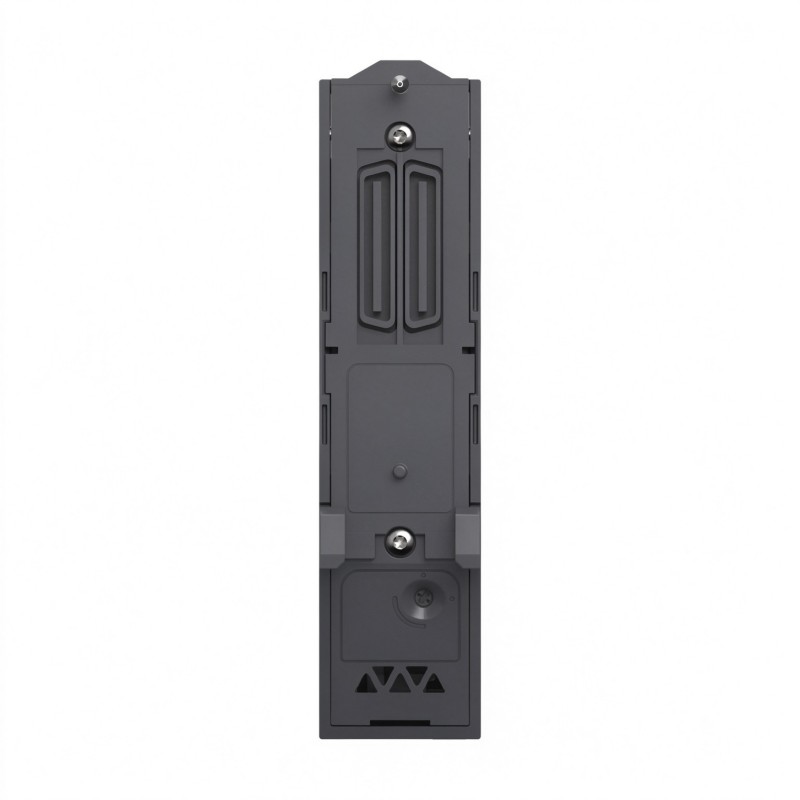
Check the backplane connector for contamination or physical damage before mounting. Align the module carefully and secure it using the manufacturer’s installation procedure.
The specified dimensions are 131 × 86.05 × 32 mm, and the listed weight is 0.396 kg.
3. Connect the Power Supply
The specified input voltage is 24 V DC, with a listed current consumption of 155 mA.
Verify power supply polarity, terminal assignments, and the electrical requirements of the complete remote I/O rack before energizing the system.
The remote rack’s total power requirements must also account for the installed I/O modules and other equipment.
4. Configure the Remote I/O Address
The module includes rotary switches for setting the remote I/O drop address.
The documented address range is 00–159. Set the address according to the project configuration and ensure it does not conflict with another remote I/O station.
After setting the address, verify that the configured value matches the controller project.
5. Connect the PRP Network
Connect ETH 2 to the LAN A network and ETH 3 to the LAN B network.
For reliable redundancy, the two networks should be physically and logically independent wherever practical. Verify switch compatibility and the overall PRP network design before connecting the adapter.
ETH 1 is intended for service or distributed equipment connections and should be configured according to the application.
6. Configure the Controller and Remote I/O System
Use the supported Schneider Electric engineering environment to configure the controller, remote I/O drop, communication parameters, and installed modules.
Confirm that the remote I/O configuration matches the actual rack arrangement.
After downloading the project, check that the controller recognizes the remote I/O adapter and that the installed modules are correctly identified.
7. Commissioning and Redundancy Testing
A practical commissioning procedure should include:
- Inspecting the module and backplane.
- Verifying the 24 V DC supply.
- Confirming the remote I/O address.
- Checking the LAN A and LAN B connections.
- Verifying controller-to-adapter communication.
- Confirming that the remote I/O modules are recognized.
- Testing input and output data exchange.
- Checking diagnostic information and module status.
- Performing an approved LAN A or LAN B failure test.
- Confirming continued communication through the remaining network path.
- Recording the final configuration and test results.
Troubleshooting and Maintenance
| Problem | Possible Cause | Recommended Action |
|---|---|---|
| Adapter does not start | Power supply fault or incorrect installation | Check the 24 V DC supply and backplane connection |
| Remote I/O drop is not detected | Incorrect address or configuration | Verify rotary switch settings and controller project |
| LAN A communication failure | Cable, switch, or network fault | Inspect the LAN A connection and network diagnostics |
| LAN B communication failure | Damaged cable or incorrect port connection | Check ETH 3 and the second network path |
| PRP redundancy is unavailable | Incorrect network architecture | Verify LAN A and LAN B independence and PRP configuration |
| Intermittent I/O communication | Network interference or configuration mismatch | Review network diagnostics and module configuration |
| I/O modules are not recognized | Backplane or module compatibility issue | Check module installation and supported rack configuration |
| Adapter redundancy problem | Incorrect redundant module arrangement | Verify hardware pairing and redundancy settings |
| Service port cannot connect | Incorrect IP or engineering access settings | Check ETH 1 configuration and network access |
| Unexpected diagnostic alarm | Hardware, communication, or configuration fault | Review LED indications and controller diagnostics |
Preventive Maintenance Recommendations
- Inspect the adapter and rack connectors during scheduled maintenance.
- Verify the stability of the 24 V DC power supply.
- Check the condition of LAN A and LAN B cables.
- Keep the control cabinet clean and within the specified temperature range.
- Review remote I/O diagnostic information regularly.
- Back up controller projects and network configuration files.
- Verify redundant communication paths through approved maintenance tests.
- Record firmware versions and hardware replacement history.
Technical FAQs
1. What is the Schneider Electric BMECRA31310?
It is a Modicon X80 redundant communication adapter that serves as the Ethernet I/O head module for compatible remote I/O drops.
2. Which automation platform is it designed for?
The BMECRA31310 is designed for Modicon X80 remote I/O systems and is compatible with Modicon M580 architectures.
3. What is the main purpose of the BMECRA31310?
Its main purpose is to manage communication between remote I/O modules and the central automation controller while supporting redundant Ethernet network architectures.
4. What redundancy protocol does it use?
It uses Parallel Redundancy Protocol (PRP), with separate LAN A and LAN B network connections.
5. How many Ethernet ports does the adapter have?
It provides three RJ45 Ethernet ports: one service port and two dedicated redundant network ports.
6. What is the operating voltage?
The specified input voltage is 24 V DC, and the listed current consumption is 155 mA.
7. Does the BMECRA31310 support hot swapping?
Yes. It supports hot swapping in compatible system configurations. Replacement must follow the manufacturer’s procedure and the requirements of the installed redundancy architecture.
8. Can the adapter operate in simplex mode?
Yes. It supports both simplex and redundant operating modes, subject to the system configuration.
9. What is the difference between BMECRA31310 and a standard X80 remote I/O adapter?
The BMECRA31310 is designed for PRP-based redundant remote I/O communication and adds functions such as module redundancy, hot swapping, and simplex or redundant operation. Standard adapters may use different network redundancy mechanisms and do not necessarily provide the same capabilities.
10. What should be checked before replacing a BMECRA31310?
Verify the exact model, controller compatibility, firmware requirements, remote I/O address, backplane arrangement, network connections, and redundancy configuration. The replacement should be tested before the system returns to normal operation.
Conclusion
The Schneider Electric BMECRA31310 Modicon X80 Redundant Communication Adapter is an important component for high-availability remote I/O architectures. Its PRP-based LAN A and LAN B connections, module redundancy, hot-swap capability, and support for simplex or redundant operation make it suitable for demanding industrial automation applications.
When integrated into a compatible Modicon M580 system, it helps maintain communication between distributed I/O equipment and the central controller. Correct rack installation, address configuration, independent network paths, and systematic commissioning are essential for achieving the intended redundancy performance.