

ProductPRODUCT
Featured products
Contact Us
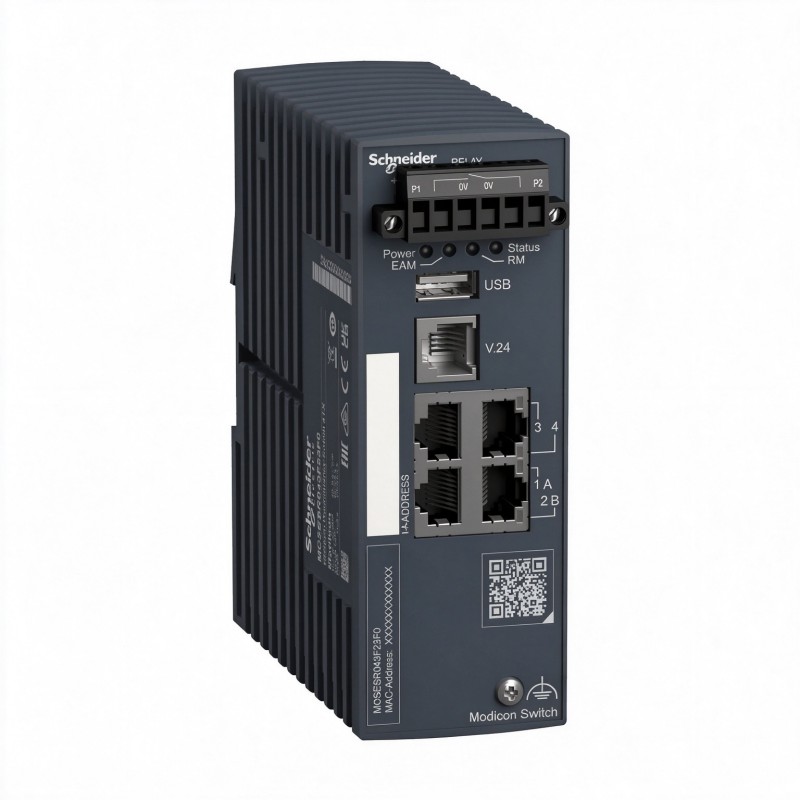
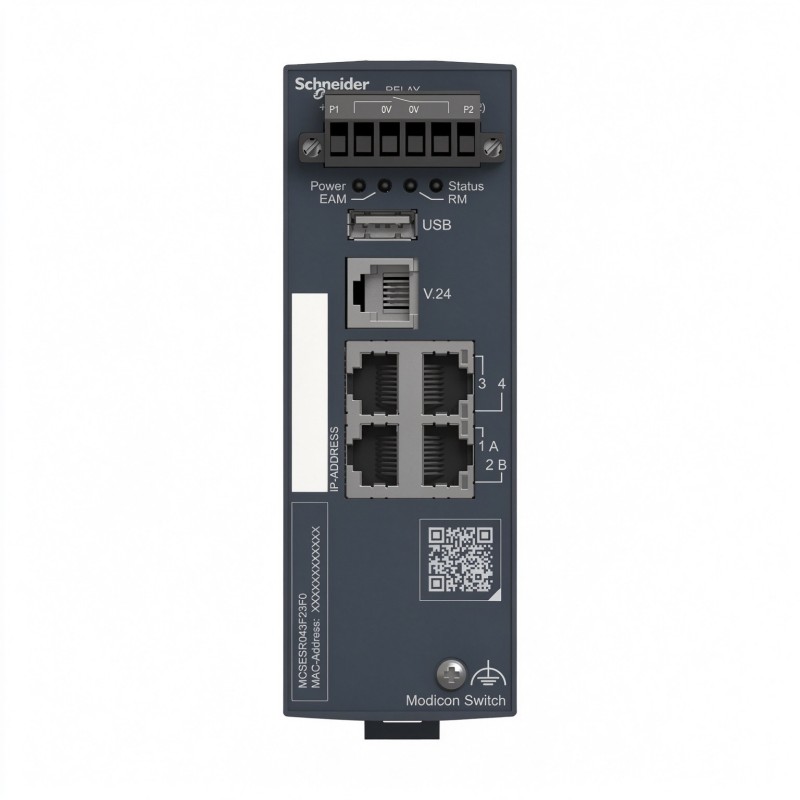
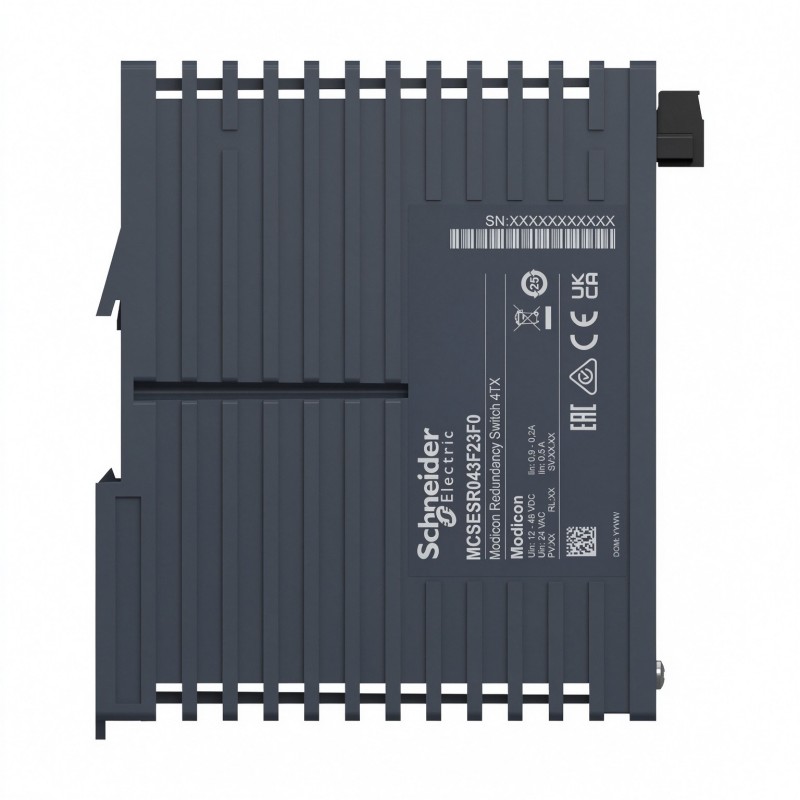
- Schneider
- MCSESR043F23F0
- Redundant Switch
- France
- 130 x 46 x 105 mm
- 0.29 kg
- Xiamen, China
- New & In Stock
- T/T, PayPal, Western Union
- 1 Year
- 1-3 Working Days
- DHL, UPS, TNT, FedEx and EMS.
- 24-Hour Service
- COO
- 10
Our advantage

Global Logistics
We have a 10-year logistics and express cooperation agreement, so our products can be shipped to any place in the world.

Brand new and original
Our products are imported in bulk from the place of origin. Because of the cooperative relationship, our products are all original and 100% new.

24-hour service
We provide 7*24 hours service to our customers. We will be there whenever you need us.

Price advantage
All our products are priced very favorably because we have our own warehouse and supply.
| Company Information | |||
| [email protected] | |||
| Mobile | +8615980777398 | ||
| +8615980777398 | |||
| 15980777398 |
Introduction
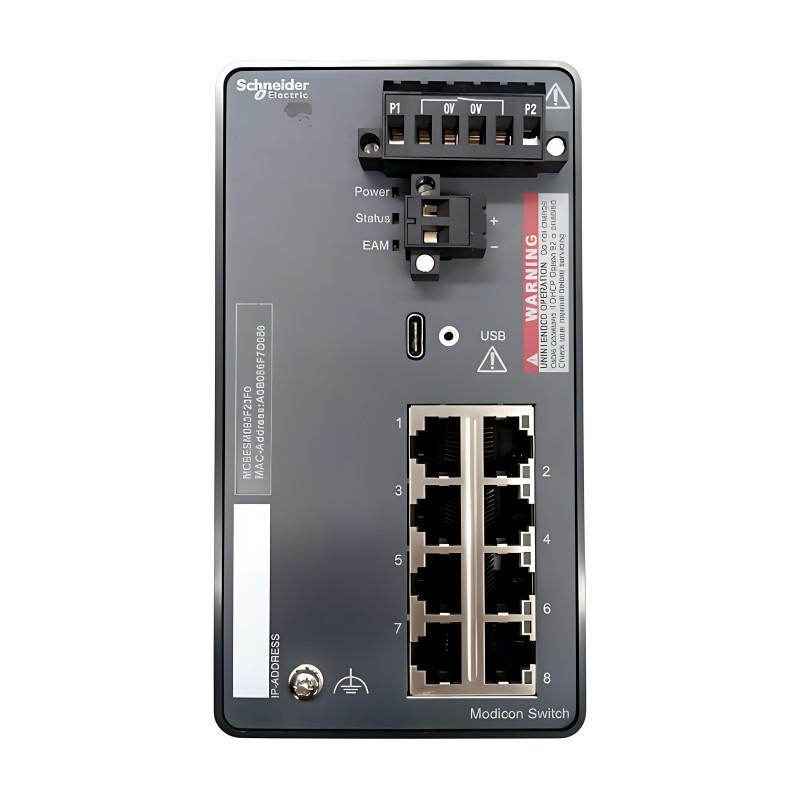
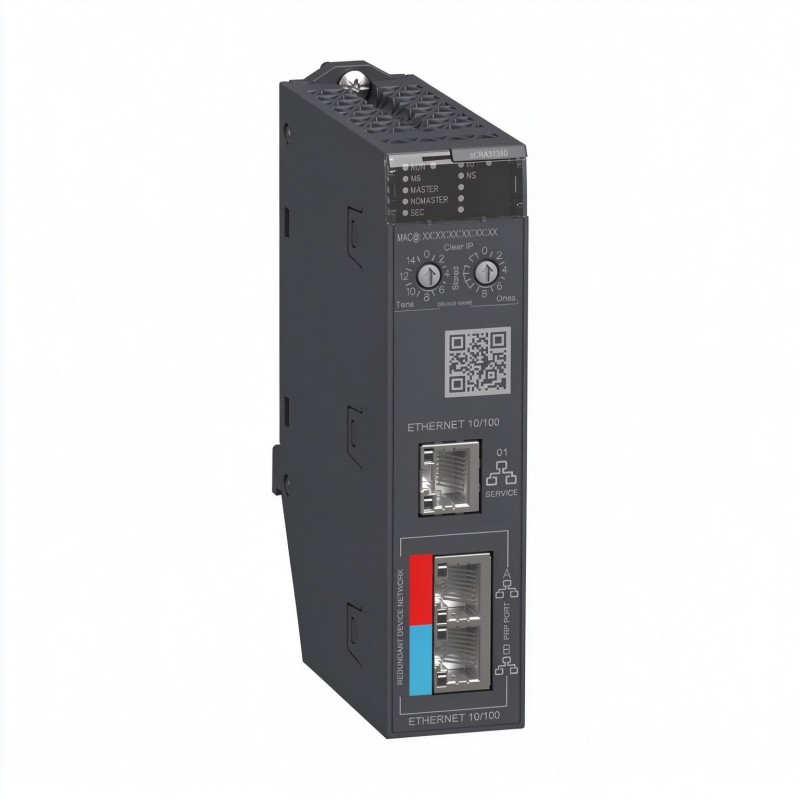
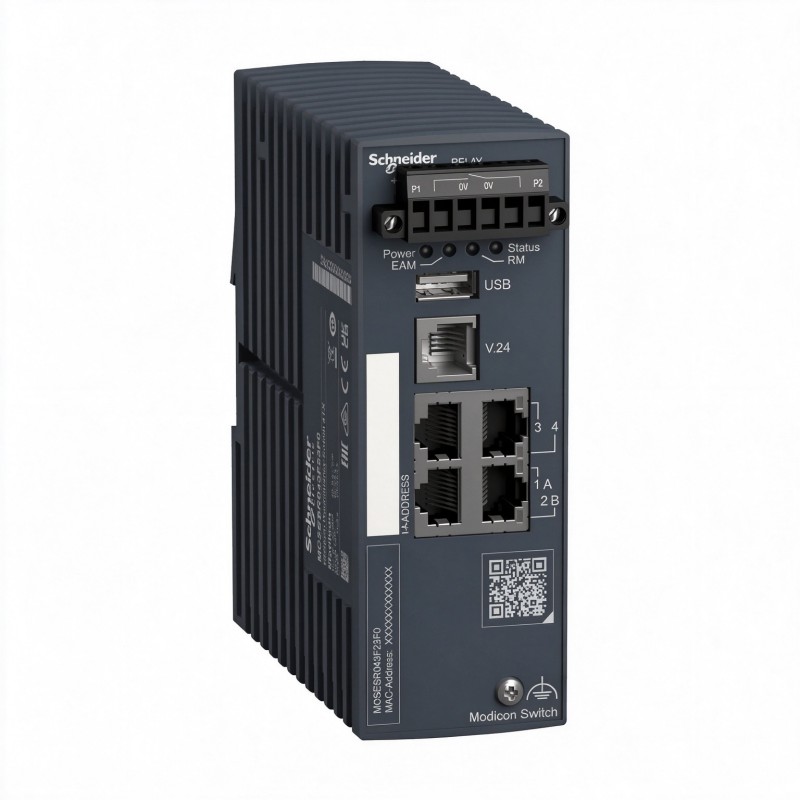
The Schneider Electric MCSESR043F23F0 is a Modicon Networking industrial Ethernet redundancy switch designed to improve communication availability in industrial automation networks. It provides four copper Ethernet ports and supports network redundancy technologies including PRP (Parallel Redundancy Protocol), RSTP (Rapid Spanning Tree Protocol), and MRP (Media Redundancy Protocol).
In industrial environments, Ethernet communication connects PLC controllers, remote I/O stations, HMI terminals, SCADA systems, drives, and other automation devices. A communication interruption can affect production monitoring, equipment coordination, and process control. Network redundancy helps reduce the impact of individual communication-path failures by providing alternative paths for data transmission.
The MCSESR043F23F0 is designed for industrial Ethernet architectures where reliable communication and network availability are important. Its support for redundant network configurations makes it suitable for applications involving Modicon automation equipment and other compatible Ethernet-based control systems.
Technical Specifications
| Parameter | Specification |
|---|---|
| Brand | Schneider Electric |
| Model | MCSESR043F23F0 |
| Product Family | Modicon Networking |
| Product Type | Industrial Ethernet Redundancy Switch |
| Ethernet Ports | 4 × 10/100BASE-TX |
| Port Connection | Shielded RJ45 |
| Transmission Medium | Shielded twisted-pair copper cable |
| Redundancy Protocols | PRP, RSTP, MRP |
| Network Communication | Ethernet TCP/IP |
| Configuration | Web-based configuration |
| Supply Voltage | 12–48 V DC / 24 V AC |
| Power Consumption | 7 W |
| Mounting | 35 mm DIN rail |
| Protection Rating | IP20 |
| Operating Temperature | 0–60°C |
| Relative Humidity | 10–95%, non-condensing |
| Alarm Output | 1 potential-free contact |
| Dimensions | 130 × 46 × 105 mm |
| Weight | 0.29 kg |
Network Architecture and Operating Functions
Four-Port Industrial Ethernet Connectivity
The MCSESR043F23F0 provides four 10/100BASE-TX copper Ethernet ports with shielded RJ45 connectors. These interfaces support connections to compatible industrial Ethernet devices using shielded twisted-pair cabling.
The ports can be incorporated into different network topologies according to the selected redundancy configuration. Engineers should plan port assignments, cable routing, network addressing, and redundancy settings before commissioning.
For copper Ethernet connections, the maximum cable distance between devices is generally 100 meters when using compliant cabling and installation practices.
PRP Network Redundancy
Parallel Redundancy Protocol is designed to provide seamless network redundancy by transmitting duplicate frames through two independent network paths.
In a correctly configured PRP architecture, a receiving device can accept the first arriving copy of a frame and discard the duplicate. This approach avoids waiting for a network recovery procedure after a single path failure.
PRP is particularly relevant to industrial applications where communication interruption must be minimized. The actual availability benefit depends on the complete network architecture, including compatible devices, independent network paths, and correct configuration.
RSTP and MRP Support
The switch also supports RSTP and MRP redundancy mechanisms.
- RSTP: Helps prevent Ethernet switching loops and provides recovery when a network link or switch connection fails.
- MRP: Supports ring-based industrial Ethernet networks and manages communication recovery when a ring connection is interrupted.
- PRP: Uses two independent network paths to provide seamless redundancy when implemented correctly.
These protocols serve different network requirements. Engineers should select the appropriate method according to the control system design and the redundancy capabilities of connected devices.
Web-Based Configuration and Monitoring
The switch supports configuration and administration through a web interface. This allows authorized personnel to manage network parameters and monitor device operation without relying exclusively on physical access to the equipment.
Network management tasks may include configuring communication settings, reviewing device status, checking port conditions, and diagnosing network problems.
Access permissions and cybersecurity settings should be established before connecting the switch to an operational control network.
Diagnostic and Alarm Functions
Industrial network maintenance requires visibility into communication and device status. The MCSESR043F23F0 provides diagnostic indicators and an alarm output for monitoring relevant operating conditions.
Depending on configuration, diagnostic information can help identify power supply faults, communication-link problems, redundancy-ring faults, switch errors, and other abnormal conditions.
These functions assist maintenance personnel in locating network problems before they cause wider operational disruption.
Industrial Applications
PLC Communication Networks
The MCSESR043F23F0 can be integrated into Ethernet communication architectures involving PLC controllers and distributed automation equipment.
In production facilities, PLCs exchange control data with remote I/O stations, operator interfaces, and other network devices. A redundant network architecture can help maintain communication availability when a network connection fails.
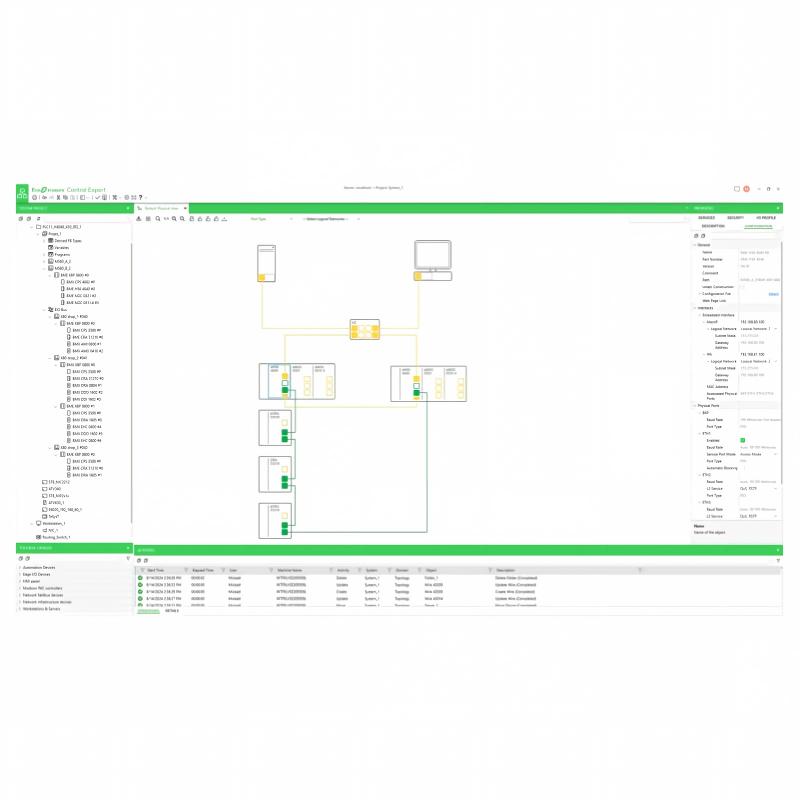
Modicon M580 High-Availability Systems
The switch is identified by Schneider Electric as suitable for M580 high-availability and other redundancy network architectures.
It can form part of a network design intended to improve communication continuity between compatible automation components. However, the complete M580 architecture must be checked for supported redundancy arrangements, firmware requirements, and configuration compatibility.
Process Automation
In process industries, communication networks connect controllers, operator stations, remote equipment, and supervisory systems.
The MCSESR043F23F0 can support industrial Ethernet infrastructure where redundant communication paths are required. Typical application environments include chemical processing, water treatment, energy facilities, and manufacturing plants.
Industrial Manufacturing
Production lines often depend on communication between PLCs, drives, sensors, inspection equipment, and visualization systems.
A properly designed redundant Ethernet network can reduce the operational impact of cable or network-path failures and improve the availability of production information.
SCADA and Supervisory Networks
SCADA systems rely on communication between field-level equipment and supervisory computers. The switch can be used as part of a compatible Ethernet network connecting automation devices and supervisory infrastructure.
The network design should consider traffic loading, cybersecurity, VLAN configuration, and the communication requirements of connected equipment.
Installation and System Integration
DIN Rail Installation
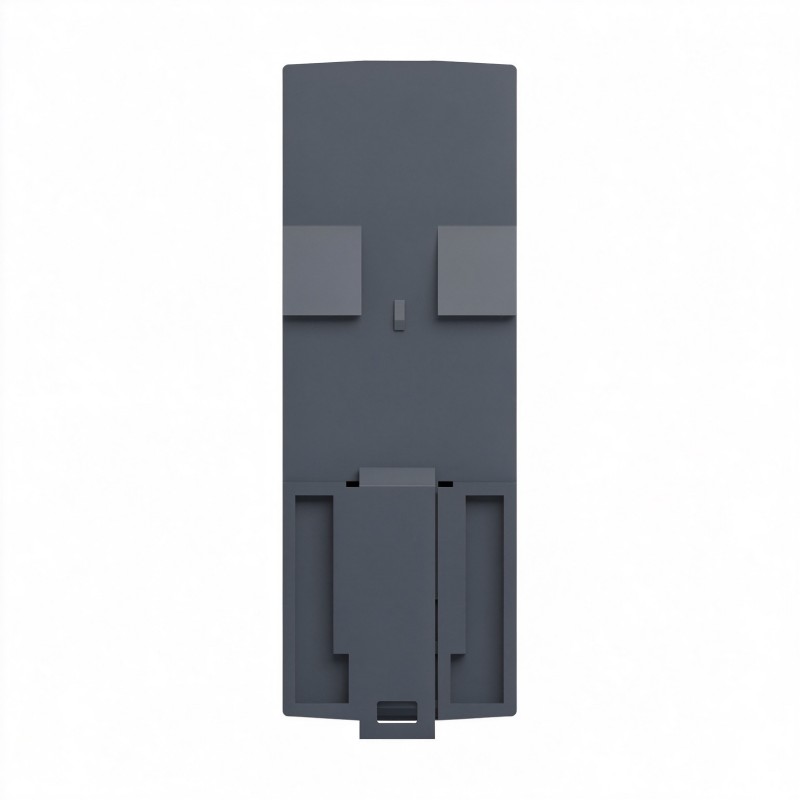
The MCSESR043F23F0 is designed for installation on a 35 mm DIN rail. Before mounting, verify that the control cabinet provides sufficient mechanical support and space for cable connections.
The specified dimensions are 130 × 46 × 105 mm, with a weight of 0.29 kg.
Allow adequate clearance for ventilation and maintenance access. Avoid installing the device where excessive heat, vibration, moisture, or electrical interference may affect operation.
Power Supply Connection
The listed supply options are 12–48 V DC or 24 V AC. Verify the available power source and terminal assignments against the manufacturer’s wiring documentation before connecting the device.
Use a suitable industrial power supply and ensure that protective grounding and electrical protection arrangements meet the installation requirements.
Do not connect or disconnect power wiring while the equipment is energized unless the approved maintenance procedure specifically permits it.
Ethernet Cable Connection
Connect the four shielded RJ45 ports to the intended industrial Ethernet devices.
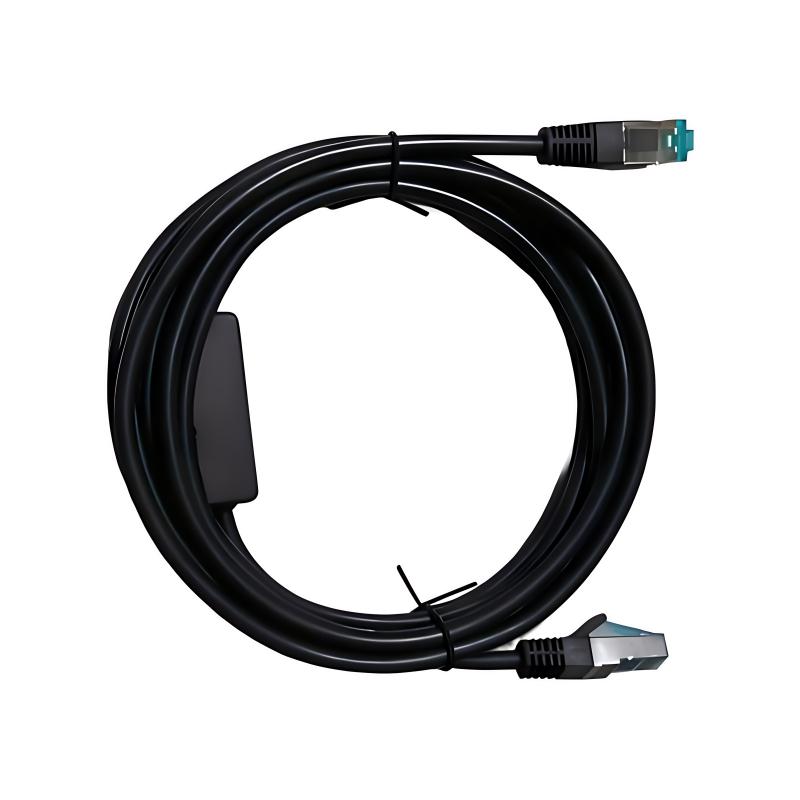
Use suitable industrial Ethernet cables and confirm that connectors are correctly seated. For copper connections, observe the applicable cable-length limits and installation recommendations.
Cable routing should avoid unnecessary proximity to high-power conductors and sources of electromagnetic interference.
Redundancy Configuration
Select the redundancy protocol according to the intended network topology and connected equipment.
Before enabling PRP, RSTP, or MRP, verify that the selected protocol is supported by the relevant network devices. Configure the required ports and network parameters according to the system design.
Do not combine incompatible redundancy configurations or create unintended network loops.
Commissioning Checklist
- Inspect the switch for physical damage.
- Confirm the model number and supply requirements.
- Mount the switch securely on the DIN rail.
- Connect the approved power supply.
- Verify that the power and device-status indicators operate normally.
- Connect the Ethernet cables to the assigned ports.
- Configure the required network parameters.
- Activate the selected redundancy protocol.
- Test communication with connected PLCs and network devices.
- Simulate an approved network-link failure to verify redundancy behavior.
- Record the final configuration for future maintenance.
Troubleshooting and Maintenance
| Problem | Possible Cause | Recommended Action |
|---|---|---|
| Switch does not power on | Incorrect supply voltage or loose wiring | Verify the supply and terminal connections |
| Ethernet link is unavailable | Damaged cable or incorrect connection | Inspect the RJ45 cable and connected device |
| PLC communication is interrupted | Network configuration error | Check IP settings and communication parameters |
| PRP redundancy does not operate | Incorrect network configuration | Verify both independent network paths and PRP settings |
| MRP ring communication fails | Incorrect ring configuration | Check ring ports and MRP compatibility |
| RSTP network recovery is slow | Incorrect topology or protocol settings | Review the network topology and RSTP configuration |
| Intermittent communication | Electrical interference or poor cable quality | Inspect cable routing, shielding, and connectors |
| Alarm output is activated | Power, link, or device fault | Review diagnostic indicators and network status |
| Web configuration is inaccessible | Incorrect IP address or access settings | Verify network addressing and authorized access |
| Device overheats | Poor ventilation or excessive ambient temperature | Check cabinet temperature and airflow |
Preventive Maintenance
Regular inspection helps maintain stable network communication.
- Check power supply wiring and terminal connections.
- Inspect Ethernet cables and RJ45 connectors.
- Monitor diagnostic indicators and alarm conditions.
- Keep the enclosure and surrounding cabinet free from excessive dust.
- Maintain adequate ventilation and operating temperature.
- Back up the switch configuration after approved changes.
- Review network redundancy operation during scheduled maintenance.
- Maintain an updated network topology diagram and port assignment record.
Technical FAQs
1. What is the Schneider Electric MCSESR043F23F0?
It is a Modicon Networking industrial Ethernet redundancy switch with four copper Ethernet ports, designed for industrial network architectures requiring communication redundancy.
2. How many Ethernet ports does this model provide?
It provides four 10/100BASE-TX copper Ethernet ports with shielded RJ45 connectors.
3. Which redundancy protocols does it support?
The switch supports PRP, RSTP, and MRP. The appropriate protocol depends on the network topology and connected equipment.
4. What is the difference between PRP and RSTP?
PRP uses two independent network paths and can provide seamless communication redundancy when correctly implemented. RSTP manages redundant Ethernet paths by preventing loops and restoring connectivity after a topology change.
5. What power supply does the switch require?
The listed supply options are 12–48 V DC or 24 V AC. Always verify the wiring and permitted supply range in the applicable manufacturer documentation.
6. Can the switch be installed in an industrial control cabinet?
Yes. It is designed for 35 mm DIN rail mounting and has an IP20 protection rating. The cabinet must provide suitable environmental protection.
7. Can it be used with Siemens or Allen-Bradley PLCs?
It can be considered for compatible Ethernet network applications involving third-party PLCs. Communication compatibility and redundancy behavior depend on the network protocol, configuration, and connected equipment.
8. Does the switch support web-based configuration?
Yes. It supports configuration and administration through a web interface. Appropriate network access and cybersecurity settings should be established.
9. What should be checked if network communication is unstable?
Check the power supply, Ethernet cable condition, port status, network addressing, redundancy settings, and possible electrical interference. Review diagnostic information to help identify the source of the problem.
10. What should be verified before replacing an existing MCSESR043F23F0?
Verify the complete part number, port configuration, redundancy protocol requirements, power supply, mounting arrangement, and existing network configuration. A replacement should be tested within the intended network architecture before being returned to production.
Conclusion
The Schneider Electric MCSESR043F23F0 Modicon Networking Redundancy Switch is designed to support industrial Ethernet communication architectures where network availability is an important operational requirement. Its four copper Ethernet ports, PRP/RSTP/MRP support, web-based configuration, and diagnostic functions make it suitable for compatible automation and process-control networks.
For reliable operation, engineers should select the correct redundancy protocol, configure network paths carefully, and verify communication behavior during commissioning. Proper installation and routine inspection can help maintain stable connectivity across industrial automation systems.