

ProductPRODUCT
Featured products
Contact Us
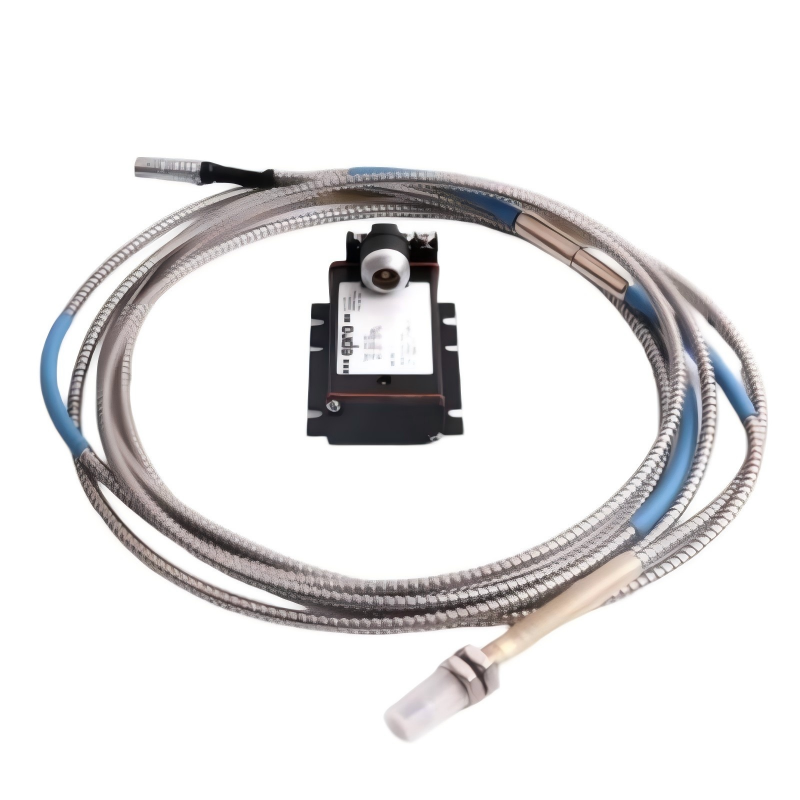
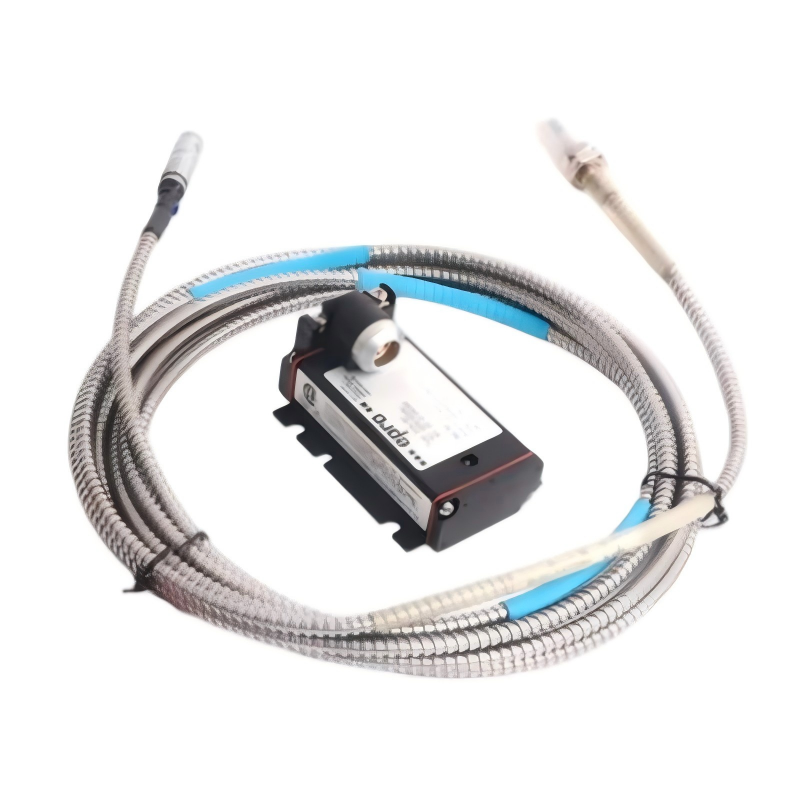
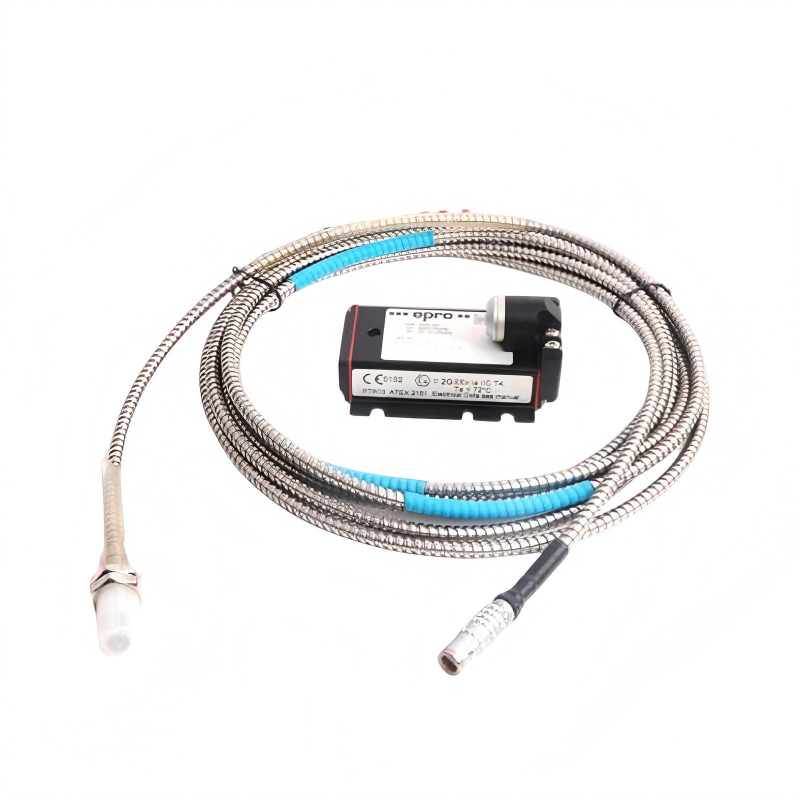
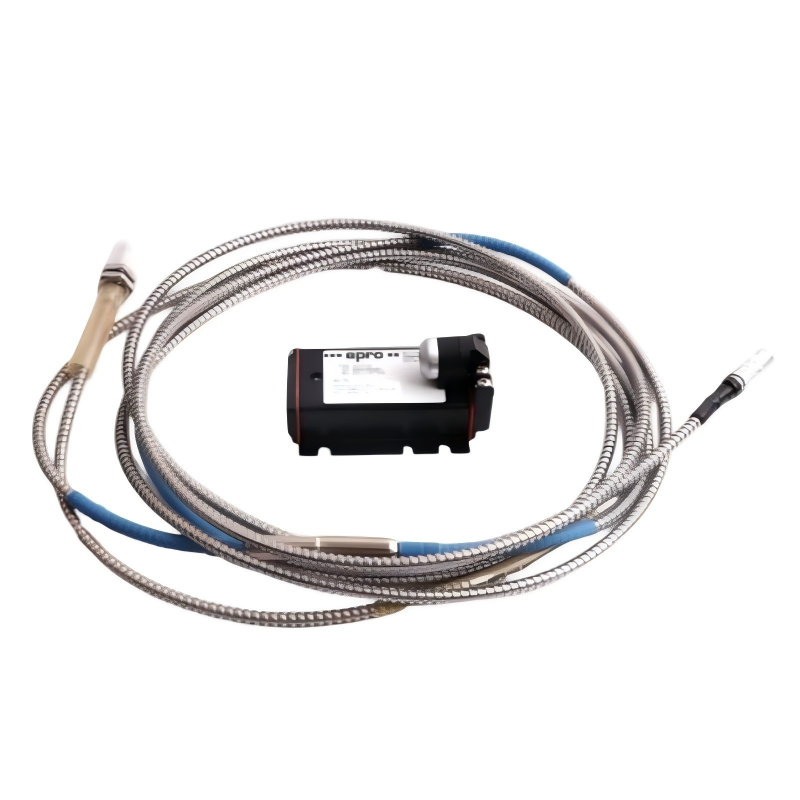
- Epro
- PR9670/113-100
- Eddy Current Sensor
- Germany
- Optional
- 3 kg
- Xiamen, China
- New & In Stock
- T/T, PayPal, Western Union
- 1 Year
- 1-3 Working Days
- DHL, UPS, TNT, FedEx and EMS.
- 24-Hour Service
- COO
- 8
Our advantage

Global Logistics
We have a 10-year logistics and express cooperation agreement, so our products can be shipped to any place in the world.

Brand new and original
Our products are imported in bulk from the place of origin. Because of the cooperative relationship, our products are all original and 100% new.

24-hour service
We provide 7*24 hours service to our customers. We will be there whenever you need us.

Price advantage
All our products are priced very favorably because we have our own warehouse and supply.
| Company Information | |||
| [email protected] | |||
| Mobile | +8615980777398 | ||
| +8615980777398 | |||
| 15980777398 |
Product Overview
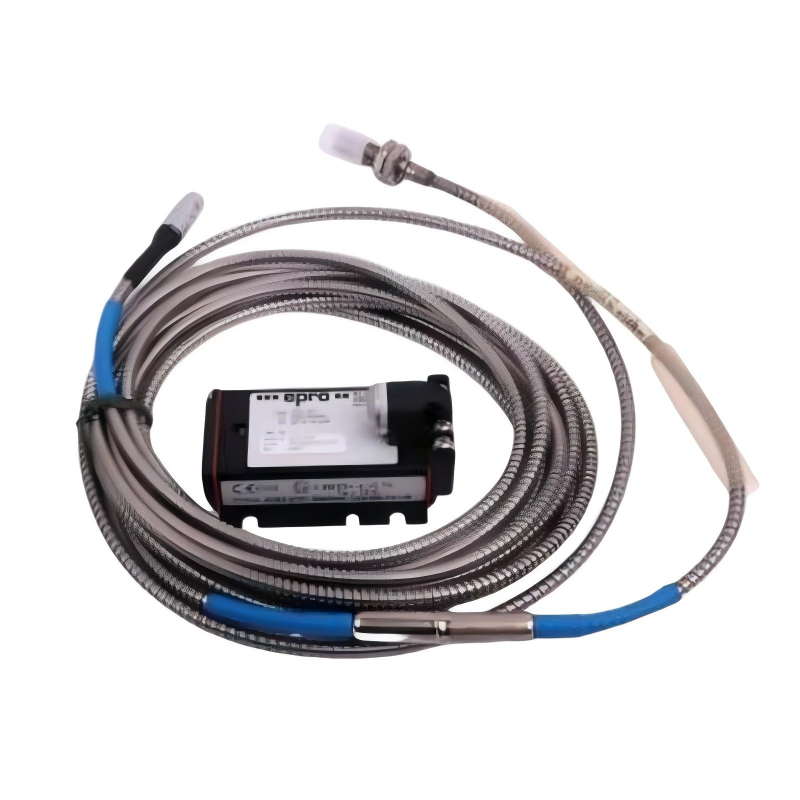
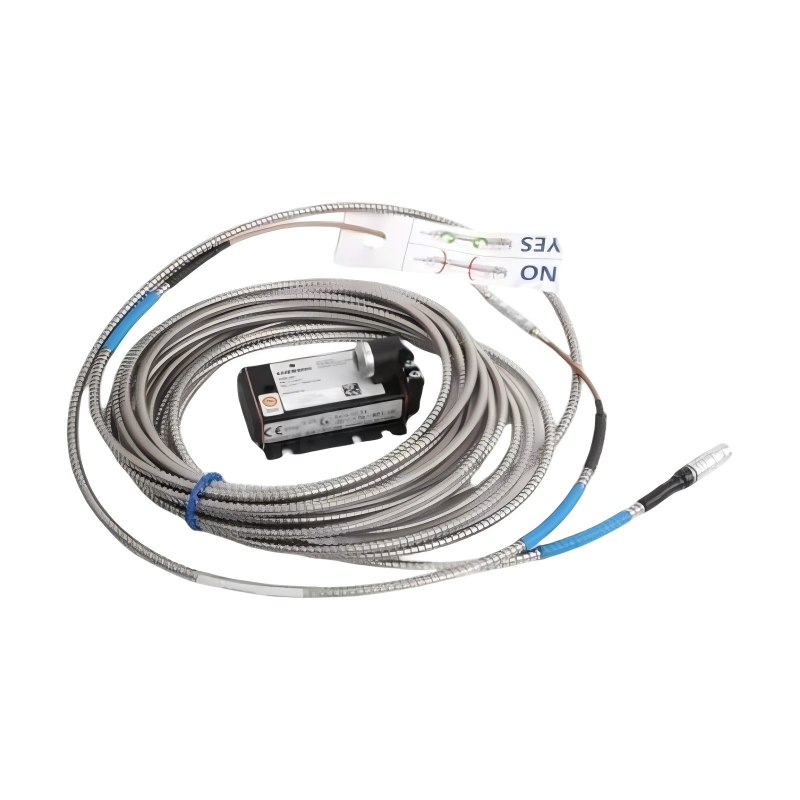
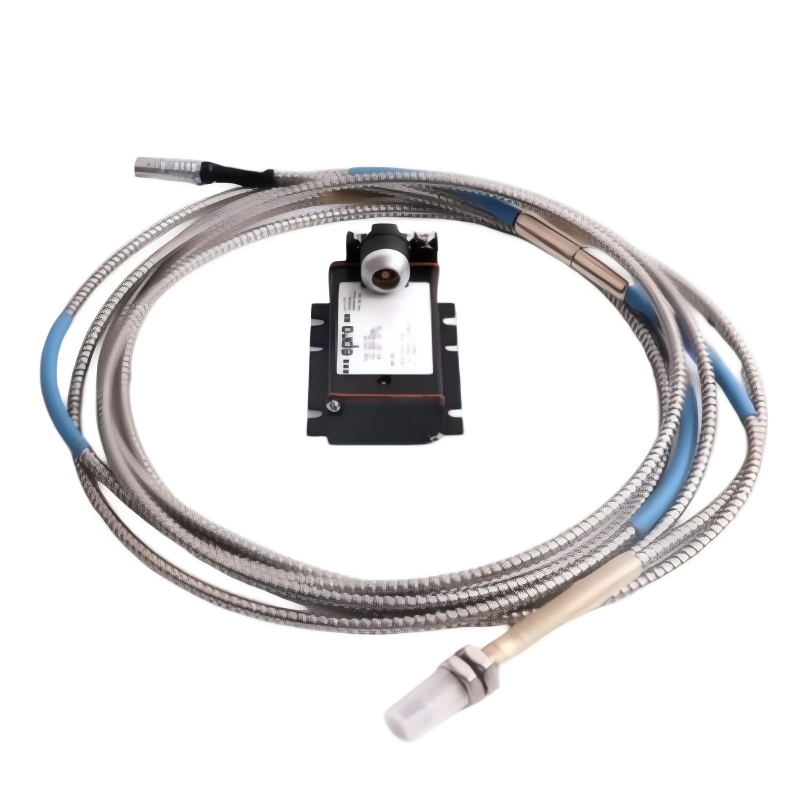
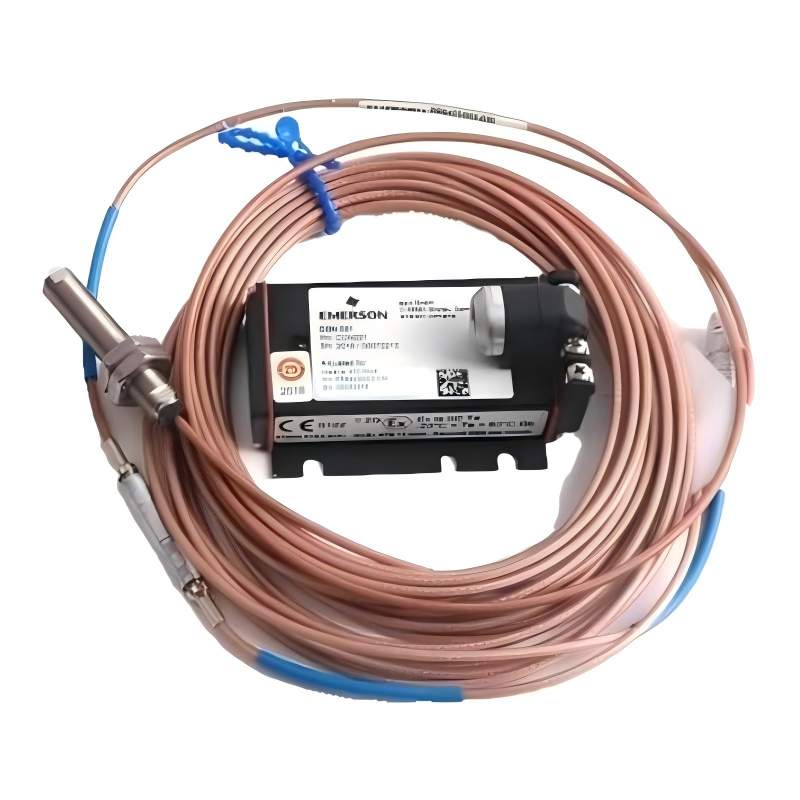
The Epro PR9670/113-100 Eddy Current Sensor is identified in the supplied product description as an industrial sensor for non-contact measurement and machinery monitoring. Eddy current sensing technology is commonly used in rotating machinery applications where accurate detection of metallic shaft movement, displacement, and relative position is required.
Unlike contact-based measurement devices, an eddy current sensor operates without physically touching the monitored metal target. This makes the technology suitable for applications involving high-speed rotating equipment, where continuous contact could introduce mechanical wear or affect measurement reliability.
In industrial facilities, shaft movement can provide important information about the operating condition of turbines, compressors, pumps, generators, and other rotating machinery. Changes in shaft position or vibration may be associated with bearing wear, rotor imbalance, misalignment, thermal expansion, or other mechanical conditions. A suitable sensor and monitoring system can help maintenance personnel observe these changes and investigate abnormal operating trends.
The PR9670/113-100 is intended for consideration in industrial monitoring and maintenance applications. Its exact installation requirements, sensing characteristics, and system compatibility should be checked against the product’s nameplate and technical documentation before integration.
The sensor head diameter is specified as optional in the supplied product information. This means buyers should confirm the required probe-head configuration before ordering. The stated shipping weight is 3 kg, which should be treated as a logistics figure rather than the confirmed net weight of the sensor alone.
For replacement projects, confirming the complete model number and physical configuration is especially important. Sensors that look similar may have different measurement principles, cable arrangements, electrical characteristics, and compatible signal-conditioning equipment.
Technical Specifications
| Parameter | Specification |
|---|---|
| Brand | Epro |
| Product Model | PR9670/113-100 |
| Product Type | Eddy Current Sensor |
| Application Category | Industrial Machinery Monitoring |
| Measurement Principle | Eddy current, subject to model verification |
| Measurement Target | Metallic machinery components, where supported by the confirmed configuration |
| Sensor Head Diameter | Optional |
| Shipping Weight | 3 kg |
| Physical Configuration | Confirm according to the selected sensor version |
| Output Characteristics | Verify with the applicable sensor documentation |
| Cable Configuration | Verify before installation |
| Signal Conditioner | Confirm the compatible model before connection |
| Typical Application Areas | Turbines, compressors, pumps, generators, and rotating machinery |
| Installation Type | Depends on the selected probe and mounting configuration |
Important specification note: Public supplier descriptions of PR9670/113-100 are inconsistent. The exact sensing principle, probe dimensions, measurement range, temperature rating, protection rating, and compatible signal conditioner should be verified against the manufacturer’s documentation for the supplied unit. The 3 kg value is the stated shipping weight, not a confirmed net product weight.
Function and Working Principle
Eddy current sensors are widely used in industrial machinery monitoring because they can measure the distance between a probe and a conductive metallic target without physical contact.
The measurement process is based on electromagnetic interaction between the sensor probe and the target surface.
1. Electromagnetic Field Generation
An eddy current probe typically contains a coil that generates an alternating electromagnetic field when supplied by a compatible electronic circuit.
When the probe is positioned near a conductive metallic target, the electromagnetic field induces circulating electrical currents in the target material. These are known as eddy currents.
The strength of this interaction changes according to the distance between the probe and the target, as well as the target material and the sensor system’s design.
2. Distance and Displacement Detection
As the distance between the probe and the metallic target changes, the electrical characteristics of the probe circuit also change.
A compatible signal-conditioning unit processes this variation and converts it into a measurement signal. The resulting signal can represent the relative distance or movement of the monitored component within the sensor system’s calibrated operating range.
In rotating machinery, the probe may be positioned near a shaft to observe changes in the gap between the sensor and the shaft surface.
3. Shaft Movement Monitoring
When a shaft rotates, its position relative to a fixed probe may change because of vibration, eccentricity, mechanical imbalance, or other operating conditions.
A suitable eddy current measurement system can detect these changes continuously. The monitoring equipment can then display trends or generate alarms when measurements exceed configured limits.
The actual measurement capabilities depend on the probe, signal conditioner, target material, installation geometry, and monitoring equipment.
4. Signal Conditioning
An eddy current probe generally operates as part of a measurement system rather than as an independent controller.
The associated signal conditioner supplies the excitation required by the probe and processes the sensor response. Depending on the system design, the resulting signal can be delivered to a machinery protection rack, PLC, DCS, or other monitoring equipment.
The correct conditioner must be selected according to the sensor’s electrical characteristics. A signal conditioner intended for another probe family should not be assumed compatible.
5. Continuous Machinery Monitoring
When installed in a suitable monitoring arrangement, the sensor can contribute measurement data to a continuous machinery monitoring system.
Maintenance engineers can use this information to observe operating trends, compare measurements under different load conditions, and investigate possible mechanical problems.
The sensor is one part of the monitoring arrangement. Reliable machinery protection also requires appropriate signal processing, alarm configuration, engineering assessment, and maintenance procedures.
Role in Industrial Control and Machinery Protection Systems
An industrial displacement or proximity sensor can provide important information to the wider control and monitoring architecture.
The PR9670/113-100 should be integrated only after its actual output characteristics and compatible electronics have been confirmed.
1. Machinery Monitoring
In rotating equipment, shaft movement and vibration measurements can help maintenance personnel evaluate mechanical operating conditions.
When the sensor is correctly installed and calibrated, its measurement signal can contribute to the monitoring of shaft position or related mechanical movement.
2. PLC and DCS Integration
A PLC or distributed control system may receive measurement information from an appropriate signal-conditioning device.
The control system can use the resulting data for monitoring, alarm handling, operating records, and maintenance notifications.
Direct connection to a PLC analog input should not be assumed. The probe’s electrical output must first be confirmed, and an appropriate signal conditioner may be required.
3. Machinery Protection Systems
Critical rotating equipment may use dedicated machinery protection systems to monitor shaft displacement, vibration, temperature, and other operating variables.
A compatible sensor can form part of the measurement chain. The protection system evaluates the received signal against configured limits and provides alarm or trip functions where the overall system design supports them.
The sensor itself does not independently provide complete machinery protection.
4. Predictive Maintenance
Continuous monitoring makes it possible to compare current measurements with historical operating data.
Maintenance teams can investigate gradual changes, identify unusual measurement patterns, and plan inspections based on equipment condition rather than relying exclusively on fixed maintenance intervals.
The usefulness of this approach depends on measurement quality, correct installation, and appropriate interpretation of the data.
Industrial Applications
Eddy current measurement technology is used in a range of industries where non-contact monitoring of rotating machinery is important.
The following applications describe typical uses of this sensor technology. The suitability of the specific PR9670/113-100 configuration must be confirmed before installation.
1. Steam Turbine Monitoring
Steam turbines operate under demanding mechanical and thermal conditions. Shaft displacement and vibration measurements can help operators observe changes in rotor behavior.
A suitable eddy current monitoring system can provide continuous measurement of relative shaft movement at designated monitoring locations.
2. Gas Turbine Applications
Gas turbines contain high-speed rotating assemblies that require careful monitoring. Sensors used in the monitoring system can provide information about shaft movement and other mechanical conditions.
Reliable sensor installation and correct measurement-system configuration are important for obtaining useful operating data.
3. Industrial Compressor Monitoring
Compressors are commonly used in petrochemical plants, refineries, gas processing facilities, and manufacturing operations.
Monitoring shaft movement can help maintenance teams investigate changes associated with rotor imbalance, bearing deterioration, or alignment problems.
4. Pumping Systems
Large industrial pumps may operate continuously and support important production processes. Monitoring the movement of rotating components can help identify abnormal mechanical behavior.
The sensor type and measurement arrangement must be selected according to the pump design and the monitoring objective.
5. Generator and Power Generation Equipment
Generators and associated rotating equipment require reliable condition monitoring. Appropriate displacement sensors can provide measurement data for evaluating shaft movement and mechanical stability.
The exact sensor configuration must be matched to the generator’s monitoring system.
6. Industrial Gearboxes
Gearboxes contain rotating shafts, bearings, and gear assemblies that can experience wear and mechanical changes over time.
Where the monitoring design supports non-contact displacement measurement, suitable sensors can help observe shaft movement and identify abnormal trends.
Installation and System Integration
Correct installation is essential for accurate measurement and reliable operation.
Before installing the PR9670/113-100, engineers should confirm the sensor’s actual mechanical dimensions, electrical requirements, cable configuration, and compatible signal-conditioning equipment.
1. Verify the Sensor Configuration
Check the complete model number and confirm the selected sensor-head diameter.
Because the supplied product description identifies the sensor-head diameter as optional, buyers should specify the required configuration before ordering.
Also confirm the probe length, mounting thread, cable arrangement, connector type, and any accessories required for the installation.
2. Confirm Signal Conditioner Compatibility
Identify the exact signal conditioner or monitoring module intended for the sensor.
Check the manufacturer’s documentation for excitation requirements, electrical characteristics, cable limitations, calibration procedures, and output signal specifications.
Do not connect the sensor directly to a PLC or DCS input unless the documentation confirms that the interface is suitable.
3. Select an Appropriate Mounting Position
The probe should be installed at a location that provides a stable and representative measurement of the intended target.
For shaft monitoring, the mounting position should be selected according to the equipment manufacturer’s recommendations and the machinery monitoring design.
The probe must be securely supported to prevent unwanted movement during equipment operation.
4. Maintain Correct Probe-to-Target Clearance
Eddy current measurement systems operate within a defined calibrated range.
The initial probe clearance must be established according to the manufacturer’s installation procedure. The measurement should remain within the specified linear operating range during normal equipment operation.
An incorrect gap can reduce measurement accuracy or cause the monitoring system to operate outside its calibrated range.
5. Manage Cable Routing
Sensor cables should be routed according to the manufacturer’s requirements.
Where necessary, keep measurement cables separated from high-power conductors, variable frequency drive output cables, and other potential sources of electrical interference.
Avoid excessive bending, crushing, and mechanical tension. Confirm cable length and connector requirements before installation.
6. Calibrate and Verify the Measurement
After installation, perform the required calibration and gap-voltage or equivalent measurement checks specified for the actual sensor system.
Verify the signal response across the intended operating range and confirm that the monitoring equipment displays the expected measurement.
Document the installation position, calibration information, and final system settings.
7. Complete Operational Testing
Before returning the machinery to service, inspect the probe mounting, cable connections, grounding, and signal-conditioning arrangement.
Compare the measurement output with the monitoring system’s expected values. Confirm that alarms and protection functions are configured according to the machinery protection plan.
Compatible System Components
A sensor-based machinery monitoring system may contain several components that work together to acquire, process, and evaluate measurement signals.
The exact compatible parts for the PR9670/113-100 must be confirmed from the product’s technical documentation.
| Component | Function | Integration Considerations |
|---|---|---|
| Eddy current probe | Detects changes in the distance to a conductive target | Confirm probe electrical and mechanical specifications |
| Signal conditioner | Excites the probe and processes its response | Must be compatible with the exact probe configuration |
| Extension cable | Connects the probe to associated electronics where required | Cable type and total electrical length must match system requirements |
| Machinery monitoring module | Processes measurement data and provides monitoring functions | Verify supported sensor and conditioner types |
| PLC | Coordinates equipment and process control | Requires a suitable conditioned signal or supported interface |
| DCS | Provides plant-wide monitoring and process coordination | Confirm input signal type and engineering configuration |
| Machinery protection rack | Evaluates critical measurements and handles alarms or trips | Confirm channel compatibility and protection design |
| Industrial control cabinet | Houses monitoring and signal-conditioning equipment | Provide suitable environmental protection and wiring practices |
These are typical system components, not a declaration that every item is supplied with the sensor.
Alternative Models and Replacement Considerations
When replacing an existing sensor, the selection process should focus on measurement compatibility rather than physical appearance alone.
| Alternative or Related Product | Consideration |
|---|---|
| Epro PR6423 Series Eddy Current Sensors | A related Epro sensor family; confirm probe diameter, measurement range, and conditioner compatibility |
| Epro PR6424 Series Eddy Current Sensors | Used in industrial displacement and proximity measurement applications; verify the exact probe configuration |
| Epro CON Series Signal Conditioners | May be relevant to Epro measurement systems, but compatibility must be checked against the specific probe |
| Bently Nevada Proximity Probe Systems | An alternative machinery monitoring technology; requires matching probes, extension cables, and compatible monitoring electronics |
| Other Industrial Eddy Current Probes | May be suitable if electrical characteristics, calibration, mechanical dimensions, and system interfaces match |
Before selecting a replacement, compare:
- Complete model and product revision.
- Measurement principle.
- Probe diameter and physical dimensions.
- Measurement range and linearity.
- Cable type and total cable length.
- Signal conditioner compatibility.
- Electrical output and excitation requirements.
- Operating temperature and environmental protection.
- Mounting thread and installation geometry.
- Monitoring-system input requirements.
A replacement probe should not be selected solely because it has a similar diameter or belongs to the same manufacturer’s product range. The complete measurement chain must be compatible.
Key Advantages of Eddy Current Sensor Technology
Non-Contact Measurement
Eddy current sensors measure the distance to conductive targets without physical contact. This avoids the mechanical wear associated with contact-based sensing methods.
Continuous Measurement Capability
When integrated into an appropriate monitoring system, the technology can provide continuous measurement data for rotating machinery.
Support for Machinery Condition Monitoring
Shaft displacement and related measurements can help maintenance personnel investigate mechanical changes and evaluate equipment condition.
Integration with Industrial Monitoring Systems
With the correct signal-conditioning equipment, sensor measurements can be incorporated into machinery monitoring, PLC, or DCS architectures.
Suitable for Rotating Equipment
Eddy current measurement is commonly used in turbine, compressor, pump, and generator monitoring applications where non-contact shaft measurement is required.
Flexible Installation Configuration
The supplied product information identifies the sensor-head diameter as optional. This makes it important to confirm the required physical configuration for the intended installation.
Technical FAQs
1. What is the Epro PR9670/113-100?
The PR9670/113-100 is identified in the supplied product description as an Epro Eddy Current Sensor. It is intended for consideration in industrial machinery measurement and monitoring applications. Its exact technical configuration should be verified before use.
2. What does an eddy current sensor measure?
An eddy current sensor can measure the distance between a probe and a conductive metallic target. In suitable machinery monitoring systems, this measurement can be used to observe shaft displacement and related movement.
3. Does the PR9670/113-100 operate without contacting the target?
Eddy current sensing technology is non-contact. The probe measures through electromagnetic interaction with the conductive target rather than through direct mechanical contact.
4. What is the sensor-head diameter?
The supplied product information describes the sensor-head diameter as optional. The required diameter should be confirmed when ordering.
5. What is the shipping weight?
The stated shipping weight is 3 kg. This figure should be used as a shipping or logistics reference, not assumed to be the net weight of the sensor alone.
6. Can the sensor connect directly to a PLC?
Direct connection should not be assumed. Many eddy current probes require a compatible signal conditioner to provide excitation and convert the sensor response into a usable measurement signal. Confirm the exact interface before wiring.
7. Can it be used for turbine monitoring?
Eddy current sensors are commonly used in rotating machinery monitoring, including suitable turbine applications. The specific probe must be confirmed as compatible with the turbine’s monitoring system and measurement requirements.
8. Does the sensor require calibration?
The sensor and its associated measurement system must be installed and calibrated according to the manufacturer’s procedure. Correct probe clearance and signal-conditioning configuration are important for accurate measurements.
9. Can it replace another Epro sensor?
Not automatically. Probe dimensions, electrical characteristics, measurement range, cable configuration, and signal conditioner compatibility must all be checked before replacement.
10. What information should be confirmed before purchasing?
Confirm the complete model number, sensor-head diameter, probe configuration, cable and connector arrangement, compatible signal conditioner, physical condition, and shipping details. If the sensor is intended as a replacement, compare it with the existing unit’s nameplate and installation documentation.
Procurement and Maintenance Recommendations
When purchasing the Epro PR9670/113-100, begin by confirming the exact product identity and configuration. The optional sensor-head diameter should be specified clearly so that the supplied probe matches the intended mounting arrangement.
For replacement applications, compare the existing sensor’s model number, physical dimensions, cable arrangement, and associated signal conditioner. Request photographs of the actual product and its identification label when sourcing spare parts.
The stated 3 kg shipping weight can be used for preliminary logistics planning. Final freight calculations should be based on the packed shipment dimensions and confirmed shipping weight.
During installation, follow the manufacturer’s instructions for probe clearance, mounting, cable routing, and calibration. Avoid modifying sensor cables or connectors unless the documentation specifically permits it.
For ongoing maintenance, inspect the probe mounting, cable condition, connectors, and signal-conditioning equipment. Review measurement trends and investigate unexpected changes rather than relying only on individual readings.
Keeping the sensor configuration and commissioning records available can simplify future replacement, troubleshooting, and machinery monitoring system maintenance.
Conclusion
The Epro PR9670/113-100 Eddy Current Sensor is listed for industrial machinery monitoring applications. Eddy current technology provides a non-contact method of measuring the distance to conductive targets and can support shaft displacement monitoring when used with a compatible signal-conditioning and monitoring system.
The supplied product information specifies an optional sensor-head diameter and a shipping weight of 3 kg. Because available descriptions of this model are not fully consistent, buyers and maintenance engineers should verify the exact sensing principle, electrical characteristics, mechanical configuration, and compatible electronics before installation or replacement.
Accurate product identification and correct integration are essential for dependable measurement in industrial machinery monitoring systems.