

ProductPRODUCT
Featured products
Contact Us
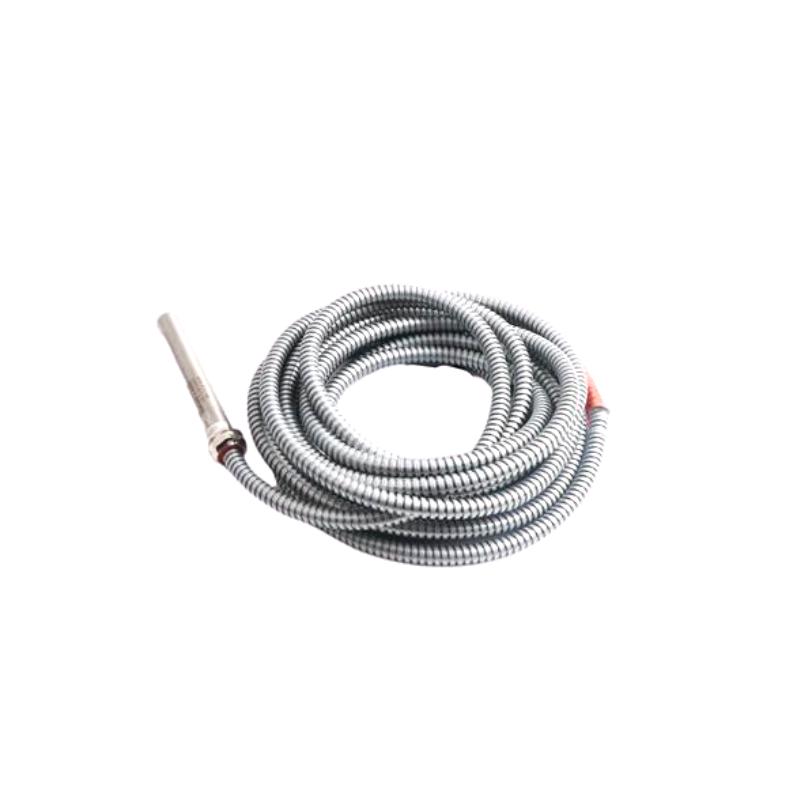
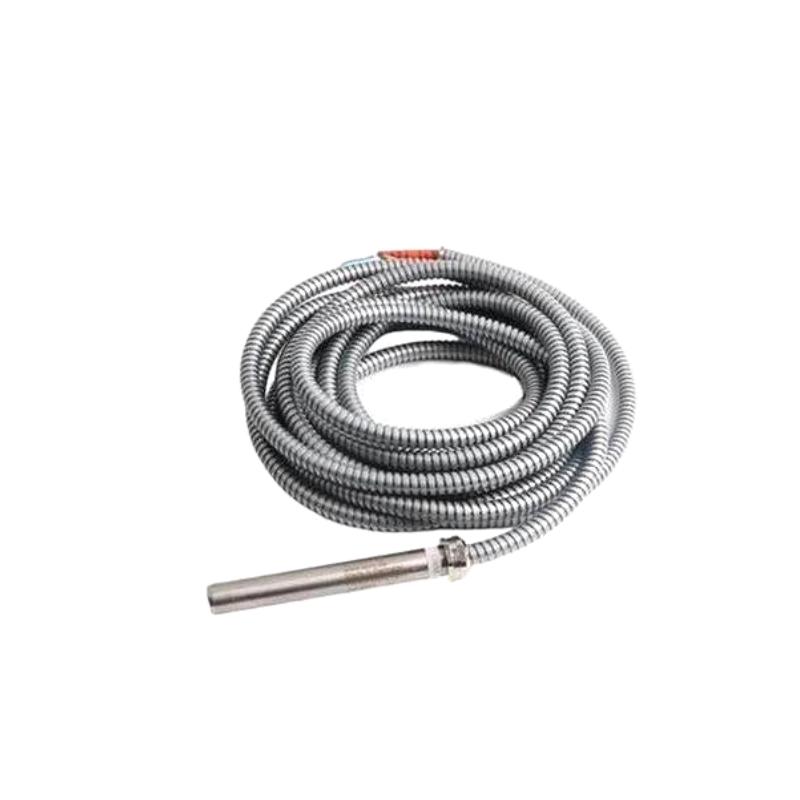
- Epro
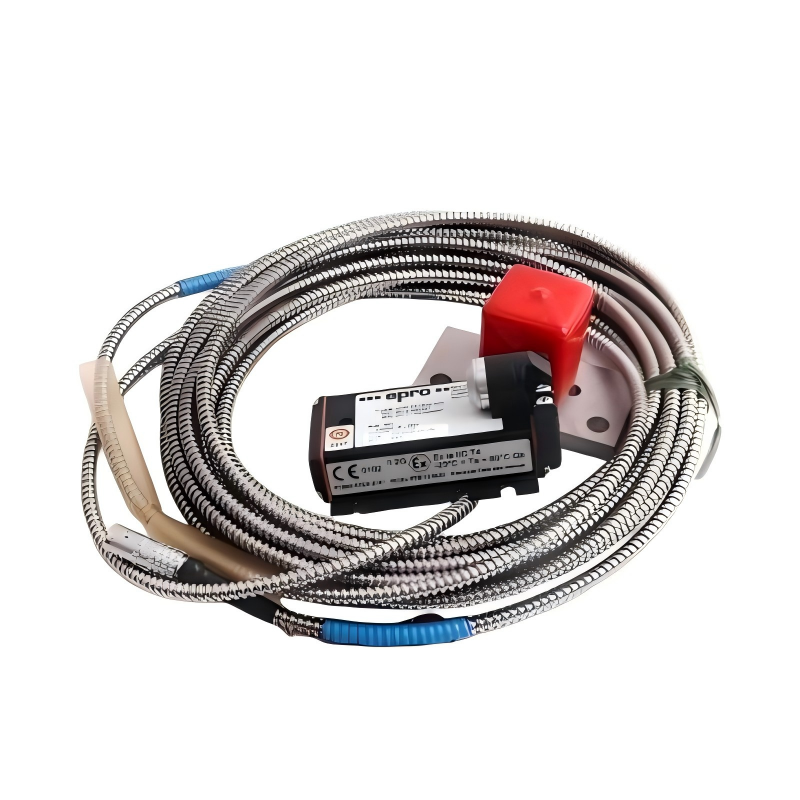
- PR9376/010-011+CON021
- Speed/Proximity Sensor
- Germany
- 14 mm
- 0.33 kg
- Xiamen, China
- New & In Stock
- T/T, PayPal, Western Union
- 1 Year
- 1-3 Working Days
- DHL, UPS, TNT, FedEx and EMS.
- 24-Hour Service
- COO
- 6
Our advantage

Global Logistics
We have a 10-year logistics and express cooperation agreement, so our products can be shipped to any place in the world.

Brand new and original
Our products are imported in bulk from the place of origin. Because of the cooperative relationship, our products are all original and 100% new.

24-hour service
We provide 7*24 hours service to our customers. We will be there whenever you need us.

Price advantage
All our products are priced very favorably because we have our own warehouse and supply.
| Company Information | |||
| [email protected] | |||
| Mobile | +8615980777398 | ||
| +8615980777398 | |||
| 15980777398 |
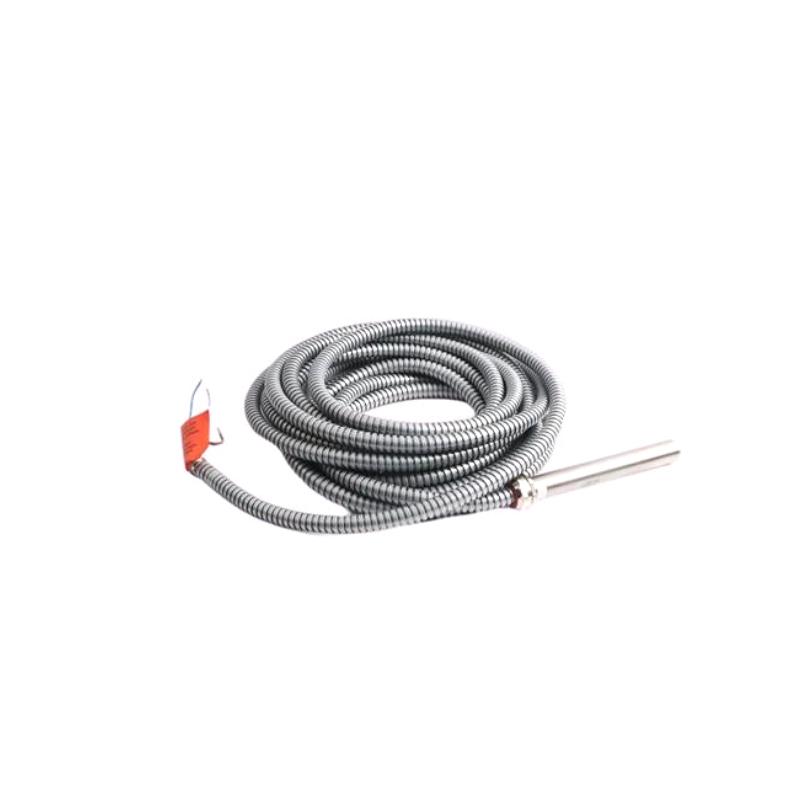
Product Overview
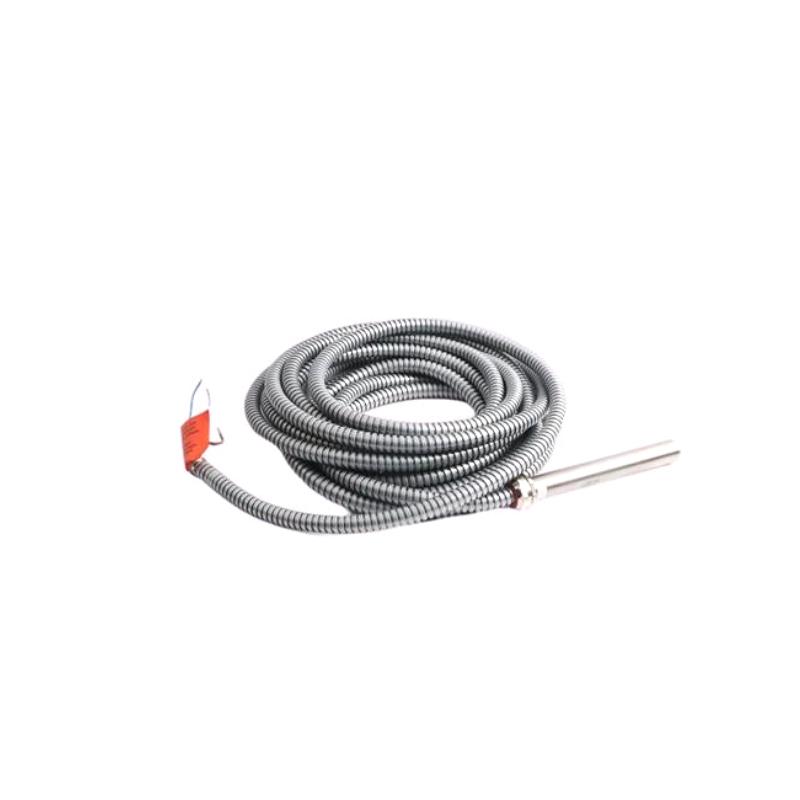
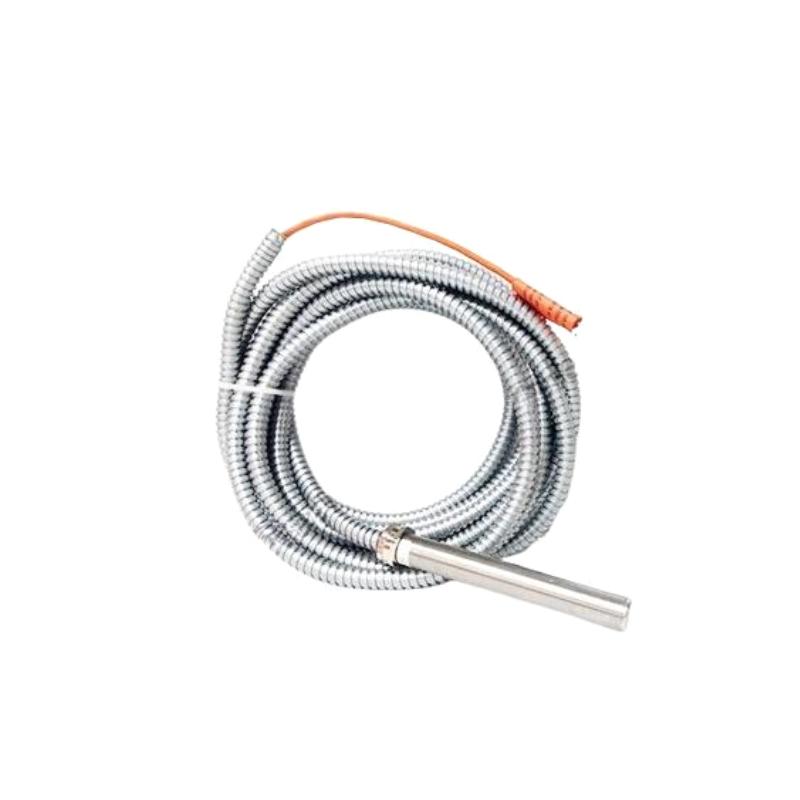
The Epro PR9376/010-011 Speed/Proximity Sensor is a non-contact Hall-effect sensor designed to detect rotational speed and the passage of ferromagnetic targets in industrial machinery. It is part of the Epro machinery monitoring sensor range and is used in applications where reliable speed signals are required for equipment monitoring, process control, and machinery protection.
Unlike contact-based sensing devices, the PR9376 detects changes in the magnetic field as a gear tooth or other suitable ferromagnetic target passes the sensing face. This operating principle allows the sensor to generate electrical pulses without physically touching the rotating component.
The sensor is intended for critical rotating machinery, including steam turbines, gas turbines, hydro turbines, compressors, pumps, and fans. Its pulse output can be used by compatible monitoring equipment to calculate rotational speed, identify changes in operating conditions, and support overspeed or zero-speed monitoring strategies.
The PR9376/010-011 uses a stainless-steel sensor housing and a PTFE-insulated cable. Its 14 mm cylindrical construction supports installation in appropriately designed mounting arrangements. The sensor operates from a 10–30 V DC supply and can detect target events at frequencies up to 12 kHz.
The sensor’s non-contact operating principle is particularly useful in machinery environments where mechanical wear, vibration, and continuous rotation make contact-based detection unsuitable. Correct installation, target material, and air-gap adjustment are essential for reliable signal generation.
The product designation supplied for this listing includes CON021. However, the PR9376 is a Hall-effect speed sensor, while Emerson’s published CON021 documentation identifies the converter for PR6422, PR6423, PR6424, and PR6426 eddy-current sensor systems. The compatibility of a PR9376 and CON021 combination should therefore be confirmed against the exact order configuration before treating them as a matched assembly.
Technical Specifications
| Parameter | Specification |
|---|---|
| Brand | Epro |
| Manufacturer | Emerson |
| Model | PR9376/010-011 |
| Product Type | Hall Effect Speed/Proximity Sensor |
| Measuring Principle | Non-contact Hall effect |
| Detection Method | Magnetic target / gear-tooth detection |
| Sensor Diameter | 14 mm |
| Supply Voltage | 10–30 V DC |
| Maximum Current Consumption | 25 mA |
| Maximum Operating Frequency | 12 kHz |
| Output | One pulse cycle per revolution or gear tooth |
| Rise/Fall Time | Approximately 1 µs |
| Output Voltage at Specified Test Condition | High: greater than 10 V; Low: less than 1 V |
| Recommended Air Gap | 1 mm for Module 1; 1.5 mm for Module 2 or greater |
| Target Material | Magnetic soft iron or steel |
| Sensor Housing | Stainless steel |
| Cable Material | PTFE |
| Operating Temperature | -25°C to +100°C |
| Storage Temperature | -40°C to +100°C |
| Protection Rating | IP67 |
| CON021 | Additional designation supplied; compatibility requires confirmation |
| Dimensions | 14 mm sensor diameter |
| Weight Provided | 0.33 kg |
Note: The 0.33 kg weight is retained as the supplied listing value. Published PR9376 documentation gives different sensor-only weights for different versions. Confirm the exact cable configuration and whether the listing weight includes accessories or packaging.
Function and Working Principle
The PR9376/010-011 detects the movement of magnetic targets and converts that movement into electrical pulses. Its Hall-effect sensing technology makes it suitable for rotational-speed measurement and proximity detection in industrial machinery.
1. Hall-Effect Detection
The Hall effect occurs when a magnetic field influences the electrical behavior of a sensing element. In the PR9376, changes in the magnetic field caused by a passing ferromagnetic target are detected by the sensor’s internal electronic circuit.
When a gear tooth approaches the sensing face, the magnetic field changes. As the tooth moves away and the next space passes the sensor, the field changes again. The sensor processes these variations and generates an electrical output signal.
Because the sensing process is non-contact, there is no mechanical contact between the sensor and the rotating target during normal operation.
2. Gear-Tooth Pulse Generation
When the sensor is installed near a suitable rotating gear, each passing tooth produces a corresponding signal cycle.
The monitoring system can use the pulse frequency to calculate rotational speed. The number of pulses per revolution depends on the number of detectable teeth on the target.
For example, when a gear has 60 detectable teeth, the monitoring system receives 60 pulses for each complete revolution. By measuring the pulse frequency, the system can calculate the shaft’s rotational speed.
This method is useful for monitoring turbines, compressors, pumps, and other rotating machinery.
3. High-Speed Signal Response
The PR9376 supports a maximum operating frequency of 12 kHz. Its published rise and fall time is approximately 1 µs, allowing it to respond quickly to changes in target position.
Fast signal response is important when monitoring machinery operating at high rotational speeds. It helps the monitoring system receive consistent pulse information without excessive signal delay.
Actual performance depends on the target geometry, installation clearance, wiring, electrical loading, and the receiving monitoring equipment.
4. Speed and Proximity Detection
Although the PR9376 is commonly used for rotational-speed measurement, it can also serve as a proximity sensor for suitable magnetic targets.
When a ferromagnetic object approaches the sensing face, the magnetic field changes and the sensor output responds accordingly. This makes the device useful for detecting the passage or presence of mechanical targets.
The target must have suitable magnetic properties. Non-magnetic materials such as plastic and many non-ferrous metals will not provide the intended detection response.
5. Signal Transmission to Monitoring Equipment
The sensor generates electrical pulses that can be received by compatible machinery monitoring or control equipment.
A monitoring system can use the signal to calculate speed, identify missing pulses, detect abnormal rotational behavior, or support overspeed protection logic.
The PR9376 is a sensing component rather than a complete machinery protection system. Alarm thresholds, trip logic, signal validation, and equipment shutdown functions must be implemented by the connected monitoring and control architecture.
Role in Industrial Control and Machinery Protection Systems
The PR9376/010-011 can provide an important measurement input for industrial machinery monitoring systems. Rotational speed is a key operating parameter for many machines, and reliable speed information supports both routine control and protective functions.
1. Rotational-Speed Monitoring
A monitoring system can calculate shaft speed by measuring the frequency of pulses generated by the sensor.
This information can be displayed to operators or transmitted to a control system for process supervision. Changes in rotational speed may indicate variations in operating conditions, process demand, or mechanical performance.
2. Overspeed Protection
Turbines and other high-speed machines must operate within defined speed limits. Excessive rotational speed can create serious mechanical risks.
The PR9376 can provide a pulse signal to a compatible overspeed monitoring system. The monitoring equipment evaluates the signal against configured limits and can initiate an alarm or protective response when an overspeed condition is detected.
For safety-related protection, the complete sensor, signal-processing, logic, and shutdown arrangement must be designed and validated as a system.
3. Zero-Speed and Low-Speed Detection
A speed-monitoring system can identify the absence or reduction of expected pulses. This information can help determine whether a shaft has stopped or is rotating below a configured threshold.
Zero-speed detection is useful during startup, shutdown, maintenance, and equipment interlocking. The monitoring system must distinguish a genuine stopped condition from a sensor fault, disconnected cable, or missing target signal.
4. PLC and DCS Integration
The PR9376 can provide speed-related signals to compatible monitoring equipment, PLC interfaces, or DCS systems.
In many installations, the sensor is connected first to a dedicated machinery monitoring channel. The monitoring system then communicates speed values, alarm states, or diagnostic information to the plant control network.
The electrical input requirements of the receiving device must be checked before connecting the sensor directly to a PLC or DCS input.
5. Equipment Condition Monitoring
Changes in speed can be important when evaluating the condition and operation of rotating equipment.
By combining the PR9376 signal with vibration, temperature, pressure, and other process measurements, maintenance teams can develop a more complete understanding of machine behavior.
The sensor does not directly measure shaft vibration or displacement. It provides speed or proximity information that can complement other machinery monitoring measurements.
Industrial Applications
The PR9376/010-011 is intended for applications requiring non-contact speed or proximity detection in industrial rotating machinery.
1. Steam Turbines
Steam turbines operate at controlled rotational speeds and require dependable speed information for normal operation and protection.
The PR9376 can detect gear-tooth movement and provide pulse signals to compatible monitoring equipment. This information can support speed indication, startup monitoring, and overspeed protection arrangements.
2. Gas Turbines
Gas turbines require continuous monitoring of rotational behavior during startup, normal operation, and shutdown.
A suitable Hall-effect sensor can provide speed pulses to a monitoring system, allowing the control and protection architecture to evaluate shaft speed against operating limits.
The installation must account for temperature, vibration, target geometry, cable routing, and the sensor’s permitted environmental conditions.
3. Hydro Turbines
Hydro turbine installations use rotational-speed information to monitor operating conditions and coordinate equipment operation.
The PR9376 can be used to detect suitable rotating targets and supply speed pulses to the monitoring system. Its IP67 sealing rating supports installation in appropriately protected industrial environments.
4. Industrial Compressors
Compressors often operate continuously and may be part of essential production or utility systems.
Speed measurement helps operators monitor machine operation and identify abnormal speed conditions. The PR9376 can provide a non-contact signal for compatible compressor monitoring systems.
5. Industrial Pumps
Pumps used in power generation, chemical processing, water treatment, and general manufacturing may require rotational-speed supervision.
The sensor can detect a suitable magnetic target on the rotating assembly and provide pulse information to a compatible monitoring device.
6. Industrial Fans
Large industrial fans and ventilation systems use rotating shafts that may require speed supervision.
A non-contact sensor can provide speed information without introducing mechanical contact with the rotating assembly. This is useful where continuous operation and reduced sensor wear are important.
Installation and System Integration
Correct sensor installation is essential for accurate pulse generation and reliable operation.
1. Verify the Target Material
The PR9376 is designed to detect magnetic soft iron or steel targets. The target material should have suitable magnetic properties.
Before installation, confirm that the gear or trigger target is compatible with the Hall-effect sensing principle. Non-magnetic targets should not be assumed to produce a reliable signal.
2. Set the Correct Air Gap
The distance between the sensor face and the target is an important installation parameter.
The published PR9376 specifications identify an air gap of approximately:
- 1 mm for Module 1 gearing.
- 1.5 mm for Module 2 or larger gearing.
The actual permitted clearance depends on the gear profile and installation conditions. Excessive clearance can reduce the magnetic signal and result in missing or unstable pulses.
3. Align the Sensor Correctly
The sensing face must be positioned according to the manufacturer’s installation drawing and the geometry of the rotating target.
The sensor should be secured firmly to prevent movement caused by vibration. Its orientation should allow the gear teeth or trigger marks to pass the sensing area consistently.
4. Check the Power Supply
The specified supply range is 10–30 V DC, with maximum current consumption of 25 mA.
Use a stable power supply within the permitted range. Check the wiring polarity, cable condition, grounding arrangement, and electrical requirements of the receiving equipment before energizing the sensor.
5. Route the Cable Properly
The PR9376 uses a PTFE-insulated cable. Cable routing should minimize mechanical damage, excessive bending, and interference from high-current power conductors.
Keep sensor wiring separated from motor cables and switching circuits where required. Use suitable shielding and grounding practices according to the system design.
6. Verify the Output Signal
After installation, rotate the target under controlled conditions and confirm that the sensor generates a stable pulse signal.
Check pulse amplitude, frequency, and consistency across the expected operating-speed range. Confirm that the receiving monitoring equipment recognizes the signal correctly.
7. Confirm CON021 Compatibility
The supplied product designation includes CON021, but this combination requires special verification.
The official CON021 documentation identifies the converter for PR6422, PR6423, PR6424, and PR6426 eddy-current sensors. It does not list PR9376 as a compatible Hall-effect sensor.
Before connecting or ordering the combination, verify the exact hardware, signal type, electrical interface, and manufacturer-approved documentation. Do not assume that the CON021 can directly process the PR9376 output.
Compatible System Components
The PR9376/010-011 is normally used with a suitable power supply, target assembly, wiring, and monitoring equipment.
| Component | Function | Compatibility Considerations |
|---|---|---|
| Ferromagnetic gear or trigger wheel | Provides the magnetic target for detection | Must use suitable magnetic soft iron or steel |
| 10–30 V DC power supply | Supplies operating power to the sensor | Confirm voltage stability and current capacity |
| Machinery monitoring system | Receives and evaluates speed pulses | Verify input signal type and electrical specifications |
| PLC | Uses speed information for machine-control logic | Confirm input voltage, frequency capability, and signal conditioning |
| DCS | Supervises process and equipment operating conditions | Integration may be through a monitoring system or suitable interface |
| Shielded sensor cable | Transmits the pulse signal | Confirm cable length, shielding, and termination |
| Sensor mounting bracket | Holds the sensor in its operating position | Must maintain alignment and air gap under vibration |
| Overspeed protection equipment | Evaluates shaft speed against protective limits | Verify the complete safety and trip architecture |
| CON021 converter | Signal converter for specified PR642x eddy-current sensors | Do not assume compatibility with PR9376; verify the exact combination |
Alternative Models and Replacement Considerations
When replacing a PR9376/010-011, the replacement should be selected according to the sensing principle, mechanical dimensions, electrical output, cable configuration, and monitoring-system requirements.
| Alternative or Related Model | Description | Replacement Considerations |
|---|---|---|
| Epro PR9376/000 series | Related Hall-effect speed sensor configuration | Compare cable and mechanical configuration |
| Epro PR9376/010-001 | Related PR9376 sensor variant | Verify cable length and exact ordering code |
| Epro PR9376/010-021 | Related Hall-effect speed/proximity sensor variant | Confirm cable configuration and electrical specifications |
| Epro PR9376-P series | Related Hall-effect sensor family | Compare dimensions, cable arrangement, and output specifications |
| Other industrial Hall-effect speed sensors | Non-contact magnetic speed detection | Verify pulse output, supply voltage, target material, and frequency range |
Before selecting a replacement, compare:
- Hall-effect sensing principle.
- Sensor diameter and mounting thread.
- Sensor length and mechanical clearance.
- Supply voltage and current consumption.
- Maximum operating frequency.
- Pulse output levels and response time.
- Permitted target material.
- Required gear-to-sensor air gap.
- Cable length, shielding, and cable protection.
- Operating temperature and environmental rating.
- Compatibility with the existing machinery monitoring input.
A sensor with the same diameter may still have a different electrical output or signal response. Replacement approval should therefore include both mechanical and electrical verification.
Key Advantages
Non-Contact Detection
The Hall-effect sensing principle detects magnetic targets without physical contact, avoiding the mechanical wear associated with contact-based detection.
High-Speed Signal Response
The published maximum operating frequency of 12 kHz and approximately 1 µs rise/fall time support applications requiring fast pulse detection.
Stainless-Steel Construction
The stainless-steel sensor housing provides a robust mechanical enclosure for industrial installation.
IP67 Protection
The IP67 rating provides protection against dust ingress and temporary immersion under the specified test conditions, making the sensor suitable for appropriately designed industrial environments.
Wide Supply Range
The 10–30 V DC supply range supports integration with common industrial control power arrangements, subject to the receiving system’s requirements.
Turbomachinery Applications
The sensor is designed for speed and proximity measurements on critical rotating equipment, including turbines, compressors, pumps, and fans.
Maintenance-Friendly Operation
Because the sensor operates without contacting the rotating target, normal sensing operation does not create contact wear between the probe and gear.
Technical FAQs
1. What is the Epro PR9376/010-011?
The Epro PR9376/010-011 is a non-contact Hall-effect speed/proximity sensor designed to detect the passage of suitable ferromagnetic targets. It is commonly used for rotational-speed monitoring in industrial machinery.
2. What is the sensor diameter?
The specified sensor diameter is 14 mm. Confirm the complete mechanical dimensions and mounting requirements before preparing the installation.
3. What supply voltage does the PR9376 require?
The published supply range is 10–30 V DC, with maximum current consumption of 25 mA.
4. What is its maximum operating frequency?
The PR9376 supports a maximum operating frequency of 12 kHz. The actual measurable speed depends on the number of target teeth and the monitoring system’s input capability.
5. What type of target can it detect?
It is designed for magnetic soft iron or steel targets. Non-magnetic materials should not be used as trigger targets unless a suitable magnetic target element is provided.
6. What air gap should be used?
The published specifications indicate approximately 1 mm for Module 1 gearing and 1.5 mm for Module 2 or larger gearing. Follow the exact installation drawing and target geometry requirements.
7. Can the PR9376 measure shaft speed?
Yes. When installed near a suitable rotating gear, it generates pulses as the teeth pass the sensing face. Compatible monitoring equipment can use the pulse frequency to calculate shaft speed.
8. Is the PR9376 suitable for turbine applications?
Yes. It is designed for speed and proximity measurement on critical rotating machinery, including steam, gas, and hydro turbines. The complete monitoring and protection arrangement must be engineered for the specific machine.
9. Is CON021 compatible with the PR9376/010-011?
This should not be assumed. Emerson’s published CON021 documentation identifies PR6422, PR6423, PR6424, and PR6426 eddy-current sensors as compatible sensor types. PR9376 is a Hall-effect sensor, so the proposed combination must be verified before procurement or installation.
10. What should be checked before purchasing a replacement?
Confirm the complete model number, sensor diameter, cable configuration, supply voltage, pulse output, maximum frequency, target material, air gap, and compatibility with the installed monitoring equipment. Also verify whether the quoted weight includes accessories or packaging.
Procurement and Maintenance Recommendations
When purchasing the Epro PR9376/010-011, verify the complete model designation and cable configuration. The suffix is important because different versions may have different cable lengths or mechanical arrangements.
For replacement projects, compare the existing sensor’s physical dimensions, mounting thread, electrical supply, output characteristics, and target geometry. A sensor that looks similar may not generate the same pulse signal or work correctly with the existing monitoring input.
If the product is supplied with a CON021 component, request confirmation of the exact part number and manufacturer-approved compatibility documentation. The PR9376 and CON021 should not be treated as a matched assembly without this verification.
For maintenance, inspect the sensor housing, cable, mounting bracket, and sensing face. Check that the installation gap remains within the specified range and that vibration has not changed the sensor position. Periodically verify the pulse signal and compare measured speed with an independent reference where appropriate.
When storing spare sensors, keep the cable protected from sharp bends, crushing, moisture, and mechanical damage. Maintain clear identification records so that the correct model can be selected during future maintenance work.
Conclusion
The Epro PR9376/010-011 Speed/Proximity Sensor is a non-contact Hall-effect sensing device designed for rotational-speed and magnetic-target detection in industrial machinery. With a 14 mm sensor diameter, 10–30 V DC supply range, maximum operating frequency of 12 kHz, and IP67 protection, it is suitable for properly engineered monitoring installations involving turbines, compressors, pumps, and fans.
Its reliable operation depends on correct target material, air-gap adjustment, electrical wiring, and compatibility with the receiving monitoring equipment. The additional CON021 designation requires particular attention because the published CON021 documentation specifies PR642x eddy-current sensor compatibility rather than PR9376 Hall-effect sensor compatibility. Confirming this configuration before purchase or installation helps avoid incorrect component selection and integration problems.