

ProductPRODUCT
Featured products
Contact Us
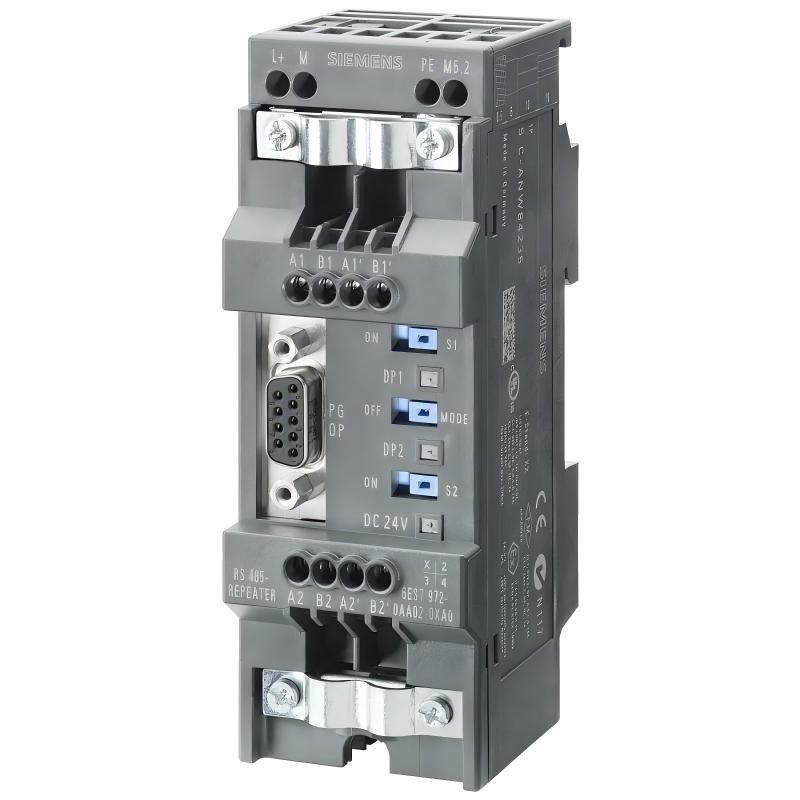
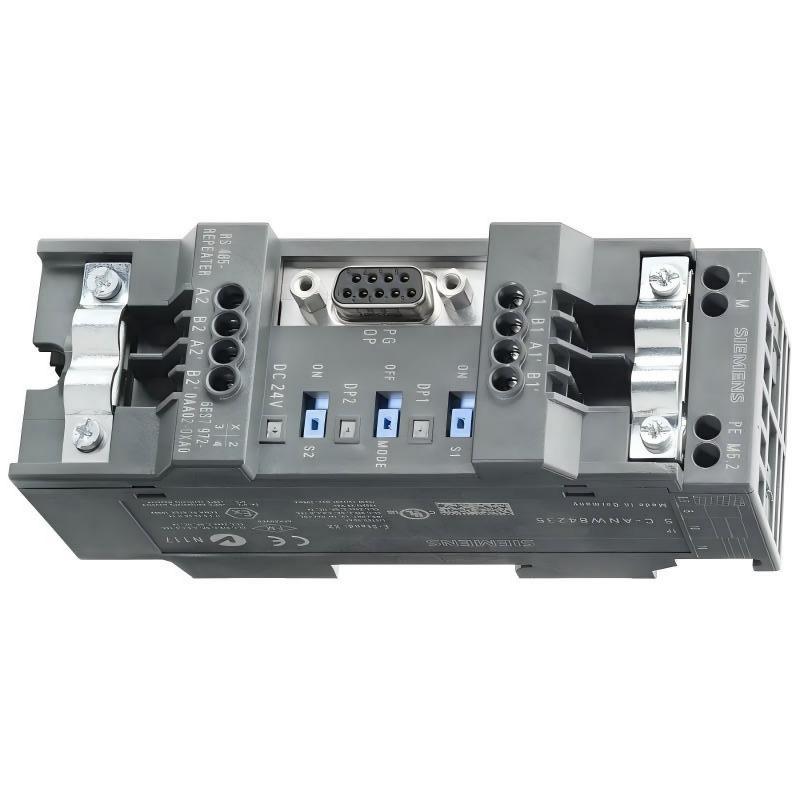
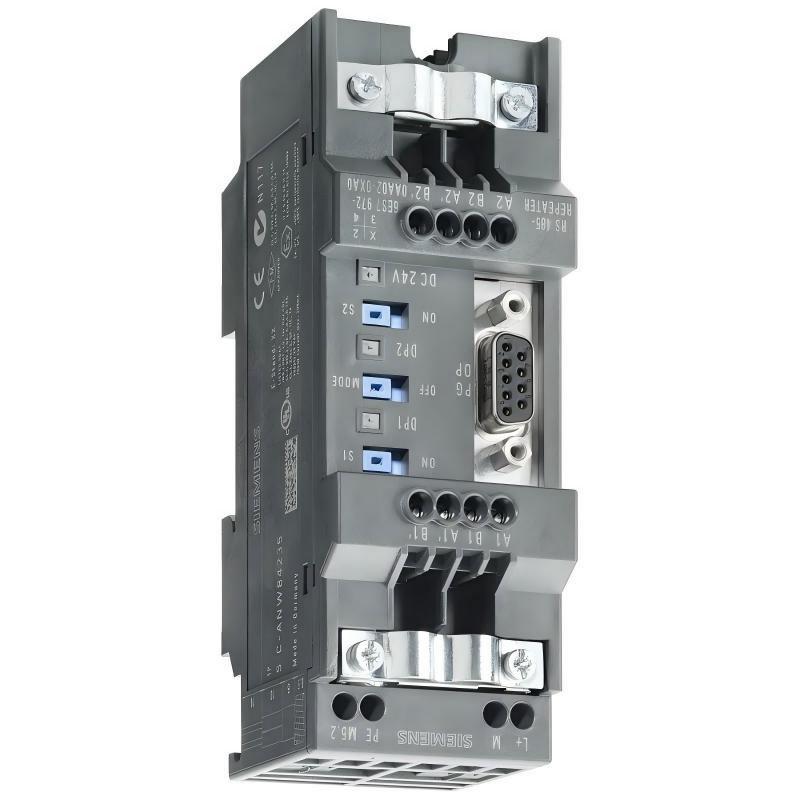
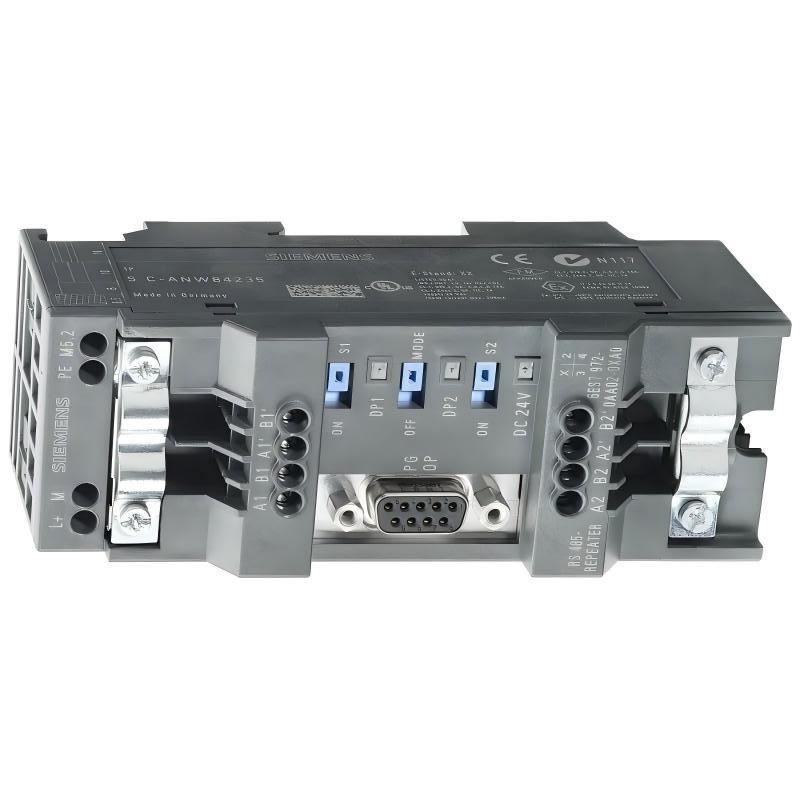
- Siemens
- 6AG1972-0AA02-7XA0
- Repeater
- Germany
- 45 x 128 x 67 mm
- 0.25 kg
- Xiamen, China
- New & In Stock
- T/T, PayPal, Western Union
- 1 Year
- 1-3 Working Days
- DHL, UPS, TNT, FedEx and EMS.
- 24-Hour Service
- COO
- 3
Our advantage

Global Logistics
We have a 10-year logistics and express cooperation agreement, so our products can be shipped to any place in the world.

Brand new and original
Our products are imported in bulk from the place of origin. Because of the cooperative relationship, our products are all original and 100% new.

24-hour service
We provide 7*24 hours service to our customers. We will be there whenever you need us.

Price advantage
All our products are priced very favorably because we have our own warehouse and supply.
| Company Information | |||
| [email protected] | |||
| Mobile | +8615980777398 | ||
| +8615980777398 | |||
| 15980777398 |
Product Overview
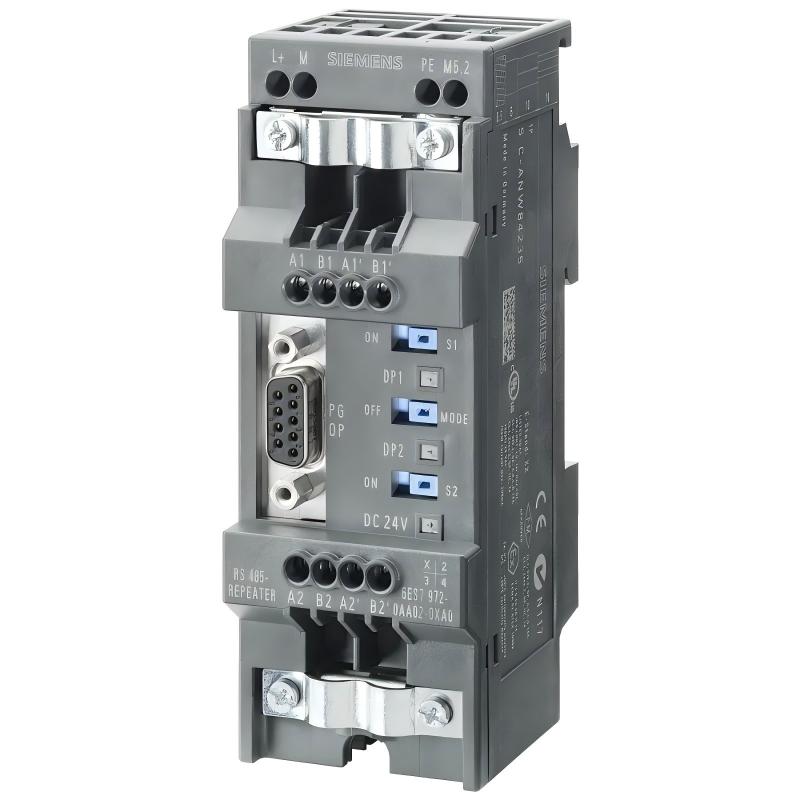
The Siemens 6AG1972-0AA02-7XA0 SIPLUS DP RS-485 Repeater is an industrial communication device designed to connect and extend PROFIBUS and MPI bus systems. It belongs to the Siemens SIPLUS product family, which provides automation components with additional protection for operation in demanding industrial environments.
This repeater is based on the standard Siemens 6ES7972-0AA02-0XA0 RS-485 repeater design and incorporates conformal coating to improve the protection of its electronic assemblies. It is intended for communication networks where reliable data transmission, network segmentation, and extended bus connectivity are important.
In a PROFIBUS network, the repeater regenerates and forwards communication signals between connected bus segments. This helps maintain signal quality and supports the connection of additional network nodes. It can also help engineers organize larger installations into separate communication segments, making network layout and troubleshooting more manageable.
The 6AG1972-0AA02-7XA0 supports PROFIBUS/MPI communication with a maximum transmission rate of 12 Mbps and up to 31 nodes. It operates from a 24 V DC supply, with a permitted voltage range of 20.4–28.8 V DC. Its IP20 enclosure and extended operating temperature range of -25°C to +70°C make it suitable for appropriately designed industrial control cabinets.
The module is particularly relevant to Siemens automation systems using PROFIBUS DP or MPI communication. It can be used in production lines, distributed I/O installations, process automation systems, and other industrial networks that require reliable RS-485 communication.
Technical Specifications
| Parameter | Specification |
|---|---|
| Brand | Siemens |
| Product Family | SIPLUS |
| Model | 6AG1972-0AA02-7XA0 |
| Product Type | PROFIBUS DP RS-485 Repeater |
| Base Model | 6ES7972-0AA02-0XA0 |
| Communication Interface | RS-485 |
| Supported Bus Systems | PROFIBUS / MPI |
| Maximum Transmission Rate | 12 Mbps |
| Maximum Number of Nodes | 31 |
| Rated Supply Voltage | 24 V DC |
| Permitted Supply Voltage | 20.4–28.8 V DC |
| Maximum Current Consumption | Depends on PG/OP socket loading; up to 200 mA under the specified loaded condition |
| Degree of Protection | IP20 |
| Operating Temperature | -25°C to +70°C |
| Storage and Transport Temperature | -40°C to +70°C |
| Conformal Coating | Included |
| Connection Method | Terminal module for supply; two terminal blocks for PROFIBUS cables |
| Dimensions | 45 × 128 × 67 mm |
| Weight Provided | 0.25 kg |
| Typical Application | PROFIBUS/MPI network segmentation and signal regeneration |
Note: The weight above is the supplied listing value. Siemens technical documentation specifies an approximate weight of 350 g. Confirm the actual unit and shipping weight before dispatch.
Function and Working Principle
The primary function of the 6AG1972-0AA02-7XA0 is to regenerate RS-485 communication signals and connect separate sections of a PROFIBUS or MPI network.
In an industrial communication network, signals can become weaker or less reliable as cable length and network complexity increase. The repeater receives signals from one network segment, processes and regenerates them, and forwards them to another segment.
1. RS-485 Signal Regeneration
RS-485 is a differential communication standard widely used in industrial fieldbus systems. It transmits data using two signal conductors, allowing communication to remain reliable in electrically noisy industrial environments when the network is correctly installed.
The repeater receives incoming signals and regenerates their electrical characteristics before forwarding them. This helps maintain communication quality between connected bus segments.
2. PROFIBUS Network Extension
PROFIBUS networks are commonly used to connect PLCs, remote I/O stations, drives, and other automation devices.
When a network installation requires additional segments, a repeater can provide an interface between them. This allows engineers to organize network topology more flexibly while maintaining the required electrical and communication specifications.
The actual achievable network length depends on the transmission speed, cable type, topology, and applicable PROFIBUS installation rules.
3. Communication Segment Isolation
A repeater can separate network sections electrically. This helps reduce the effect of certain electrical disturbances between segments and supports more organized troubleshooting.
Segment separation can also make it easier to identify the location of communication problems. If a fault occurs in one section, engineers can inspect that segment without treating the entire network as a single uninterrupted cable path.
4. High-Speed Data Transmission
The module supports transmission rates up to 12 Mbps. This allows it to be used in PROFIBUS/MPI installations with different communication-speed requirements.
The selected baud rate must be consistent across the relevant network devices. Cable length and network configuration must also comply with the requirements for the selected transmission speed.
5. Environmental Protection
Unlike a standard industrial repeater configuration, this SIPLUS model includes conformal coating on its electronic assemblies.
The coating provides additional protection against certain environmental influences, including humidity and chemically or mechanically active substances within the specified classification limits. It does not eliminate the need for correct cabinet design, cable protection, or environmental assessment.
Role in Industrial Automation Systems
The 6AG1972-0AA02-7XA0 is a communication infrastructure component rather than a controller or I/O module. Its role is to support data exchange between devices connected to a PROFIBUS or MPI network.
PLC Communication
A Siemens PLC can communicate with distributed devices through PROFIBUS. The repeater helps connect network segments and maintain the electrical signal quality required for data transmission.
In a typical installation, the PLC acts as the controller, while the repeater supports communication between the controller and field devices.
Distributed I/O Networks
Remote I/O stations allow sensors and actuators to be connected to a central control system without routing every signal directly to the main PLC cabinet.
A repeater can help organize the PROFIBUS network connecting these distributed stations. This is particularly useful in production facilities where devices are spread across different machines or plant areas.
Drive and Motor Control Communication
Industrial drives may exchange control commands, operating values, and diagnostic information through PROFIBUS.
The repeater can support the communication infrastructure connecting these drives to the automation controller. The drive, PLC, and network configuration must all support the selected PROFIBUS communication method.
Industrial Network Maintenance
Communication faults can interrupt machine operation even when the controller and field devices are functioning correctly.
By dividing a network into separate segments, repeaters can help maintenance personnel locate wiring problems, termination issues, or communication disturbances more efficiently.
Industrial Applications
The Siemens SIPLUS RS-485 repeater can be used in industrial environments where PROFIBUS/MPI communication is required and additional environmental protection is beneficial.
1. Manufacturing Production Lines
Automated production lines often contain multiple PLC-controlled machines, remote I/O stations, and motor drives. A PROFIBUS repeater can help connect network sections across different equipment areas.
This supports organized communication architecture and simplifies the connection of distributed automation devices.
2. Process Automation
Process plants may use PROFIBUS communication to connect controllers, remote I/O, and instrumentation systems.
The repeater can support communication between different network segments, provided that the devices and network topology meet the applicable PROFIBUS requirements.
3. Distributed Control Cabinets
Large industrial installations frequently use several control cabinets located in different areas of a facility.
A repeater can help divide the communication network into manageable segments and support reliable data exchange between connected automation equipment.
4. Industrial Machinery
Packaging machines, material-handling systems, assembly equipment, and processing machinery may use PROFIBUS for communication between controllers and peripheral devices.
The module can support network expansion where the communication design requires an additional RS-485 segment.
5. Environments with Demanding Conditions
The SIPLUS conformal coating makes this model relevant to installations where electronic assemblies may encounter environmental influences beyond those normally expected in a clean control cabinet.
However, the IP20 protection rating still applies. The module should be installed in a suitable enclosure and should not be exposed directly to water or uncontrolled contamination.
Installation and System Integration
Proper installation is essential for reliable PROFIBUS communication. The repeater should be installed according to Siemens documentation and the electrical requirements of the overall network.
1. Power Supply Connection
The module uses a nominal 24 V DC supply and accepts an operating voltage between 20.4 V and 28.8 V DC.
Before connecting the supply, verify polarity, voltage stability, grounding arrangements, and the available current capacity. The power supply should be suitable for the complete connected control system.
2. PROFIBUS Cable Connection
The repeater provides two terminal blocks for PROFIBUS cable connections.
Connect the bus conductors according to the terminal markings and the applicable PROFIBUS wiring guidelines. Maintain consistent conductor identification and ensure that cable shielding is handled correctly.
Incorrect wiring or poor shielding connections may lead to intermittent communication problems.
3. Network Termination
PROFIBUS RS-485 segments require correct bus termination at the appropriate ends of each segment.
Incorrect termination can cause signal reflections and communication errors, particularly at higher transmission rates.
Check the network topology and termination arrangements whenever a repeater is added or a cable segment is modified.
4. Baud Rate and Cable Length
The repeater supports communication rates up to 12 Mbps. However, the permitted cable length depends on the selected transmission speed and the type of cable used.
Engineers should calculate segment lengths according to PROFIBUS specifications rather than assuming that every baud rate supports the same cable distance.
5. Mounting and Environmental Conditions
The module measures 45 × 128 × 67 mm and is designed for industrial control installations.
Provide sufficient space for wiring and maintenance access. Maintain suitable cabinet ventilation and avoid placing the device near sources of excessive heat or electrical interference.
The specified operating temperature range is -25°C to +70°C. The conformal coating provides additional protection, but installation conditions must remain within the manufacturer’s limits.
6. Commissioning and Communication Testing
After installation, verify the supply voltage, cable connections, grounding, shielding, and termination.
Check that connected devices communicate at the intended baud rate. Use appropriate PROFIBUS diagnostic tools to identify communication errors and confirm that all network segments operate correctly.
Document the final topology, cable routes, node addresses, and communication settings for future maintenance.
Compatible System Components
The 6AG1972-0AA02-7XA0 is intended for use in PROFIBUS/MPI communication networks. The following equipment categories may form part of a compatible automation installation.
| Component | Function | Integration Considerations |
|---|---|---|
| Siemens SIMATIC S7 PLC | Central automation control | Confirm the PLC supports the required PROFIBUS/MPI interface |
| PROFIBUS DP remote I/O | Connects distributed sensors and actuators | Verify device addresses and network configuration |
| Siemens ET 200 systems | Distributed automation and I/O | Check the specific interface module and PROFIBUS compatibility |
| PROFIBUS-compatible drives | Motor control and status communication | Confirm the drive’s communication interface and baud rate |
| 24 V DC power supply | Provides operating power | Maintain the specified voltage range and adequate current capacity |
| PROFIBUS bus cable | Carries RS-485 communication signals | Use suitable PROFIBUS cable and correct shielding |
| PROFIBUS connectors | Connect devices to the bus | Ensure correct connector type and termination functionality |
| Engineering workstation | Configuration and diagnostics | Use compatible Siemens engineering and diagnostic tools |
| Industrial control cabinet | Houses automation equipment | Provide suitable environmental protection and cable routing |
Compatibility should be confirmed against the exact hardware and network design. The repeater does not replace a PLC, bus controller, or network interface module.
Alternative Models and Replacement Considerations
When replacing or upgrading the 6AG1972-0AA02-7XA0, engineers should distinguish between the SIPLUS version and its standard Siemens base model.
| Model | Description | Replacement Considerations |
|---|---|---|
| 6AG1972-0AA02-7XA0 | SIPLUS DP RS-485 Repeater | Extended environmental protection and conformal coating |
| 6ES7972-0AA02-0XA0 | Standard DP RS-485 Repeater | Base model; compare environmental requirements before substitution |
| Other Siemens PROFIBUS repeaters | Alternative PROFIBUS network components | Verify transmission rate, segment configuration, and electrical characteristics |
| Siemens diagnostic repeater products | Network monitoring and diagnostic options | May provide additional diagnostic functions but are not automatically direct replacements |
Before selecting an alternative, compare:
- Supported PROFIBUS and MPI communication functions.
- Maximum transmission rate.
- Permitted number of nodes.
- Supply voltage and current consumption.
- Number and type of bus connections.
- Network termination requirements.
- Isolation and grounding characteristics.
- Operating temperature range.
- Environmental protection and conformal coating.
- Mounting dimensions and wiring arrangement.
A standard repeater may provide similar communication functions but may not offer the same environmental protection as the SIPLUS version. For installations in demanding conditions, this difference should be considered carefully.
Key Advantages
PROFIBUS and MPI Network Support
The module supports the connection of PROFIBUS/MPI bus systems, making it useful in Siemens automation networks that rely on RS-485 communication.
High Transmission Rate
With a maximum transmission rate of 12 Mbps, the repeater supports high-speed PROFIBUS communication when the complete network is configured accordingly.
Network Segmentation
The repeater allows communication networks to be divided into separate electrical segments, supporting more flexible installation layouts and easier troubleshooting.
Conformal Coating
The SIPLUS design includes conformal coating to provide additional protection for electronic assemblies in demanding industrial environments.
Extended Temperature Range
Its specified operating range of -25°C to +70°C supports installations with wider temperature requirements than many standard control-room environments.
Compact Installation Design
The compact dimensions of 45 × 128 × 67 mm allow the module to be incorporated into appropriately designed industrial control cabinets.
Siemens Automation Compatibility
The repeater is designed for PROFIBUS/MPI communication systems commonly found in Siemens SIMATIC automation installations.
Technical FAQs
1. What is the Siemens 6AG1972-0AA02-7XA0?
It is a Siemens SIPLUS DP RS-485 repeater designed to connect and extend PROFIBUS/MPI communication networks. It is based on the standard 6ES7972-0AA02-0XA0 repeater and includes conformal coating.
2. What communication protocols does this repeater support?
It supports PROFIBUS and MPI bus systems using RS-485 communication. The exact network configuration must follow the relevant protocol requirements.
3. What is the maximum transmission speed?
The maximum supported transmission rate is 12 Mbps. The actual network speed must be configured consistently across connected devices.
4. How many nodes can be connected?
The specified maximum is 31 nodes. The complete network design must also account for segment topology, cable length, and the electrical characteristics of the connected devices.
5. What power supply does the module require?
It requires a nominal 24 V DC supply and supports an operating range of 20.4–28.8 V DC.
6. What is the operating temperature range?
The specified operating temperature range is -25°C to +70°C. Storage and transportation temperatures are specified separately.
7. What is the difference between 6AG1972-0AA02-7XA0 and 6ES7972-0AA02-0XA0?
The 6AG1972-0AA02-7XA0 is the SIPLUS version based on the 6ES7972-0AA02-0XA0. It includes conformal coating and an extended environmental specification for demanding industrial conditions.
8. Does the repeater require PROFIBUS termination?
Yes. PROFIBUS RS-485 segments require correct termination at the appropriate segment ends. Follow the network topology and Siemens installation instructions when configuring termination.
9. Can this repeater be used with Siemens S7 PLCs?
It can be used in compatible Siemens automation networks where the PLC and connected devices support PROFIBUS/MPI communication. Verify the PLC interface and network configuration before installation.
10. What should be checked before purchasing this module?
Verify the complete model number, physical condition, terminal condition, supply requirements, and communication compatibility. For replacement projects, also compare the environmental specifications and conformal coating requirements.
Procurement and Maintenance Recommendations
When sourcing the Siemens 6AG1972-0AA02-7XA0, verify that the complete order number matches the required SIPLUS version. The standard 6ES7972-0AA02-0XA0 and SIPLUS 6AG1972-0AA02-7XA0 share a basic repeater design, but their environmental specifications are not identical.
For new, surplus, or refurbished units, request clear product-label photographs and confirm the unit’s condition. Check the terminal blocks, housing, mounting features, and any signs of contamination or physical damage.
During installation, verify the 24 V DC supply, PROFIBUS wiring, shielding, and termination. Confirm that the baud rate and cable lengths are suitable for the network design.
For preventive maintenance, inspect cable connections and grounding points, monitor communication diagnostics, and investigate intermittent bus faults promptly. Keep the module installed in an enclosure that provides suitable environmental protection.
Maintain updated network documentation, including node addresses, segment layout, cable routes, and communication settings. This information can reduce troubleshooting time and help maintenance teams restore communication after equipment replacement.
Conclusion
The Siemens 6AG1972-0AA02-7XA0 SIPLUS DP RS-485 Repeater is an industrial communication component designed for PROFIBUS/MPI network segmentation and signal regeneration. Based on the 6ES7972-0AA02-0XA0, it supports transmission rates up to 12 Mbps, a maximum of 31 nodes, and a 24 V DC power supply.
Its conformal coating and -25°C to +70°C operating temperature range make it suitable for selected industrial environments where additional protection is required. For maintenance, network expansion, and replacement projects, engineers should verify the exact model, communication parameters, wiring arrangement, and environmental requirements before installation.