

ProductPRODUCT
Featured products
Contact Us
- Siemens
- 6ES7552-1AA00-0AB0
- Time-Based Digital I/O Technology Module
- Germany
- 35 × 147 × 129 mm
- 0.436 kg
- Xiamen, China
- New & In Stock
- T/T, PayPal, Western Union
- 1 Year
- 1-3 Working Days
- DHL, UPS, TNT, FedEx and EMS.
- 24-Hour Service
- COO
- 7
Our advantage

Global Logistics
We have a 10-year logistics and express cooperation agreement, so our products can be shipped to any place in the world.

Brand new and original
Our products are imported in bulk from the place of origin. Because of the cooperative relationship, our products are all original and 100% new.

24-hour service
We provide 7*24 hours service to our customers. We will be there whenever you need us.

Price advantage
All our products are priced very favorably because we have our own warehouse and supply.
| Company Information | |||
| [email protected] | |||
| Mobile | +8615980777398 | ||
| +8615980777398 | |||
| 15980777398 |
Product Overview
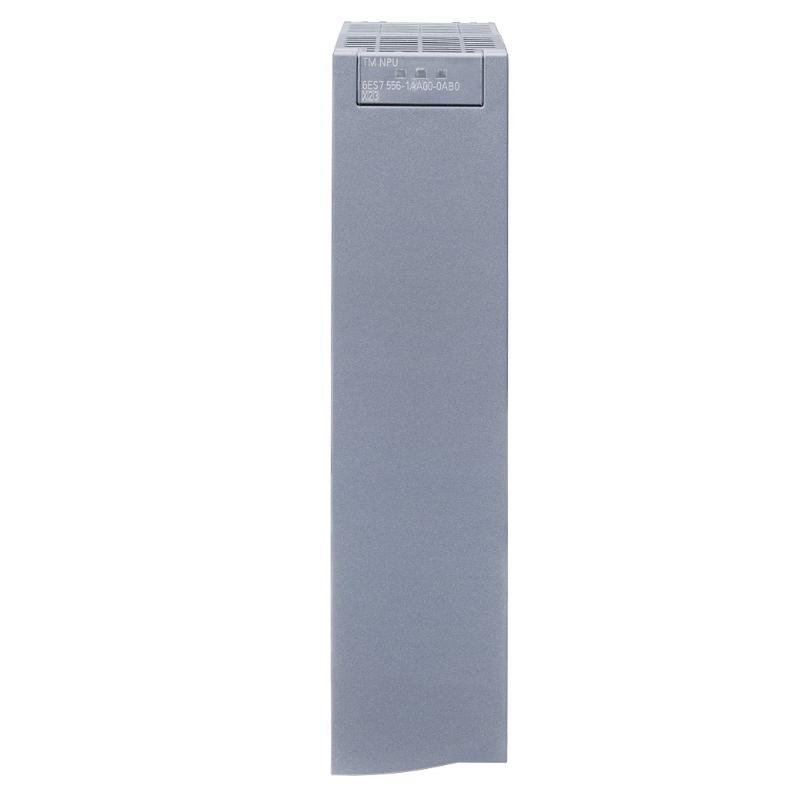
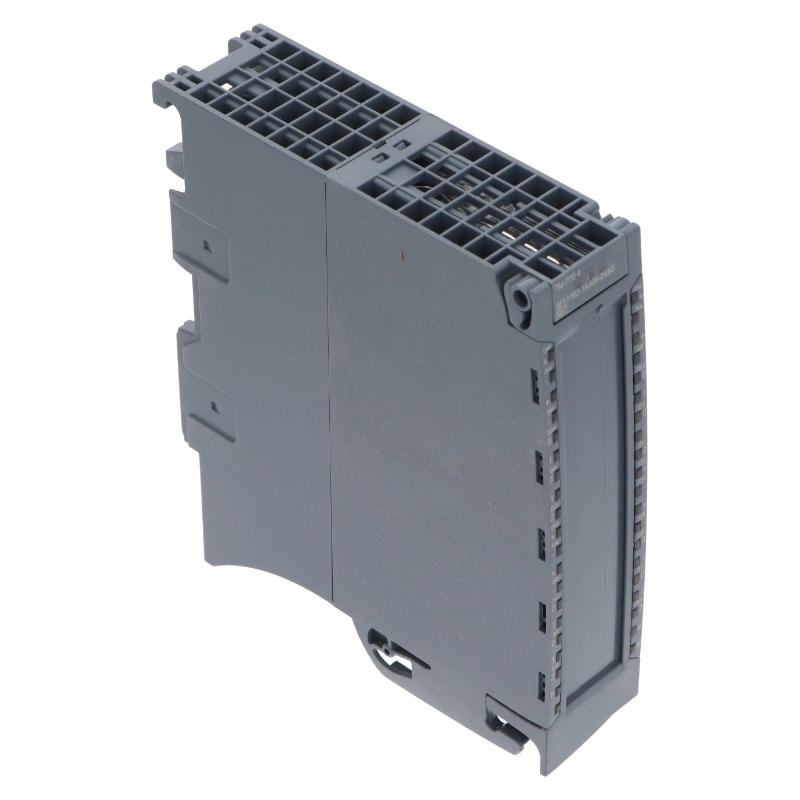
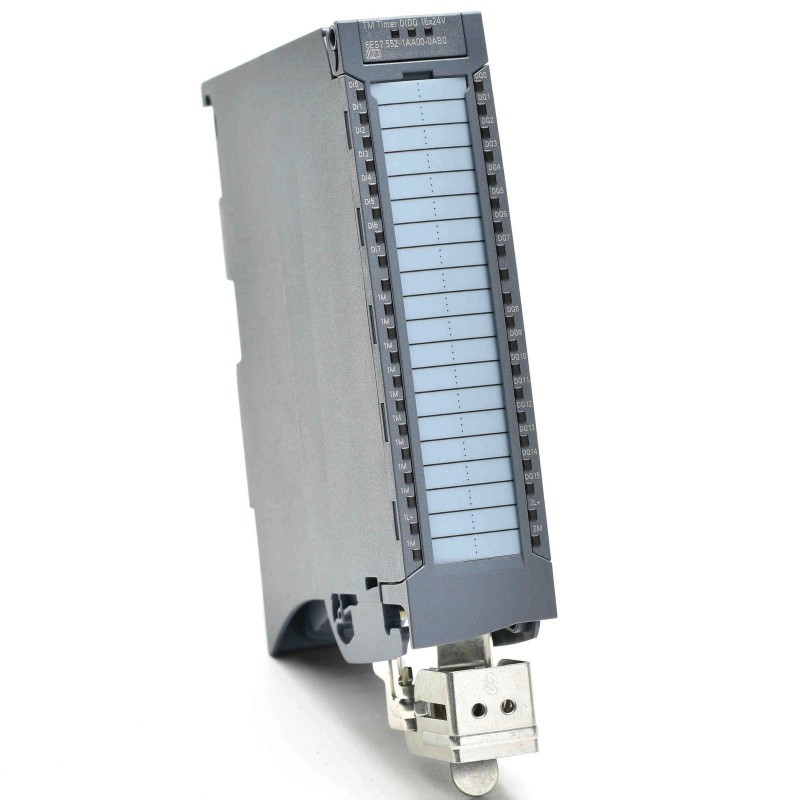
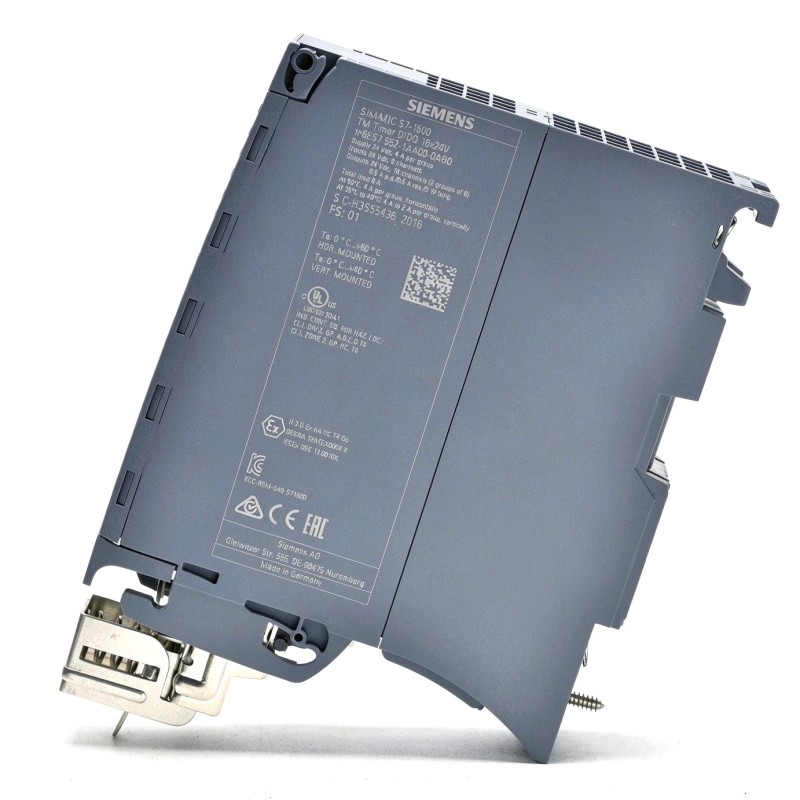
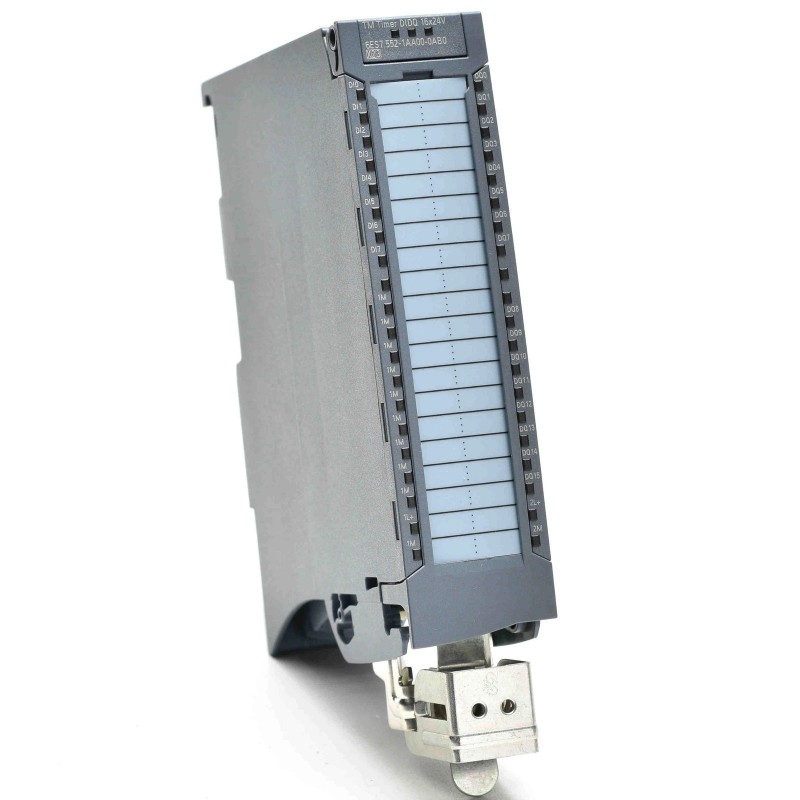
The Siemens 6ES7552-1AA00-0AB0 SIMATIC S7-1500 Time-Based Digital I/O Technology Module, also known as TM Timer DIDQ 16x24V, is a specialized technology module for time-critical digital signal acquisition and output control in SIMATIC S7-1500 automation systems. It combines configurable digital inputs and outputs with timestamping, pulse-width modulation (PWM), oversampling, and counting functions.
Unlike conventional digital I/O modules, which primarily process signals according to the PLC’s normal input and output update cycle, the TM Timer DIDQ 16x24V supports time-based signal processing with microsecond-level resolution. This makes it particularly useful in machines where the timing of a sensor signal or output transition directly affects production accuracy.
The module supports up to eight digital inputs and 16 digital outputs, depending on the selected channel configuration. Its channels can be assigned to different technological functions, allowing the same module to handle ordinary digital signals, time-controlled switching, pulse generation, and counting tasks.
A typical application is a high-speed packaging machine where photoelectric sensors detect products moving along a conveyor. With timestamping enabled, the module records the arrival time of input edges. The PLC can use these time values to calculate product spacing, identify irregular feeding intervals, or coordinate downstream actuators. This is particularly useful when ordinary cyclic input processing does not provide sufficient timing resolution.
The output functions are equally important. The module supports time-controlled digital outputs, allowing switching events to be scheduled with precise timing. For example, a pneumatic ejector can be triggered at a calculated time after a product passes a detection sensor. This helps synchronize the actuator response with the actual movement of the product.
Another useful function is 32x oversampling. Instead of acquiring only one input value per bus cycle, the module can collect multiple signal samples within the configured cycle. This is valuable when monitoring short signal changes or acquiring digital information that would otherwise be missed by conventional cyclic sampling.
The module also supports PWM output. This function generates pulse signals with configurable timing characteristics and can be used for controlling suitable actuators, regulating equipment, or generating periodic control signals.
For applications involving incremental encoders, the integrated counter functions allow the module to evaluate pulse sequences and track movement. It supports up to four counters, with a maximum counting frequency of 200 kHz using quadruple evaluation.
The 6ES7552-1AA00-0AB0 also supports isochronous operation, allowing signal acquisition and output switching to be synchronized with the S7-1500 system cycle. This is particularly relevant in machines where several control functions must operate according to a common timing reference.
For engineers working with high-speed packaging, automated assembly, material handling, and synchronized production equipment, the TM Timer DIDQ 16x24V provides a combination of digital I/O and specialized timing functions within one S7-1500 technology module.
Technical Specifications
| Parameter | Specification |
|---|---|
| Manufacturer | Siemens |
| Model | 6ES7552-1AA00-0AB0 |
| Product Type | TM Timer DIDQ 16x24V |
| Product Family | SIMATIC S7-1500 |
| Module Category | Time-Based Digital I/O Technology Module |
| Number of Digital Inputs | Up to 8 |
| Number of Digital Outputs | Up to 16 |
| Rated Input Voltage | 24 V DC |
| Rated Load Voltage | 24 V DC |
| Permissible Supply Voltage Range | 19.2–28.8 V DC |
| Input Signal Type | 24 V DC |
| Digital Input Signal “1” | +11 to +30 V |
| Digital Input Signal “0” | -5 to +5 V |
| Digital Input Functions | Timestamping, Counting, Oversampling, Hardware Enable |
| Maximum Timestamped Inputs | 8 |
| Maximum Timestamped Outputs | 16 |
| Oversampling | 32x |
| Integrated Counters | 4 |
| Maximum Counting Frequency | 200 kHz with quadruple evaluation |
| Encoder Support | 24 V Incremental Encoder, Asymmetrical |
| Encoder Evaluation | A/B Tracks with 90° Phase Offset |
| PWM Output | Supported |
| Maximum PWM Channels | 16, depending on parameterization |
| Digital Output Type | Transistor |
| Standard Output Current | 0.5 A per output |
| High-Speed Output Current | 0.1 A per output |
| Maximum Output Current per Module | 8 A, subject to derating |
| Maximum Output Current per Group | 4 A |
| Short-Circuit Protection | Electronic / Thermal |
| Output Switching Frequency | Up to 10 kHz with resistive load |
| Minimum Bus Cycle Time in Isochronous Mode | 250 µs |
| Maximum Jitter | 1 µs |
| Input Address Space | 44 Bytes |
| Output Address Space | 74 Bytes |
| Backplane Bus Power Consumption | 1.3 W |
| Typical Power Loss | 5 W |
| Configuration Software | STEP 7 / TIA Portal V13 Update 3 or Later |
| Diagnostic Functions | Supply Voltage Monitoring, Short-Circuit Detection |
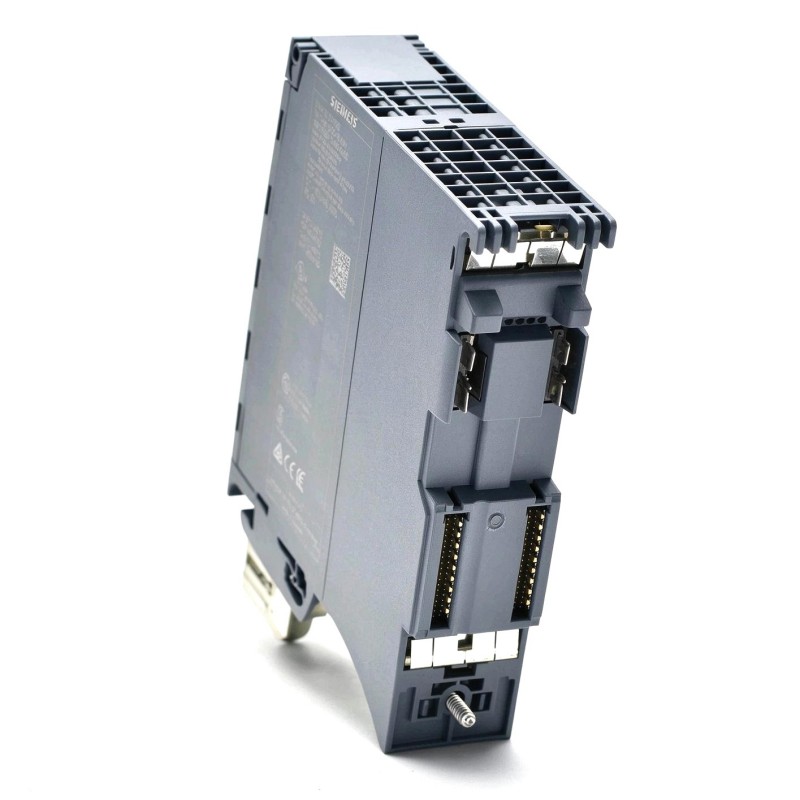
| Mounting Type | S7-1500 Mounting Rail |
| Dimensions | 35 × 147 × 129 mm |
| Weight | 0.436 kg |
Product Features
- Configurable Digital I/O: Supports up to eight digital inputs and 16 digital outputs, depending on channel configuration.
- Time-Stamped Inputs: Records input signal transitions with precise time information for event analysis and synchronization.
- Time-Controlled Outputs: Executes scheduled output switching for applications requiring accurate actuator timing.
- 32x Oversampling: Acquires multiple digital samples within a configured cycle to capture fast signal changes.
- Integrated Counter Functions: Provides four counters for pulse evaluation and movement monitoring.
- Incremental Encoder Support: Evaluates asymmetrical 24 V A/B encoder signals with 90° phase displacement.
- PWM Generation: Produces configurable pulse-width-modulated output signals.
- High-Speed Output Operation: Supports dedicated high-speed outputs with reduced switching delays.
- Hardware Enable Functions: Allows digital inputs to control the enabling of configured input or output functions.
- Isochronous Operation: Synchronizes signal acquisition and output processing with the automation system cycle.
- Electrical Protection: Includes electronic and thermal short-circuit protection for digital outputs.
- Channel Diagnostics: Provides status and fault information through integrated LED indicators.
Working Principle
The 6ES7552-1AA00-0AB0 operates as a time-based digital signal processing interface between field devices and the S7-1500 CPU. Its main difference from a conventional digital I/O module is that signal acquisition and output switching can be associated with precise timing information rather than relying exclusively on ordinary cyclic updates.
The basic signal arrangement is:
Field Sensors / Encoders → TM Timer DIDQ 16x24V → S7-1500 Backplane Bus → CPU → Control Program / Actuators
The module provides several operating functions that can be configured according to the machine requirements.
Time-Stamped Signal Acquisition
When timestamping is enabled, the module records the time of configured input signal transitions. Instead of simply reporting that a digital input has changed state, it also provides information about when the event occurred.
Consider a conveyor carrying products at relatively high speed. Two photoelectric sensors detect the same product at different positions. By comparing their recorded timestamps, the PLC can calculate the time required for the product to travel between the sensors. This information can be used to monitor conveyor speed, detect irregular product spacing, or identify unexpected delays.
The module supports timestamped operation for up to eight inputs, depending on the channel configuration.
Time-Controlled Output Switching
The output channels can execute switching operations according to configured timing information. This allows the PLC to schedule output events rather than relying solely on the moment when the next ordinary output update occurs.
For example, a sorting machine may detect a product and calculate when it will reach an ejector position. The controller can use the timing information to schedule the corresponding output signal, allowing the pneumatic actuator to operate at the correct moment.
Up to 16 outputs can be configured for time-controlled operation, depending on the selected operating mode.
Oversampling
The 32x oversampling function allows the module to acquire multiple digital signal samples within one configured bus cycle. This increases the temporal resolution of digital signal acquisition.
In a high-speed assembly process, a sensor may produce short switching pulses that are difficult to capture through conventional cyclic input processing. Oversampling provides a way to acquire these changes as multiple samples rather than relying on a single input state per cycle.
The collected information is then made available to the controller for subsequent processing.
PWM Output Generation
The PWM function generates periodic output pulses with configurable pulse characteristics. By adjusting the pulse-width ratio, the controller can regulate suitable devices that accept PWM control signals.
For example, a machine may use PWM to control a compatible proportional actuator or generate a periodic control signal for an external electronic device. The required output configuration must match the electrical and timing requirements of the connected equipment.
Counter and Encoder Evaluation
The module includes four integrated counters and supports counting frequencies up to 200 kHz with quadruple evaluation.
When connected to a compatible incremental encoder, it evaluates the A/B phase-shifted signals to determine pulse counts and movement direction. The resulting count values can be used by the PLC to monitor conveyor movement, track machine cycles, or measure the rotation of a shaft.
Isochronous Signal Processing
In isochronous mode, the module synchronizes signal acquisition and output processing with the configured S7-1500 system cycle. This is useful when input events, control calculations, and output responses must follow a coordinated timing sequence.
By combining these functions, the TM Timer DIDQ 16x24V can handle applications involving fast sensor signals, accurately timed switching, pulse generation, and encoder-based counting without requiring several separate technology modules.
Role in the SIMATIC S7-1500 Control Architecture
The 6ES7552-1AA00-0AB0 functions as a specialized digital signal interface within the SIMATIC S7-1500 automation architecture. It connects field sensors and actuators to the PLC while handling timing-sensitive operations directly at the technology module level.
A typical system arrangement follows this structure:
Field Sensors / Encoders → TM Timer DIDQ 16x24V → S7-1500 Backplane Bus → CPU → Machine Control Logic → Actuators
| System Component | Function |
|---|---|
| Siemens 6ES7552-1AA00-0AB0 | Handles time-based digital input and output operations |
| SIMATIC S7-1500 CPU | Processes signal information and executes machine control logic |
| S7-1500 Mounting Rail | Provides mechanical mounting for the technology module |
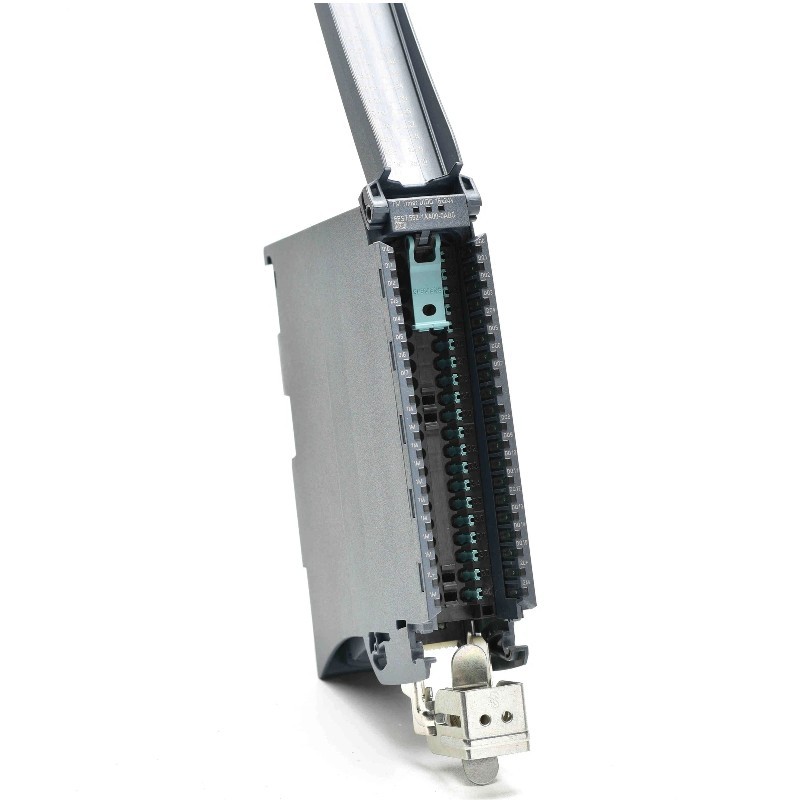
| Front Connector | Provides field wiring connections for digital signals |
| Photoelectric Sensor | Detects product presence and generates input events |
| Proximity Sensor | Detects component positions and machine movements |
| Incremental Encoder | Supplies pulse signals for counting and movement monitoring |
| Digital Actuator | Responds to time-controlled output signals |
| Pneumatic Solenoid Valve | Controls pneumatic movements through digital switching |
| 24 V DC Power Supply | Supplies the module and connected field devices |
| STEP 7 / TIA Portal | Configures the technology module and its time-based functions |
Within the control architecture, the CPU handles higher-level machine logic, while the technology module manages configured timing-related signal functions.
For example, in a packaging machine, the CPU can calculate the required actuator activation time from product position information. The TM Timer DIDQ 16x24V then handles the scheduled output event. This division of tasks is useful when the application requires more precise timing than ordinary cyclic I/O processing can provide.
The module also supports isochronous operation, allowing it to participate in synchronized signal processing across the S7-1500 system. This is particularly useful when several sensor and actuator events must be coordinated within a predictable cycle.
Industrial Applications
| Application | Typical Use |
|---|---|
| High-Speed Packaging Machinery | Recording product detection timestamps and synchronizing packaging actuators |
| Conveyor Systems | Monitoring sensor intervals, product spacing, and movement through counting functions |
| Automated Sorting Equipment | Scheduling ejector signals according to product arrival times |
| Assembly Lines | Capturing short sensor pulses and coordinating machine operations |
| Printing Machinery | Synchronizing digital switching events with machine movement |
| Filling and Bottling Equipment | Timing valve activation and monitoring product detection signals |
| Material Handling | Counting encoder pulses and coordinating conveyor-related operations |
| Automated Inspection Systems | Acquiring high-speed sensor signals through oversampling |
| Pneumatic Control Systems | Generating time-controlled switching signals for solenoid valves |
| Industrial Equipment Monitoring | Monitoring repetitive signals and counting machine operating cycles |
Installation and Maintenance
- Verify the Module Type: Confirm that Siemens 6ES7552-1AA00-0AB0 is the required TM Timer DIDQ 16x24V technology module and that its timing functions match the application.
- Check CPU Compatibility: Verify that the S7-1500 CPU and TIA Portal configuration support the required timestamping, PWM, counting, and oversampling functions.
- Inspect the Module: Examine the housing, mounting contacts, and front connector interface for damage or contamination.
- Prepare the Mounting Rail: Ensure that the S7-1500 mounting rail is correctly installed and that the designated module position is available.
- Isolate the Power Supply: Disconnect the relevant power sources and follow electrical safety procedures before installing or removing the module.
- Install the Module: Mount the TM Timer DIDQ 16x24V in the designated S7-1500 configuration and verify that it is correctly seated.
- Connect Digital Inputs: Wire the photoelectric sensors, proximity switches, and other digital signal sources according to the module’s input assignments.
- Connect Digital Outputs: Connect the required actuators and external equipment while observing the output current limits and the distinction between standard and high-speed output operation.
- Check the 24 V Supply: Verify both load supply connections and confirm that the connected equipment does not exceed the permitted current ratings.
- Configure Channel Functions: Use STEP 7 or TIA Portal to assign the required timestamping, oversampling, counter, PWM, and time-controlled output functions.
- Test Signal Timing: Verify input timestamps, output switching events, counter values, and diagnostic indicators under controlled operating conditions.
- Document the Configuration: Record channel assignments, timing parameters, output loads, encoder connections, and isochronous settings for future maintenance.
Compatible System Components
| Component | Function |
|---|---|
| Siemens 6ES7552-1AA00-0AB0 | TM Timer DIDQ 16x24V time-based digital I/O module |
| SIMATIC S7-1500 CPU | Executes machine logic and processes timing-related data |
| S7-1500 Mounting Rail | Provides mechanical installation support |
| S7-1500 Front Connector | Provides electrical connections for field wiring |
| 24 V DC Power Supply | Supplies the module and connected field equipment |
| Photoelectric Sensor | Generates product detection signals |
| Inductive Proximity Sensor | Detects machine component positions |
| Incremental Encoder | Supplies pulse signals for counting and movement monitoring |
| Pneumatic Solenoid Valve | Controls pneumatic actuators through digital outputs |
| Digital Switching Actuator | Responds to time-controlled output signals |
| STEP 7 / TIA Portal | Configures module parameters and technology functions |
| SIMATIC S7-1500 Automation System | Provides the PLC platform and backplane communication |
Recommended Related Models
| Model | Product Type | Typical Application |
|---|---|---|
| Siemens 6ES7550-1AA01-0AB0 | SIMATIC S7-1500 TM Count 2x24V Counter Module | High-speed 24 V pulse counting and encoder evaluation |
| Siemens 6ES7551-1AB00-0AB0 | SIMATIC S7-1500 TM PosInput 2 Position Detection Module | Incremental and absolute encoder position acquisition |
| Siemens 6ES7553-1AA00-0AB0 | SIMATIC S7-1500 TM PTO 4 Pulse Generator Module | Pulse generation for positioning and drive control |
| Siemens 6ES7521-1BH00-0AB0 | SIMATIC S7-1500 Digital Input Module | General-purpose digital signal acquisition |
| Siemens 6ES7522-1BL01-0AB0 | SIMATIC S7-1500 Digital Output Module | Digital actuator and equipment control |
| Siemens 6ES7523-1BL00-0AA0 | SIMATIC S7-1500 Digital Input/Output Module | Combined digital input and output processing |
Key Advantages
- Combines configurable digital inputs and outputs with specialized timing functions.
- Supports timestamped acquisition of up to eight digital inputs.
- Provides time-controlled switching for up to 16 digital outputs.
- Supports 32x oversampling for high-speed signal acquisition.
- Includes four integrated counters with counting frequencies up to 200 kHz.
- Generates PWM signals for compatible external equipment.
- Supports 24 V incremental encoder signal evaluation.
- Provides isochronous operation for synchronized automation tasks.
- Includes short-circuit protection and channel-level diagnostic indication.
Technical FAQs
What is the main difference between the TM Timer DIDQ 16x24V and a standard S7-1500 digital I/O module?
A standard digital I/O module primarily handles ordinary cyclic input acquisition and output switching. The TM Timer DIDQ 16x24V adds specialized functions such as timestamping, time-controlled outputs, 32x oversampling, PWM generation, and integrated counters. These functions make it more suitable for applications where signal timing and fast switching are important.
How many digital inputs and outputs can the 6ES7552-1AA00-0AB0 support?
The module supports up to eight digital inputs and 16 digital outputs. The actual number of channels available for individual technological functions depends on the selected parameterization. For example, timestamped inputs, PWM outputs, and oversampling channels must be configured according to the module’s supported operating modes.
What is the purpose of the 32x oversampling function?
Oversampling allows the module to acquire multiple digital signal samples within one configured bus cycle. This is useful for detecting short signal changes and capturing faster input patterns than ordinary cyclic acquisition may handle. The resulting samples can be processed by the PLC for monitoring and control applications.
Can the TM Timer DIDQ 16x24V be used for incremental encoder applications?
Yes. The module includes four integrated counters and supports asymmetrical 24 V incremental encoders with A/B signals shifted by 90 degrees. Its maximum counting frequency is 200 kHz with quadruple evaluation. This allows it to monitor movement, rotation, and pulse-based production processes.