

ProductPRODUCT
Featured products
Contact Us
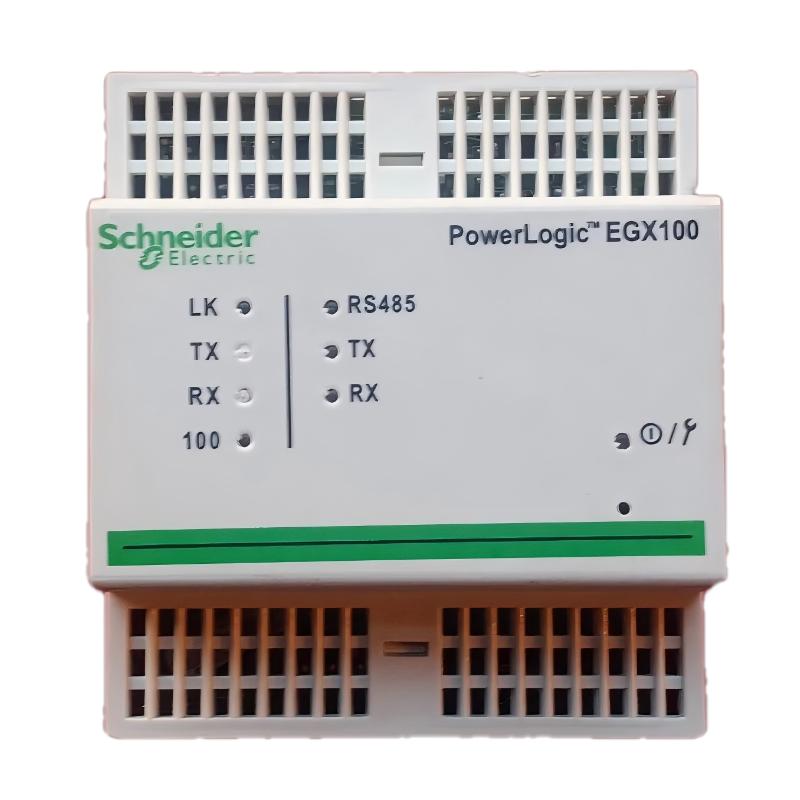
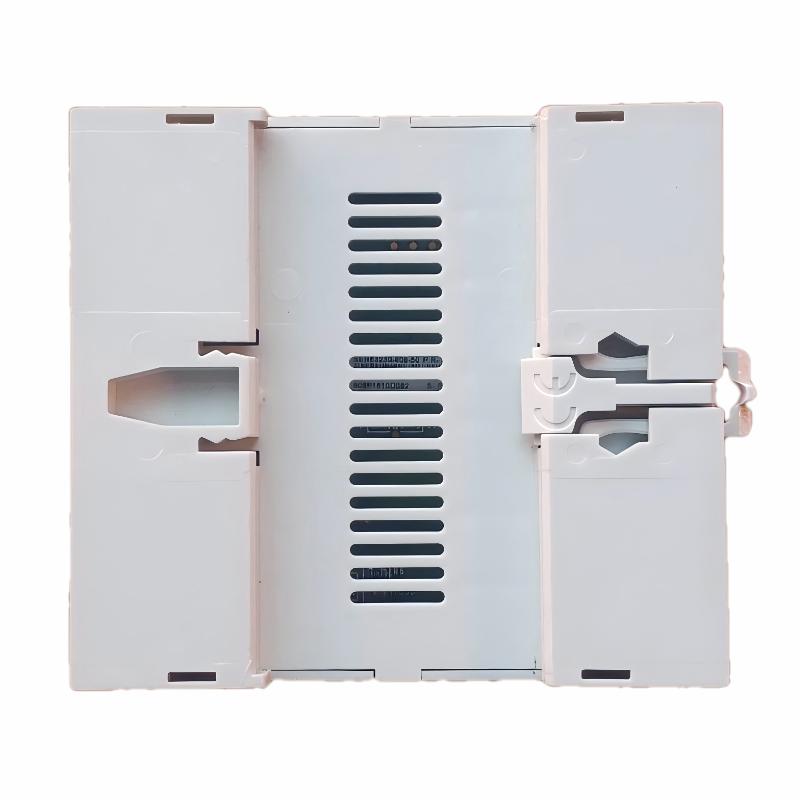
- Schneider
- EGX100
- Ethernet Gateway
- France
- 91 x 72 x 122.568 mm
- 0.17 kg
- Xiamen, China
- New & In Stock
- T/T, PayPal, Western Union
- 1 Year
- 1-3 Working Days
- DHL, UPS, TNT, FedEx and EMS.
- 24-Hour Service
- COO
- 21
Our advantage

Global Logistics
We have a 10-year logistics and express cooperation agreement, so our products can be shipped to any place in the world.

Brand new and original
Our products are imported in bulk from the place of origin. Because of the cooperative relationship, our products are all original and 100% new.

24-hour service
We provide 7*24 hours service to our customers. We will be there whenever you need us.

Price advantage
All our products are priced very favorably because we have our own warehouse and supply.
| Company Information | |||
| [email protected] | |||
| Mobile | +8615980777398 | ||
| +8615980777398 | |||
| 15980777398 |
Product Overview
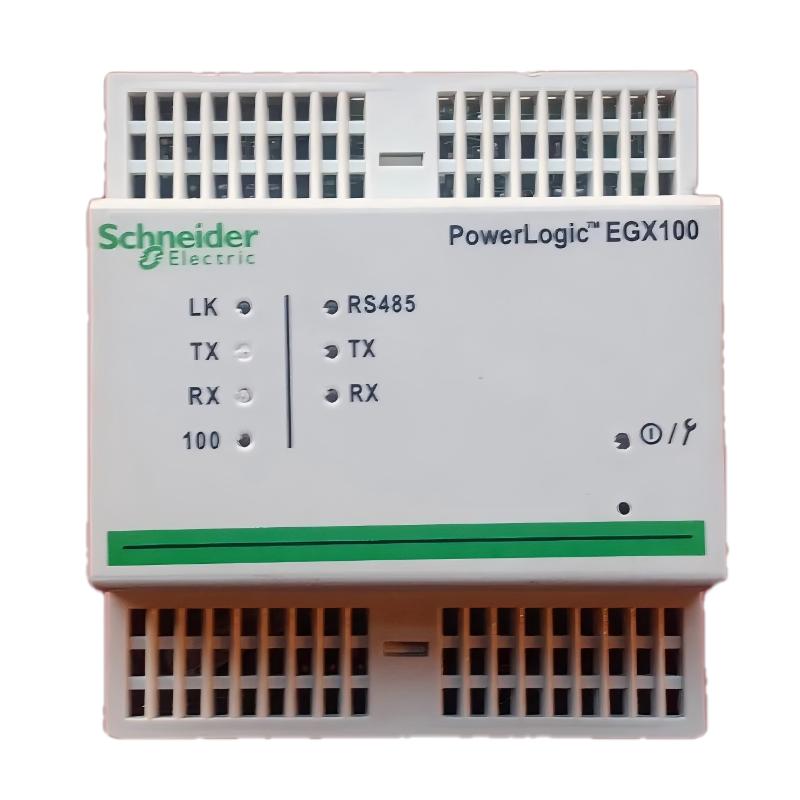
The Schneider Electric EGX100 PowerLogic Ethernet Gateway is an industrial communication device designed to connect serial-based electrical equipment to Ethernet networks. It enables supported power meters, protection devices, and other compatible equipment to exchange data with supervisory systems, energy management platforms, and network-based monitoring applications.
In industrial facilities, electrical equipment often uses serial communication interfaces such as RS-232 and RS-485. Although these interfaces are widely used in legacy installations, modern monitoring systems frequently rely on Ethernet and IP-based communication. The EGX100 bridges this gap by translating supported serial communication protocols into network-accessible data.
The EGX100 belongs to Schneider Electric’s PowerLogic product family, which is used in electrical distribution monitoring and energy management applications. It supports protocols including Modbus TCP/IP, Modbus RTU, Modbus ASCII, PowerLogic SY/MAX, and JBUS. Its Ethernet interface also supports HTTP, FTP, and SNMP functions.
The gateway is designed for DIN rail mounting and uses a nominal 24 V DC control supply. Compatible Power over Ethernet (PoE) installations can also provide power, subject to the applicable requirements. Its compact design allows it to be installed in electrical distribution panels, power monitoring cabinets, and industrial control enclosures.
The EGX100 is now a discontinued product. It remains relevant to facilities maintaining existing PowerLogic systems, especially where established serial devices must continue communicating with Ethernet-based supervisory software. When sourcing a replacement, engineers should verify the installed model, communication protocols, network configuration, and electrical requirements.
Technical Specifications
| Parameter | Specification |
|---|---|
| Brand | Schneider Electric |
| Product Family | PowerLogic |
| Model | EGX100 |
| Product Type | Ethernet Gateway |
| Primary Function | Ethernet-to-serial protocol gateway |
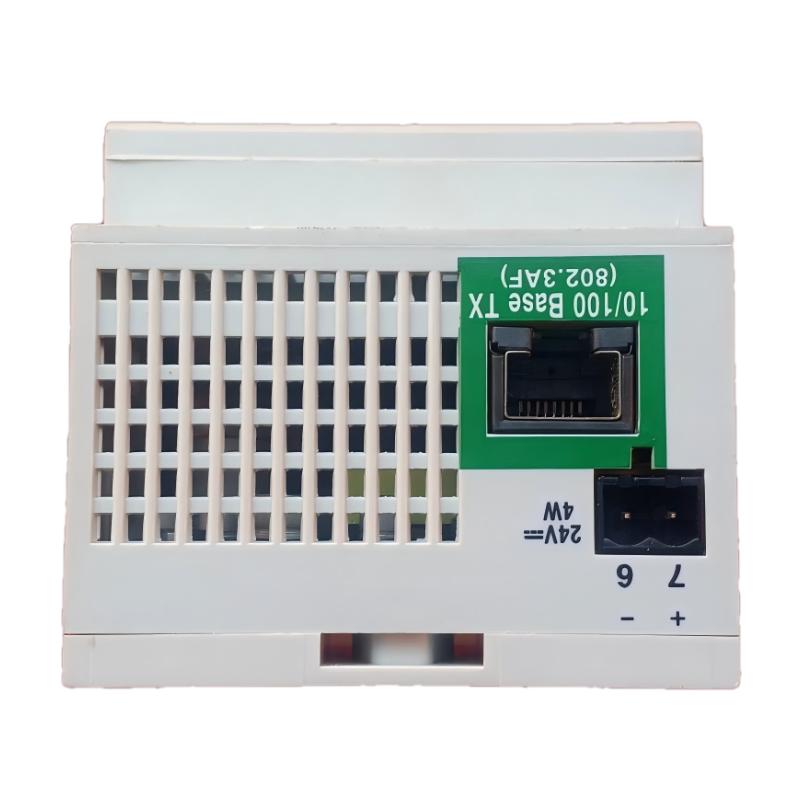
| Ethernet Port | 1 × 10/100 Mbps Ethernet |
| Ethernet Connector | RJ45 |
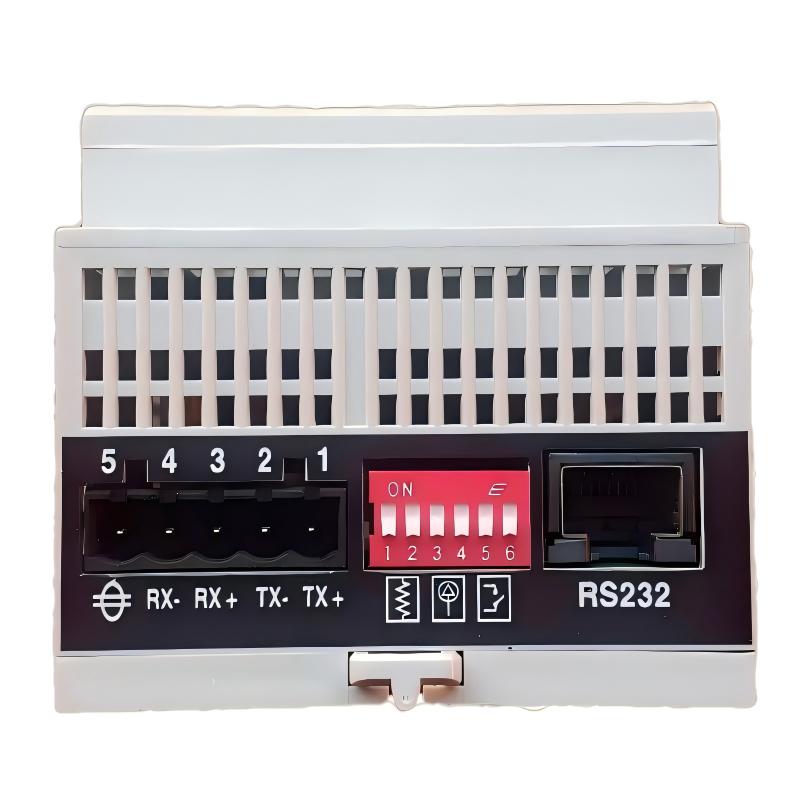
| Serial Interfaces | RS-232 and RS-485 |
| Supported Protocols | Modbus TCP/IP, Modbus RTU, Modbus ASCII, PowerLogic SY/MAX, JBUS |
| Additional Ethernet Services | HTTP, FTP, SNMP |
| Rated Supply Voltage | 24 V DC |
| Alternative Power Method | Compatible IEEE 802.3af PoE |
| Power Consumption | Approximately 4 W, depending on configuration |
| Mounting | 35 mm DIN rail |
| Protection Rating | IP30 |
| Operating Temperature | Approximately -25°C to +70°C |
| Net Weight | 0.17 kg |
| Dimensions Provided | 91 × 72 × 122.568 mm |
| Product Lifecycle | Discontinued |
| Typical Application | Electrical power monitoring and serial-to-Ethernet integration |
Important: The supplied third dimension of 122.568 mm differs from the approximately 65.8–68 mm depth in manufacturer documentation. Confirm the actual dimensions before publishing final mechanical specifications or planning installation space.
Function and Working Principle
The primary function of the EGX100 is to provide a communication path between compatible serial devices and Ethernet-based monitoring systems. Rather than replacing the connected meters or protection devices, it enables their data to be accessed through a network interface.
1. Serial-to-Ethernet Communication
Many electrical meters and protection devices communicate through RS-485 or RS-232 serial connections. These devices may use Modbus RTU, Modbus ASCII, JBUS, or PowerLogic SY/MAX protocols.
The EGX100 connects to supported serial devices and makes their data accessible through its Ethernet interface. This arrangement allows supervisory systems to retrieve measurements without requiring every field device to have a native Ethernet connection.
For example, several compatible power meters can communicate over an RS-485 line while an energy management application accesses the gateway through an Ethernet network.
2. Modbus Protocol Integration
The gateway supports Modbus TCP/IP on the Ethernet side and Modbus RTU or ASCII on the serial side. This allows compatible serial devices to be integrated into an IP-based monitoring architecture.
The gateway handles communication between the supported interfaces and protocols. It does not automatically make every serial device compatible with every supervisory application; the device’s register map, communication settings, and protocol implementation must still be supported.
3. Ethernet Network Access
The EGX100 provides a 10/100 Mbps Ethernet interface. Network access enables authorized monitoring applications and users to communicate with supported connected devices.
Its Ethernet-related services include HTTP, FTP, Modbus TCP/IP, and SNMP. These services support configuration, data exchange, file transfer, and network management functions according to the gateway’s capabilities and firmware.
Network access should be configured with appropriate access restrictions and security controls. The gateway should not be exposed directly to untrusted networks without a suitable security design.
4. Communication Diagnostics
Troubleshooting a serial-to-Ethernet system requires identifying whether the problem originates in the network, gateway, serial wiring, or connected field device.
The EGX100 provides diagnostic and configuration capabilities that can help technicians assess communication status. Correct baud rate, parity, device address, serial wiring, and Ethernet configuration are essential for reliable data exchange.
5. Power Supply and Installation Flexibility
The EGX100 supports a 24 V DC supply and compatible Power over Ethernet arrangements. PoE can simplify installation where the Ethernet infrastructure provides the appropriate power capability.
The selected power method must comply with the device’s installation requirements. Verify the actual hardware variant and power arrangement before wiring or commissioning.
Role in Industrial Control and Power Monitoring Systems
The EGX100 is typically used as a communication intermediary in electrical distribution and energy monitoring systems. It allows serial devices to be incorporated into an Ethernet-based monitoring environment without replacing every connected instrument.
Power Meter Integration
Industrial facilities often deploy multiple power meters to monitor voltage, current, power, energy consumption, and related electrical parameters. When compatible meters use serial protocols, the EGX100 can provide a network access point for collecting their data.
The resulting measurements can support energy reporting, equipment-performance analysis, and operational monitoring.
SCADA and Supervisory Systems
Supervisory control and data acquisition (SCADA) systems collect information from field equipment and present it to operators. By making supported serial-device data accessible over Ethernet, the EGX100 can form part of a SCADA communication architecture.
The SCADA software must support the relevant protocol and the connected devices’ data definitions. The gateway does not replace the SCADA server or independently provide all of its monitoring functions.
Building Management Systems
Large commercial and industrial buildings may use electrical meters, distribution equipment, and protection devices from different installation generations. A compatible gateway can help integrate serial-based electrical monitoring equipment into a centralized building management or energy management system.
The actual level of integration depends on the supported protocols and the software used by the facility.
Electrical Distribution Monitoring
In a distribution panel or electrical room, the EGX100 can provide Ethernet access to compatible devices that otherwise communicate over serial lines. This can reduce the need for separate serial interfaces at the supervisory computer and simplify the overall communications architecture.
The gateway is a data communication component; it does not replace electrical protection relays, circuit breakers, meters, or the safety functions of the connected equipment.
Industrial and Commercial Applications
1. Industrial Energy Management
Factories use electrical monitoring systems to understand energy consumption across production lines, utility equipment, and distribution circuits. The EGX100 can connect supported serial power meters to an Ethernet-based energy management platform.
Centralized data collection can help maintenance and energy teams identify consumption patterns and investigate unusual readings.
2. Electrical Distribution Panels
Electrical distribution panels may contain meters, monitoring devices, and protection equipment with serial communication interfaces. A DIN rail-mounted gateway can provide a compact way to connect compatible devices to the facility network.
Installation must account for electrical separation, grounding, cable routing, and the environmental conditions inside the enclosure.
3. Data Centers and Critical Facilities
Data centers and other critical facilities monitor electrical distribution equipment to understand load conditions and energy usage. Where compatible PowerLogic devices use serial communication, the EGX100 can help transfer their data into an Ethernet-based monitoring system.
The gateway itself does not provide redundant communications or guarantee uninterrupted monitoring. System availability depends on the overall network, power supply, software, and connected devices.
4. Commercial Buildings
Office buildings, hospitals, campuses, and retail facilities may use electrical meters and distribution monitoring equipment from different generations. The EGX100 can provide a communication bridge between supported serial equipment and network-based monitoring platforms.
Before integration, confirm that the building management software supports the required protocol and that the device data is correctly mapped.
5. Legacy Power Monitoring Systems
The EGX100 is especially relevant when maintaining existing installations that depend on PowerLogic communication devices. Replacing a gateway may require changes to IP addresses, serial communication settings, connected-device lists, or supervisory software configuration.
Keeping an accurate record of the original settings can reduce commissioning time and help avoid interruptions during maintenance.
Installation and System Integration
Correct installation and configuration are essential for reliable communication between serial devices and Ethernet-based systems.
1. Confirm the Power Source
Verify that the selected power supply matches the gateway’s requirements. The EGX100 is designed for 24 V DC operation and supports compatible PoE arrangements.
Check polarity, supply capacity, wiring condition, and grounding according to the manufacturer’s instructions. Do not connect an unverified power source.
2. Install on a DIN Rail
The gateway is designed for mounting on a standard 35 mm DIN rail. Select an installation location that allows access to connectors, status indicators, and wiring.
The enclosure should protect the device from conditions outside its specified environmental limits. Its IP30 rating does not provide protection against water ingress or unrestricted exposure to dust.
3. Connect the Ethernet Network
Connect the RJ45 Ethernet port to a suitable network switch or other compatible network interface. Configure the gateway’s IP settings and confirm that the monitoring system can reach it.
Network addressing must be coordinated with the facility’s IT or controls team to avoid address conflicts. Use appropriate network segmentation and access restrictions for industrial monitoring equipment.
4. Connect RS-232 or RS-485 Devices
Choose the serial interface that matches the connected equipment. For RS-485 networks, verify the wiring topology, polarity, termination, and biasing requirements. For RS-232 connections, confirm the correct cable and connector pinout.
Set the appropriate baud rate, parity, stop bits, and device address for each connected serial device. Inconsistent settings are a common cause of failed communication.
5. Configure Protocols and Device Addresses
Configure the gateway according to the protocol and device arrangement used by the installation. Check that the serial device list, communication settings, and network access parameters match the supervisory system.
When using Modbus, verify the relevant device addresses and register definitions. Confirm whether the software expects zero-based or one-based register addressing, as mismatches can result in incorrect data readings.
6. Test Communication
After wiring and configuration, test the Ethernet connection and serial communication separately. Confirm that the gateway responds on the network and that connected devices provide valid readings.
Compare selected values against local meter displays or other trusted measurements. Record the configuration, including IP settings, serial parameters, device addresses, and relevant register mappings.
7. Apply Appropriate Cybersecurity Controls
The EGX100 supports network services that should be managed according to the facility’s security policy. Restrict access to authorized systems, avoid unnecessary network exposure, and use segmentation where appropriate.
For legacy gateways, evaluate the security limitations of the installed firmware and determine whether a supported replacement is more appropriate for the current network environment.
Compatible System Components
The EGX100 is designed to communicate with supported serial devices and network-based monitoring systems. Compatibility depends on the exact protocol implementation, configuration, and data requirements.
| Component | Function | Compatibility Considerations |
|---|---|---|
| PowerLogic power meter | Measures electrical parameters | Confirm serial interface and supported protocol |
| Modbus RTU device | Provides serial-based process or electrical data | Verify address, baud rate, parity, and register map |
| RS-485 communication network | Connects multiple compatible serial devices | Follow wiring, termination, and device-count requirements |
| RS-232 device | Provides point-to-point serial communication | Verify connector pinout and serial settings |
| Ethernet switch | Connects the gateway to the facility network | Support 10/100 Mbps Ethernet and suitable network configuration |
| SCADA software | Collects and displays device data | Confirm Modbus TCP/IP support and correct register mapping |
| Energy management software | Analyzes electrical consumption | Verify gateway and connected-meter compatibility |
| Building management system | Provides centralized facility monitoring | Confirm supported protocols and integration method |
| 24 V DC power supply | Powers the gateway | Verify voltage, capacity, polarity, and installation requirements |
| Compatible PoE equipment | Supplies power over Ethernet | Confirm support for the required IEEE 802.3af configuration |
These components are examples of equipment used in a complete system. They are not necessarily included with the gateway.
Alternative Models and Replacement Considerations
Because the EGX100 is discontinued, facilities planning maintenance or upgrades should review the available replacement options and the requirements of the existing system.
| Alternative | Considerations |
|---|---|
| Schneider Electric EGX150 / Link150 | A related gateway family designed for serial-to-Ethernet integration; verify its supported protocols, ports, and configuration |
| Schneider Electric EcoStruxure Panel Server PAS600 | A potential alternative for suitable modern monitoring architectures; assess interface and application requirements |
| Another compatible Modbus gateway | May work where protocol requirements are straightforward, but requires validation of supported functions and device compatibility |
| Updated power monitoring architecture | May be appropriate when upgrading legacy equipment or improving network security and long-term support |
A replacement should not be selected solely because it has an Ethernet port. Confirm the following before purchase:
- Required serial interfaces, including RS-232 and RS-485.
- Support for Modbus RTU, Modbus ASCII, and any PowerLogic-specific protocols in use.
- Ethernet services and protocol compatibility.
- Supply voltage and PoE requirements.
- Number of connected serial devices and required communication performance.
- Existing IP configuration and supervisory software dependencies.
- Mounting dimensions and cabinet clearance.
- Security features and lifecycle support.
- Required configuration changes during migration.
A replacement may require reconfiguration of device addresses, IP settings, serial parameters, register mappings, or monitoring software. Test the new arrangement before removing the existing gateway from a critical installation.
Key Advantages
Serial-to-Ethernet Integration
The EGX100 allows supported serial devices to be accessed through an Ethernet network, helping facilities integrate legacy electrical monitoring equipment into centralized systems.
Support for Multiple Protocols
Its support for Modbus TCP/IP, Modbus RTU, Modbus ASCII, PowerLogic SY/MAX, and JBUS enables integration with a range of compatible devices and applications.
Compact DIN Rail Installation
The compact form factor supports installation in electrical panels and control cabinets where space is limited.
Flexible Power Options
The gateway supports 24 V DC power and compatible PoE arrangements, providing flexibility when planning panel wiring and network infrastructure.
Centralized Electrical Monitoring
By connecting serial power meters to network-based monitoring systems, the gateway can support centralized access to electrical data.
Practical for Legacy System Maintenance
The EGX100 can be important when maintaining established PowerLogic installations that depend on its protocol and interface capabilities.
Technical FAQs
1. What is the Schneider Electric EGX100?
The EGX100 is a PowerLogic Ethernet gateway that connects supported serial devices to Ethernet-based monitoring systems. It is used in electrical distribution monitoring, energy management, and related applications.
2. Which communication protocols does the EGX100 support?
It supports Modbus TCP/IP, Modbus RTU, Modbus ASCII, PowerLogic SY/MAX, and JBUS. Its Ethernet interface also supports HTTP, FTP, and SNMP functions.
3. Does the EGX100 support RS-485?
Yes. It supports RS-485 and RS-232 serial communication. Confirm the connection type, wiring, and settings required by the connected equipment.
4. What power supply does the EGX100 require?
The gateway is designed for a nominal 24 V DC supply and also supports compatible IEEE 802.3af PoE arrangements. Confirm the exact hardware variant and installation requirements before powering the device.
5. Can the EGX100 connect power meters to a SCADA system?
Yes, when the meters, gateway configuration, and SCADA software use compatible protocols. The software must also support the connected devices’ register maps and data definitions.
6. Is the EGX100 still manufactured?
The EGX100 is discontinued. Existing units may be available through industrial spare-parts suppliers, but buyers should verify the exact model, condition, and support status.
7. What is the weight of the EGX100?
The documented net weight is approximately 0.17 kg. Shipping weight may be higher because of packaging and accessories.
8. What are the correct dimensions?
Manufacturer documentation lists dimensions around 90.7 × 72 × 65.8 mm, while some product data lists a rounded depth of approximately 68 mm. The supplied listing value of 91 × 72 × 122.568 mm should be verified before publication.
9. What should be checked before replacing an EGX100?
Confirm the serial interfaces, supported protocols, supply arrangement, connected-device count, IP configuration, register mappings, and supervisory software requirements. A replacement should be tested with the actual connected devices before being placed into service.
10. Is the EGX150 a direct replacement?
Schneider Electric identifies the EGX150 / Link150 as a related replacement option for the EGX100 family. However, suitability depends on the existing installation’s protocol requirements, interface configuration, and system architecture. Confirm the exact requirements before substitution.
Procurement and Maintenance Recommendations
When sourcing a Schneider Electric EGX100 Ethernet Gateway, begin by verifying the model identification and the communication requirements of the existing installation. Since the product is discontinued, availability and condition may vary among industrial spare-parts suppliers.
For used or surplus units, request clear photographs of the product label, connectors, and status indicators. Confirm the hardware variant, power requirements, physical condition, and any available functional test information. Check whether power connectors or other required accessories are included.
Before ordering a replacement, document the existing gateway’s IP settings, serial communication parameters, connected-device addresses, and supervisory software configuration. These details can be essential when transferring a legacy monitoring system to new hardware.
For ongoing maintenance, inspect serial wiring, Ethernet connections, power supply stability, and communication diagnostics. Maintain suitable cybersecurity controls and restrict access to the gateway’s configuration and network services.
Where a modern replacement is being considered, assess both protocol compatibility and long-term support. A successful migration should preserve the required device data and monitoring functions while addressing the network and maintenance needs of the facility.
Conclusion
The Schneider Electric EGX100 PowerLogic Ethernet Gateway provides communication between compatible serial devices and Ethernet-based monitoring systems. With support for RS-232, RS-485, Modbus TCP/IP, Modbus RTU, Modbus ASCII, PowerLogic SY/MAX, and JBUS, it can help integrate legacy electrical meters and monitoring devices into centralized energy management and supervisory applications.
Its DIN rail mounting, 24 V DC power supply, and compatible PoE capability make it suitable for a range of electrical panels and monitoring installations. However, the EGX100 is discontinued, so accurate identification and compatibility checks are important when purchasing spare units or planning a migration.
For industrial maintenance teams and equipment buyers, confirming the serial interfaces, supported protocols, power requirements, and physical dimensions is essential to ensure a reliable replacement and continued access to electrical monitoring data.