

ProductPRODUCT
Featured products
Contact Us
- Schneider
- TM3DQ16T
- Discrete Output Module
- France
- 90 × 84.6 × 27.4 mm
- 0.11 kg
- Xiamen, China
- New & In Stock
- T/T, PayPal, Western Union
- 1 Year
- 1-3 Working Days
- DHL, UPS, TNT, FedEx and EMS.
- 24-Hour Service
- COO
- 5
Our advantage

Global Logistics
We have a 10-year logistics and express cooperation agreement, so our products can be shipped to any place in the world.

Brand new and original
Our products are imported in bulk from the place of origin. Because of the cooperative relationship, our products are all original and 100% new.

24-hour service
We provide 7*24 hours service to our customers. We will be there whenever you need us.

Price advantage
All our products are priced very favorably because we have our own warehouse and supply.
| Company Information | |||
| [email protected] | |||
| Mobile | +8615980777398 | ||
| +8615980777398 | |||
| 15980777398 |
Product Overview
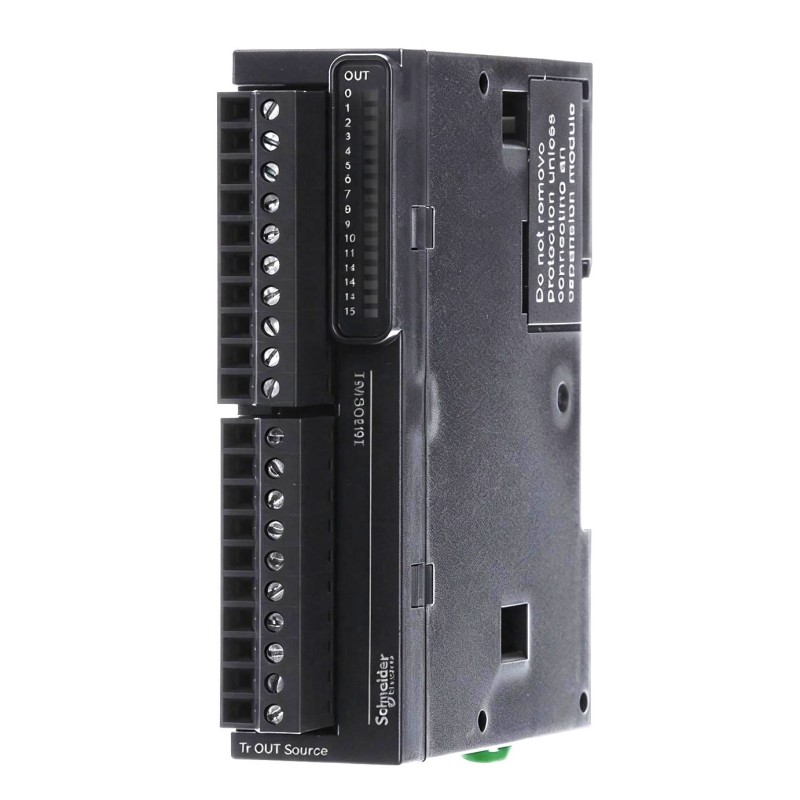
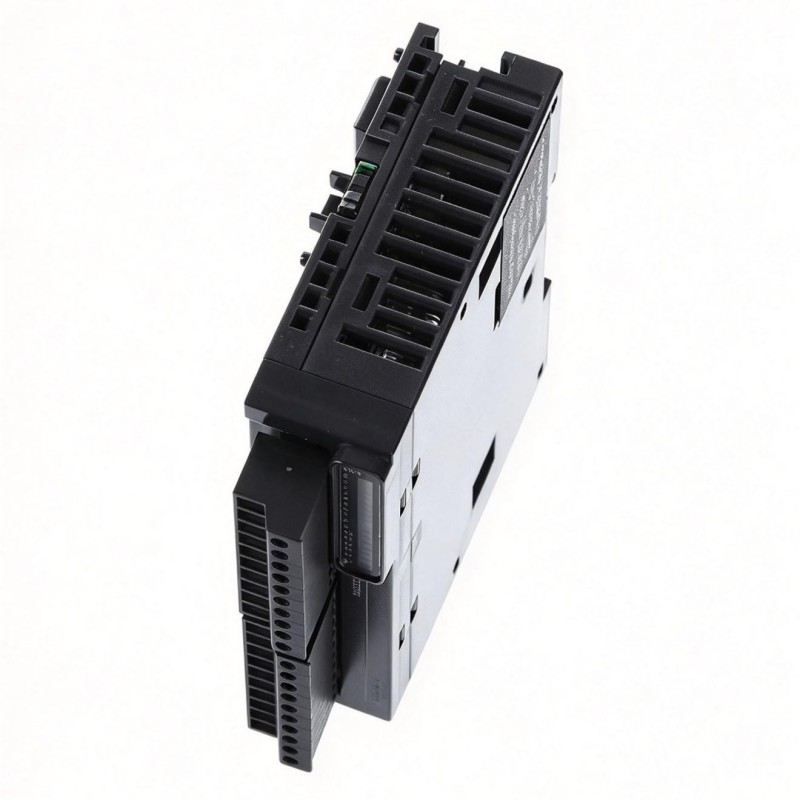
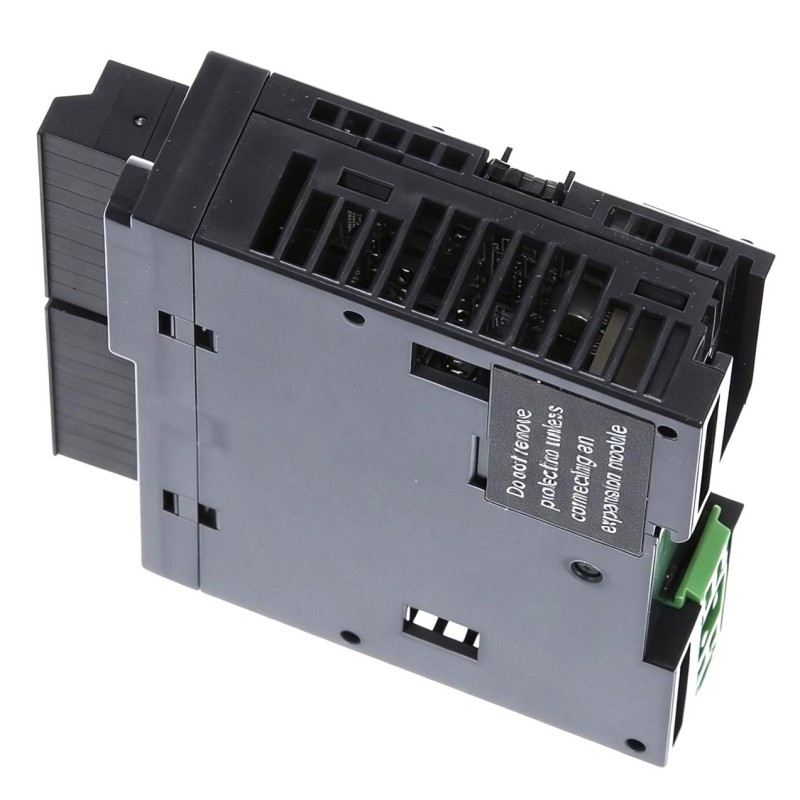
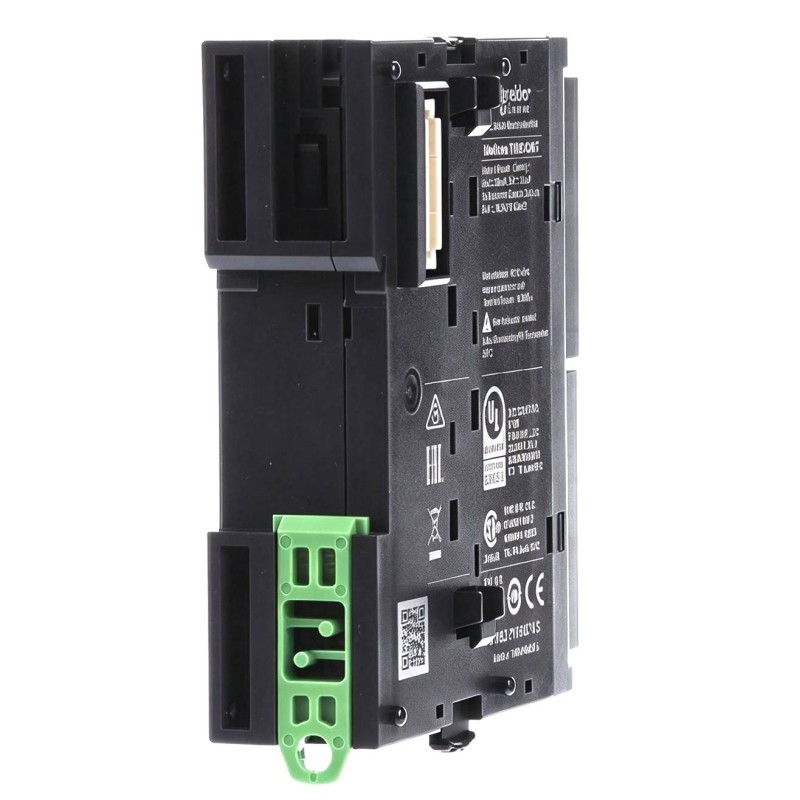
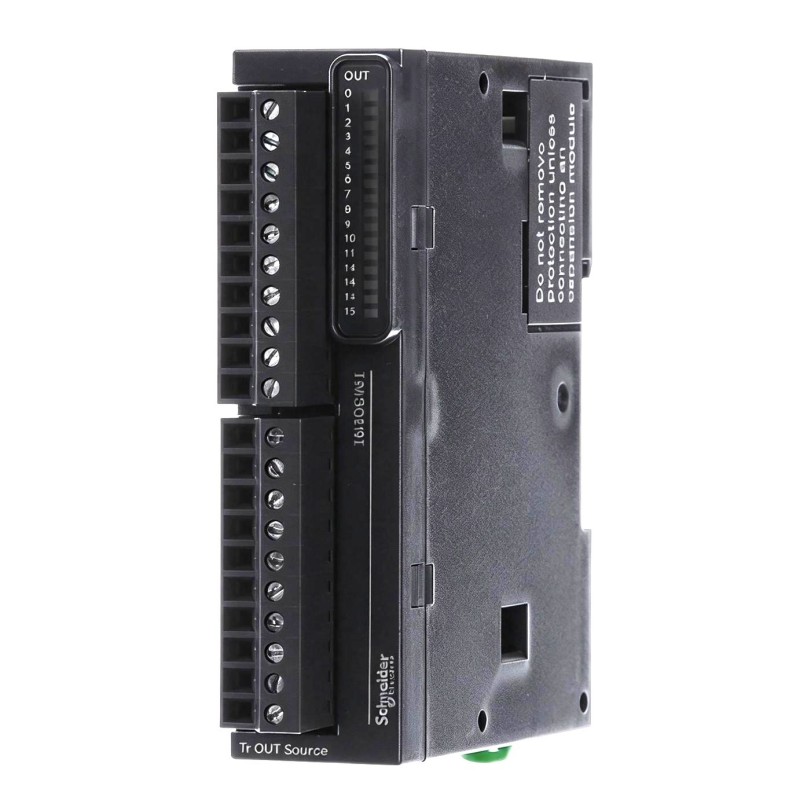
The Schneider TM3DQ16T Modicon TM3 Discrete Output Module is an expansion I/O component in the Modicon TM3 range. It allows a compatible controller configuration to manage discrete output signals for connected equipment, extending the control capabilities available for machine automation applications.
In a typical installation, discrete outputs are used to switch compatible field devices according to the logic executed by the controller. Depending on the machine design and electrical interface, these devices may include relays, indicator lamps, solenoid-operated equipment, and other supported loads. The module’s output characteristics must match the requirements of the connected circuits.
The TM3DQ16T is identified by its complete model number, which is important when selecting replacement hardware or planning an expansion to an existing control system. Output modules in the same product family may differ in channel count, output technology, electrical ratings, and wiring arrangements. These details should be checked before installation rather than inferred from the product name alone.
For maintenance engineers, the module forms part of the control system’s output path between the controller program and the machine’s electrical devices. Correct operation depends on controller compatibility, suitable field wiring, appropriate load selection, and the configuration of the application logic.
Technical Specifications
| Parameter | Specification |
|---|---|
| Manufacturer | Schneider Electric |
| Model | TM3DQ16T |
| Product Series | Modicon TM3 |
| Product Type | Discrete Output Module |
| Product Category | Programmable Controller Expansion I/O |
| Primary Function | Discrete output signal control |
| I/O Type | Digital output |
| Output Channel Count | 16, as indicated by the model designation; confirm against the official datasheet |
| Output Technology | Verify from the applicable Schneider Electric documentation |
| Rated Output Voltage | Verify from the applicable product documentation |
| Output Current Rating | Verify from the applicable product documentation |
| Controller Compatibility | Supported Modicon controller configurations |
| Installation Type | Controller expansion module |
| Typical Application | Machine automation and discrete device control |
| Wiring Requirements | Follow the official terminal assignment and wiring diagram |
| Maintenance Approach | Output testing, wiring inspection, and configuration verification |
| Dimensions | 90 × 84.6 × 27.4 mm |
| Weight | 0.11 kg |
Product Features
- Discrete Output Control: Provides discrete output channels for controlling compatible external circuits within an appropriate automation configuration.
- Modicon TM3 Integration: Belongs to the Modicon TM3 expansion family and can be used where the controller and system arrangement support the module.
- Multi-Channel Output Interface: Supports multiple discrete control points, allowing several devices or circuits to be managed through the same expansion module.
- Controller-Program Operation: Output states are governed by the control logic and the system configuration in which the module is installed.
- Electrical Load Matching: Connected devices must comply with the module’s documented voltage, current, and output-type requirements.
- System Expansion: Allows a compatible controller installation to incorporate additional output functions without treating every field device as a separate controller.
- Model-Specific Replacement: The TM3DQ16T designation helps maintenance teams distinguish the required module from other Modicon TM3 I/O variants.
Working Principle
The Schneider TM3DQ16T Modicon TM3 Discrete Output Module operates as an output interface between a compatible controller and connected field circuits. The controller executes its application program and determines when each configured output should change state. The module then switches the corresponding output channel according to its electrical design.
When the application logic activates an output, the module changes the electrical state of the relevant channel. A connected device can then respond if the circuit is correctly wired and the load falls within the module’s specified operating limits. When the program deactivates the output, the channel returns to its corresponding inactive state.
The actual switching behavior depends on the module’s output technology and electrical specifications. Output type, load characteristics, external supply arrangement, and wiring must therefore be confirmed from the product documentation before connecting equipment. A mismatch can lead to incorrect operation or damage to the output circuit.
During troubleshooting, technicians should compare the commanded output state with the module’s status indication and the electrical condition at the field circuit. If the expected response is absent, the investigation should include the controller program, module configuration, field supply, terminal connections, connected load, and output channel itself.
Role in a Modicon TM3 Control Architecture
Within a Modicon control architecture, the Schneider TM3DQ16T provides discrete output functions for a compatible controller installation. The controller processes the application logic, while the output module translates the resulting commands into electrical states for supported field devices.
| System Component | Function | Relationship to the Discrete Output Module |
|---|---|---|
| Modicon Controller | Executes the application program and coordinates machine operation | Determines the required output states |
| TM3DQ16T Output Module | Switches configured discrete output channels | Transfers controller commands to compatible output circuits |
| Field Power Supply | Supplies power to applicable field circuits | Must meet the requirements of the output arrangement |
| Relay or Contactor | Switches an external electrical circuit | May be controlled through a suitable output interface |
| Solenoid or Actuator | Performs a physical action in response to an electrical command | Responds to an output signal when the electrical interface is suitable |
| Indicator Device | Displays an operating or fault state | Can be driven by a compatible output circuit |
| Terminal Blocks and Wiring | Carry electrical signals to connected equipment | Connect the module’s outputs to field devices |
| Programming Software | Supports controller programming and configuration | Defines the conditions that activate or deactivate each output |
Industrial Applications
| Application Area | Typical Use | Relevance of the Discrete Output Module |
|---|---|---|
| Machine Automation | Switching devices according to programmed machine sequences | Provides output channels for compatible discrete control circuits |
| Packaging Equipment | Controlling indicators, relays, and supported actuating devices | Supports output functions within the machine control program |
| Material Handling | Issuing discrete commands to compatible equipment | Connects controller logic with supported field output circuits |
| Assembly Machinery | Coordinating machine actions and auxiliary devices | Allows programmed output states to control connected equipment |
| Production Lines | Managing discrete operating and status signals | Provides an output interface for configured control functions |
| Control Cabinet Expansion | Adding output points to a compatible controller installation | Extends the available discrete output capacity where supported |
| Industrial Maintenance | Diagnosing output-related faults | Provides an identifiable module for channel-level testing |
| Equipment Refurbishment | Replacing or servicing installed I/O hardware | Supports model-specific spare-parts identification |
Installation and Maintenance
- Verify the Model Number: Confirm that the required module is TM3DQ16T and compare the designation with the controller configuration and equipment documentation.
- Check Controller Compatibility: Verify that the installed Modicon controller supports the module and the intended expansion arrangement.
- Review Electrical Ratings: Confirm the output technology, rated voltage, current limits, load requirements, and wiring arrangement from the official product documentation.
- Isolate the Equipment: Follow the approved electrical isolation procedure before installing the module or changing field wiring.
- Record Existing Connections: Document terminal assignments, wire labels, connected devices, and controller settings before removing an existing module.
- Inspect the Module: Check the housing and accessible terminals for damage, contamination, discoloration, or signs of overheating.
- Check the Field Loads: Ensure that each connected device is suitable for the module’s output characteristics and does not exceed the specified electrical limits.
- Apply ESD Precautions: Use appropriate electrostatic discharge protection when handling the electronic module, following the manufacturer’s handling instructions.
- Install the Module: Mount the module according to the specified installation procedure and confirm that it is correctly seated in the intended arrangement.
- Reconnect the Field Wiring: Follow the official terminal diagram and verify that each conductor is connected to the correct terminal.
- Test Output Operation: Restore the system under the approved procedure and verify the commanded output states, module indications, and responses of the connected devices.
- Document the Maintenance: Record the model number, wiring checks, configuration details, observed faults, replacement information, and test results in the service history.
Compatible System Components
| Component | Function | Relationship to the Discrete Output Module |
|---|---|---|
| Compatible Modicon Controller | Executes application logic | Provides the commands that determine output states |
| Modicon TM3 Expansion System | Supports controller I/O expansion | Provides the intended system context for the module |
| Field Power Supply | Supplies the required power to applicable output circuits | Must meet the documented electrical requirements |
| Relays and Contactors | Switch external circuits | May be operated through suitable output channels |
| Solenoid Valves and Actuators | Perform mechanical or process actions | Can be controlled where their electrical requirements match |
| Indicator Lamps | Display operating and fault conditions | Provide visual indications driven by compatible outputs |
| Terminal Blocks and Wiring | Connect output channels to external equipment | Carry signals between the module and field circuits |
| Programming and Configuration Software | Defines controller behavior | Determines the conditions under which outputs change state |
Recommended Related Models
| Model or Product Category | Product Type | Relationship |
|---|---|---|
| Schneider TM3DQ16T | Modicon TM3 Discrete Output Module | Exact model reference for identification and replacement |
| Schneider Modicon TM3 Digital Output Modules | Controller Expansion Output Modules | Related category; verify channel count and electrical specifications |
| Schneider Modicon TM3 Digital Input Modules | Controller Expansion Input Modules | Related I/O category for receiving discrete field signals |
| Schneider Modicon TM3 Mixed I/O Modules | Controller Expansion I/O Modules | Related category where both input and output functions are required |
| Schneider Modicon Controllers | Programmable Controllers | Related control platform; verify the supported module combination |
| Industrial Interface Relays | Electrical Switching Components | Related components for applications requiring an appropriate interface between outputs and field loads |
Key Advantages
- Multi-Point Output Control: Supports multiple discrete control channels within a compatible automation system.
- Modicon TM3 Integration: Provides an expansion option for supported Modicon controller configurations.
- Programmed Device Control: Allows the controller to operate compatible field circuits according to application logic.
- Structured Fault Diagnosis: Enables technicians to investigate individual output channels alongside wiring and connected loads.
- Clear Model Identification: The full part number supports accurate procurement and maintenance records.
- System Expansion Support: Helps extend the output capabilities of a compatible machine control installation.
Technical FAQs
1. What should be verified before replacing the Schneider TM3DQ16T?
Confirm the complete model number, controller compatibility, output technology, electrical ratings, terminal arrangement, and connected load requirements. Another Modicon TM3 output module should not be assumed to be interchangeable without checking its specifications.
2. Why might a commanded output fail to operate its connected device?
Possible causes include incorrect program logic, an inactive controller output, wiring errors, an unsuitable field supply, a damaged load, or a fault in the output channel. Compare the controller command with the module indication and the electrical condition at the connected circuit.
3. Can the TM3DQ16T directly control every type of industrial actuator?
No. The connected device must match the module’s documented output characteristics and electrical limits. Some loads may require an appropriately rated interface relay or other switching arrangement, depending on the device and application.
4. How should the module be tested after installation?
Verify the controller configuration and terminal assignments, then test the required output states under an approved commissioning procedure. Confirm that the connected devices respond correctly and that no abnormal status indications or unexpected output behavior occur.