
NewsNEWCENTER
Featured products
Contact Us
Allen Bradley 1606-XLP30B Power Supply Installation Guide
2026-09-22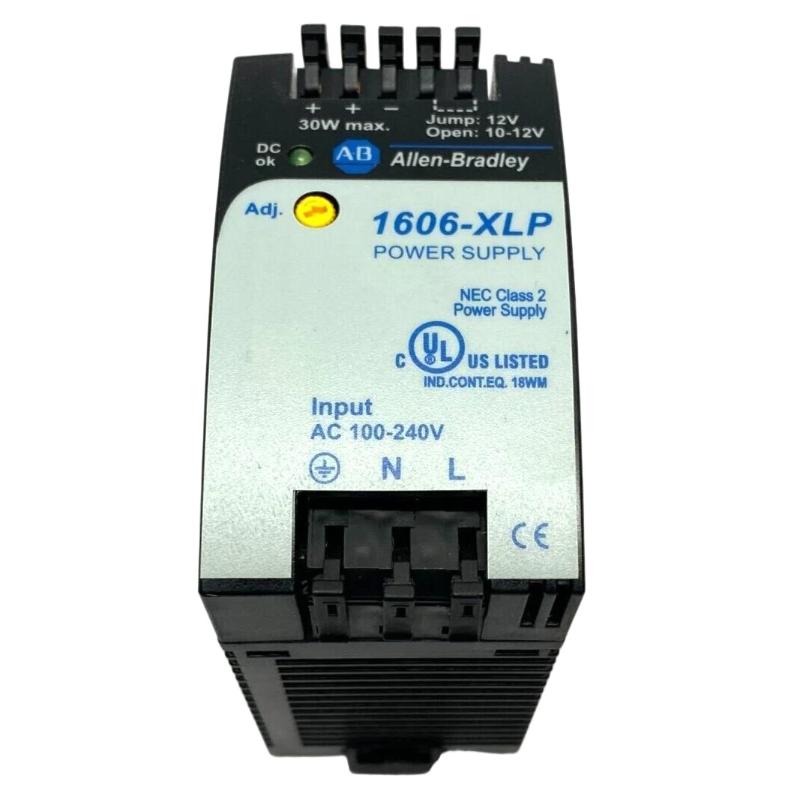
The Allen Bradley 1606-XLP30B power supply should be installed with careful attention to AC input wiring, DC output polarity, grounding, cabinet ventilation, load requirements, and commissioning sequence. As a compact industrial power supply in the Allen Bradley 1606-XLP family, the 1606-XLP30B is intended to provide a stable DC supply for automation equipment and control circuits. Always verify the exact terminal arrangement and electrical ratings against the documentation for the installed unit before energizing the system.
Allen Bradley 1606-XLP30B Power Supply Installation Overview
The Allen Bradley 1606-XLP30B is an industrial power supply designed for use in control cabinets and automation systems. Its primary function is to convert the available input power into a regulated DC supply suitable for connected control components.
In a typical automation cabinet, the power supply is positioned between the incoming electrical supply and the DC control circuit.
Incoming AC Power
        |
        v
[ Protection / Isolation ]
        |
        v
Allen Bradley 1606-XLP30B
        |
        v
Regulated DC Output
        |
        +---- PLC / Controller
        +---- I/O Modules
        +---- Sensors / Relays
        +---- Control Devices
Correct installation helps maintain stable control voltage and reduces the possibility of nuisance faults caused by poor wiring, excessive loading, overheating, or electrical interference.
Allen Bradley 1606-XLP30B Power Supply Function in an Industrial Control System
The 1606-XLP30B acts as a DC power source for automation and control equipment. Unlike a PLC or controller, it does not normally perform application logic. Its role is to provide the electrical power required by downstream control components.
- Converts incoming power into usable DC control power.
- Supplies connected automation components.
- Supports stable operation of control circuits.
- Provides an organized power source within the control cabinet.
- Helps separate control power from the incoming plant electrical system.
Allen Bradley 1606-XLP30B Installation Preparation
Before installing the 1606-XLP30B, inspect both the power supply and the surrounding cabinet conditions.
- Confirm the complete model number: 1606-XLP30B.
- Inspect the housing and terminals for shipping damage.
- Confirm the input power available at the installation site.
- Determine the expected DC load before connecting downstream equipment.
- Check that the cabinet provides suitable ventilation.
- Prepare the required circuit protection and disconnecting means.
- Separate power wiring from sensitive signal and communication wiring where appropriate.
- Confirm the required grounding arrangement.
Allen Bradley 1606-XLP30B Mounting and Panel Layout
The 1606-XLP30B should be mounted securely inside a suitable industrial control enclosure. The mounting position should allow adequate airflow and provide sufficient access to the terminals for inspection and maintenance.
When several heat-producing devices are installed in the same cabinet, avoid placing the power supply directly in a location where hot air from another device is continuously directed toward it.
- Mount the unit securely on the approved cabinet mounting surface.
- Maintain the required clearances around the power supply.
- Keep ventilation openings unobstructed.
- Provide convenient access to input and output terminals.
- Keep high-current switching equipment appropriately separated where practical.
Allen Bradley 1606-XLP30B Wiring and Interface Connections
Power wiring should be performed with the incoming supply isolated. The exact terminal identification should be checked against the applicable Allen Bradley documentation rather than assumed from another 1606-XLP model.
AC Input
  |
  +---- Protective Device
  |
  v
[ 1606-XLP30B ]
  |
  +---- DC Positive ----> Control Loads
  |
  +---- DC Negative ----> Control Loads
  |
  +---- Protective Earth / Ground
Check polarity carefully before connecting DC loads. Reversed polarity can damage connected equipment even when the power supply itself appears to operate normally.
Allen Bradley 1606-XLP30B Power Supply Setup
After the wiring has been completed, inspect the installation before applying power. The first startup should ideally be performed with the downstream system in a controlled maintenance state.
- Verify the input wiring.
- Verify protective earth and cabinet grounding.
- Check DC output polarity.
- Confirm that connected loads are within the intended operating range.
- Check that no bare conductors can contact adjacent terminals.
- Apply input power according to the approved procedure.
- Check the power supply status.
- Measure the DC output at the appropriate test point.
- Connect or enable downstream loads in a controlled sequence.
Allen Bradley 1606-XLP30B Commissioning Procedure
Commissioning should verify both the unloaded power supply condition and its behavior when the connected automation equipment is operating.
Installation Inspection
        |
        v
Input Wiring Check
        |
        v
Grounding Check
        |
        v
Power-On
        |
        v
DC Output Verification
        |
        v
Connect / Enable Loads
        |
        v
Load Voltage Check
        |
        v
System Functional Test
        |
        v
Final Inspection
If the measured output is abnormal, do not immediately increase the load or continue commissioning. First verify the input supply, wiring, polarity, load condition, and power-supply status.
Allen Bradley 1606-XLP30B Installation Validation
A completed installation should satisfy the electrical and mechanical requirements of the control cabinet.
- Power supply is securely mounted.
- Input wiring is correctly identified and tightened.
- Grounding is correctly connected.
- DC polarity is correct.
- Connected loads are appropriate for the power supply.
- Cabinet ventilation is unobstructed.
- DC output remains stable during normal operation.
- No abnormal noise, odor, overheating, or visible damage is present.
Allen Bradley 1606-XLP30B Field Commissioning Case
Representative example: During cabinet commissioning, the 1606-XLP30B powers up normally, but a downstream controller repeatedly reports a low-voltage condition. Instead of replacing the power supply immediately, the technician checks the voltage at both the power-supply output and the controller terminals.
Power Supply Output:
Normal under light load

Controller Terminal Voltage:
Lower than expected

Next Checks:
1. Inspect DC distribution wiring
2. Check terminal tightness
3. Check cable length and conductor condition
4. Check connected load
5. Measure voltage again during operation

Finding:
Voltage drop exists in the downstream distribution circuit
This representative case demonstrates why voltage should be checked at both the power-supply terminals and the actual load. A normal power-supply output does not automatically mean that the downstream equipment is receiving the same voltage.
Allen Bradley 1606-XLP30B Installation FAQ
What is the Allen Bradley 1606-XLP30B?
The Allen Bradley 1606-XLP30B is an industrial power supply used to provide DC power for automation and control equipment.
Where is the 1606-XLP30B normally installed?
It is typically installed inside an industrial control cabinet where it can supply DC power to PLCs, I/O equipment, relays, sensors, and other control loads, depending on the system design.
What should be checked before wiring the 1606-XLP30B?
Verify the model, input power, output requirements, terminal identification, polarity, grounding, circuit protection, cabinet ventilation, and expected load.
Why should the DC voltage be measured at the load?
Voltage can drop across wiring, terminals, distribution components, or protection devices. Measuring only at the power-supply terminals may therefore miss a downstream distribution problem.
Can another 1606-XLP model be substituted directly?
Not automatically. Input characteristics, output characteristics, power capability, dimensions, terminals, and application requirements should be checked before selecting a substitute.
Allen Bradley 1606-XLP30B Technical Summary
The Allen Bradley 1606-XLP30B power supply is an important part of an industrial control cabinet because stable DC power directly affects the reliability of connected automation equipment. A successful installation requires correct wiring, grounding, mechanical mounting, thermal management, load assessment, and controlled commissioning. For replacement or maintenance work, the exact electrical characteristics and terminal assignments should always be verified before reconnecting the unit.