

ProductPRODUCT
Featured products
Contact Us
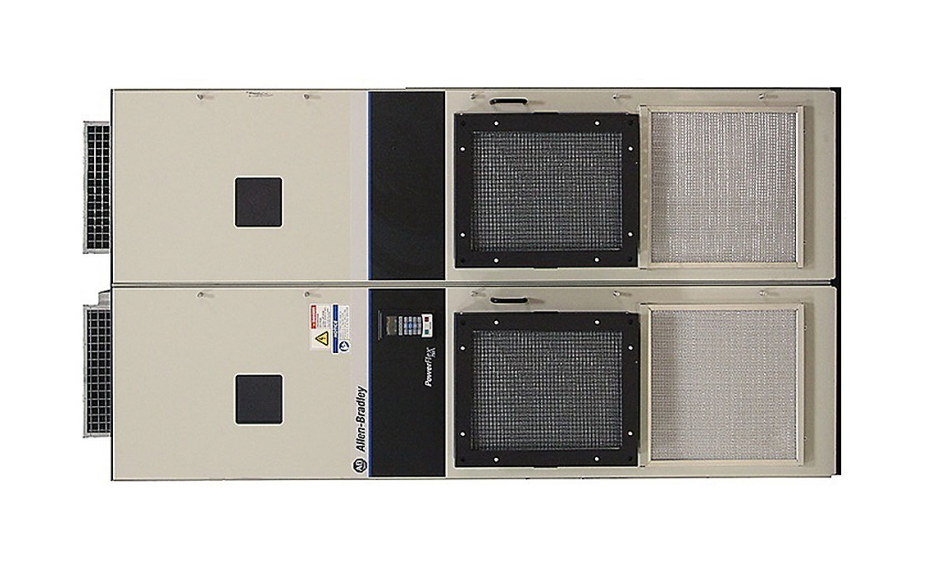
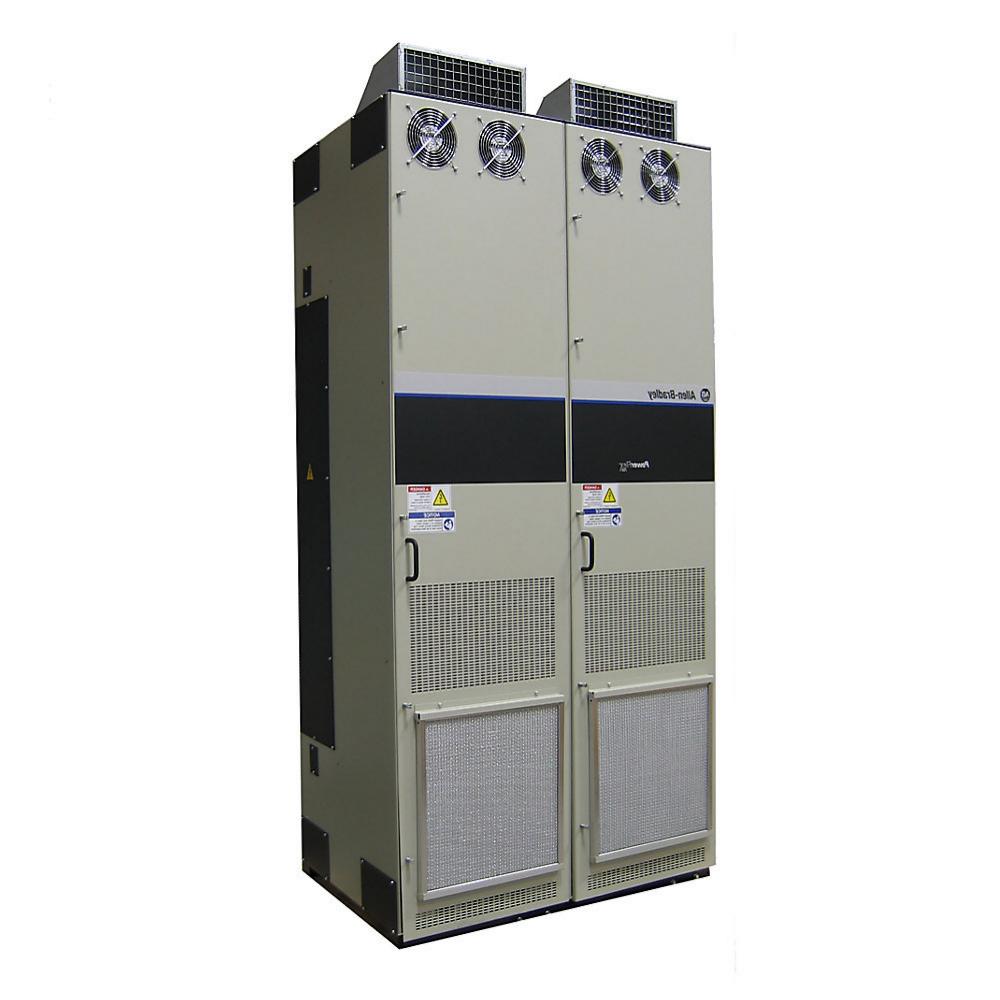
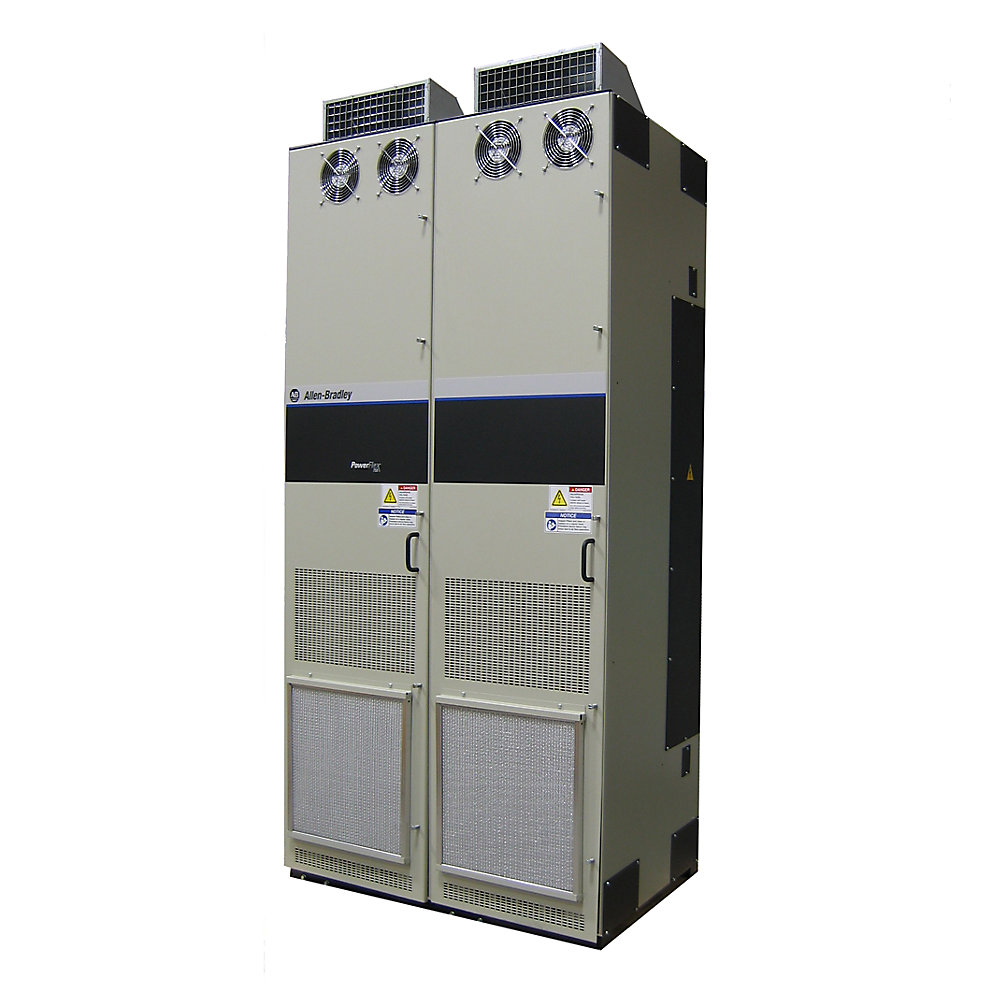
- Allen Bradley
- 20G1F3C750LNDNNNNN
- PowerFlex AC Drive
- USA
- 2477 × 1200 × 800 mm
- 993kg
- Xiamen, China
- New & In Stock
- T/T, PayPal, Western Union
- 1 Year
- 1-3 Working Days
- DHL, UPS, TNT, FedEx and EMS.
- 24-Hour Service
- COO
- 5
Our advantage

Global Logistics
We have a 10-year logistics and express cooperation agreement, so our products can be shipped to any place in the world.

Brand new and original
Our products are imported in bulk from the place of origin. Because of the cooperative relationship, our products are all original and 100% new.

24-hour service
We provide 7*24 hours service to our customers. We will be there whenever you need us.

Price advantage
All our products are priced very favorably because we have our own warehouse and supply.
| Company Information | |||
| [email protected] | |||
| Mobile | +8615980777398 | ||
| +8615980777398 | |||
| 15980777398 |
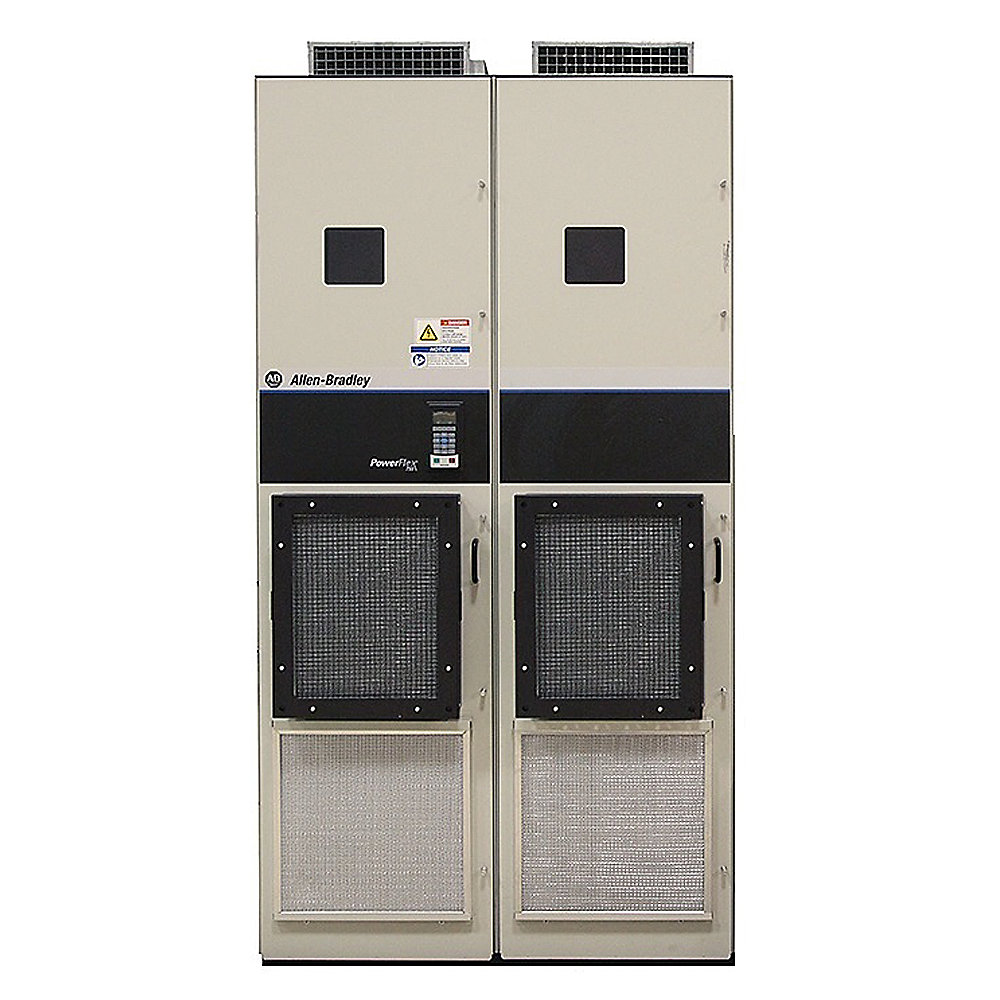
Allen-Bradley 20G1F3C750LNDNNNNN PowerFlex 755 AC Drive
1. Product Overview
The Allen-Bradley 20G1F3C750LNDNNNNN is a high-power AC variable frequency drive belonging to the PowerFlex 755 family. It is designed for large industrial motor applications where high current capacity, accurate speed control, controlled acceleration and deceleration, and dependable operation are important.
The model is part of the large-frame PowerFlex 755 platform and is intended for demanding industrial installations rather than small machine applications. Its 400 V AC three-phase class and Frame 8 configuration place it in the high-power range of the PowerFlex 755 product family.
The PowerFlex 755 platform was developed for applications requiring more than simple motor speed adjustment. It can be integrated into larger automation systems and can be configured for applications involving conveyors, pumps, fans, compressors, material handling equipment, process machinery, and other high-power rotating equipment.
The 20G1F3C750LNDNNNNN catalog number represents a specific configuration, so the complete catalog suffix is important when purchasing, replacing, or comparing this drive. Options related to enclosure, control, human-machine interface, filtering, braking, communication, and other functions can affect the final installation requirements.
2. Brand and Product Series
| Item | Description |
|---|---|
| Brand | Allen-Bradley |
| Product Family | PowerFlex |
| Series | PowerFlex 755 |
| Product Type | High-power AC variable frequency drive |
| Catalog Number | 20G1F3C750LNDNNNNN |
| Drive Class | PowerFlex 755 AC Drive |
| Voltage Class | 400 V AC |
| Input | Three-phase AC |
| Frame | Frame 8 / Frame 8C configuration |
| Cooling | Air-cooled configuration |
| Installation | Floor-mount / large-frame industrial installation |
| Application Class | Industrial heavy-duty motor control |
| Product Status | Discontinued |
The exact model is listed as a PowerFlex 755 AC Drive, with a 400 V AC rating and Frame 8C designation. The PowerFlex 755 family was discontinued as a product line on December 20, 2021, so this catalog number is normally encountered today in existing installations, replacement projects, maintenance inventories, and industrial spare-parts markets.
3. Basic Product Parameters
| Parameter | Specification |
|---|---|
| Model | 20G1F3C750LNDNNNNN |
| Brand | Allen-Bradley |
| Series | PowerFlex 755 |
| Drive Type | AC variable frequency drive |
| Input Voltage | 400 V AC |
| Input Phase | 3-phase |
| Frequency | 50/60 Hz application dependent |
| Frame Size | Frame 8 / 8C |
| Cooling Method | Air cooled |
| Mounting | Floor mount / large-frame configuration |
| Drive Current Class | 750-class configuration |
| Catalog Current Field | 805 A at 400 V AC |
| Enclosure / Protection | Configuration dependent; exact installation enclosure should be checked against the complete catalog configuration |
| Control Platform | PowerFlex 755 control architecture |
| Display / HIM | Configuration dependent |
| Communication | Option-dependent |
| Regenerative Capability | Application/configuration dependent |
| Low-Harmonic Capability | Available within applicable PowerFlex architecture/configuration |
| Dimensions | Configuration dependent; refer to the exact Frame 8 mechanical drawing |
| Weight (kg) | Configuration dependent; exact packaged-drive mechanical data should be confirmed before lifting or installation |
The catalog entry for 20G1F3C750LNDNNNNN identifies an electrical current value of 805 A at 400 V AC and a Frame 8C designation. Because this is a large-frame drive, the electrical rating should not be confused with the motor’s actual continuous operating current; final selection must consider the motor nameplate current, duty cycle, overload requirement, ambient conditions, carrier frequency, and installation conditions.
4. Electrical Specifications
| Electrical Parameter | Specification |
|---|---|
| Model | 20G1F3C750LNDNNNNN |
| Rated Input Voltage | 400 V AC |
| Input Configuration | Three-phase |
| Nominal Frequency | 50 Hz typical for 400 V systems |
| Applicable Frequency Range | Application dependent |
| Drive Current Class | 750-class |
| Catalog Current | 805 A |
| Output Voltage | Variable AC output |
| Output Frequency | Variable according to programmed operating range |
| Motor Control | Programmable AC motor control |
| Speed Control | Variable-frequency speed control |
| Acceleration Control | Programmable |
| Deceleration Control | Programmable |
| Overcurrent Protection | Integrated drive protection |
| Ground Fault Protection | Drive protection functions available |
| DC Bus | Integrated DC bus architecture |
| Control Power | Internal drive control supply |
| Motor Compatibility | Dependent on motor type, current and application configuration |
The PowerFlex 755 platform is based on a three-phase AC input architecture and provides programmable motor control rather than simply switching the motor on and off. This makes it suitable for systems in which acceleration, deceleration, speed regulation, torque control, and process coordination are important.
5. Power and Duty Rating
For large PowerFlex 755 Frame 8 configurations, the exact power rating depends on voltage, current configuration, duty classification, carrier frequency, ambient temperature, and other operating conditions.
For this 750-class 400 V configuration, the commonly associated rating range is approximately:
| Duty / Rating Category | Typical Rating Class |
|---|---|
| Light Duty | Up to approximately 400 kW class |
| Normal Duty | Approximately 355 kW class |
| Heavy Duty | Approximately 315 kW class |
| Voltage | 400 V AC |
| Current Class | 750 A class |
| Frame | 8 |
The exact usable motor power should always be determined from the applicable rating table for the complete catalog configuration rather than selecting a motor solely from the catalog-number current code. PowerFlex 755 Frame 8 documentation shows different current and power combinations for light, normal, and heavy-duty operation.
6. Dimensions and Weight
The 20G1F3C750LNDNNNNN is a large-frame, floor-mounted drive. Unlike small PowerFlex drives, it should not be treated as a compact wall-mounted VFD.
The mechanical envelope depends on the exact package, enclosure, options, bus configuration, cabinet arrangement, and installation design.
| Mechanical Parameter | Specification |
|---|---|
| Model | 20G1F3C750LNDNNNNN |
| Frame | Frame 8 / 8C |
| Mounting | Floor mount |
| Approximate Construction | Large industrial cabinet / large-frame assembly |
| Height | Configuration dependent |
| Width | Configuration dependent |
| Depth | Configuration dependent |
| Dimensions H × W × D | Must be confirmed from the exact mechanical drawing |
| Net Weight | Configuration dependent |
| Weight (kg) | Must be confirmed from the exact mechanical drawing / shipping data |
| Installation Clearance | Must follow the applicable installation instructions |
| Lifting Requirement | Mechanical lifting equipment normally required for large-frame installation |
It is important not to substitute the dimensions of a smaller PowerFlex 755 frame for this model. Published PowerFlex 755 documentation provides separate dimensional information for different frames, while Frame 8–10 floor-mount products use substantially larger mechanical arrangements.
For an actual replacement project, the correct approach is to use the exact catalog-number mechanical drawing and verify cabinet height, width, depth, cable-entry space, ventilation space, access space, lifting points, and floor loading before installation.
7. Construction and Design
The PowerFlex 755 platform is designed as a high-performance industrial drive system rather than a basic general-purpose inverter.
The drive controls the motor by regulating the electrical output delivered to the motor. This allows the machine to accelerate smoothly, operate at controlled speed, reduce mechanical shock, and decelerate according to the programmed process requirements.
For a large motor, this type of control can have a major effect on the mechanical system. Direct starting can impose high starting current and mechanical stress on couplings, gearboxes, belts, shafts, conveyors, and driven equipment. A properly configured VFD can significantly improve the way the motor and machine move through the operating cycle.
The large-frame design also provides the physical structure necessary to handle high-power electrical components, cooling requirements, power connections, control components, and optional equipment.
8. Control and Operation
One of the major characteristics of the PowerFlex 755 family is its emphasis on coordinated motor control and integration with industrial automation systems.
The drive can be programmed for parameters such as:
- Motor rated voltage
- Motor rated current
- Motor rated frequency
- Motor rated speed
- Acceleration time
- Deceleration time
- Minimum speed
- Maximum speed
- Current limits
- Torque limits
- Start and stop behavior
- Fault response
- Communication settings
- Feedback configuration
- Application-specific control functions
This allows the drive to become part of the machine-control system instead of operating as an isolated motor controller.
9. TotalFORCE-Based Control Concept
PowerFlex 755 systems are associated with the TotalFORCE control architecture, which was developed to provide advanced motor control, configuration, diagnostics, and application functionality.
This architecture is particularly useful in systems where motor behavior must be coordinated closely with the machine.
For example, a conveyor may require controlled acceleration to prevent material movement, while a hoist may require accurate torque control during lifting and lowering. A pump may require smooth speed changes to reduce hydraulic shock, while a large fan may require controlled ramping to prevent excessive mechanical loading.
Common configuration and programming concepts across the PowerFlex family can also make it easier for engineers and maintenance personnel to transfer experience between compatible drive platforms.
10. Main Applications
10.1 Large Conveyors
The 20G1F3C750LNDNNNNN is suitable for high-power conveyor systems where the motor has a large current requirement.
Typical applications include mining conveyors, bulk-material conveyors, aggregate handling systems, ports, warehouses, cement plants, and heavy industrial production lines.
Controlled acceleration helps reduce sudden mechanical loading on conveyor belts, gearboxes, couplings, and shafts.
For long conveyors, controlled speed can also be useful for matching production rates and coordinating multiple sections of a material-handling system.
10.2 Mining Equipment
Large mining machinery frequently requires high-power motor control.
Possible applications include:
- Ore conveyors
- Material handling systems
- Ventilation systems
- Crushers
- Pumps
- Hoists
- Processing equipment
- Aggregate handling equipment
Mining installations can place high demands on electrical equipment because motors may experience frequent starts, variable loads, high inertia, dust, temperature variation, and long operating hours.
Proper enclosure selection, cooling, environmental protection, and maintenance are therefore particularly important.
10.3 Cement and Aggregate Equipment
Cement plants and aggregate facilities use many high-power motors.
Typical equipment includes:
- Crushers
- Conveyors
- Fans
- Blowers
- Pumps
- Mills
- Material feeders
- Dust collection equipment
- Process machinery
The ability to regulate motor speed allows the equipment to respond to changes in production requirements instead of running continuously at full speed.
10.4 Large Pumps
Large water pumps and industrial process pumps are another important application area.
A VFD can regulate pump speed according to process demand.
Instead of operating a pump at constant speed and controlling flow primarily through valves, a variable-speed drive can adjust motor speed to better match the required operating point.
This can be especially useful in water treatment, industrial water systems, cooling systems, wastewater facilities, and process plants.
10.5 Large Fans and Blowers
Large ventilation fans and industrial blowers can benefit from variable-speed control.
Applications may include:
- Mine ventilation
- Industrial ventilation
- Furnace systems
- Process-air systems
- Dust collection
- Cooling systems
- Large building ventilation
Fan speed can be adjusted according to actual airflow demand.
10.6 Compressors
Large compressors can require substantial starting torque and high continuous motor power.
The PowerFlex 755 platform can be considered for compressor applications where the motor and compressor characteristics are compatible with the selected control mode and drive rating.
Final selection should take into account compressor starting requirements, load profile, speed range, bypass requirements, harmonics, braking behavior, and motor characteristics.
10.7 Material Handling
Heavy material-handling machinery can benefit from controlled acceleration and deceleration.
Applications can include:
- Conveyor transfer systems
- Bulk material handling
- Storage and retrieval machinery
- Industrial transport systems
- Heavy production machinery
The drive can help control machine speed while reducing abrupt changes in motor torque.
10.8 Hoists and Crane-Related Machinery
High-power motor control is also relevant to certain crane and lifting applications.
However, lifting applications require special attention to braking, mechanical holding systems, safety functions, torque requirements, regenerative energy, and applicable standards.
A general-purpose VFD should never be selected for a lifting application solely because its power and current ratings appear adequate.
11. Major Advantages
11.1 High-Power Capability
The primary advantage of the 20G1F3C750LNDNNNNN is its position in the high-power PowerFlex 755 range.
With a 400 V AC system and large Frame 8 configuration, it is intended for substantially larger motors than compact industrial VFDs.
This makes it suitable for centralized drive applications where the motor power requirement is too large for smaller drive frames.
11.2 Smooth Motor Starting
Instead of applying full line voltage directly to the motor, the drive gradually increases motor speed according to the programmed acceleration profile.
This can reduce mechanical shock during startup.
The result can be smoother operation of:
- Conveyors
- Pumps
- Fans
- Blowers
- Compressors
- Process machines
- Material-handling systems
11.3 Controlled Deceleration
The drive can also control how quickly the motor slows down.
This is particularly useful for large rotating equipment because large machines have considerable inertia.
A controlled deceleration profile can reduce mechanical shock and provide more predictable machine behavior.
11.4 Flexible Speed Control
The drive allows the motor speed to be adjusted to match process requirements.
For example, a pump may operate at lower speed during low-demand conditions, while a conveyor can operate at different speeds depending on production requirements.
This provides considerably more flexibility than fixed-speed motor operation.
11.5 Advanced Industrial Control
The PowerFlex 755 platform supports sophisticated control functions that make it appropriate for complex industrial machinery.
The drive can be integrated with automation systems so that speed, torque, status, faults, and operating conditions can be managed as part of a larger machine-control strategy.
11.6 Large Motor Compatibility
The high-current Frame 8 design makes this model appropriate for large industrial motors.
It is particularly relevant where the motor requires a high current rating and where the application needs more advanced control than a simple starter can provide.
11.7 Industrial Automation Integration
The PowerFlex 755 family is designed to operate within industrial automation environments.
This is important in modern factories where drives are expected to communicate with PLCs, HMIs, supervisory systems, and other automation equipment.
The result is better visibility of operating status and drive conditions.
11.8 Diagnostic Capability
A modern industrial VFD can provide useful diagnostic information such as:
- Fault codes
- Warning conditions
- Current information
- Speed information
- Operating status
- Temperature-related conditions
- Communication status
- Motor-related conditions
This can reduce troubleshooting time compared with systems where the motor controller provides little operating information.
12. Regenerative and Energy-Management Considerations
Large industrial machinery frequently stores substantial mechanical energy.
Examples include:
- High-inertia fans
- Large conveyors
- Centrifugal equipment
- Hoists
- Large rotating machines
When a motor decelerates, mechanical energy can return toward the electrical system through the drive’s DC bus.
Depending on the exact PowerFlex configuration, regenerative solutions can be used to manage this energy.
This can be valuable where frequent deceleration occurs and where conventional braking would otherwise produce significant heat.
The exact regenerative capability must be confirmed against the complete catalog configuration because not every PowerFlex 755 catalog number represents the same regenerative hardware arrangement.
13. Harmonic Considerations
Large VFD installations can introduce harmonic currents into an electrical system.
At high power levels, harmonic management becomes more important because the drive may represent a significant portion of the facility’s electrical load.
For projects where harmonic performance is critical, the appropriate drive architecture, line-side equipment, filtering, transformer arrangement, and system impedance should be evaluated during the engineering stage.
The PowerFlex platform includes configurations and technologies intended for applications where low-harmonic performance is important, but the exact catalog number and option configuration should be checked before assuming a particular harmonic specification.
14. Cooling System
The 20G1F3C750LNDNNNNN belongs to the large air-cooled PowerFlex configuration family.
Air cooling is a practical approach for many industrial environments, but the installation must provide sufficient airflow and suitable ambient conditions.
A large drive generates heat during operation.
Therefore, the installation should consider:
- Cabinet ventilation
- Ambient temperature
- Airflow direction
- Filter condition
- Fan condition
- Dust accumulation
- Installation clearance
- Heat dissipation
- Altitude
- Drive loading
Insufficient airflow can cause thermal stress and may result in drive derating or protective trips.
15. Installation Considerations
Because this is a large-frame industrial drive, installation should be treated as an engineering project rather than a simple component replacement.
Before installation, verify:
- Input voltage.
- Input phase configuration.
- Motor rated current.
- Motor rated voltage.
- Motor rated frequency.
- Motor power.
- Duty requirement.
- Short-circuit rating.
- Grounding arrangement.
- Cable size.
- Motor cable length.
- Harmonic requirements.
- Cooling requirements.
- Cabinet dimensions.
- Floor loading.
- Lifting requirements.
- Environmental conditions.
- Communication requirements.
- Control architecture.
- Safety requirements.
For an existing installation, the original drive’s complete catalog number should be recorded before selecting a replacement.
16. Maintenance
Routine maintenance of a large industrial drive should include inspection of cooling components, electrical connections, cabinet conditions, fans, filters where fitted, signs of overheating, and fault history.
Maintenance personnel should also monitor unusual noise, excessive fan vibration, unexpected temperature increases, repeated overcurrent faults, repeated DC-bus faults, and communication failures.
Because the model is discontinued, spare-parts planning is particularly important.
A plant using this drive as a critical production component may want to maintain an appropriate spare strategy rather than waiting until the installed drive fails.
17. Product Lifecycle Status
The exact 20G1F3C750LNDNNNNN catalog entry is identified as discontinued. The PowerFlex 755 product line was formally discontinued on December 20, 2021. A newer replacement category is identified for this catalog number, but compatibility should be checked carefully because replacement products may have different hardware, dimensions, configuration requirements, firmware behavior, and installation procedures.
For an existing machine, the fact that a product is discontinued does not automatically mean that it should be removed immediately.
If the drive is operating correctly and spare parts are available, it can continue to be an important maintenance component for an existing production system.
For a new machine design, however, the lifecycle status should be considered during the equipment-selection process.
18. Five Related Models in the Same Series
The following models are useful for comparison because they belong to the same PowerFlex 755 family or are closely related large-drive configurations.
Exact electrical ratings and physical construction can change with voltage, frame, enclosure, duty rating, and catalog suffix, so these models should be treated as comparison candidates rather than automatic drop-in replacements. The PowerFlex 755 platform includes multiple Frame 8–10 configurations and different current ratings.
| Model | Series | Voltage Class | Current / Rating | Duty / Application | Frame | Cooling | Dimensions | Weight (kg) |
|---|---|---|---|---|---|---|---|---|
| 20G1F3C650LNDNNNNN | PowerFlex 755 | 400 V AC | 650-class | Large industrial motor | 8 | Air | Configuration dependent | Configuration dependent |
| 20G1F3C650KNANNNNN | PowerFlex 755 | 400 V AC | 650-class | Large industrial motor | 8 | Air | Configuration dependent | Configuration dependent |
| 20G1F3C650LNANNNNN | PowerFlex 755 | 400 V AC | 650-class | Large industrial motor | 8 | Air | Configuration dependent | Configuration dependent |
| 20G1F3C650MNDNNNNN | PowerFlex 755 | 400 V AC | 650-class | Large industrial motor | 8 | Air | Configuration dependent | Configuration dependent |
| 20G1F3C750LNANNNNN | PowerFlex 755 | 400 V AC | 750-class | High-power industrial motor | 8 | Air | Configuration dependent | Configuration dependent |
These related catalog numbers are useful when evaluating replacement possibilities, current requirements, enclosure options, or alternative configurations within the same PowerFlex 755 platform.
They should not be considered electrically interchangeable without checking the complete catalog number, motor current, duty rating, enclosure, control hardware, options, firmware, and mechanical arrangement.
19. Five Popular Allen-Bradley Models for Comparison
The following models represent other commonly encountered PowerFlex products and closely related configurations that can be useful when comparing drive capacity and application range.
| Model | Series | Typical Voltage Class | Current / Rating | Application Range | Frame / Size | Cooling | Dimensions | Weight (kg) |
|---|---|---|---|---|---|---|---|---|
| 20F1AGC260JA0NNNNN | PowerFlex 753 | 480 V class | Medium/high-power class | Industrial machinery | Frame dependent | Air | Configuration dependent | Configuration dependent |
| 20F1AGC302JN0NNNNN | PowerFlex 753 | 480 V class | High-power class | Industrial motor control | Frame dependent | Air | Configuration dependent | Configuration dependent |
| 20F1AGC367JA0NNNNN | PowerFlex 753 | 480 V class | High-power class | Industrial machinery | Frame dependent | Air | Configuration dependent | Configuration dependent |
| 20G1F3C650KNANNNNN | PowerFlex 755 | 400 V class | 650-class | Large industrial motor | Frame 8 | Air | Configuration dependent | Configuration dependent |
| 20G1F3C750LNDNNNNN | PowerFlex 755 | 400 V class | 750-class | Large/high-power industrial motor | Frame 8 | Air | Configuration dependent | Configuration dependent |
The PowerFlex 753 and PowerFlex 755 families share many industrial-drive concepts, but they are not simply interchangeable based on current rating alone. Application requirements, control functions, I/O, communication, feedback, mechanical installation, and motor characteristics must all be considered.
20. Practical Comparison: 20G1F3C750LNDNNNNN vs. Smaller Drives
| Feature | 20G1F3C750LNDNNNNN | Smaller Industrial VFD |
|---|---|---|
| Power Range | High | Low to medium |
| Current Capacity | Very high | Lower |
| Physical Size | Large | Compact |
| Installation | Floor/cabinet | Wall/panel commonly |
| Cooling Requirement | Significant | Lower |
| Motor Size | Large | Small to medium |
| Typical Application | Heavy industrial | General machinery |
| Conveyor Application | Large conveyor | Small/medium conveyor |
| Pump Application | Large pump | Small/medium pump |
| Fan Application | Large industrial fan | Smaller fan |
| Maintenance Requirement | Industrial high-power | Generally simpler |
| Electrical Engineering | Important | Moderate |
| Replacement Planning | Important | Generally easier |
| Lifting Equipment | Often required | Usually not required |
21. Suitable Application Industries
The 20G1F3C750LNDNNNNN can be associated with a wide range of high-power industrial sectors.
Mining
Large conveyors, pumps, fans, material-handling equipment, processing systems, and other high-power machinery.
Cement
Large fans, conveyors, crushers, feeders, process equipment, and material-handling systems.
Water and Wastewater
Large water pumps, wastewater pumps, lift systems, aeration equipment, and process machinery.
Steel and Metals
Material handling, cooling systems, pumps, fans, conveyors, and other high-power rotating equipment.
Chemical Processing
Large pumps, blowers, compressors, process machinery, and continuous-duty equipment.
Manufacturing
Large production machinery, conveyors, fans, pumps, compressors, and centralized motor-control systems.
Ports and Bulk Handling
Large conveyors, loading systems, unloading systems, and bulk-material transportation equipment.
22. Advantages in Large Conveyor Applications
For large conveyor systems, one of the most useful features of a high-power VFD is controlled acceleration.
A heavily loaded conveyor can have significant mechanical inertia.
If the motor is started too aggressively, the sudden torque can place stress on the belt, gearbox, coupling, and conveyor structure.
A controlled ramp can provide smoother starting behavior.
The same principle applies during stopping.
Controlled deceleration can reduce sudden mechanical stress and provide a more predictable production process.
For systems with multiple conveyor sections, coordinated speed control can also help match the operating speed of different sections.
23. Advantages in Pump Applications
Pump systems often do not require maximum speed at all times.
A VFD can allow the motor speed to follow process demand.
This can be useful for:
- Water supply
- Cooling water
- Industrial process water
- Wastewater
- Irrigation
- Chemical circulation
- Pressure control
- Flow control
Reducing speed can also reduce the amount of mechanical and hydraulic energy required by the system.
The actual energy savings depend on the pump curve, system curve, operating point, motor efficiency, drive losses, and process requirements.
24. Advantages in Fan Applications
Large fans are another natural application for variable-speed operation.
A fan that operates continuously at maximum speed may provide more airflow than the process actually requires.
A variable-frequency drive can adjust the fan speed according to demand.
This can improve process flexibility and can potentially reduce energy consumption when the fan does not need to operate at full capacity.
Applications include mine ventilation, factory ventilation, furnace systems, cooling systems, and industrial air-handling systems.
25. Advantages in Heavy Material Handling
Heavy material-handling systems benefit from predictable motion.
The drive can be programmed to control:
- Start speed
- Acceleration
- Running speed
- Deceleration
- Stop behavior
- Torque behavior
This makes it possible to create a more controlled machine operating cycle.
In systems handling valuable or fragile materials, smoother movement can also be important for reducing unnecessary shock.
26. Replacement and Upgrade Considerations
If 20G1F3C750LNDNNNNN is being replaced in an existing machine, the replacement should not be selected only according to the 750 A number.
The following information should be collected first:
| Check Item | Why It Matters |
|---|---|
| Existing catalog number | Determines exact configuration |
| Motor nameplate current | Determines required drive current |
| Motor power | Confirms drive capacity |
| Motor voltage | Confirms electrical compatibility |
| Duty cycle | Determines required overload capability |
| Enclosure | Determines mechanical/environmental suitability |
| Frame | Determines physical installation |
| HIM | Determines operator-interface compatibility |
| Communication | Determines PLC/system compatibility |
| Feedback | Determines speed/position-control requirements |
| Braking | Determines stopping and energy-management requirements |
| Harmonics | Determines line-side requirements |
| Firmware | Determines compatibility and commissioning considerations |
| Dimensions | Determines whether the replacement physically fits |
| Weight | Determines lifting and installation requirements |
The exact model is discontinued, so a modern replacement may require more than simply disconnecting one drive and connecting another.
Mechanical dimensions, control wiring, communication architecture, software configuration, and commissioning procedures should all be reviewed.
27. Key Specification Summary
| Specification | 20G1F3C750LNDNNNNN |
|---|---|
| Brand | Allen-Bradley |
| Series | PowerFlex 755 |
| Product | PowerFlex 755 AC Drive |
| Model | 20G1F3C750LNDNNNNN |
| Input Voltage | 400 V AC |
| Input | Three-phase |
| Current Class | 750 A class |
| Catalog Current | 805 A |
| Frame | Frame 8 / 8C |
| Cooling | Air cooled |
| Installation | Floor mount / large-frame |
| Motor Control | Variable-frequency AC motor control |
| Industrial Use | Yes |
| Conveyor Applications | Yes |
| Pump Applications | Yes |
| Fan Applications | Yes |
| Compressor Applications | Application dependent |
| Mining Applications | Yes |
| Cement Applications | Yes |
| Material Handling | Yes |
| Communication | Configuration dependent |
| HIM | Configuration dependent |
| Regenerative Functions | Configuration dependent |
| Low-Harmonic Functions | Configuration dependent |
| Dimensions | Configuration dependent |
| Weight (kg) | Configuration dependent |
| Product Lifecycle | Discontinued |
28. Final Product Assessment
The Allen-Bradley 20G1F3C750LNDNNNNN is a high-power PowerFlex 755 AC drive intended for demanding industrial motor-control applications.
Its main characteristics are its 400 V AC three-phase architecture, large Frame 8 construction, high current capability, industrial motor-control functions, and suitability for large rotating machinery.
It is particularly relevant to applications such as large conveyors, pumps, fans, blowers, compressors, mining equipment, cement machinery, material-handling systems, and other high-power industrial processes.
The most important point when working with this model today is its lifecycle status. The catalog number is discontinued, so users maintaining existing equipment should pay close attention to spare availability, replacement planning, mechanical compatibility, control compatibility, and the possibility of migration to a newer drive platform.
For an existing installation, the complete catalog number 20G1F3C750LNDNNNNN should be treated as a complete configuration identifier, rather than simply interpreting “750” as the only important specification.
The motor’s actual nameplate current, duty cycle, application inertia, braking requirements, ambient temperature, installation altitude, enclosure, cooling method, communication system, and mechanical dimensions all need to be considered before selecting a replacement or alternative model.
In practical terms, this model is best understood as a large industrial PowerFlex 755 drive for high-power motor applications, rather than as a general-purpose compact VFD.