

ProductPRODUCT
Featured products
Contact Us
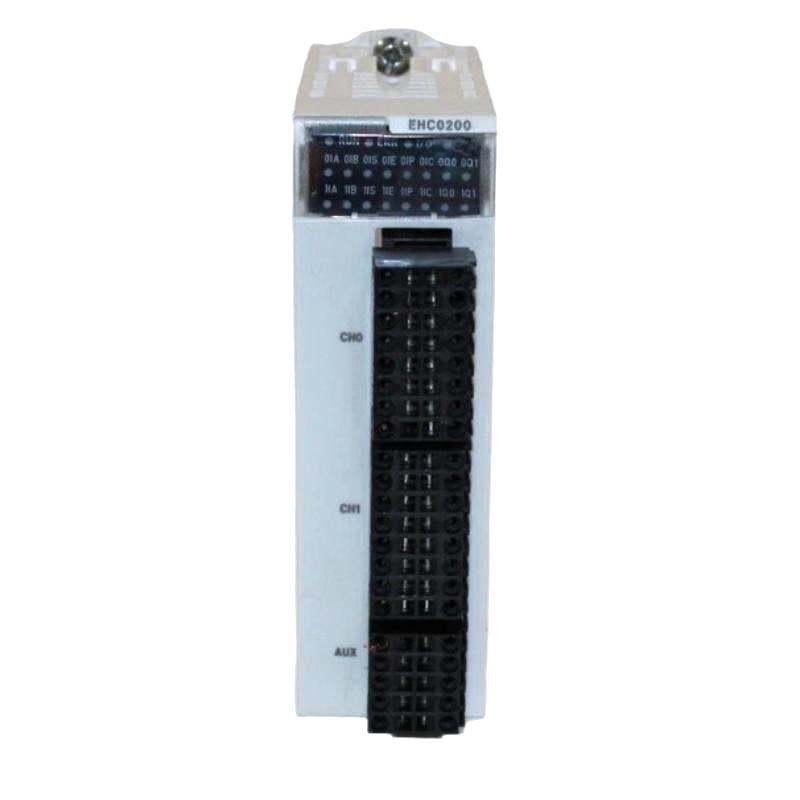
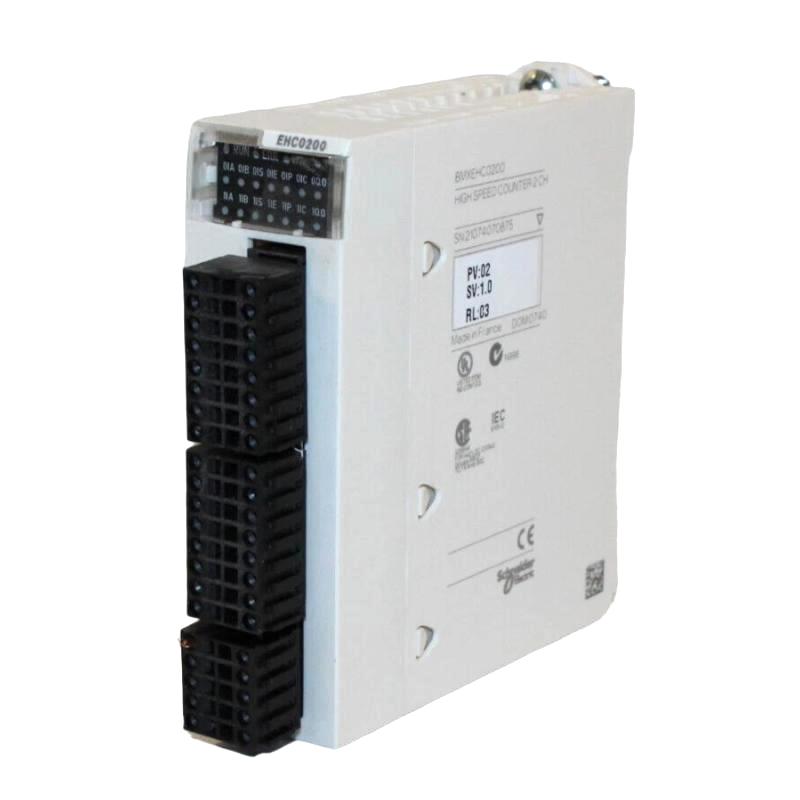
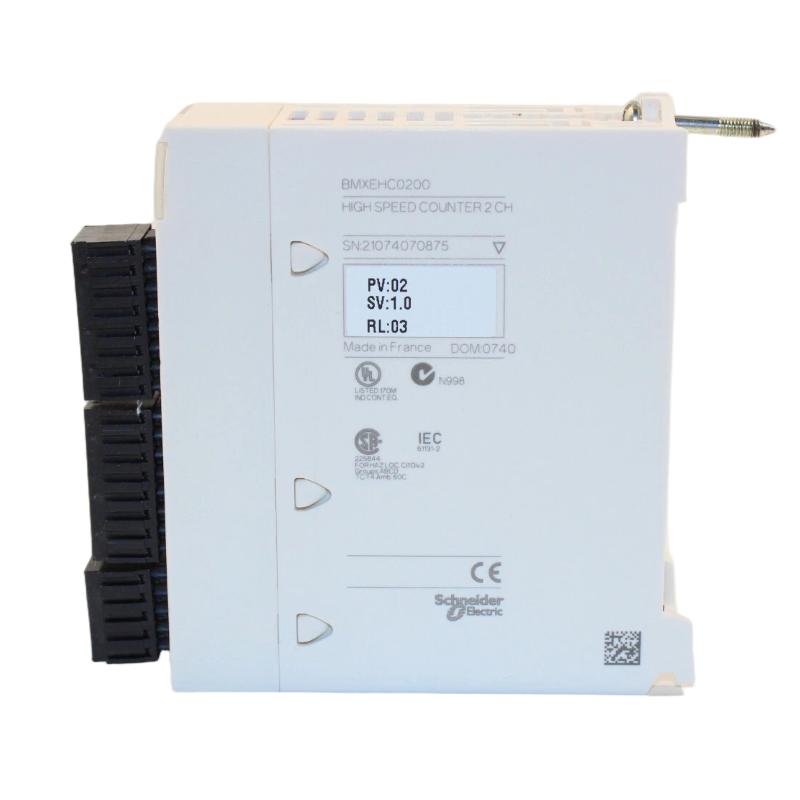
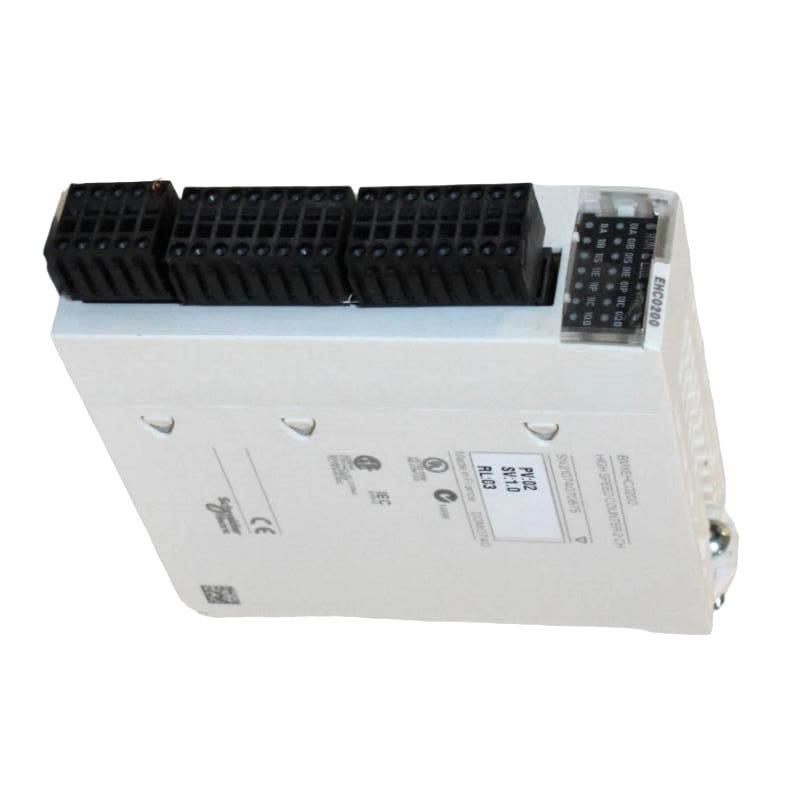
- Schneider
- BMXEHC0200
- High-Speed Counter Module
- France
- 32 × 103.7 × 86 mm
- 0.112 kg
- Xiamen, China
- New & In Stock
- T/T, PayPal, Western Union
- 1 Year
- 1-3 Working Days
- DHL, UPS, TNT, FedEx and EMS.
- 24-Hour Service
- COO
- 7
Our advantage

Global Logistics
We have a 10-year logistics and express cooperation agreement, so our products can be shipped to any place in the world.

Brand new and original
Our products are imported in bulk from the place of origin. Because of the cooperative relationship, our products are all original and 100% new.

24-hour service
We provide 7*24 hours service to our customers. We will be there whenever you need us.

Price advantage
All our products are priced very favorably because we have our own warehouse and supply.
| Company Information | |||
| [email protected] | |||
| Mobile | +8615980777398 | ||
| +8615980777398 | |||
| 15980777398 |
Product Overview
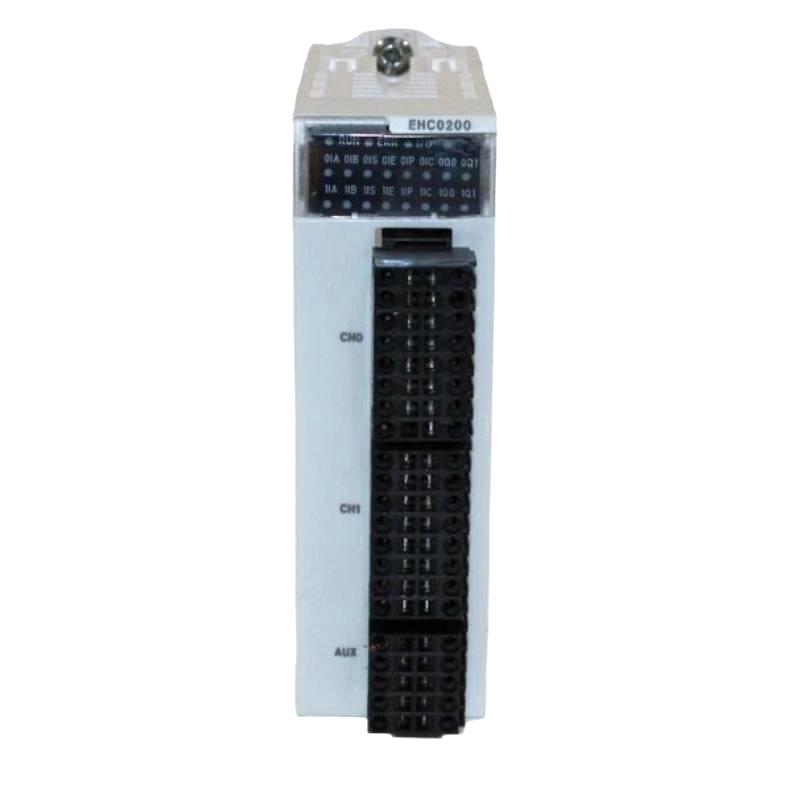
The Schneider BMXEHC0200 High-Speed Counter Module is a specialized industrial automation module designed for applications that require reliable processing of high-frequency pulse signals. In modern PLC systems, standard digital inputs may not always be suitable for rapidly changing pulse signals generated by encoders, proximity sensors, flowmeters, frequency sensors, and other field devices.
A high-speed counter module provides dedicated counting functionality so that fast pulses can be acquired and processed without depending entirely on the normal PLC program scan cycle.
The BMXEHC0200 can therefore serve as an important interface between high-speed field signals and the PLC control system. Depending on the application configuration, high-speed counting can be used to monitor machine speed, count products, measure rotational movement, track material length, or provide position-related information.
The supplied physical dimensions of the Schneider BMXEHC0200 are 32 × 103.7 × 86 mm, with a weight of 0.112 kg. Its compact form makes it suitable for integration into modular PLC control systems where cabinet space and organized I/O architecture are important considerations.
Exact channel configuration, maximum counting frequency, supported counting modes, input electrical characteristics, encoder compatibility, output behavior, and diagnostic functions should be confirmed against the applicable Schneider Electric technical documentation before engineering or commissioning.
Technical Specifications
| Parameter | Specification |
|---|---|
| Manufacturer | Schneider Electric |
| Model | BMXEHC0200 |
| Product Type | High-Speed Counter Module |
| Primary Function | High-Speed Pulse Counting |
| Application | Industrial Automation and Machine Control |
| Signal Type | High-Speed Pulse / Counting Signals |
| System Role | High-Speed Field Signal Interface |
| Dimensions | 32 × 103.7 × 86 mm |
| Weight | 0.112 kg |
| Installation | Modular PLC System |
| Typical Applications | Pulse Counting, Speed Monitoring, Product Counting, Position Monitoring |
The physical dimensions and weight above are based on the information supplied for this article. Exact electrical and performance specifications should be verified for the specific installation.
What Is the Schneider BMXEHC0200?
The Schneider BMXEHC0200 is a High-Speed Counter Module designed to process fast pulse signals within an industrial PLC automation architecture.
Many industrial devices generate pulses as they operate. For example, a rotating encoder may produce a sequence of pulses proportional to shaft movement. A proximity sensor may generate a pulse each time a product passes a detection point. A flowmeter may generate pulses related to the quantity of fluid passing through a process.
A conventional PLC input may not be the ideal solution for processing very fast signals because normal input processing is associated with the PLC’s program execution cycle.
A high-speed counter module provides dedicated hardware functionality for detecting and counting these signals.
A simplified architecture is:
Sensor / Encoder → BMXEHC0200 → PLC CPU → Application Logic → Machine Control
The PLC can then use the accumulated count or associated high-speed information as part of the control strategy.
High-Speed Counting Working Principle
Pulse Generation
A field device generates electrical pulses in response to a physical event.
Examples include:
- Encoder rotation
- Product detection
- Machine movement
- Flow measurement
- Shaft rotation
- Linear movement
High-Speed Signal Acquisition
The BMXEHC0200 receives the incoming pulse signal through its appropriate field interface.
The module is intended for applications where signal frequency or pulse timing requires dedicated high-speed processing.
Counter Processing
The module processes incoming pulses using its high-speed counting functionality.
Instead of relying exclusively on a conventional PLC scan, the dedicated counter architecture can handle rapid signal transitions more effectively.
PLC Application Processing
The PLC application can use the resulting counter information for control and monitoring.
For example:
Pulse Count → PLC Calculation → Engineering Value → Control Decision
The application can convert a pulse count into a machine-related value such as product quantity, rotational position, travel distance, or another process variable.
Exact conversion formulas depend on the sensor and machine configuration.
Why High-Speed Counting Is Important
High-speed counting is particularly important when the frequency of incoming pulses is high relative to the PLC scan cycle.
Consider a machine where a sensor generates many pulses within a short period. If the controller attempts to monitor the signal only through conventional cyclic input processing, some signal transitions may not be reliably detected.
A dedicated high-speed counter can provide a more appropriate architecture for these applications.
Typical benefits include:
- Reliable pulse acquisition
- Accurate event counting
- Machine speed monitoring
- Product counting
- Position-related measurement
- Improved response to fast signals
- Reduced dependence on normal PLC scan timing
The actual performance depends on the configured system and connected field device.
Role in Industrial Automation
The BMXEHC0200 can act as a bridge between fast-changing field signals and PLC application logic.
A typical automation architecture may contain:
High-Speed Sensor → BMXEHC0200 → PLC CPU → HMI / SCADA → Actuators
The counter information can be used by the PLC for:
- Counting
- Speed calculation
- Position monitoring
- Production tracking
- Length measurement
- Machine synchronization
- Process monitoring
For example, in a packaging machine, a sensor may generate one pulse for every product passing through a detection point. The counter module can acquire these pulses, while the PLC uses the count to determine production quantity or trigger subsequent machine operations.
Industrial Applications
Product Counting
High-speed counters are commonly used to count products moving through automated production lines.
Possible applications include:
- Bottling
- Packaging
- Assembly
- Sorting
- Material handling
- Production inspection
The counter value can be used for production statistics or machine sequencing.
Encoder-Based Position Monitoring
Encoders generate pulse signals related to mechanical movement.
The BMXEHC0200 can be used within an architecture where pulse information is required for monitoring:
- Rotational movement
- Linear movement
- Conveyor position
- Machine travel
- Shaft movement
The actual position calculation depends on encoder characteristics and system configuration.
Speed Monitoring
Pulse frequency can be related to rotational or linear speed.
The control system can process counter information to calculate an engineering value representing machine speed.
Length Measurement
In material-processing applications, pulse information can be associated with material travel.
For example, a conveyor or measuring wheel may generate pulses proportional to the distance traveled.
The PLC can then convert the count into a calculated length.
Flow Measurement
Some flowmeters produce pulse outputs proportional to fluid movement.
The high-speed counter can acquire these pulses so that the PLC application can monitor or calculate flow-related quantities.
Machine Synchronization
Fast pulse information can also be used to coordinate multiple machine operations.
For example, a controller may use pulse counts to determine when a downstream mechanism should activate relative to upstream machine movement.
PLC System Integration
The BMXEHC0200 can be integrated into a modular Schneider PLC architecture.
A typical system includes:
- High-speed sensors
- Encoders
- BMXEHC0200
- PLC CPU
- Digital I/O modules
- Analog I/O modules
- Communication modules
- HMI
- SCADA system
- Machine actuators
The high-speed counter module handles the fast field signal while the PLC CPU executes the overall machine control program.
A simplified control sequence is:
- The field sensor generates pulses.
- The BMXEHC0200 receives the high-speed signal.
- The module processes the pulse information.
- Counter data becomes available to the PLC application.
- The PLC evaluates the count or related parameters.
- The control program calculates the required engineering value.
- The PLC activates the appropriate machine outputs.
- The HMI can display production or machine information.
This separation between high-speed signal acquisition and general PLC logic can simplify machine-control architecture.
Encoder and Pulse Sensor Applications
The BMXEHC0200 can be considered for applications involving compatible high-speed pulse-producing devices.
Potential field devices include:
- Incremental encoders
- Proximity sensors
- Photoelectric sensors
- Pulse-output flowmeters
- Tachometers
- Speed sensors
- Measuring wheels
- Rotary sensing devices
The exact sensor interface requirements must be checked before connection.
For encoder applications, engineers should consider the encoder’s pulse format, electrical characteristics, resolution, signal frequency, and wiring arrangement.
High-Speed Counter Configuration
Before commissioning, the application should define how the incoming pulses will be interpreted.
Important engineering considerations can include:
- Counting direction
- Counting mode
- Pulse source
- Preset values
- Reset behavior
- Scaling
- Overflow handling
- Start and stop conditions
- Associated PLC logic
The exact configuration options depend on the BMXEHC0200 hardware and software environment.
For this reason, the actual module configuration should be based on the applicable hardware and programming documentation rather than assumed from the general function of a high-speed counter.
Installation Guidelines
Verify Module Identification
Confirm the complete module designation:
Schneider BMXEHC0200
The module should be installed only in a compatible PLC system.
Check Physical Space
The supplied dimensions are:
32 × 103.7 × 86 mm
Cabinet planning should also allow space for wiring, connectors, ventilation, and maintenance access.
Inspect the Module
Before installation, check the module for:
- Physical damage
- Connector damage
- Contamination
- Mechanical deformation
- Signs of improper storage
Verify Field Devices
Confirm that the connected sensor or encoder is compatible with the intended high-speed counter interface.
Check Wiring
Before applying power, verify:
- Signal connections
- Common/reference connections
- Shielding
- Grounding
- Cable routing
- Sensor power
- Module connections
High-Speed Signal Wiring Considerations
High-speed pulse signals can be sensitive to electrical interference.
Signal wiring should therefore be planned carefully.
Recommended practices include:
- Keep pulse cables away from high-power conductors.
- Minimize unnecessary cable loops.
- Use appropriate shielding where required.
- Maintain proper grounding.
- Secure cables against vibration.
- Avoid damaged or poorly terminated conductors.
- Separate encoder wiring from motor power cables when practical.
Variable-frequency drives, contactors, motors, and switching power equipment can produce electrical noise that may affect sensitive pulse signals.
Commissioning Procedure
Step 1: Verify Hardware Installation
Confirm that the BMXEHC0200 is correctly installed in the PLC system.
Step 2: Check the Sensor
Verify the connected pulse sensor or encoder.
Step 3: Verify Wiring
Check all high-speed signal connections and reference wiring.
Step 4: Configure the Counter
Set the required counting parameters in accordance with the application and applicable technical documentation.
Step 5: Apply Power
Energize the control system under controlled commissioning conditions.
Step 6: Generate Test Pulses
Operate the connected sensor or machine mechanism and verify that the counter responds.
Step 7: Check Count Direction
Where directional counting is used, confirm that machine movement produces the expected counting behavior.
Step 8: Verify Scaling
If the pulse count is converted into speed, distance, quantity, or another engineering value, verify the calculation against a known reference.
Step 9: Test Machine Logic
Confirm that PLC outputs and machine functions respond correctly to the counter information.
Troubleshooting the BMXEHC0200
No Counter Response
If the counter does not register pulses, inspect:
- Sensor power
- Sensor output
- Signal wiring
- Module connections
- Counter configuration
- PLC configuration
- Sensor condition
A sensor failure can produce symptoms similar to a module problem.
Count Is Lower Than Expected
Possible causes include:
- Missed pulses
- Incorrect sensor configuration
- Signal interference
- Incorrect wiring
- Incorrect counting mode
- Sensor mounting problems
- Incorrect scaling
Check the signal source and configuration before replacing the module.
Count Is Unstable
An unstable count can be caused by:
- Electrical interference
- Poor signal grounding
- Damaged cables
- Sensor vibration
- Incorrect sensor mounting
- Noise on the input signal
Signal quality should be investigated before assuming a module fault.
Incorrect Counting Direction
If the application uses directional information, verify:
- Sensor arrangement
- Encoder wiring
- Counting configuration
- Mechanical direction
- PLC scaling and logic
Intermittent Pulse Detection
Intermittent detection may be associated with:
- Loose terminals
- Cable damage
- Connector problems
- Electromagnetic interference
- Sensor degradation
- Mechanical vibration
Monitoring the signal during actual machine operation can help identify the source.
Preventive Maintenance
Inspect High-Speed Sensors
Check the connected sensor or encoder for:
- Mechanical damage
- Misalignment
- Contamination
- Loose mounting
- Excessive vibration
Check Signal Wiring
Inspect cables for:
- Cuts
- Abrasion
- Loose connections
- Moisture
- Shielding problems
- Excessive bending
Monitor Counter Behavior
Unexpected changes in pulse count can indicate developing sensor, wiring, or mechanical problems.
Maintain Cabinet Conditions
The PLC cabinet should be maintained in an environment with appropriate:
- Temperature
- Humidity
- Cleanliness
- Ventilation
- Vibration control
Replacement Considerations
When replacing a Schneider BMXEHC0200 High-Speed Counter Module, verify the complete model number and the PLC system configuration.
Important replacement checks include:
- Complete part number
- Hardware revision
- PLC platform
- Module position
- Field sensor type
- Wiring arrangement
- Counter configuration
- Application software
The supplied physical specifications are:
Dimensions: 32 × 103.7 × 86 mm
Weight: 0.112 kg
A module should not be considered interchangeable solely because another device has similar physical dimensions. High-speed input characteristics and application compatibility are equally important.
Physical Dimensions and Weight
| Parameter | Value |
|---|---|
| Dimensions | 32 × 103.7 × 86 mm |
| Weight | 0.112 kg |
These values are useful for:
- PLC cabinet layout
- Spare-parts planning
- Maintenance preparation
- Equipment inventory
- Module replacement
- Shipping and handling
Additional space should be reserved for field wiring and service access.
Engineering Best Practices
Use the Correct Sensor
Select a pulse-generating sensor or encoder that is compatible with the intended high-speed counting architecture.
Protect High-Speed Signals
Keep pulse wiring away from strong electromagnetic noise sources whenever possible.
Verify Counting Parameters
Make sure counting mode, direction, reset behavior, and scaling are consistent with the machine design.
Validate Against a Known Reference
During commissioning, compare the module’s counter information with a known number of pulses or a calibrated mechanical movement.
Monitor Long-Term Performance
Trend monitoring can help identify sensor degradation, mechanical wear, or signal-quality problems.
Maintain Configuration Records
Document the module configuration, sensor details, wiring, scaling factors, and PLC application settings for future maintenance.
Compatible Automation Components
Depending on the application, the BMXEHC0200 may be integrated with:
- Schneider PLC CPUs
- Incremental Encoders
- Pulse Sensors
- Proximity Sensors
- Photoelectric Sensors
- Flowmeters
- Digital Input Modules
- Digital Output Modules
- Analog Input Modules
- Communication Modules
- HMI Panels
- SCADA Systems
- Industrial Actuators
- Conveyor Systems
- Machine Control Equipment
The exact combination depends on the control architecture and field application.
Recommended Related Schneider Product Categories
| Product Category | Typical Function |
|---|---|
| Schneider High-Speed Counter Modules | High-frequency pulse acquisition |
| Schneider PLC CPUs | Machine control and application logic |
| Schneider Encoder Interfaces | Position feedback integration |
| Schneider Discrete Input Modules | Standard digital signal acquisition |
| Schneider Discrete Output Modules | Digital equipment control |
| Schneider Communication Modules | Industrial data exchange |
| Schneider HMI Systems | Operator monitoring |
| Schneider Motion Products | Motion and positioning applications |
These product categories may operate within the same automation architecture but should not be considered direct replacements without confirming technical compatibility.
Key Advantages
High-Speed Pulse Processing
The BMXEHC0200 is designed specifically for applications where pulse signals must be processed at high speed.
Dedicated Counting Function
A dedicated counter architecture provides an appropriate solution for pulse-based machine monitoring and control applications.
Broad Industrial Use
High-speed counting can be applied to production counting, speed monitoring, encoder feedback, material measurement, and machine synchronization.
Compact Physical Design
The supplied 32 × 103.7 × 86 mm dimensions make the module suitable for compact modular PLC installations.
Lightweight Construction
With a supplied weight of 0.112 kg, the module is convenient for installation, maintenance, inventory, and replacement operations.
PLC Integration
Counter information can be incorporated into PLC application logic for machine sequencing, monitoring, calculations, and control.
Technical FAQs
What is the Schneider BMXEHC0200?
The Schneider BMXEHC0200 is a High-Speed Counter Module designed to acquire and process high-frequency pulse signals within a compatible PLC automation system.
What is the main purpose of a high-speed counter module?
It allows a PLC system to process rapidly changing pulse signals more effectively than relying only on conventional cyclic input processing.
What devices can generate signals for a high-speed counter?
Potential devices include incremental encoders, proximity sensors, photoelectric sensors, tachometers, flowmeters, and other pulse-generating field devices, provided they meet the applicable interface requirements.
What are the dimensions of the BMXEHC0200?
The supplied dimensions are 32 × 103.7 × 86 mm.
What is the weight of the BMXEHC0200?
The supplied weight is 0.112 kg.
Where can the BMXEHC0200 be used?
Typical applications include product counting, conveyor monitoring, encoder-based position monitoring, speed measurement, material-length measurement, flow measurement, and machine synchronization.
What should be checked if the counter does not respond?
Check the sensor, sensor power, signal wiring, grounding, module installation, counter configuration, PLC configuration, and sensor condition.
Why might the counter value be incorrect?
Potential causes include incorrect configuration, signal interference, wiring problems, sensor faults, mechanical problems, incorrect counting mode, or incorrect scaling in the PLC application.
Can another Schneider module replace the BMXEHC0200?
A replacement should not be selected based only on physical dimensions. The high-speed counting function, electrical interface, PLC compatibility, field-device requirements, and application configuration should all be verified.
Conclusion
The Schneider BMXEHC0200 High-Speed Counter Module is a specialized PLC interface designed for industrial applications that require reliable acquisition and processing of high-frequency pulse signals. By providing dedicated high-speed counting functionality, it can support product counting, encoder feedback, speed monitoring, material measurement, machine synchronization, and other pulse-based automation functions.
The supplied physical dimensions are 32 × 103.7 × 86 mm, and the supplied weight is 0.112 kg. These specifications are useful for PLC cabinet design, equipment layout, spare-parts management, and replacement planning.
Successful operation depends on the complete signal chain, including the field sensor, wiring, shielding, grounding, module configuration, PLC application, and mechanical installation. For this reason, troubleshooting should consider the sensor, BMXEHC0200, PLC, and machine as an integrated system.
Before installation or replacement, the complete BMXEHC0200 model designation should be verified together with the applicable PLC platform, field-device characteristics, high-speed counting requirements, and system configuration.