

ProductPRODUCT
Featured products

Contact Us
- Schneider
- ABE7P16T210
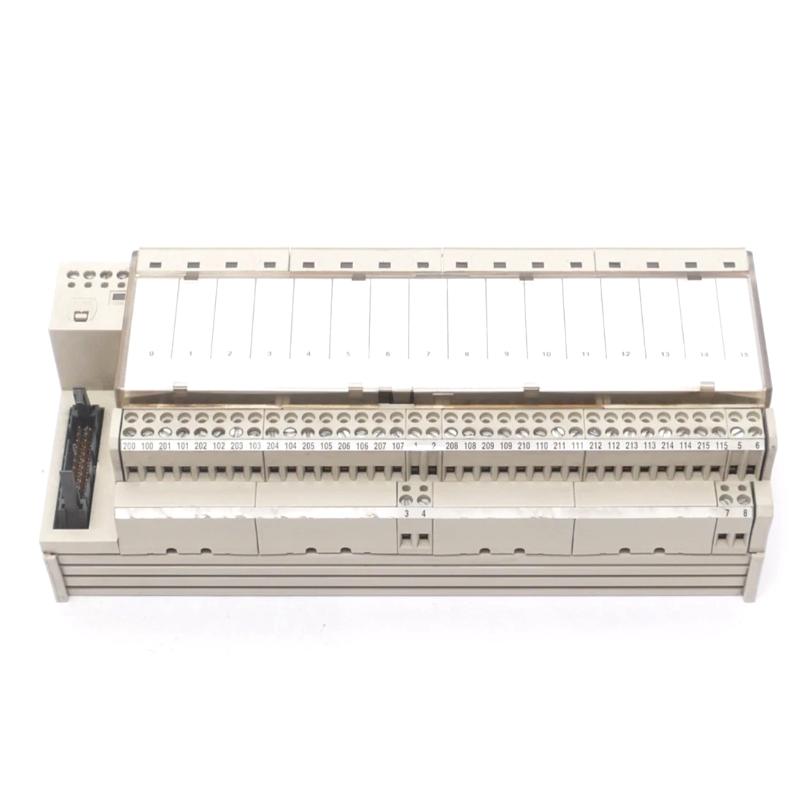
- Sub-base for Plug-in Relay
- France
- 211 × 73 × 88 mm
- 0.615 kg
- Xiamen, China
- New & In Stock
- T/T, PayPal, Western Union
- 1 Year
- 1-3 Working Days
- DHL, UPS, TNT, FedEx and EMS.
- 24-Hour Service
- COO
- 6
Our advantage

Global Logistics
We have a 10-year logistics and express cooperation agreement, so our products can be shipped to any place in the world.

Brand new and original
Our products are imported in bulk from the place of origin. Because of the cooperative relationship, our products are all original and 100% new.

24-hour service
We provide 7*24 hours service to our customers. We will be there whenever you need us.

Price advantage
All our products are priced very favorably because we have our own warehouse and supply.
| Company Information | |||
| [email protected] | |||
| Mobile | +8615980777398 | ||
| +8615980777398 | |||
| 15980777398 |
Product Overview
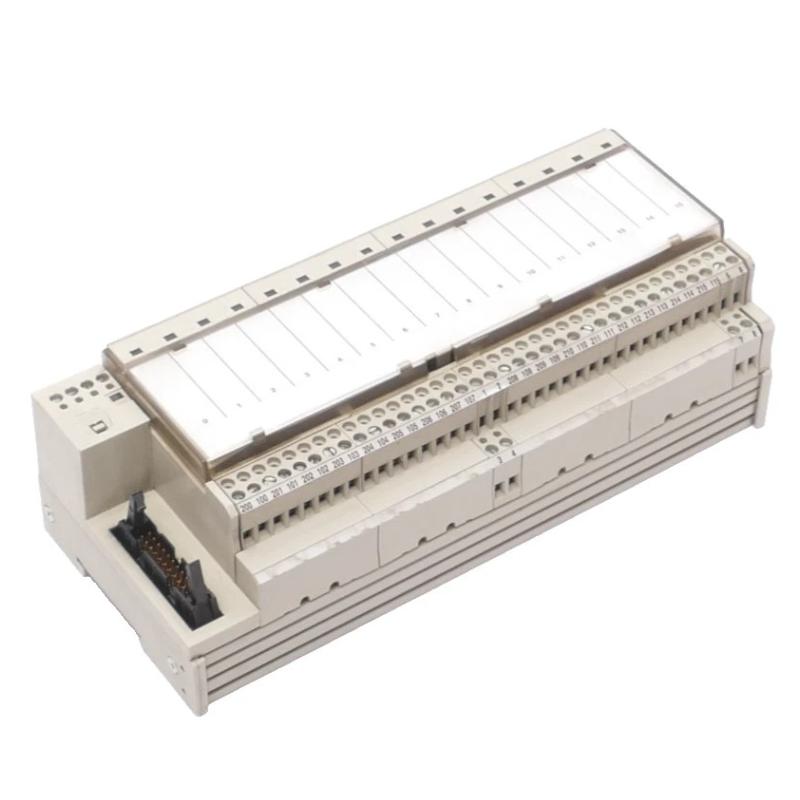
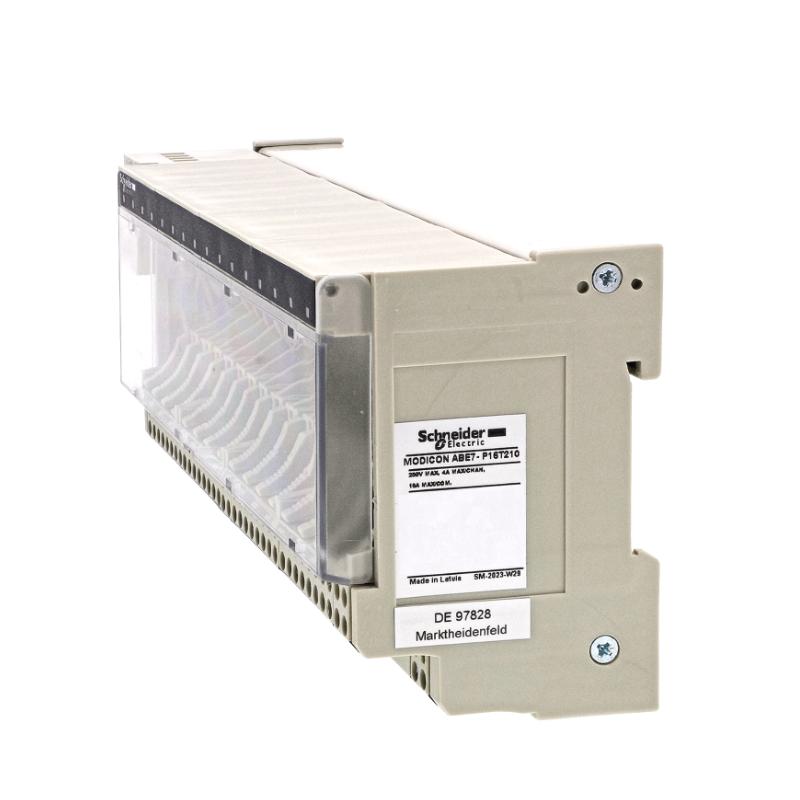
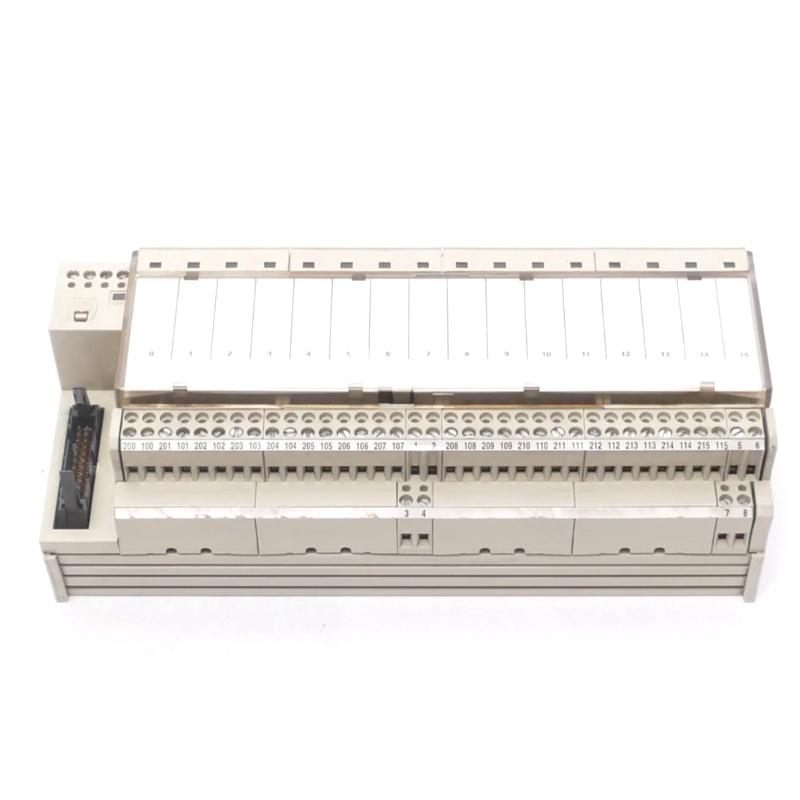
The Schneider ABE7P16T210 Modicon ABE7 Sub-base for Plug-in Relay is a relay-interface sub-base used to organize and connect plug-in relay circuits within industrial automation control panels. It forms part of the Modicon ABE7 interface system and provides the physical connection platform for compatible plug-in relays and associated field wiring.
In PLC control cabinets, relay sub-bases are commonly installed between controller I/O and external electrical circuits. They provide a structured termination point for discrete signals and make it easier to separate PLC-side connections from machine-side wiring.
The ABE7P16T210 is suited to machine automation, process equipment, motor-control panels, and OEM control cabinets where multiple relay channels need to be arranged in a compact interface section. The sub-base itself does not execute control logic or perform the switching function of the relay.
For replacement or panel modification, the sub-base should be considered together with the plug-in relay type, terminal assignments, PLC I/O configuration, and field wiring. Correct matching of these elements is necessary for the intended interface circuit to operate properly.
Technical Specifications
| Parameter | Specification |
|---|---|
| Manufacturer | Schneider Electric |
| Model | ABE7P16T210 |
| Product Family | Modicon ABE7 |
| Product Series | ABE7 |
| Product Type | Sub-base for Plug-in Relay |
| Primary Function | Relay mounting and electrical signal interface |
| System Role | Discrete signal interface |
| Typical Application | PLC I/O and industrial relay interface systems |
| Dimensions | 211 × 73 × 88 mm |
| Weight | 0.615 kg |
Product Features
- Modicon ABE7 sub-base for compatible plug-in relay applications.
- Provides a structured mounting and wiring platform for relay circuits.
- Suitable for PLC-to-field electrical signal interfaces.
- Supports organized discrete signal distribution in control cabinets.
- Separates relay-interface wiring from the main PLC and field wiring areas.
- Suitable for machine automation and industrial control panels.
- Can be integrated with compatible ABE7 relay-interface components.
- Useful for replacement, expansion, and refurbishment of existing relay-interface assemblies.
Working Principle
The ABE7P16T210 provides the physical connection between the plug-in relay circuits and the associated control and field wiring. Signals from the PLC or automation system are routed through the interface arrangement, while the relay provides the corresponding electrical switching function.
PLC I/O → ABE7P16T210 Sub-base → Plug-in Relay → Field Wiring → External Equipment
The sub-base itself does not process the control program or determine when a relay should operate. Its purpose is to provide the electrical terminals and mechanical interface required by the compatible plug-in relay.
When the control system changes the relay command, the associated relay changes its electrical state and passes the applicable signal toward the external circuit. The sub-base maintains the connection between these elements and provides an organized point for wiring inspection and maintenance.
Role in a Modicon ABE7 Relay Interface Architecture
The ABE7P16T210 occupies the relay-interface layer between PLC I/O and external electrical circuits. It allows plug-in relay components to be incorporated into a structured control-panel wiring arrangement.
PLC / Controller → PLC I/O → ABE7P16T210 → Plug-in Relay → Terminal / Field Wiring → Machine Equipment
| System Element | Function |
|---|---|
| PLC / Controller | Executes machine or process control logic |
| PLC I/O | Exchanges discrete control signals |
| ABE7P16T210 | Provides the mounting and connection base for plug-in relays |
| Plug-in Relay | Performs the applicable electrical switching function |
| Terminal Wiring | Routes signals between the interface and field circuits |
| Field Equipment | Receives or generates machine and process signals |
| Control Cabinet | Houses and organizes the automation interface components |
This arrangement provides a dedicated relay interface between controller outputs and external circuits, which can simplify panel wiring and maintenance.
Industrial Applications
| Application | Typical Use |
|---|---|
| PLC Control Panels | Interface between PLC outputs and external circuits |
| Machine Automation | Relay switching for discrete machine functions |
| Motor Control Panels | Interface for contactor and auxiliary control circuits |
| Packaging Equipment | Discrete signal switching and machine-interface wiring |
| Material Handling | Relay interface for conveyors and auxiliary equipment |
| Process Equipment | Controller-to-field signal isolation and switching |
| OEM Control Cabinets | Modular relay-interface installation |
| Production Lines | Centralized organization of multiple discrete relay circuits |
Installation and Maintenance
- Confirm that the ABE7P16T210 matches the intended Modicon ABE7 relay-interface arrangement before installation.
- Verify the compatible plug-in relay type and required electrical configuration.
- Check the approved control-panel schematic for relay and terminal assignments.
- Isolate the relevant control and field circuits before replacing or modifying the sub-base.
- Inspect the sub-base and mounting area for cracks, deformation, contamination, or other physical damage.
- Secure the sub-base according to the applicable control-panel mounting arrangement.
- Verify the relay position and orientation before installing the plug-in relay.
- Check all control-side and field-side terminals for correct identification and secure connections.
- Confirm that the connected external circuits are suitable for the installed relay configuration.
- Apply control power under controlled commissioning conditions and test the affected relay channels.
- If a channel does not operate correctly, inspect the relay, sub-base terminals, PLC I/O, and field wiring as one complete signal path.
- After replacement, verify every affected relay circuit and the associated machine function before returning the equipment to normal operation.
Compatible System Components
| Component | Function |
|---|---|
| Schneider Modicon ABE7 | Provides the relay and PLC interface architecture |
| Plug-in Relay | Performs the applicable electrical switching function |
| PLC Digital I/O | Provides and receives discrete control signals |
| Terminal Blocks | Distributes control and field wiring |
| Contactors | Switches higher-power machine loads |
| Field Sensors | Provides discrete machine-status information |
| Machine Actuators | Performs commanded machine functions |
| Control Cabinet | Houses and organizes relay-interface equipment |
Recommended Related Models
| Model / Product Family | Product Type | Typical Application |
|---|---|---|
| Schneider Modicon ABE7 | Relay Interface System | PLC and field signal interfacing |
| Schneider ABE7P Series | Sub-base for Plug-in Relay | Plug-in relay interface applications |
| Schneider ABE7S Series | Solid State Relay Sub-base | Solid-state relay interfaces |
| Schneider ABE7R Series | Relay Interface Components | Discrete control signal connection |
| Schneider Modicon X80 | I/O System | Industrial discrete and analog I/O |
| Schneider Modicon M340 | PLC Platform | Machine and process control |
| Schneider Modicon M580 | PLC Platform | Advanced industrial automation control |
Key Advantages
- Provides a dedicated mounting and connection platform for plug-in relay circuits.
- Organizes PLC-side and field-side discrete wiring within the control cabinet.
- Supports modular relay-interface arrangements based on the Modicon ABE7 platform.
- Simplifies access to relay connections during inspection and maintenance.
- Suitable for machine, process, motor-control, and OEM automation applications.
- Can be incorporated into larger PLC-to-field interface architectures.
Technical FAQs
What is the difference between the ABE7P16T210 and a plug-in relay?
The ABE7P16T210 is the sub-base that provides the mechanical mounting and electrical connection arrangement. The plug-in relay installed with it performs the actual switching function.
Why use a relay sub-base between PLC I/O and field equipment?
A relay interface can provide a structured connection point between controller I/O and external circuits. It can also simplify cabinet wiring and maintenance when multiple discrete relay circuits are required.
What should be checked if a relay channel does not switch correctly?
Check the PLC output or control signal first, then inspect the sub-base terminals, relay installation, field wiring, and external load. Testing the complete signal path helps distinguish an interface problem from a PLC or field-device fault.
Can the ABE7P16T210 be replaced without checking the relay configuration?
The relay arrangement should be verified before replacement. Mechanical fit alone does not establish electrical compatibility, so the plug-in relay type, terminal assignment, PLC I/O application, and field circuit should all be checked.