
NewsNEWCENTER
Featured products
Contact Us
Allen Bradley 1606-XLE240EN Power Supply Installation Guide
2026-09-09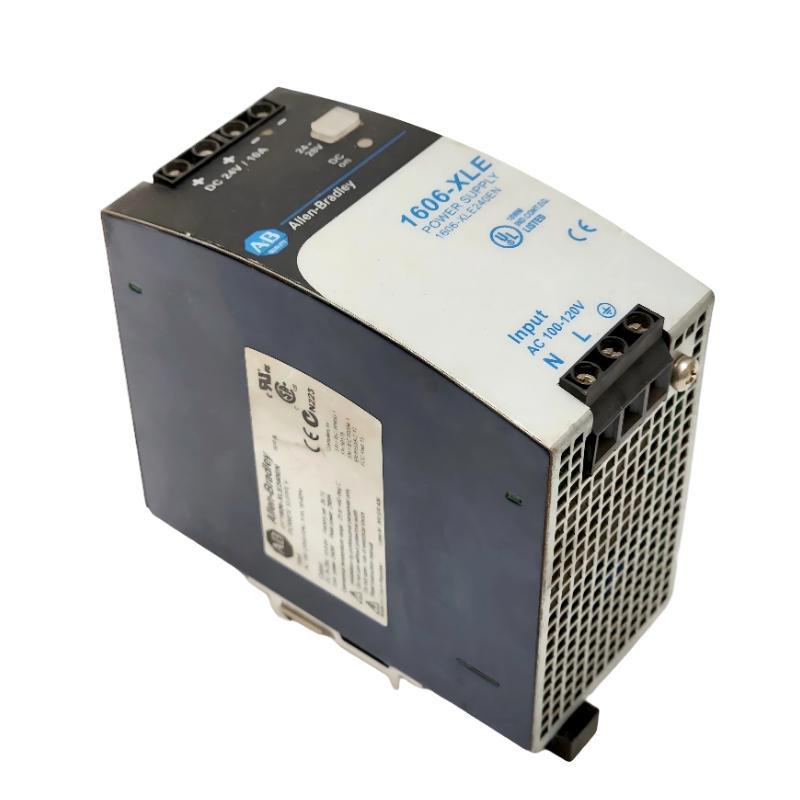
Table of Contents
- Allen Bradley 1606-XLE240EN Power Supply Installation Overview
- Allen Bradley 1606-XLE240EN Installation Planning for Industrial Automation
- Allen Bradley 1606-XLE240EN Mechanical Installation Strategy
- Allen Bradley 1606-XLE240EN Wiring and Electrical Setup
- Allen Bradley 1606-XLE240EN Startup and Commissioning Process
- Allen Bradley 1606-XLE240EN System Configuration Verification
- Allen Bradley 1606-XLE240EN Real Commissioning Experience
- Allen Bradley 1606-XLE240EN Installation FAQ
- Allen Bradley 1606-XLE240EN Technical Summary
Allen Bradley 1606-XLE240EN Power Supply Installation Overview
Allen Bradley 1606-XLE240EN Power Supply installation should begin with verification of the entire DC power distribution system rather than simply energizing the unit. In industrial automation projects, commissioning issues are more frequently caused by wiring mistakes, excessive voltage drop, overloaded circuits or poor grounding than by an actual power supply failure. A structured Installation Guide helps engineers establish reliable DC power for PLC Controllers, I/O Modules, Sensors and industrial communication equipment.
The Allen Bradley 1606-XLE240EN Power Supply is commonly integrated into industrial control cabinets where stable 24 VDC power is essential for continuous production. Correct Setup and Commissioning reduce future maintenance and improve long-term system reliability.
Allen Bradley 1606-XLE240EN Installation Planning for Industrial Automation
Before installation, evaluate the complete System Configuration to ensure that the power supply capacity matches the connected equipment.
- Calculate the total DC current requirement.
- Reserve capacity for future expansion.
- Separate control wiring from motor power cables.
- Verify grounding continuity.
- Inspect incoming AC protection.
- Review cabinet ventilation.
- Confirm branch circuit protection.
Good engineering planning minimizes startup delays and reduces future Troubleshooting requirements.
Allen Bradley 1606-XLE240EN Mechanical Installation Strategy
Mount the power supply securely on a DIN rail while maintaining adequate clearance for natural air circulation. Avoid installing the unit directly beside high-temperature equipment such as variable frequency drives or braking resistors.
Mechanical stability and effective ventilation contribute significantly to long-term reliability in demanding industrial environments.
Allen Bradley 1606-XLE240EN Wiring and Electrical Setup
Complete all electrical work with the incoming power supply isolated.
- Verify AC input voltage.
- Connect protective earth first.
- Confirm DC output polarity.
- Inspect cable insulation.
- Tighten every terminal securely.
- Label outgoing DC circuits.
- Inspect grounding conductors.
Incoming AC
      │
      ▼
1606-XLE240EN
      │
      ▼
24VDC Bus
      │
 ├── PLC Controller
 ├── Remote I/O Modules
 ├── Industrial Ethernet Switch
 ├── HMI
 └── Field Sensors
After wiring, perform continuity and insulation checks before energizing downstream equipment.
Allen Bradley 1606-XLE240EN Startup and Commissioning Process
Successful Commissioning follows a staged startup process rather than applying power to the complete machine at once.
- Measure incoming AC voltage.
- Verify unloaded DC output.
- Power the PLC Controller.
- Enable communication devices.
- Connect remote I/O Modules.
- Activate field Sensors.
- Operate the machine under production load.
Document all voltage measurements during Setup and Commissioning. These baseline values are extremely valuable during future Fault Diagnosis.
Allen Bradley 1606-XLE240EN System Configuration Verification
- Stable DC output.
- No PLC Controller restart.
- Reliable industrial communication.
- Consistent Sensor signals.
- No abnormal cabinet temperature.
- Minimal voltage drop.
- Stable operation during continuous production.
Compare voltage measurements at the power supply output with measurements taken at the furthest remote cabinet. Differences typically indicate cable resistance or distribution issues.
Allen Bradley 1606-XLE240EN Real Commissioning Experience
During commissioning of a bottling production line, engineers observed intermittent communication failures affecting several distributed I/O stations whenever multiple servo axes accelerated simultaneously.
The Allen Bradley 1606-XLE240EN Power Supply initially appeared to be the source of the problem because every affected controller shared the same DC supply.
Measurements showed the power supply maintained approximately 24.2 VDC, while the remote cabinet voltage dropped to approximately 22.0 VDC during peak production demand.
Further investigation identified an undersized DC feeder cable together with a loose terminal inside the distribution panel. After replacing the cable and tightening the terminals, voltage stabilized above 23.9 VDC and communication remained stable throughout continuous production.
The original power supply continued operating normally, demonstrating that distribution wiring should always be verified before replacing hardware.
Allen Bradley 1606-XLE240EN Installation FAQ
Why should voltage be measured before connecting field devices?
Verifying the unloaded output confirms that the power supply is operating correctly before additional loads influence system performance.
Should voltage also be measured at remote cabinets?
Yes. Voltage drop frequently occurs within distribution wiring rather than at the power supply output terminals.
Does grounding influence communication reliability?
Absolutely. Proper grounding improves EMC performance and reduces communication instability.
Why document commissioning measurements?
Recorded baseline values simplify future Troubleshooting and provide valuable engineering references throughout the equipment life cycle.
Allen Bradley 1606-XLE240EN Technical Summary
The Allen Bradley 1606-XLE240EN Power Supply Installation Guide should combine structured planning, correct wiring, systematic Setup, controlled Commissioning and complete System Configuration verification. Following these engineering practices significantly improves the reliability of PLC Controllers, I/O Modules, Sensors and industrial automation systems while minimizing unexpected downtime.