
NewsNEWCENTER
Featured products
Contact Us
Rockwell Automation Accelerates AI-Driven Smart Manufacturing for the Next Industrial Revolution
2026-09-08Intelligent Automation and Digital Engineering Help Manufacturers Improve Productivity and Operational Resilience
As manufacturers continue to embrace digital transformation, the role of industrial automation is expanding beyond traditional machine control. Rockwell Automation is advancing intelligent manufacturing technologies that combine industrial AI, cloud-based engineering, advanced analytics and connected automation to help companies build more efficient, flexible and resilient production environments.
One of the most significant developments in today’s manufacturing industry is the rapid adoption of Industrial AI. Instead of using artificial intelligence only for business analysis, manufacturers are embedding AI directly into engineering, production and maintenance workflows. Intelligent software can analyze production data in real time, identify operational bottlenecks and recommend process improvements that help increase productivity while reducing waste. Rockwell Automation has identified Industrial AI as a key driver in the industry’s transition from traditional automation toward autonomous operations.
Digital engineering is also transforming how factories are designed and commissioned. Modern engineering platforms allow manufacturers to create virtual production environments where machine layouts, control logic and production processes can be tested before equipment is installed. This reduces commissioning time, minimizes engineering risks and enables faster deployment of new production lines.
Cloud-based automation platforms are becoming increasingly important as manufacturing companies operate multiple facilities around the world. Engineers can develop, manage and update automation projects from centralized environments while maintaining standardized control strategies across different plants. This approach improves engineering efficiency and simplifies software maintenance throughout the equipment lifecycle.
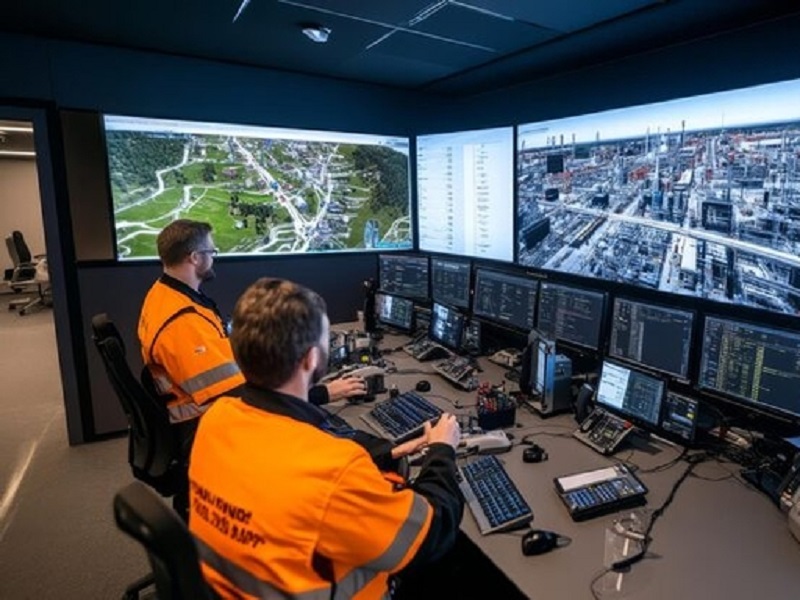
Connected production systems continue to strengthen operational visibility. PLCs, HMIs, industrial robots, variable frequency drives, sensors and safety devices are increasingly integrated into unified industrial networks. Real-time communication between these systems allows operators to monitor production status, equipment performance and energy consumption from centralized control rooms, enabling faster responses to changing production conditions.
Predictive maintenance remains one of the fastest-growing applications of industrial automation. Continuous monitoring of motors, gearboxes, conveyors, pumps and other rotating equipment allows maintenance teams to identify abnormal operating conditions before failures occur. By scheduling maintenance based on actual equipment condition rather than fixed service intervals, manufacturers can reduce unexpected downtime while extending asset life.
Another important trend is the growing use of autonomous material handling. Intelligent autonomous mobile robots (AMRs) are being deployed to transport materials between production areas without requiring fixed routes or manual operation. These systems use advanced navigation technologies to move safely through dynamic factory environments, improving logistics efficiency and reducing repetitive manual tasks. Recent industrial deployments demonstrate that AI-enabled AMRs are becoming an increasingly important part of modern smart factories.
Cybersecurity continues to be a major priority as industrial equipment becomes more connected. Manufacturers are strengthening network segmentation, secure remote access, user authentication and backup strategies to protect automation infrastructure while maintaining reliable production operations. Secure digital connectivity has become an essential requirement for future smart manufacturing facilities.
Sustainability is also influencing automation investment decisions. Intelligent motor control, energy monitoring systems and advanced production analytics help manufacturers optimize resource utilization while reducing electricity consumption and carbon emissions. By combining operational data with AI-assisted recommendations, companies can improve both production efficiency and environmental performance.
Looking ahead, industrial automation will continue evolving toward greater autonomy through the integration of AI, digital engineering, cloud computing and intelligent robotics. Manufacturers investing in these technologies will be better positioned to improve productivity, enhance operational resilience and remain competitive in an increasingly digital industrial landscape.
As the next generation of smart factories takes shape, Rockwell Automation continues to drive innovation through connected automation, Industrial AI and digital engineering solutions that support safer, more efficient and more sustainable manufacturing operations.