
NewsNEWCENTER
Featured products
Contact Us
Siemens and IFS Industrial AI Partnership Accelerates Smart Manufacturing Automation and Digital Transformation
2026-07-08The global manufacturing industry is experiencing a major transformation as companies increasingly adopt artificial intelligence, industrial software, and automation technologies to improve productivity and operational efficiency. Siemens, one of the world’s leading industrial technology companies, continues to expand its industrial digitalization strategy by strengthening partnerships and solutions focused on artificial intelligence-driven manufacturing.
The combination of industrial automation expertise and artificial intelligence capabilities is creating new opportunities for manufacturers to improve production processes, reduce downtime, and optimize factory operations.
Traditional automation systems based on PLC, DCS, SCADA, and industrial networks have already enabled highly efficient production environments. However, the increasing complexity of modern manufacturing requires more advanced solutions that can analyze large amounts of operational data and provide intelligent recommendations.
Industrial AI is becoming an important technology direction because it connects automation systems with advanced analytics, machine learning, and digital engineering platforms.
For manufacturers, this means future factories will not only execute programmed operations but will also continuously learn from production data and improve their performance.
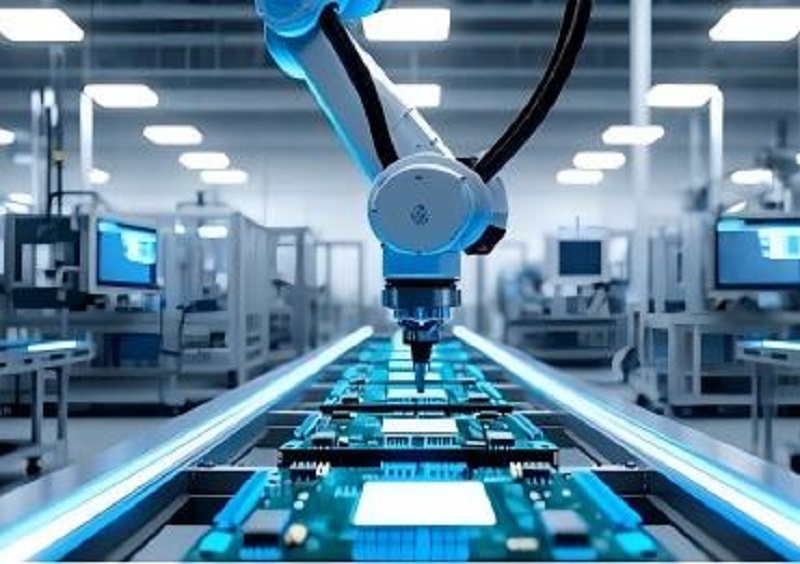
The Evolution from Traditional Automation to Intelligent Manufacturing
Industrial automation has developed through several major stages.
The first generation focused on replacing manual operations with mechanical and electrical control systems.
The second generation introduced programmable automation through PLC systems, enabling flexible machine control and improved production efficiency.
The third generation introduced industrial networks, distributed control systems, manufacturing execution systems, and connected production environments.
Today, the industry is entering the next stage: intelligent automation.
Modern factories require systems that can:
- Monitor equipment conditions in real time
- Predict potential failures before they happen
- Optimize production parameters automatically
- Improve energy efficiency
- Support flexible manufacturing models
Artificial intelligence provides the analytical capability needed to achieve these goals.
By combining automation hardware with AI-based software, manufacturers can move from reactive maintenance toward predictive and intelligent operations.
Siemens Industrial Digitalization Strategy and AI Integration
Siemens has been developing industrial digital technologies through its automation, electrification, and software businesses for many years.
Its industrial ecosystem includes technologies related to:
- PLC automation systems
- Industrial control systems
- Industrial communication networks
- Digital twins
- Manufacturing software
- Industrial edge computing
- Engineering platforms
The company’s digital manufacturing approach focuses on connecting the physical production environment with virtual engineering models.
Industrial AI adds another important layer by allowing systems to analyze operational information and support better decision-making.
For example, an intelligent manufacturing system can analyze:
- Machine operating conditions
- Production cycle performance
- Energy consumption patterns
- Quality inspection results
- Maintenance history
Based on this information, AI algorithms can identify improvement opportunities and help engineers optimize factory performance.
How Industrial AI Benefits PLC and Automation Systems
PLC systems remain the foundation of many industrial automation applications worldwide. They provide reliable control for machines, production lines, and industrial processes.
However, traditional PLC applications mainly execute predefined logic.
With industrial AI integration, automation systems can become more adaptive.
For example:
A conventional PLC system may stop a machine after detecting abnormal sensor values.
An AI-enhanced system can analyze historical operating data, identify the possible cause of the abnormal condition, and recommend maintenance actions before a failure occurs.
This creates a transition from simple control automation toward intelligent operational management.
For automation engineers, this means future PLC-based systems will increasingly include:
- Advanced data collection
- Edge computing capabilities
- AI-based diagnostics
- Cloud connectivity
- Predictive maintenance functions
The role of PLC systems will continue to expand from machine controllers to important data sources within intelligent factories.
Industrial AI Applications in Manufacturing
Industrial AI technology has many practical applications across different industries.
Predictive Maintenance
Equipment failures can cause expensive production interruptions.
AI systems can analyze vibration data, temperature information, motor conditions, and operational patterns to identify early warning signals.
Manufacturers can schedule maintenance activities before unexpected failures occur.
This approach improves equipment availability and reduces maintenance costs.
Quality Improvement
Manufacturing companies face increasing pressure to improve product quality while maintaining production speed.
AI-powered inspection systems can analyze production information and detect quality issues more efficiently.
Combined with automation systems, these solutions can help manufacturers achieve more consistent production results.
Energy Optimization
Energy consumption has become a major concern for industrial companies.
Industrial AI can analyze energy usage patterns and identify opportunities for reducing consumption.
For industries such as chemical processing, steel manufacturing, and power generation, intelligent energy management can create significant operational improvements.
Production Process Optimization
Modern production lines often contain thousands of operational parameters.
Human engineers may not be able to analyze all relationships between these variables.
AI systems can process large amounts of data and identify optimization opportunities that improve:
- Production speed
- Material utilization
- Equipment efficiency
- Product consistency
The Importance of Industrial Data in AI-Based Automation
Artificial intelligence depends heavily on high-quality industrial data.
Modern factories generate information from many sources:
- PLC systems
- DCS controllers
- Sensors
- Industrial robots
- Drives
- Safety systems
- Manufacturing software
However, collecting data alone is not enough.
Manufacturers need reliable industrial architectures that can securely transfer and analyze information.
This creates increasing demand for:
- Industrial communication modules
- Automation controllers
- Remote I/O systems
- Industrial gateways
- Control system upgrades
For companies supplying industrial automation equipment, the development of industrial AI creates new market opportunities.
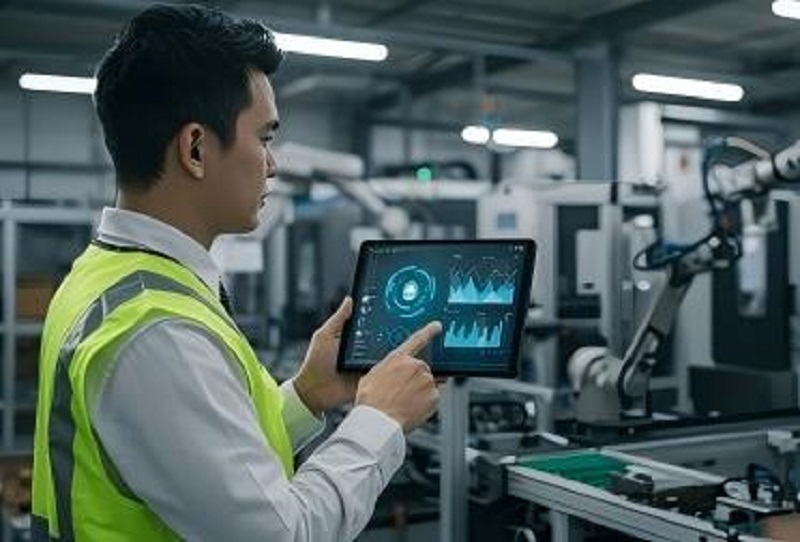
Impact on DCS and Process Automation Industries
While PLC systems dominate machine automation, DCS platforms remain essential in process industries such as:
- Oil and gas
- Chemical production
- Power generation
- Water treatment
- Pharmaceutical manufacturing
Industrial AI is also changing the future development of DCS systems.
Traditional DCS platforms focus on:
- Process monitoring
- Control loops
- Alarm management
- Operator supervision
AI-enhanced DCS solutions can provide additional capabilities:
- Advanced process optimization
- Intelligent alarm analysis
- Predictive equipment monitoring
- Operator decision support
This transformation helps process industries improve safety, efficiency, and reliability.
Challenges of Industrial AI Implementation
Although industrial AI offers significant advantages, manufacturers must also address several challenges.
Data Security
Connected factories require strong cybersecurity protection.
Industrial companies must ensure that automation networks remain secure while enabling data exchange.
System Integration
Many factories operate with equipment from different generations and manufacturers.
Integrating AI technologies with existing PLC, DCS, and SCADA systems requires professional engineering expertise.
Workforce Skills
The future automation workforce needs knowledge across multiple areas:
- Control engineering
- Industrial networking
- Data analysis
- Artificial intelligence
- Digital manufacturing
Companies will increasingly require engineers who can combine traditional automation knowledge with emerging digital technologies.
Future Outlook: AI Will Become a Core Part of Industrial Automation
The development of industrial AI represents a major shift in manufacturing technology.
Factories of the future will not simply use automation systems to execute production tasks. They will use intelligent systems that continuously analyze data, optimize operations, and improve performance.
The combination of PLC, DCS, industrial software, and artificial intelligence will become a key foundation for smart manufacturing.
For global manufacturers, investing in intelligent automation will help achieve:
- Higher productivity
- Better equipment reliability
- Lower operating costs
- Improved production flexibility
For industrial automation suppliers and engineering companies, the growth of AI-driven manufacturing will create new demand for automation hardware, control modules, communication solutions, and system modernization services.
Conclusion
Siemens’ continued development of industrial AI solutions reflects the growing importance of intelligent automation in global manufacturing.
As factories become more connected and data-driven, artificial intelligence will play an increasingly important role in PLC systems, DCS platforms, and industrial control architectures.
The future of manufacturing will depend on the successful combination of automation engineering and intelligent technologies.
Companies that adopt industrial AI strategies today will be better positioned to achieve efficient, flexible, and sustainable production operations in the coming years.