
NewsNEWCENTER
Featured products
Contact Us
PLC and DCS Integration Becomes Standard Architecture in 2026 Industrial Automation Systems
2026-07-06In 2026, the integration of PLC (Programmable Logic Controller) and DCS (Distributed Control System) technologies has become a standard architecture in modern industrial automation systems. Industries such as oil and gas, petrochemicals, power generation, pharmaceuticals, and advanced manufacturing are increasingly adopting unified control platforms to improve efficiency, reliability, and operational visibility.
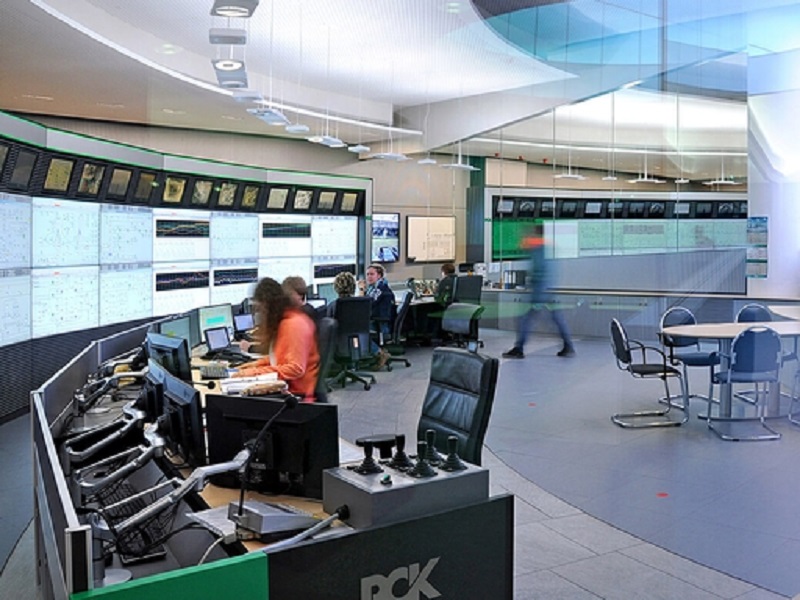
Historically, PLC and DCS systems were designed for different purposes. PLCs were optimized for high-speed discrete control applications, while DCS platforms were designed for large-scale continuous process control. However, modern industrial environments require both systems to operate seamlessly together.
One of the most important benefits of PLC-DCS integration is improved operational efficiency. By enabling real-time communication between discrete and continuous control systems, manufacturers can achieve better coordination across production processes. This leads to higher throughput, reduced downtime, and improved system performance.
Another key advantage is enhanced system visibility. Unified automation platforms allow engineers to monitor both PLC and DCS operations through centralized dashboards. This provides a complete overview of industrial processes and enables faster, more accurate decision-making.
Cybersecurity remains a critical concern in integrated automation environments. As systems become more interconnected, protecting communication channels between PLC and DCS networks is essential. Modern systems now implement encrypted communication, network segmentation, and continuous threat monitoring.
Standard communication protocols such as OPC UA, Modbus TCP, and Industrial Ethernet are widely used to simplify integration between different automation systems. These protocols ensure interoperability across multiple vendors and reduce engineering complexity.
Artificial intelligence is increasingly being used in process automation. AI algorithms analyze large volumes of industrial data to optimize production parameters, reduce energy consumption, and improve product quality. This is particularly important in energy-intensive industries where small improvements can result in significant cost savings.
Edge computing further enhances PLC-DCS integration by enabling real-time data processing at the source. Instead of relying entirely on centralized systems, edge devices handle critical processing locally, improving responsiveness and system stability.
Modern industrial plants are increasingly adopting hybrid automation architectures. PLC systems manage fast-response tasks such as robotics and packaging, while DCS systems control continuous processes such as temperature, pressure, and chemical composition. Integrated platforms ensure seamless communication between both systems.
As Industry 4.0 continues to evolve, PLC and DCS systems are becoming part of a larger digital ecosystem that includes cloud computing, digital twins, and AI-driven optimization tools. This transformation is enabling fully connected, intelligent factories capable of predictive and autonomous operations.
In the future, PLC-DCS integration will become a mandatory standard in industrial automation design. Companies that adopt unified architectures will benefit from improved efficiency, reduced operational costs, and increased flexibility in production systems.