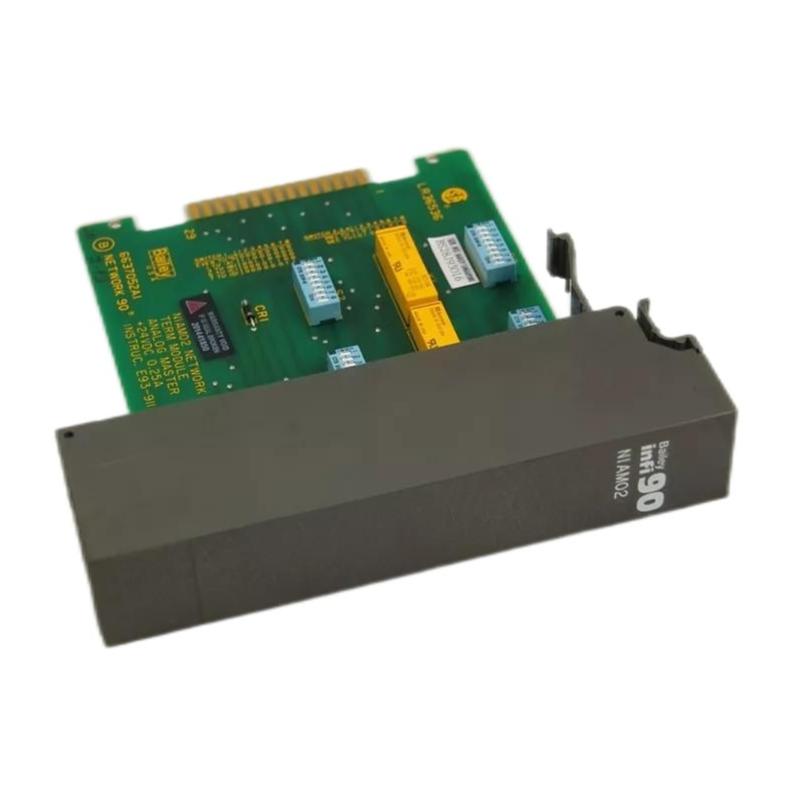
Product Overview
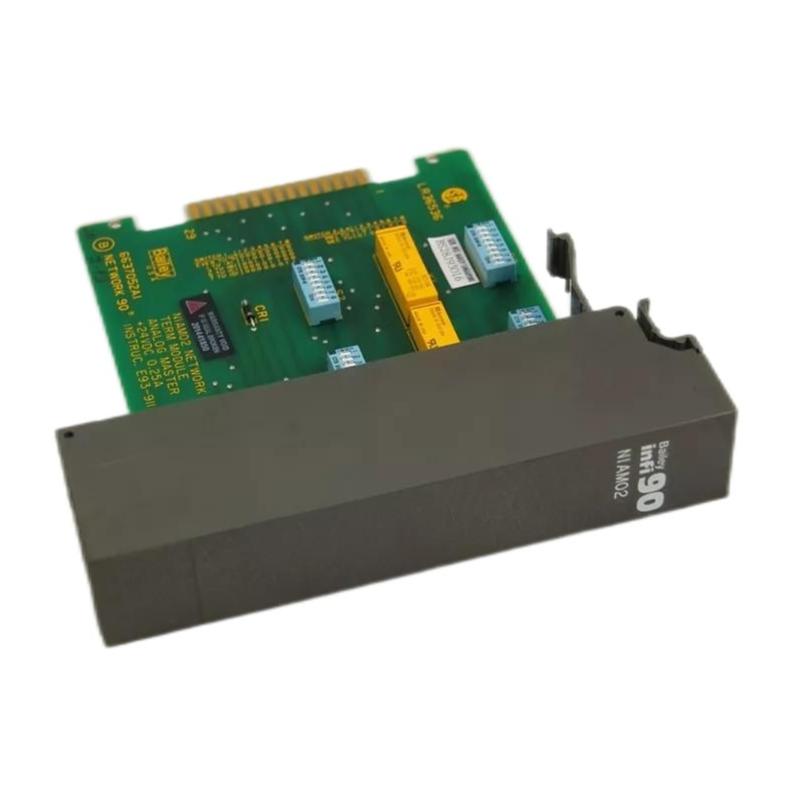
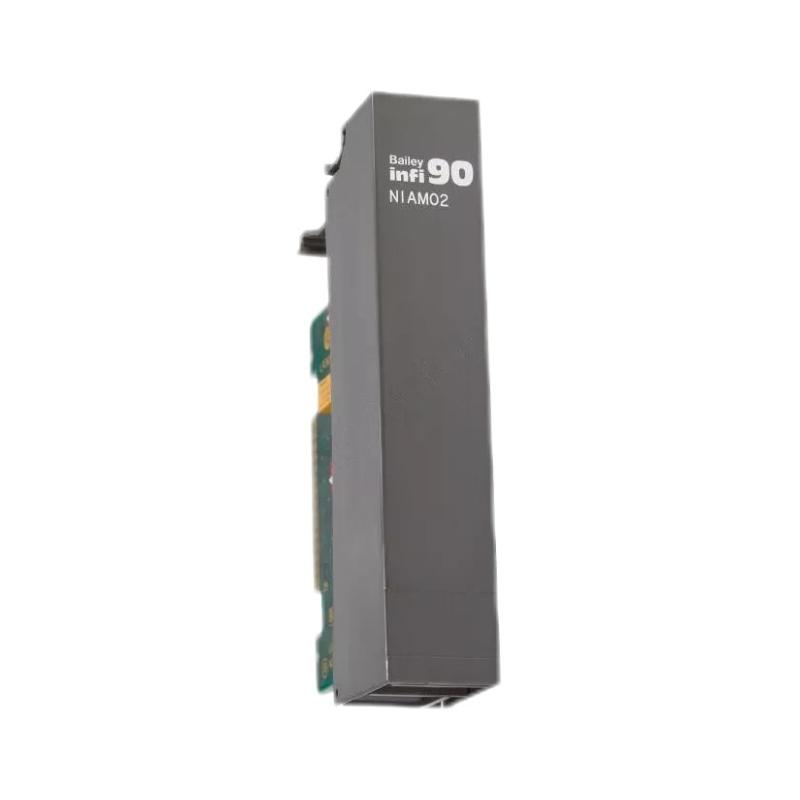
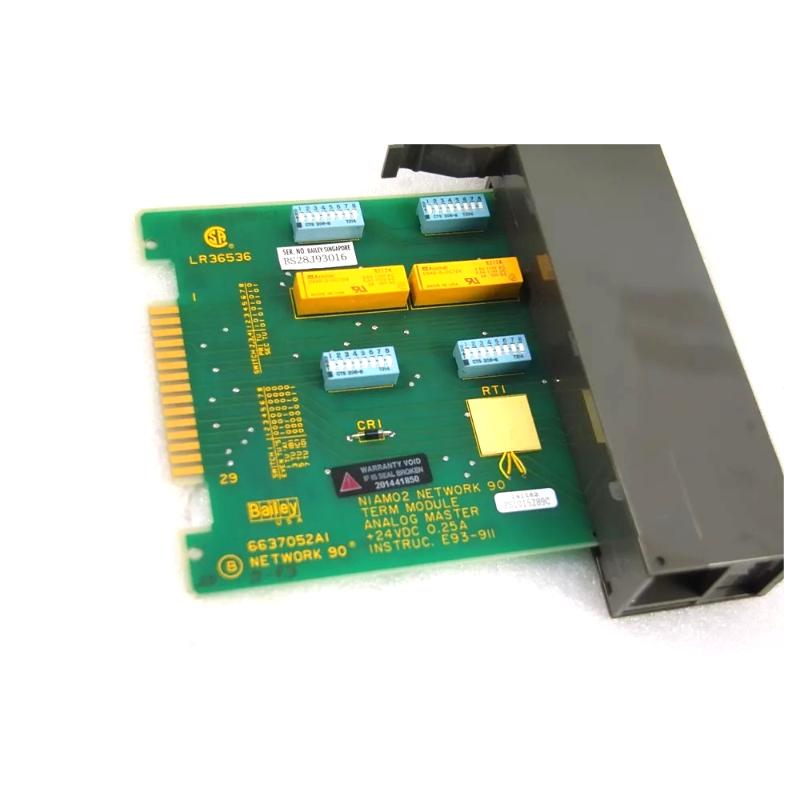
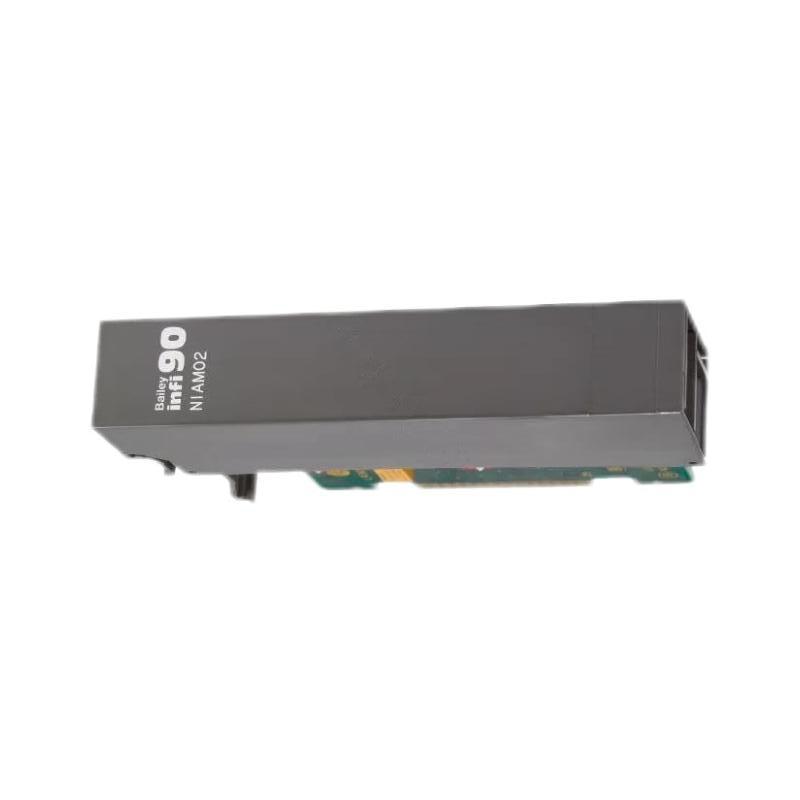
The ABB Bailey NIAM02 Analog Main Terminal Module is an industrial termination and interface control module used in ABB Bailey INFI 90 / Net 90 Distributed Control Systems (DCS). It functions as a central analog signal interface node, coordinating communication between multiple analog input terminal modules and the main analog master processing system.
Despite the “Simulated Main Terminal” designation in some system configurations, the NIAM02 is not a processing unit. It serves as a signal coordination and routing hub, ensuring structured transfer of analog data between field termination modules and the central analog master module.
This module is typically used in multi-rack analog input architectures, especially where high channel density and multi-module synchronization are required.
Technical Specifications
| Parameter |
Details |
| Manufacturer |
ABB (Bailey) |
| Model |
NIAM02 |
| Product Type |
Analog Main Terminal / Interface Module |
| System Compatibility |
ABB Bailey INFI 90 / Net 90 DCS |
| Function |
Central analog signal coordination and routing |
| Supported Modules |
NIAI01 / NIAI02 / NIAI03 / NIAI04 / NIAI05 |
| Signal Type |
4–20 mA / mV / RTD / thermocouple (system dependent) |
| Interface Role |
Master termination interface for analog input system |
| Communication Link |
Backplane / ribbon cable system connection |
| Channel Management |
Multi-terminal module aggregation support |
| Power Supply |
System supplied (rack backplane) |
| Power Consumption |
Low-power control logic module |
| Isolation |
System-level isolation via connected I/O modules |
| Installation Type |
Rack-mounted main termination unit |
| Operating Temperature |
0°C to +60°C |
| Storage Temperature |
-40°C to +85°C |
| Humidity Range |
5%–95% non-condensing |
| Dimensions |
78.74 × 215.9 × 233.68 mm |
| Weight |
0.7 kg |
Function and Working Principle
The ABB NIAM02 operates as a central coordination layer for analog input termination modules.
Working principle:
- Field analog signals are collected through NIAI-series terminal modules
- All NIAI modules connect to the NIAM02 main terminal unit
- NIAM02 organizes and synchronizes signal routing paths
- Calibration and reference signals are distributed through the system
- Analog master module receives unified signal streams
- The DCS converts and processes data for control logic
This structure ensures consistent signal synchronization, calibration integrity, and multi-module scalability.
Role in Industrial Control Systems
Within ABB Bailey INFI 90 / Net 90 systems, the NIAM02 plays a system-level coordination role:
- Centralizes analog input termination module connections
- Coordinates multiple NIAI modules in a unified structure
- Supports cold junction compensation and calibration signal routing
- Ensures consistent signal timing across analog inputs
- Acts as interface between termination layer and master analog module
It is a critical architecture component in large-scale analog input systems.
Industrial Applications
The ABB NIAM02 is widely used in:
- Power generation control systems
- Oil and gas processing facilities
- Petrochemical and refinery automation
- Water treatment plants
- Industrial process control systems
- Large ABB Bailey DCS installations
- High-channel analog measurement systems
It is especially important in systems requiring multi-module analog input synchronization and centralized signal management.
Installation and System Integration
Proper installation ensures stable system operation:
- Installed in ABB Bailey INFI 90 / Net 90 rack systems
- Connects to multiple NIAI terminal modules
- Interfaces directly with analog master modules (IMAMM series)
- Requires correct backplane and ribbon cable configuration
- Must follow grounding and shielding standards
- Installed by qualified DCS engineers
- Used during system commissioning and expansion
Compatible System Components
The NIAM02 typically works with:
- ABB Bailey NIAI01–NIAI05 terminal modules
- Analog input slave modules (IMASI series)
- Analog master modules (IMAMM03)
- Calibration modules (NIAC series)
- Field transmitters and sensors
- System backplane communication infrastructure
- DCS controller and processor modules
Together, these form a complete ABB Bailey analog input architecture.
Recommended Alternative Models
| Model |
Type |
Key Feature |
Application |
| NIAM02 |
Analog Main Terminal Module |
Central analog coordination unit |
Multi-rack DCS systems |
| NIAM01 |
Basic main terminal module |
Single-rack support |
Small analog systems |
| NIAM03 |
Enhanced main terminal |
Improved signal distribution |
High-density systems |
| NIAI04 |
Terminal module |
Field signal termination |
Input layer |
| IMAMM03 |
Analog master module |
Signal processing core |
Control layer |
Key Advantages
- Centralizes multiple analog terminal modules
- Improves system scalability and structure
- Ensures stable signal synchronization
- Supports complex multi-rack architectures
- Compatible with ABB Bailey DCS systems
- Enhances calibration and signal integrity
- Reduces wiring and configuration complexity
Technical FAQs
Q1: What is the main function of ABB NIAM02?
It acts as a central coordination and routing unit for multiple analog input terminal modules.
Q2: Does it process analog signals directly?
No. It coordinates and routes signals; processing is done by master or slave modules.
Q3: What systems use NIAM02?
It is used in ABB Bailey INFI 90 and Net 90 distributed control systems.
Q4: Why is it called a “main terminal module”?
Because it aggregates and manages multiple NIAI terminal modules into a unified system.
Conclusion
The ABB Bailey NIAM02 Analog Main Terminal Module is a key architectural component in ABB Bailey distributed control systems. It provides centralized coordination, routing, and synchronization of analog input terminal modules, ensuring stable and scalable system integration.
Its role is essential in large-scale industrial automation environments where high-density analog signals must be managed reliably across multiple racks and control layers.