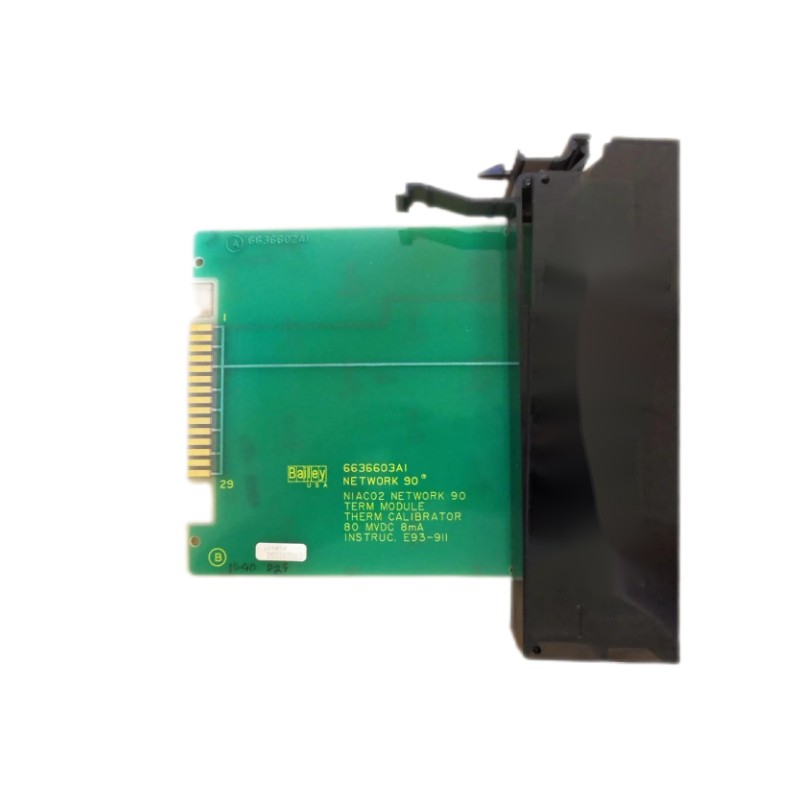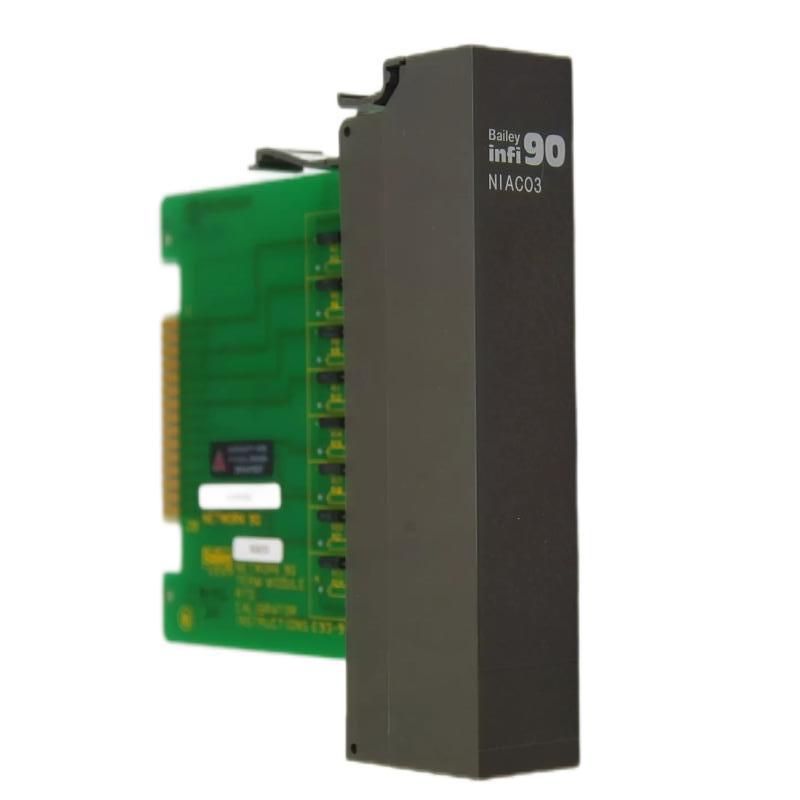
Product Overview
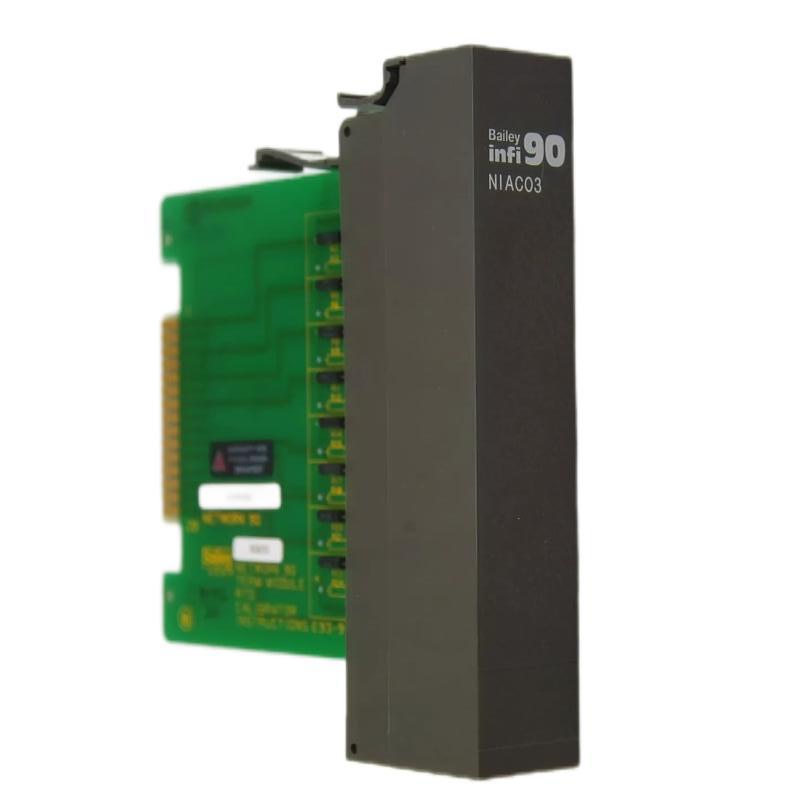
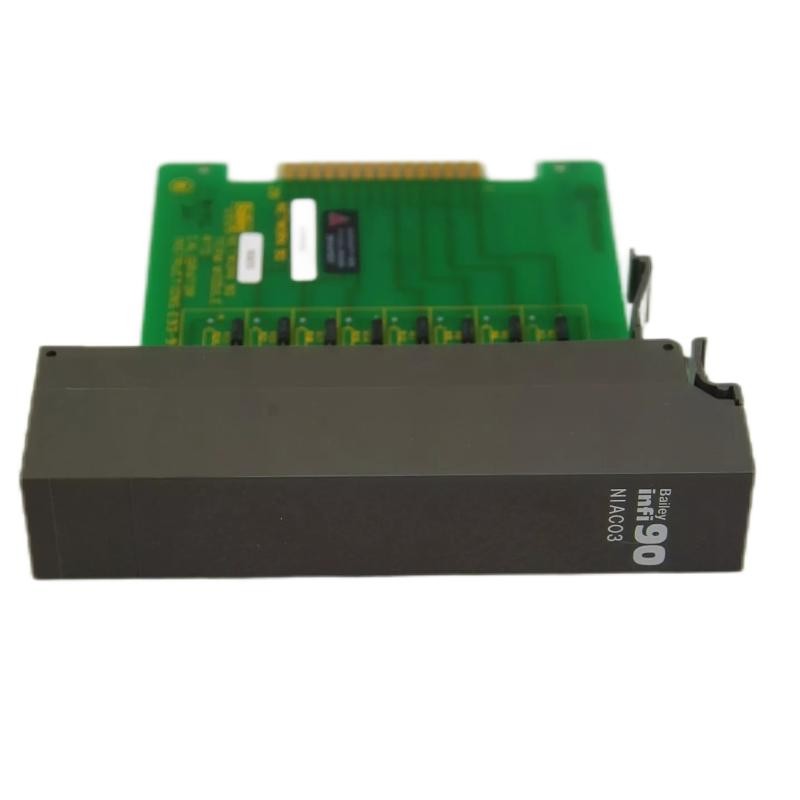
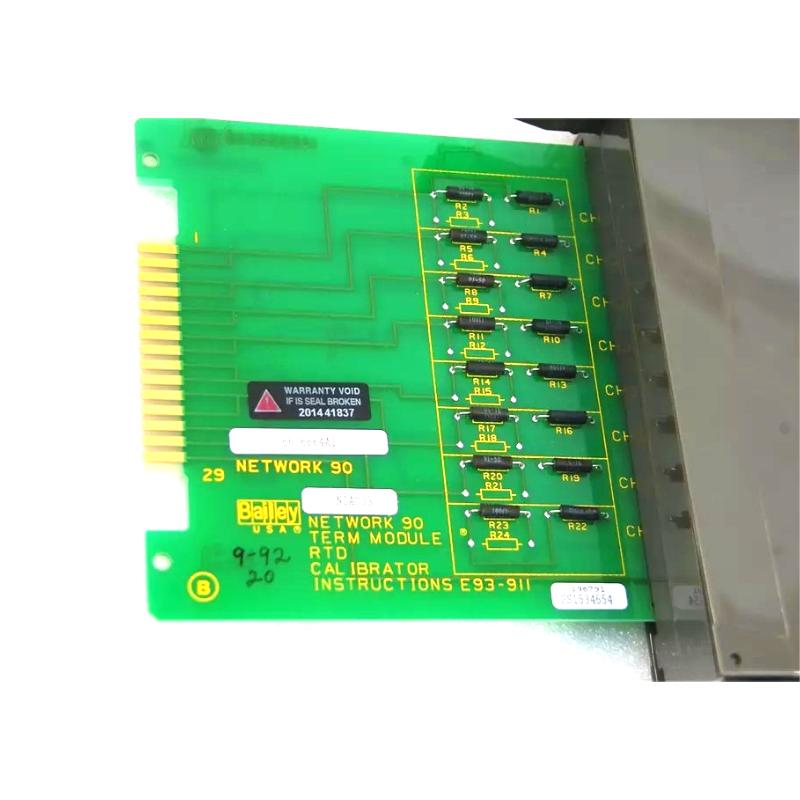
The ABB Bailey NIAC03 Analog Input Calibration Module is an industrial signal calibration and termination module used in ABB Bailey INFI 90 / Net 90 Distributed Control Systems (DCS). It is designed to provide precision calibration references for analog input channels, ensuring accurate measurement and stable signal performance across industrial automation systems.
This module works as part of the ABB Bailey analog input subsystem, supporting calibration of input modules by providing stable reference signals and calibration switching functions. It is mainly used during commissioning, maintenance, and system verification of analog measurement loops.
The NIAC03 is essential in applications where long-term measurement accuracy, sensor stability, and signal consistency are critical.
Technical Specifications
| Parameter |
Details |
| Manufacturer |
ABB (Bailey) |
| Model |
NIAC03 |
| Product Type |
Analog Input Calibration Module |
| System Compatibility |
ABB Bailey INFI 90 / Net 90 DCS |
| Function |
Analog input calibration and reference signal switching |
| Associated Modules |
IMASI03 / IMASM03 analog input slave systems |
| Calibration Method |
Precision resistor/reference signal injection |
| Signal Type |
RTD / thermocouple / mV / current loop (system dependent) |
| Installation Type |
Termination mounting unit (rack-based) |
| Interface |
Dedicated calibration slot / backplane connection |
| Power Supply |
System supplied (rack dependent) |
| Power Consumption |
Low-power passive/logic-assisted module |
| Operating Temperature |
0°C to +60°C |
| Storage Temperature |
-40°C to +85°C |
| Humidity Range |
5%–95% non-condensing |
| Dimensions |
120 × 80 × 40 mm |
| Weight |
0.5 kg |
Function and Working Principle
The ABB NIAC03 operates as a calibration reference interface for analog input systems.
Working principle:
- The analog input slave module is placed into a dedicated calibration configuration
- The NIAC03 provides precision internal reference resistances or signals
- Calibration signals are routed through the system backplane
- The DCS controller reads reference values from the slave module
- Gain and offset corrections are calculated automatically or during setup
- The system stores calibration parameters for normal operation
This ensures accurate analog signal conversion, reduced drift, and long-term measurement stability.
Role in Industrial Control Systems
Within ABB Bailey INFI 90 / Net 90 architectures, the NIAC03 plays a critical support role in:
- Calibrating analog input slave modules
- Providing precision reference signals for RTD and analog loops
- Supporting maintenance and commissioning procedures
- Ensuring measurement accuracy across long-term operation
- Reducing sensor drift and system deviation
It acts as a calibration assurance layer within the analog signal chain.
Industrial Applications
The ABB NIAC03 is widely used in:
- Power generation control systems
- Oil and gas processing plants
- Petrochemical and refinery automation
- Water treatment and utility systems
- Industrial process measurement systems
- ABB Bailey legacy DCS installations
- Critical analog measurement calibration loops
It is especially important in environments requiring high-accuracy process measurement and stable instrumentation calibration.
Installation and System Integration
Proper installation ensures correct calibration behavior:
- Installed in ABB Bailey termination mounting units
- Used in dedicated calibration slots within DCS architecture
- Connected to analog input slave modules via backplane interface
- Requires correct module addressing and system configuration
- Calibration procedures executed via system controller (MFP/processor)
- Must follow ESD handling and grounding requirements
- Typically used during commissioning or maintenance cycles
Compatible System Components
The NIAC03 typically works with:
- ABB Bailey analog input slave modules (IMASI/IMASM series)
- RTD and thermocouple input termination units
- System controllers (MFP processors)
- Analog signal conditioning modules
- Rack backplane communication systems
- Field transmitters and temperature sensors
- DCS calibration software tools
Together, these components form a precision-calibrated analog measurement system.
Recommended Alternative Models
| Model |
Type |
Key Feature |
Application |
| NIAC03 |
Analog Input Calibration Module |
Standard ABB Bailey calibration unit |
INFI 90 / Net 90 systems |
| NIAC02 |
Calibration module variant |
RTD-focused calibration support |
Temperature measurement systems |
| NIAI03 |
Analog input termination module |
Signal interface and wiring support |
Field input systems |
| IMASI03 |
Universal analog input slave |
Multi-signal acquisition |
Process control systems |
| AI03 |
Modern analog input module |
Automatic calibration support |
Upgraded DCS platforms |
Key Advantages
- Provides precise calibration reference signals
- Improves long-term analog measurement accuracy
- Reduces sensor drift and system deviation
- Compatible with ABB Bailey DCS architectures
- Supports stable industrial process monitoring
- Essential for commissioning and maintenance operations
- Compact rack-based design for easy integration
Technical FAQs
Q1: What is the main function of ABB NIAC03?
It provides calibration references for analog input modules in ABB Bailey DCS systems.
Q2: Does it measure signals directly?
No. It supports calibration of analog input systems rather than direct measurement.
Q3: What systems use NIAC03?
It is used in ABB Bailey INFI 90 and Net 90 distributed control systems.
Q4: When is it used?
During commissioning, maintenance, and calibration of analog input channels.
Conclusion
The ABB Bailey NIAC03 Analog Input Calibration Module is a critical precision support component in ABB Bailey distributed control systems. It ensures accurate calibration of analog input channels, improving measurement stability and long-term reliability of industrial automation systems.
With its dedicated calibration function and tight system integration, it remains an essential module for maintaining signal accuracy in power, petrochemical, and process control industries.