
NewsNEWCENTER
Featured products
Contact Us
Schneider Electric and Shanghai Huayi: A Billion-Dollar Practice in Green and Digital Chemical Manufacturing
2026-11-24Schneider Electric Supports Huayi’s Green and Digital Transformation Across the Chemical Industry
Schneider Electric and Shanghai Huayi Group are deepening their cooperation in industrial digitalization, energy management and process safety, using large-scale chemical manufacturing projects as practical examples of green and intelligent industrial transformation.
The cooperation has attracted attention because of the scale and complexity of Huayi’s industrial operations. Shanghai Huayi Group has developed five major business areas: energy and chemicals, green tires, advanced materials, fine chemicals and chemical services. The group operates 46 factories and major production bases in China and overseas.
For a chemical manufacturer with multiple production facilities and complex engineering projects, digital transformation involves more than installing automation equipment. It requires consistent engineering data, reliable process control, safety systems, workforce training and efficient management of energy and utilities throughout the plant lifecycle.
Schneider Electric has been working with Huayi across these areas, with applications ranging from digital engineering delivery and construction materials management to safety instrumented systems and real-time process optimization.
One major example is the Huayi Qinzhou Chemical New Materials Integrated Base in Guangxi, China. The project has a total investment of nearly RMB 100 billion, making it one of the largest industrial projects in Guangxi.
The investment figure refers to the overall Huayi industrial base, not the value of Schneider Electric’s contract or its digital solutions.
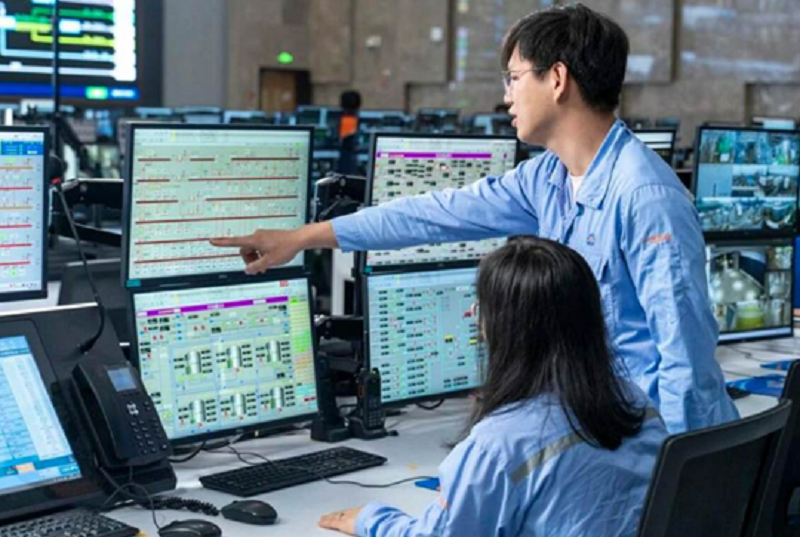
1. Engineering and Construction: Establishing a Digital Foundation
Large chemical projects generate substantial engineering information, including equipment specifications, drawings, material lists, procurement records and construction documents.
When these records are managed through disconnected systems, engineering teams may face inconsistent data, repeated manual entry, outdated drawings and difficulties tracking equipment information.
These problems can increase coordination costs during construction and create additional challenges when a facility moves into commissioning and operation.
To address these issues, Schneider Electric has supported Huayi with AVEVA AIM, a digital engineering information management platform.
The platform helps consolidate engineering information into a structured digital environment. Equipment data, engineering documents, design changes and material information can be managed more consistently, creating a foundation for later maintenance and operational management.
An example is Shanghai Huayi Industrial Gases Co., Ltd., which introduced AVEVA AIM in 2023. The project brought engineering information into a unified management environment, covering data at the million-record scale and supporting its continued use during subsequent operational stages.
This approach helps transform engineering documentation from project-specific records into digital assets that can remain useful throughout the facility lifecycle.
Digital Materials Management with AVEVA ERM
Material management is another important part of large industrial construction projects.
Traditional management based on manually updated spreadsheets can make it difficult to obtain an accurate picture of inventory, outstanding procurement orders, deliveries and material consumption.
In 2023, Shanghai Huayi Engineering worked with Schneider Electric to introduce the AVEVA ERM materials and construction management system.
The platform supports tracking of material procurement, receiving, issuing and inventory changes. It also provides planning and scheduling functions to help project managers coordinate material availability with construction activities.
According to the published project report, the system can help reduce average material waste by approximately 7%.
This demonstrates how digital project management can contribute not only to data visibility but also to resource efficiency and construction cost control.
2. Plant Commissioning: Strengthening Process Safety and Operator Training
Once a chemical facility moves from construction toward commissioning and production, process safety and operational readiness become critical.
Chemical production may involve high temperatures, high pressures, flammable materials and complex process interactions. Equipment failures or incorrect operating procedures can create serious risks.
At the Huayi Qinzhou Chemical New Materials Integrated Base, the third-phase project includes major production facilities involving methanol-to-olefins, vinyl acetate and ethylene-vinyl acetate (EVA) production.
To support process safety, Schneider Electric provides its Triconex Safety Instrumented System (SIS).
Triconex SIS for Safety-Critical Process Protection
The Triconex SIS platform uses a triple modular redundancy architecture in relevant configurations.
Triple modular redundancy, commonly known as TMR, uses three processing channels to support fault tolerance and reliable safety-related decision-making.
In a properly engineered safety instrumented system, sensors detect process conditions, logic solvers evaluate safety requirements and final control elements execute protective actions when necessary.
For chemical plants, SIS technology is an important layer of protection against hazardous process conditions.
It is important to distinguish SIS from a conventional distributed control system (DCS). A DCS primarily manages normal process operations, while an SIS performs designated safety functions based on a safety requirements specification and the plant’s risk assessment.
The two systems may exchange information, but their safety-related functions and engineering requirements must remain appropriately separated.
AVEVA OTS: Preparing Operators for Real Operating Conditions
Reliable safety equipment is only one part of plant readiness. Operators must also understand normal operating procedures, abnormal conditions and emergency responses.
Schneider Electric’s AVEVA Operator Training Simulator (OTS) provides a simulation environment in which operators can practice operating procedures and respond to simulated process conditions.
The system can reproduce process behavior and control-room scenarios, allowing personnel to gain practical experience without creating risks to an operating production unit.
For the Qinzhou project, the published case report states that after four to six months of training, new operators can reach practical operating proficiency approaching that of operators with six years of experience.
This is a reported project outcome rather than a universal training guarantee. Actual results depend on the quality of the simulation model, training program, operator background and assessment criteria.
Nevertheless, simulation-based training provides a useful way to standardize operational knowledge and improve workforce readiness before new production facilities enter service.
3. Production Operations: Optimizing Steam Network Management
After production units are commissioned, efficient management of utilities becomes a major factor in operational performance.
Steam is particularly important in large chemical complexes. It provides process heat and supports different production operations, while also representing a significant energy cost.
The Huayi Qinzhou base has a complex steam supply network. Steam comes from external power plants as well as by-product steam generated within production processes.
The network covers multiple production units and includes 11 pressure levels. Operators must balance supply and demand while managing pressure reduction, temperature adjustment, steam venting and changing production requirements.
Previously, steam scheduling and balancing relied largely on operator experience and spreadsheet-based calculations. This approach could make it difficult to respond quickly to changing operating conditions or evaluate different operating scenarios.
AVEVA Real-Time Optimization for Steam Distribution
Schneider Electric has implemented an AVEVA Real-Time Optimization (RTO) solution to help optimize the site’s steam production, distribution and consumption.
The solution uses process models to represent the steam network and its operating constraints. It can evaluate the relationship between steam supply and demand across different production units and support more efficient scheduling decisions.
Its main objectives include:
- Improving the balance between steam generation and consumption.
- Reducing unnecessary steam venting.
- Lowering dependence on purchased steam.
- Supporting more accurate utility scheduling.
- Evaluating alternative operating strategies under changing conditions.
- Improving coordination between energy supply and production planning.
The RTO solution also connects with Huayi’s existing production scheduling and profit optimization platform.
This allows energy constraints to be considered alongside production requirements, helping planners evaluate the impact of different operating scenarios.
According to the published project results, the steam network model achieves a calculation error of less than 5%, while steam consumption has been reduced by more than 1%.
These figures are reported outcomes from the Qinzhou application and should not be interpreted as guaranteed savings for every chemical plant.
4. Intelligent Power Distribution Supports Stable Production
In addition to process control and energy optimization, Schneider Electric has supported Huayi’s project bases with medium- and low-voltage intelligent power distribution infrastructure.
Electrical distribution is essential to the operation of gasification, purification and downstream chemical production units.
A reliable power system needs to provide appropriate electrical protection, distribution and monitoring to support continuous production.
Relevant equipment and technologies include:
- Medium-voltage switchgear.
- Low-voltage switchgear.
- Circuit breakers and electrical protection devices.
- Intelligent power monitoring systems.
- Power distribution and control infrastructure.
- Digital electrical management solutions.
For large chemical facilities, these systems help provide the electrical foundation for process equipment, pumps, compressors, motors, control systems and auxiliary utilities.
Integrating power monitoring with plant-level digital systems can also improve visibility into electrical operating conditions and support more informed maintenance decisions.
5. A Lifecycle Approach to Green and Digital Chemical Manufacturing
The Huayi cooperation demonstrates that digital transformation in the chemical industry needs to cover the entire industrial lifecycle.
The different solutions address distinct but connected challenges.
| Project stage | Schneider Electric technology | Main application |
|---|---|---|
| Engineering and construction | AVEVA AIM | Engineering data management and digital delivery |
| Construction management | AVEVA ERM | Material tracking and construction planning |
| Plant commissioning and operation | Triconex SIS | Safety instrumented protection |
| Operator preparation | AVEVA OTS | Simulation-based operator training |
| Production and utilities | AVEVA RTO | Steam network optimization |
| Electrical infrastructure | Medium- and low-voltage distribution solutions | Power supply, protection and monitoring |
This lifecycle approach is important because decisions made during engineering and construction can influence the efficiency and reliability of a facility for many years.
A consistent digital information foundation can support equipment maintenance, production management and energy optimization after commissioning.
At the same time, safety systems, process control, electrical distribution and workforce training must be developed as coordinated but clearly defined parts of the overall plant architecture.
What This Means for the Industrial Automation Market
The Schneider Electric and Huayi cooperation provides several useful observations for the industrial automation and process control sector.
First, engineering data is becoming a long-term industrial asset.
Digital engineering platforms can help manufacturers maintain consistent equipment information from project design through commissioning and operation.
Second, process safety requires both reliable technology and skilled personnel.
Safety instrumented systems provide an important technical protection layer, while operator simulation helps personnel prepare for complex operating conditions.
Third, energy optimization is increasingly connected to production planning.
Utilities such as steam, electricity and cooling water affect production costs and operational flexibility. Real-time optimization can help manufacturers consider energy constraints alongside production objectives.
Fourth, electrical infrastructure remains fundamental to digital manufacturing.
Intelligent power distribution, protection and monitoring provide the electrical foundation required by modern chemical production facilities.
For equipment suppliers and industrial system integrators, these trends create opportunities in PLC and DCS systems, SIS platforms, industrial communication, electrical distribution, process optimization and digital engineering services.
Conclusion
Schneider Electric’s cooperation with Shanghai Huayi Group illustrates how digital technologies can support the transformation of large chemical manufacturing operations.
From AVEVA AIM and AVEVA ERM in engineering and construction to Triconex SIS and AVEVA OTS during plant commissioning, and AVEVA RTO in production operations, the cooperation covers multiple stages of the industrial lifecycle.
The Huayi Qinzhou Chemical New Materials Integrated Base, with a total investment of nearly RMB 100 billion, provides an important example of how digital engineering, process safety, operator training, intelligent power distribution and energy optimization can work together in a large-scale chemical environment.
For the industrial automation industry, the broader message is clear: green and intelligent chemical manufacturing requires more than isolated automation products. It depends on the coordinated application of control systems, safety technologies, electrical infrastructure, industrial software and operational expertise.
SEO Keywords: Schneider Electric Huayi cooperation, green digital chemical industry, Huayi Qinzhou chemical base, Schneider Electric industrial automation, AVEVA AIM, AVEVA ERM, Triconex SIS, AVEVA OTS, AVEVA RTO, chemical plant digital transformation, industrial energy optimization, steam network optimization, process safety system, intelligent power distribution.