

ProductPRODUCT
Featured products
Contact Us
- Siemens
- 6AG4010-6EC31-0DX5
- SIMATIC IPC3000 SMART
- Germany
- 481 × 175 × 509 mm
- 14.1kg
- Xiamen, China
- New & In Stock
- T/T, PayPal, Western Union
- 1 Year
- 1-3 Working Days
- DHL, UPS, TNT, FedEx and EMS.
- 24-Hour Service
- COO
- 16
Our advantage

Global Logistics
We have a 10-year logistics and express cooperation agreement, so our products can be shipped to any place in the world.

Brand new and original
Our products are imported in bulk from the place of origin. Because of the cooperative relationship, our products are all original and 100% new.

24-hour service
We provide 7*24 hours service to our customers. We will be there whenever you need us.

Price advantage
All our products are priced very favorably because we have our own warehouse and supply.
| Company Information | |||
| [email protected] | |||
| Mobile | +8615980777398 | ||
| +8615980777398 | |||
| 15980777398 |
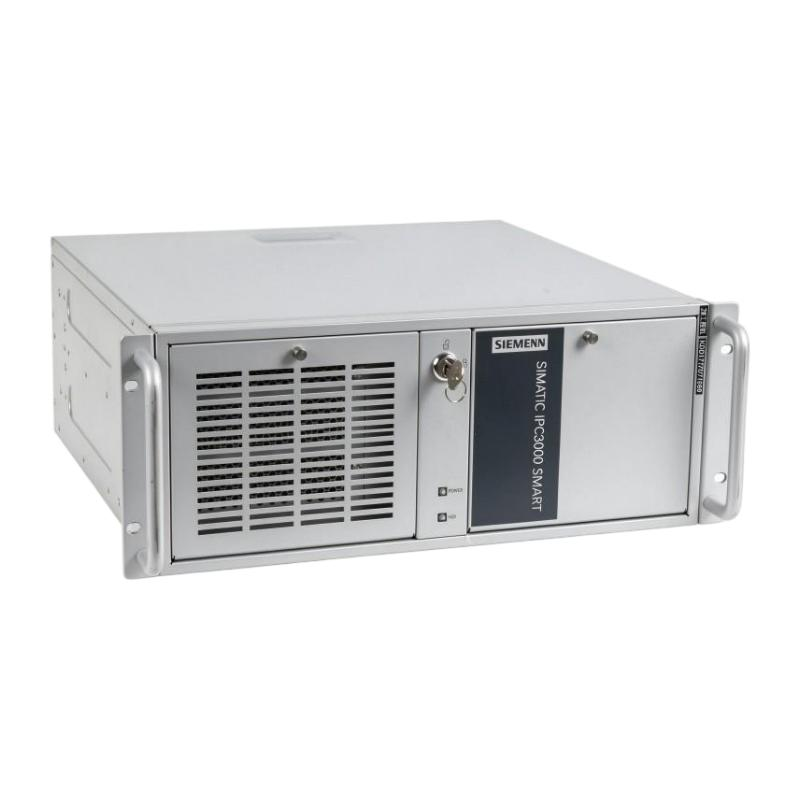
6AG4010-6EC31-0DX5 Industrial PC — Technical Specifications, Applications, Advantages and Related Models
1. Product Overview
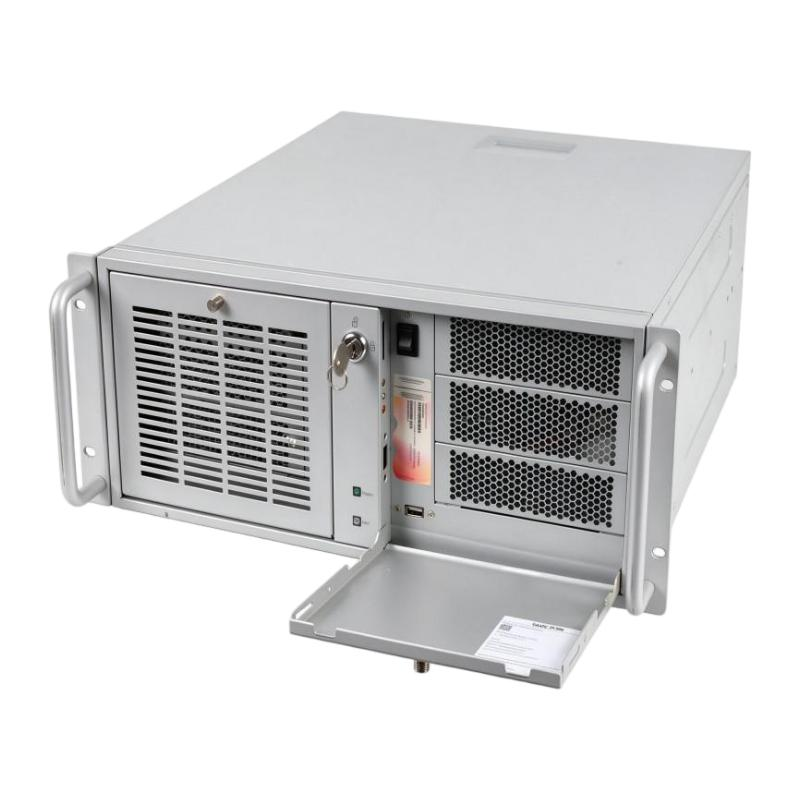
The 6AG4010-6EC31-0DX5 is an industrial computing system belonging to the SIMATIC IPC product family. It is designed for industrial environments where reliable computing, long-term system operation, stable communication, and compatibility with industrial automation equipment are important.
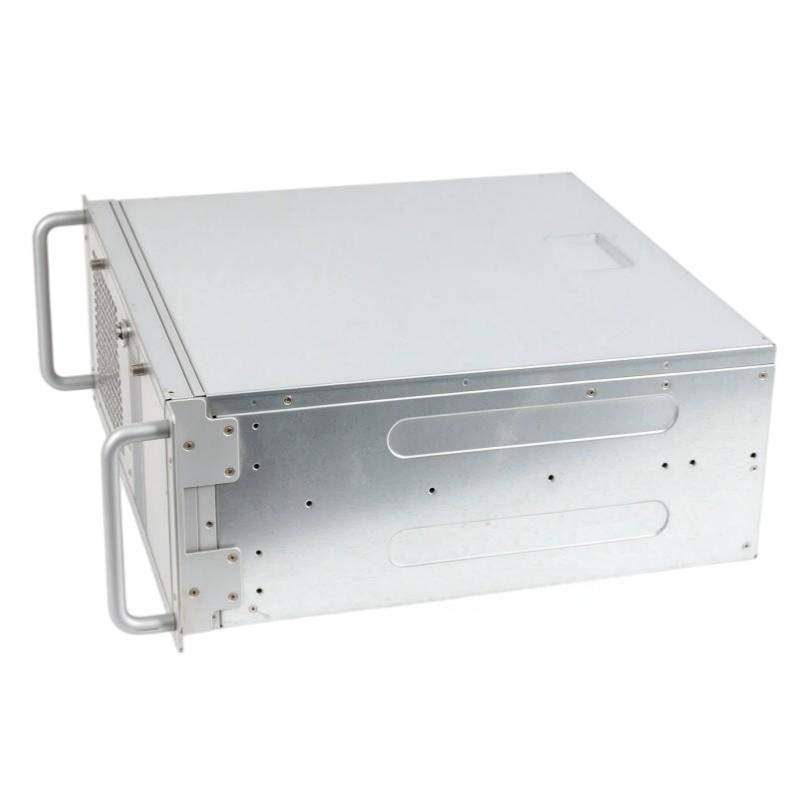
The unit is part of the SIMATIC IPC3000 Smart V3 family and is positioned as a rack-mounted industrial PC solution. Its 19-inch rack-oriented construction makes it suitable for installation in industrial cabinets, control-room equipment racks, automation stations, machine-control systems, and other applications where a conventional office PC is not the preferred solution.
The system is based on an Intel Core i7-6700 processor platform. The processor provides four physical CPU cores and supports four threads, with a base operating frequency of 3.4 GHz and a maximum turbo frequency of 4.0 GHz.
The platform is intended for applications that require substantially more processing capability than a basic industrial controller while still requiring the mechanical and electrical characteristics expected from industrial computing equipment.
The rack-mounted design also makes the unit suitable for centralized computing installations. Instead of placing a small computer directly beside every machine, an industrial rack PC can be installed in a control cabinet or equipment rack and connected to multiple industrial communication networks and peripheral devices.
2. Brand and Product Series
| Item | Specification |
|---|---|
| Brand | Siemens |
| Product family | SIMATIC IPC |
| Product series | SIMATIC IPC3000 Smart V3 |
| Model | 6AG4010-6EC31-0DX5 |
| Product type | Industrial PC |
| Mechanical format | 19-inch rack-mounted industrial PC |
| Processor platform | Intel Core i7-6700 |
The product belongs to the SIMATIC IPC family, a range of industrial computing platforms intended for automation, control, visualization, data processing, industrial communication, and supervisory applications.
The IPC3000 Smart V3 designation identifies the product series rather than a general-purpose desktop computer category. The series is designed around industrial installation requirements, making it appropriate for applications where continuous operation and integration with industrial systems are more important than consumer-PC characteristics.
3. Main Technical Parameters
The following table contains the technical information that can be stated without introducing estimated values.
| Parameter | Specification |
|---|---|
| Model | 6AG4010-6EC31-0DX5 |
| Brand | Siemens |
| Product family | SIMATIC IPC |
| Product series | SIMATIC IPC3000 Smart V3 |
| Product type | Industrial rack PC |
| Rack format | 19-inch |
| Processor | Intel Core i7-6700 |
| CPU cores | 4 |
| CPU threads | 4 |
| Base frequency | 3.4 GHz |
| Maximum frequency | 4.0 GHz |
| Processor cache | 8 MB |
| Memory technology | DDR4 SDRAM |
| Ethernet | 2 × Ethernet LAN |
| Serial communication | Supported |
| Serial communication standards | RS232 / RS422 / RS485 |
| Display interface | VGA |
| Digital display interface | DisplayPort |
| USB interfaces | Multiple USB interfaces |
| PS/2 interfaces | 2 |
| Audio | Integrated audio |
| Optical drive | Not included |
| Operating system | Not specified in the confirmed information |
| Dimensions | Exact value not stated here |
| Weight (kg) | Exact value not stated here |
The dimensions and weight are intentionally not replaced with approximate figures. The suffix 6AG4010-6EC31-0DX5 identifies a specific configuration, and the physical configuration can differ between closely related order numbers. For that reason, a dimension or weight taken from another configuration should not be presented as the exact specification of this model.
4. Processor Specification
The system uses the Intel Core i7-6700 processor.
The processor has four physical CPU cores and four threads. Its base frequency is 3.4 GHz, while its maximum turbo frequency reaches 4.0 GHz. The processor has 8 MB of cache.
| Processor Parameter | Specification |
|---|---|
| Processor | Intel Core i7-6700 |
| CPU architecture | Intel Core processor platform |
| Number of cores | 4 |
| Number of threads | 4 |
| Base frequency | 3.4 GHz |
| Maximum frequency | 4.0 GHz |
| Cache | 8 MB |
For industrial automation applications, this processor level provides a useful balance between processing capability and system simplicity. It is suitable for applications involving HMI software, supervisory applications, industrial data processing, communication tasks, engineering software, and other workloads that require more computing power than a basic embedded controller.
The four-core architecture is particularly useful when several software processes need to run at the same time. An industrial computer may simultaneously handle visualization, data collection, network communication, logging, monitoring, and other background services.
5. Memory and Data Processing
The platform uses DDR4 SDRAM technology.
DDR4 memory is suitable for industrial computing applications because it provides a modern memory architecture for the processor platform while allowing the system to handle multiple applications and operating processes.
Memory capacity should be matched to the intended software environment. Applications such as simple visualization and communication normally place less demand on system memory than large databases, advanced SCADA projects, virtual machines, engineering environments, or complex data-processing applications.
Because the exact installed memory capacity for the 6AG4010-6EC31-0DX5 should not be inferred from another order number, an exact capacity is not inserted into this profile.
6. Industrial Communication
Industrial communication is one of the important characteristics of this type of computing platform.
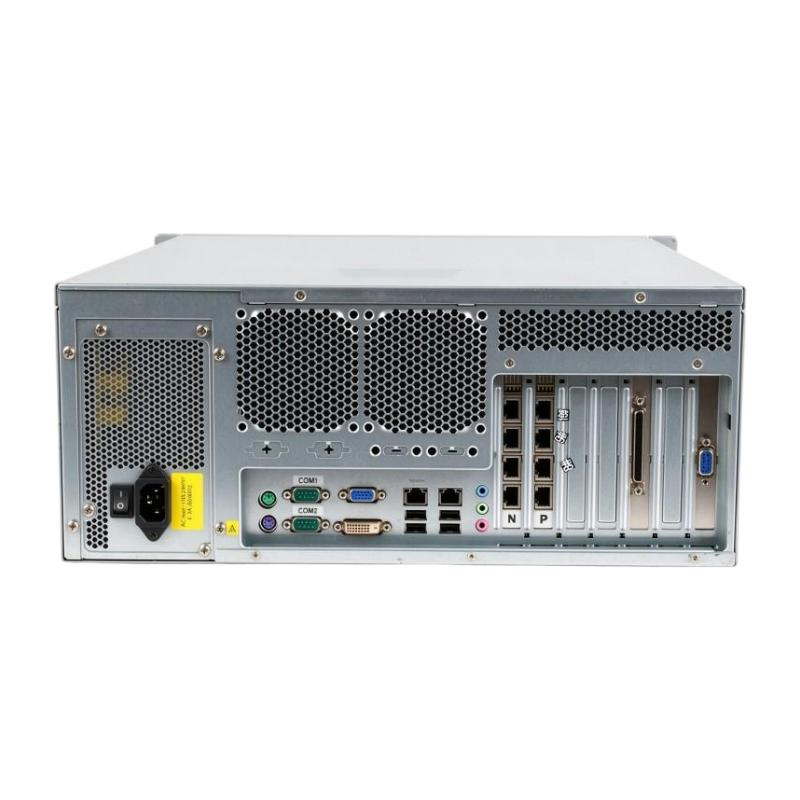
The system provides Ethernet connectivity for communication with industrial networks and other networked equipment. The available serial communication capability also makes the platform suitable for applications involving legacy automation equipment and devices using serial communication standards.
The confirmed serial communication standards include:
- RS232
- RS422
- RS485
These interfaces are useful in situations where the industrial computer must communicate with equipment that does not use modern Ethernet-based communication exclusively.
RS232 is commonly used for point-to-point serial communication.
RS422 is suitable for differential serial communication over longer distances and in electrically demanding environments.
RS485 is particularly useful for industrial multi-device communication because it supports differential signaling and is widely used in industrial equipment and field communication systems.
7. Display and Operator Interface
The system provides VGA and DisplayPort connectivity.
These interfaces allow the industrial computer to be connected to industrial monitors, control-room displays, operator terminals, or other compatible display equipment.
A typical installation can use the industrial PC as the central computing unit while the operator interacts with the system through one or more industrial displays.
This arrangement is useful for SCADA stations, production monitoring systems, centralized machine supervision, process visualization, and industrial control-room applications.
The availability of both VGA and DisplayPort also provides flexibility when integrating the computer into existing equipment, particularly in installations where older display hardware must remain in service while newer display equipment is introduced.
8. USB and Peripheral Connectivity
The unit provides multiple USB interfaces.
USB connectivity is useful for connecting keyboards, mice, service equipment, external storage devices, USB peripherals, and other compatible accessories.
The system also provides PS/2 interfaces, which can be useful in industrial environments where traditional keyboard or mouse interfaces are preferred.
The combination of USB, PS/2, display interfaces, Ethernet, and serial communication makes the computer suitable for installations where several different types of peripheral equipment must be connected to a single industrial computing platform.
9. Product Applications
9.1 Industrial Automation
The 6AG4010-6EC31-0DX5 can be used as an industrial computing platform within automation systems.
It can provide the computing environment for visualization, data collection, monitoring, communication, engineering applications, and supervisory software.
In an automation installation, the industrial PC can work alongside PLCs, industrial communication equipment, operator panels, drives, sensors, and other automation components.
The computer does not replace the role of a PLC in applications that require deterministic control logic. Instead, it can complement PLC-based systems by providing higher-level computing, visualization, data processing, and supervisory functions.
9.2 SCADA Systems
The system is suitable for SCADA-related applications.
A SCADA workstation generally needs to communicate with field equipment, collect operating information, display process status, store historical data, and provide operators with a central interface.
The combination of processor performance, Ethernet connectivity, serial communication, and display interfaces makes this type of industrial PC suitable for such applications.
It can be used as a supervisory workstation in manufacturing plants, process facilities, utility installations, and other industrial environments.
9.3 HMI and Visualization
The system can be used for industrial HMI and visualization applications.
Compared with a small embedded computing device, the Core i7 platform provides substantially more general-purpose computing capability for applications that require a graphical user interface, database functions, network services, or several software applications operating simultaneously.
Typical visualization applications may include production status screens, machine monitoring interfaces, alarm displays, process trends, equipment status pages, and operator dashboards.
9.4 Industrial Data Collection
The computer can also be used as a centralized data-processing station.
Industrial production environments often generate large amounts of information from machines, PLCs, sensors, instruments, and production equipment.
An industrial PC can receive this information through industrial communication networks and process or forward the data to higher-level systems.
The system can therefore serve as a computing node between shop-floor automation equipment and higher-level management or information systems.
9.5 Machine and Equipment Monitoring
The unit can be used in machine-monitoring applications where a dedicated computer is required to collect operating information and provide a local or centralized interface.
For example, a monitoring workstation may display machine status, production information, alarm conditions, operating parameters, and maintenance-related information.
Its rack-mounted industrial design also allows it to be installed as part of a centralized equipment cabinet instead of being mounted directly on the machine.
9.6 Industrial Control Rooms
The 19-inch rack-oriented construction makes the system suitable for control-room and centralized equipment installations.
A control room may contain several computing systems, network devices, communication modules, displays, and other equipment.
A rack-mounted industrial computer can be integrated into this type of infrastructure in a more organized way than a conventional desktop PC.
9.7 Production Line Monitoring
Production lines often require continuous monitoring of multiple machines and production stations.
The industrial computer can act as a central workstation for collecting information from several production units.
With Ethernet and serial communication capabilities, it can interface with different types of equipment and provide operators with a centralized view of the production process.
10. Product Advantages
10.1 Industrial-Oriented Construction
One of the main advantages of this product category is its industrial-oriented design.
The system is intended for integration into industrial equipment rather than normal office use. The rack-mounted format makes it easier to incorporate into standardized industrial cabinets and equipment racks.
This is especially useful in centralized automation installations where computing equipment must be installed together with other industrial hardware.
10.2 Strong Processing Capability
The Intel Core i7-6700 provides four CPU cores and four threads with a base frequency of 3.4 GHz and a maximum frequency of 4.0 GHz.
This gives the system enough processing capability for many demanding industrial software applications.
It is particularly useful when an application requires several software components to operate simultaneously.
For example, a system may need to run visualization software, communication services, logging functions, monitoring software, and database-related processes at the same time.
10.3 Flexible Industrial Communication
The combination of Ethernet and serial communication interfaces provides flexibility when integrating different generations of industrial equipment.
Modern equipment can commonly communicate through Ethernet, while many existing industrial devices still rely on RS232, RS422, or RS485.
Having both types of communication capability in one industrial computer can simplify the integration of mixed-generation equipment.
10.4 Flexible Display Connectivity
The combination of VGA and DisplayPort gives the system flexibility when connecting to different display devices.
This can be particularly useful when upgrading an industrial workstation gradually.
Older display equipment can remain in service where appropriate, while newer display technology can be integrated into the same computing environment.
10.5 Suitable for Long-Term Industrial Installations
Industrial computing systems are normally selected with the expectation that they will remain part of an automation installation for a relatively long period.
A rack-mounted industrial PC is therefore often preferred over an ordinary consumer desktop when the computer is part of a production or control system.
The industrial form factor also makes replacement and equipment management more organized within standardized control cabinets and racks.
10.6 Broad Application Range
The system can be used in many different industrial computing roles.
It can function as:
- An industrial workstation
- A SCADA computer
- An HMI platform
- A production monitoring computer
- A data collection station
- An industrial communication gateway computer
- A control-room workstation
- A machine monitoring station
- An industrial visualization computer
- A centralized automation workstation
This flexibility is one of the strongest practical reasons for selecting an industrial rack PC.
11. Recommended Related Models
The following models are closely related within the same industrial PC product range or represent closely associated configurations. Only technical values that can be stated from the established product information are included.
| Model | Processor | Memory | Storage | Product Type |
|---|---|---|---|---|
| 6AG4010-6EC30-0XX5 | Intel Core i7-6700 | 8 GB DDR4 | 2 × 1 TB HDD | Industrial Rack PC |
| 6AG4010-6EC50-0XX5 | Intel Core i7-6700 | 32 GB DDR4 | 2 × 1 TB HDD | Industrial Rack PC |
| 6AG4010-6EE30-0XX5 | Intel Core i7-6700 | 8 GB DDR4 | 512 GB SSD | Industrial Rack PC |
| 6AG4010-6BC30-0XX5 | Intel Core i5-6500 | 8 GB DDR4 | 2 × 1 TB HDD | Industrial Rack PC |
| 6AG4010-6BB30-0XX5 | Intel Core i5-6500 | 8 GB DDR4 | 1 TB HDD | Industrial Rack PC |
These related configurations are useful when selecting a system according to processing requirements, memory requirements, or storage technology.
The i7 configurations are positioned toward higher processing requirements, while the i5 configurations provide an alternative for applications where the maximum processing capability of the i7 platform is not required.
The SSD-based configuration is particularly relevant when faster storage response and solid-state storage characteristics are preferred over conventional hard-disk storage.
12. Comparison of Related Configurations
| Model | CPU | CPU Cores | Base Frequency | Memory | Storage |
|---|---|---|---|---|---|
| 6AG4010-6EC31-0DX5 | Intel Core i7-6700 | 4 | 3.4 GHz | DDR4 SDRAM | — |
| 6AG4010-6EC30-0XX5 | Intel Core i7-6700 | 4 | 3.4 GHz | 8 GB DDR4 | 2 × 1 TB HDD |
| 6AG4010-6EC50-0XX5 | Intel Core i7-6700 | 4 | 3.4 GHz | 32 GB DDR4 | 2 × 1 TB HDD |
| 6AG4010-6EE30-0XX5 | Intel Core i7-6700 | 4 | 3.4 GHz | 8 GB DDR4 | 512 GB SSD |
| 6AG4010-6BC30-0XX5 | Intel Core i5-6500 | 4 | 3.2 GHz | 8 GB DDR4 | 2 × 1 TB HDD |
| 6AG4010-6BB30-0XX5 | Intel Core i5-6500 | 4 | 3.2 GHz | 8 GB DDR4 | 1 TB HDD |
The comparison shows that the same product family can be configured for different levels of workload.
The i7-6700 configurations are suitable when higher CPU frequency and stronger processing performance are required.
The i5-6500 configurations provide a lower-performance alternative while retaining the general industrial rack-PC concept.
Storage configuration is another major selection factor. Systems equipped with HDD storage are suitable for applications where conventional industrial storage is acceptable, while an SSD configuration can be preferred where solid-state storage is required.
13. Recommended Popular Models from the Same Brand
The following models are widely associated with the same industrial automation and industrial computing product portfolio. They cover different application categories and are useful as alternatives when the required function is different from that of a rack-mounted industrial PC.
| Model | Product Category | Main Application | Key Specification |
|---|---|---|---|
| SIMATIC IPC477D | Panel PC | Industrial HMI and visualization | Industrial panel PC platform |
| SIMATIC IPC627D | Box PC | Industrial computing and control | Compact industrial PC |
| SIMATIC IPC827D | Rack PC | Industrial computing | Rack-mounted industrial PC |
| SIMATIC IPC647D | Rack PC | Automation and industrial computing | Compact rack-mounted PC |
| SIMATIC IPC547D | Industrial Rack PC | Industrial automation and high-performance computing | 19-inch rack PC |
These models are useful when the installation requirements differ.
A panel PC is more suitable when the display and computer need to be integrated into a single operator station.
A box PC is useful when compact installation and flexible mounting are more important than rack installation.
A rack PC is more appropriate when the computer needs to be installed together with other rack-mounted industrial equipment.
14. Product Selection Considerations
When selecting the 6AG4010-6EC31-0DX5, the first consideration should be the required computing workload.
For basic visualization, communication, and monitoring, a lower-performance configuration may be sufficient.
For larger SCADA systems, complex visualization, data collection, engineering applications, or multiple simultaneous software processes, the Core i7 platform provides a stronger computing base.
The second consideration is the communication architecture.
If the installation contains both Ethernet-based equipment and legacy serial devices, the available Ethernet and RS232/RS422/RS485 capabilities can be useful.
The third consideration is display compatibility.
Existing installations may still use VGA-based monitors, while newer installations may use DisplayPort-compatible equipment. The available display interfaces provide flexibility during system integration.
The fourth consideration is physical installation.
Because the system is designed as a 19-inch industrial rack PC, the equipment cabinet or rack should be planned accordingly.
15. Typical System Architecture
A typical installation can place the industrial PC at the supervisory level of an automation architecture.
At the lower level, PLCs, drives, sensors, instruments, and machine controllers perform machine-level operations.
The industrial PC can then communicate with these devices through Ethernet or serial communication.
At the supervisory level, the computer can provide visualization, alarms, data collection, logging, monitoring, and operator interaction.
The resulting architecture separates real-time machine control from higher-level computing functions.
This approach can be useful because the PLC remains responsible for dedicated control logic while the industrial PC handles tasks that require a general-purpose operating environment and more extensive data processing.
16. Why This Model Is Suitable for Industrial Use
The main strength of the 6AG4010-6EC31-0DX5 is the combination of an industrial rack form factor, a Core i7 processor platform, industrial communication capability, and flexible peripheral connectivity.
The system is not simply a desktop computer installed inside an industrial cabinet. Its product positioning is specifically oriented toward industrial computing applications.
The 19-inch rack format provides a standardized method of installation.
The Intel Core i7-6700 provides a four-core processing platform.
Ethernet connectivity supports industrial network communication.
RS232, RS422, and RS485 capabilities provide connectivity for serial industrial devices.
VGA and DisplayPort provide display flexibility.
USB and PS/2 interfaces provide practical peripheral connectivity.
Together, these characteristics make the platform appropriate for industrial supervisory and computing tasks where a conventional consumer PC would not be the preferred equipment choice.
17. Main Advantages at a Glance
| Advantage | Description |
|---|---|
| Industrial form factor | Designed as a 19-inch rack-oriented industrial PC |
| Processing performance | Intel Core i7-6700, 4 cores, up to 4.0 GHz |
| Industrial communication | Ethernet plus RS232/RS422/RS485 capability |
| Display flexibility | VGA and DisplayPort |
| Peripheral connectivity | Multiple USB interfaces and PS/2 |
| Application flexibility | Suitable for SCADA, HMI, monitoring, visualization and industrial data processing |
| Centralized installation | Suitable for control cabinets and equipment racks |
| Mixed-generation integration | Can support modern Ethernet devices and serial equipment |
| Expandable application scope | Suitable for supervisory computing rather than only one dedicated task |
18. Brand and Series Summary
| Item | Details |
|---|---|
| Brand | Siemens |
| Product family | SIMATIC IPC |
| Series | SIMATIC IPC3000 Smart V3 |
| Model | 6AG4010-6EC31-0DX5 |
| Main category | Industrial PC |
| Installation concept | 19-inch rack-mounted |
| Processor | Intel Core i7-6700 |
| Primary application area | Industrial automation computing |
The 6AG4010-6EC31-0DX5 is therefore best described as a SIMATIC industrial rack PC from the IPC3000 Smart V3 family, intended for industrial automation computing, visualization, supervisory control, communication, monitoring, and data-processing applications.
Its main technical characteristics are centered on the four-core Intel Core i7-6700 platform, DDR4 memory architecture, Ethernet connectivity, serial communication capability, VGA and DisplayPort interfaces, and industrial rack installation.
For an engineering replacement or purchasing decision, the complete order number should always be matched exactly rather than assuming that specifications from a visually similar or closely related model are identical. In particular, memory configuration, storage configuration, physical dimensions, and weight should be taken from the exact order-number configuration rather than copied from another IPC3000 Smart V3 variant.