

ProductPRODUCT
Featured products
Contact Us
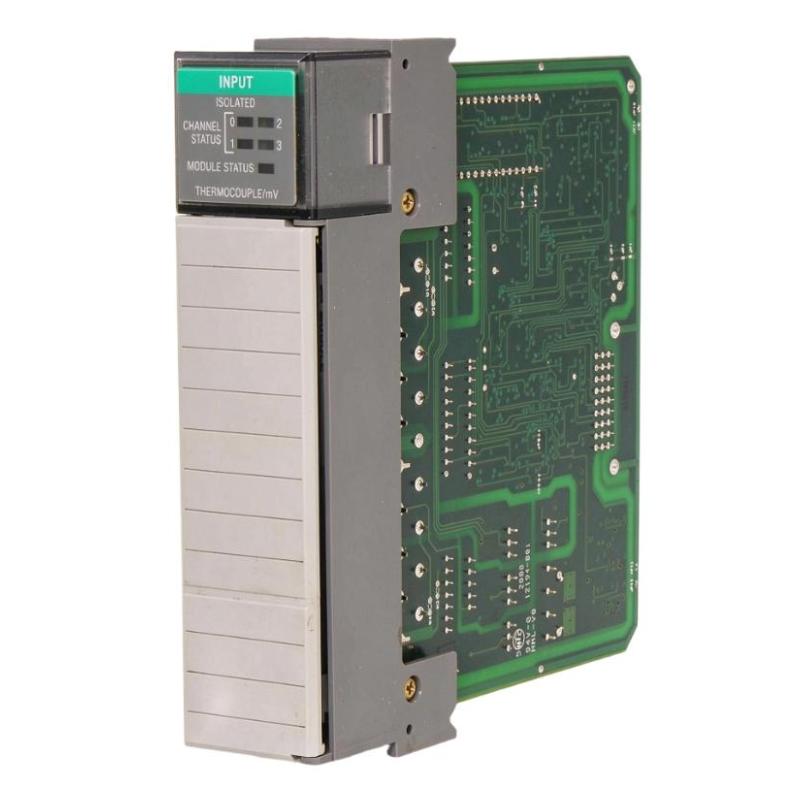
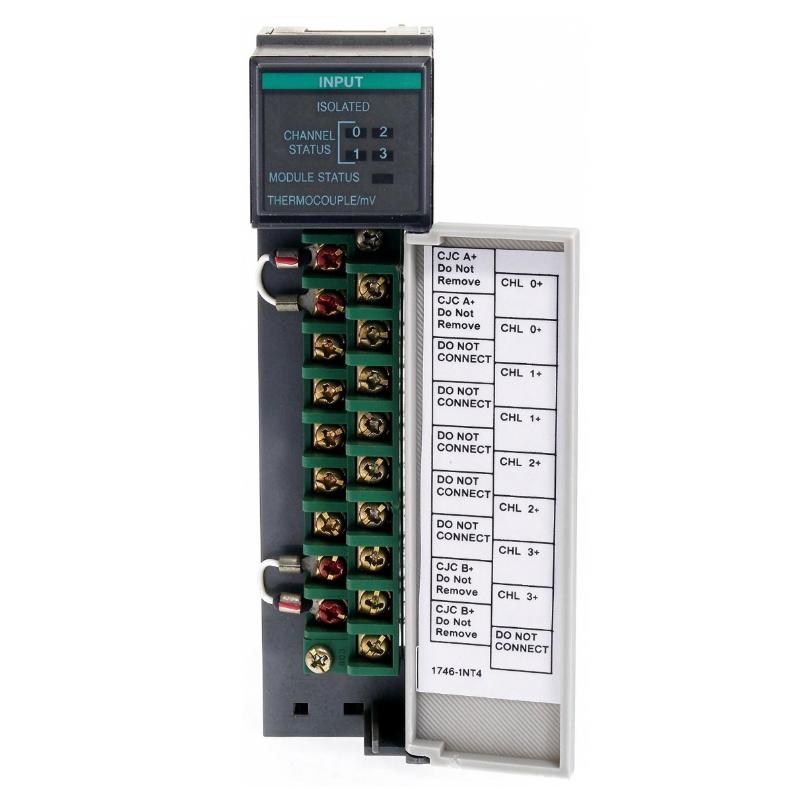
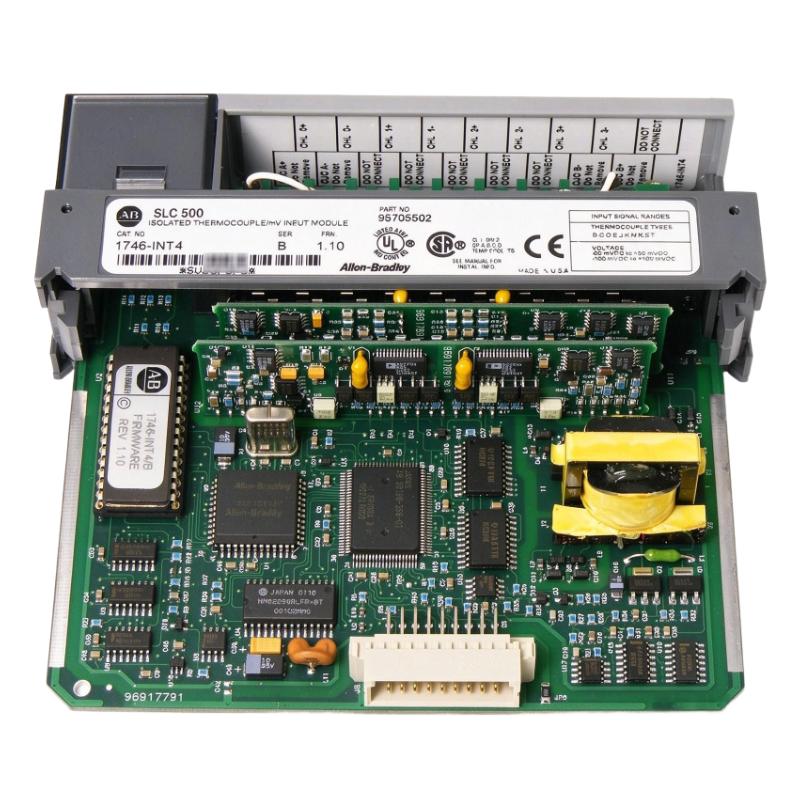
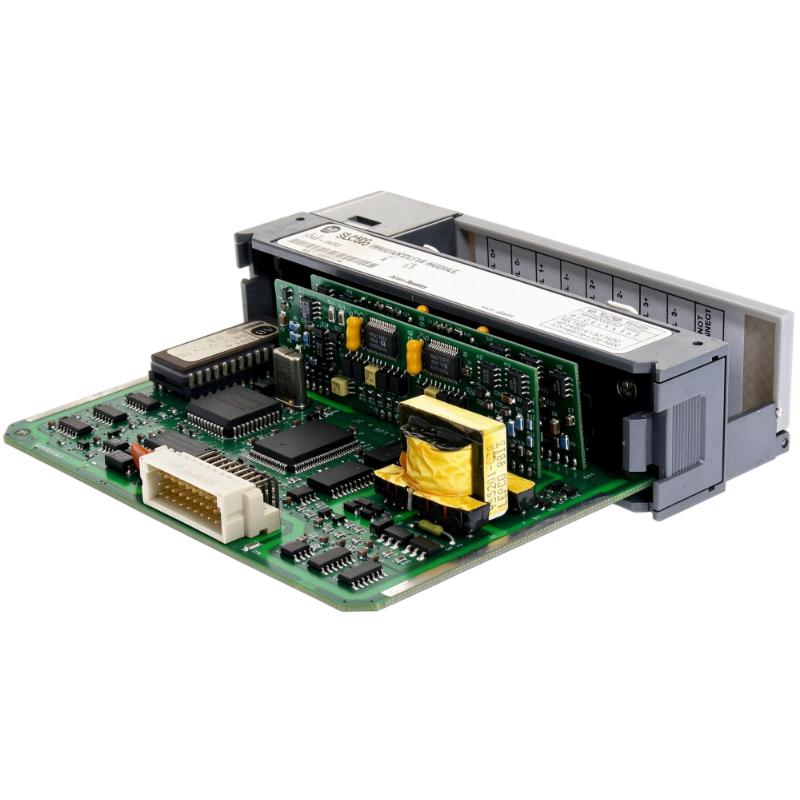
- Allen Bradley
- 1746-INT4
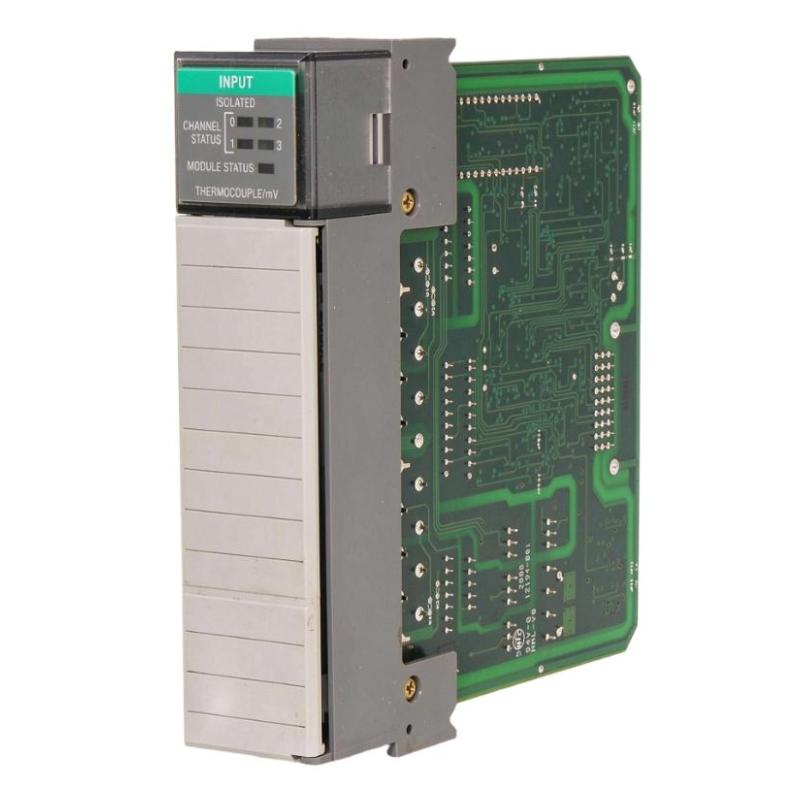
- SLC 500 Isolated Thermocouple Input Module
- USA
- 144.5 × 34.6 × 130.18 mm
- 0.45 kg
- Xiamen, China
- New & In Stock
- T/T, PayPal, Western Union
- 1 Year
- 1-3 Working Days
- DHL, UPS, TNT, FedEx and EMS.
- 24-Hour Service
- COO
- 2
Our advantage

Global Logistics
We have a 10-year logistics and express cooperation agreement, so our products can be shipped to any place in the world.

Brand new and original
Our products are imported in bulk from the place of origin. Because of the cooperative relationship, our products are all original and 100% new.

24-hour service
We provide 7*24 hours service to our customers. We will be there whenever you need us.

Price advantage
All our products are priced very favorably because we have our own warehouse and supply.
| Company Information | |||
| [email protected] | |||
| Mobile | +8615980777398 | ||
| +8615980777398 | |||
| 15980777398 |
Product Overview
The Allen-Bradley 1746-INT4 SLC 500 Isolated Thermocouple Input Module is a specialized analog input module designed for temperature measurement and low-level voltage signal acquisition in industrial automation systems. Part of the Allen-Bradley SLC 500 I/O family from Rockwell Automation, it enables a programmable logic controller to receive temperature information from thermocouples and millivolt signals from compatible measurement devices.
Temperature monitoring is an essential function in many industrial processes. Furnaces, ovens, heating equipment, chemical processing systems, production machinery, and thermal treatment lines all depend on reliable temperature measurements. The 1746-INT4 provides four input channels for connecting thermocouple sensors or millivolt signal sources to an SLC 500 control system.
One of the module’s important characteristics is its electrical isolation. The four input channels are isolated from one another and from the module backplane. This arrangement helps reduce the effects of electrical potential differences between measurement points and supports more dependable signal acquisition in industrial environments.
The 1746-INT4 supports multiple thermocouple types, including B, C, D, E, J, K, N, R, S, and T. It also accepts millivolt input signals. Each channel can be configured for the appropriate sensor or signal type, allowing different measurement points to be handled within one module.
The module uses analog-to-digital conversion to transform incoming sensor signals into digital values that can be processed by the SLC 500 controller. For thermocouple measurements, it provides cold-junction compensation and linearization functions to support temperature conversion.
With four isolated channels, diagnostic indicators, and configurable input processing, the 1746-INT4 is suitable for industrial applications where temperature measurement accuracy and signal separation are important.
Technical Specifications
| Parameter | Specification |
|---|---|
| Brand | Allen-Bradley |
| Manufacturer | Rockwell Automation |
| Model | 1746-INT4 |
| Product Series | SLC 500 |
| Product Type | Isolated Thermocouple / Millivolt Analog Input Module |
| Number of Input Channels | 4 |
| Input Signal Types | Thermocouple and millivolt |
| Supported Thermocouple Types | B, C, D, E, J, K, N, R, S, T |
| Millivolt Input Ranges | ±50 mV and ±100 mV |
| Channel Isolation | Channel-to-channel and channel-to-backplane |
| Cold Junction Compensation | Integrated |
| A/D Conversion Method | Sigma-delta modulation |
| Input Bandwidth | 8 Hz |
| Backplane Current Consumption | 110 mA at 5 V DC; 85 mA at 24 V DC |
| Maximum Backplane Power Consumption | 0.6 W |
| Normal Mode Rejection | Greater than 50 dB at 50 Hz; greater than 60 dB at 60 Hz |
| Common Mode Rejection | Greater than 120 dB at 50/60 Hz under specified conditions |
| Isolation Rating | 1000 V transient or 150 V AC continuous |
| Status Indicators | Five green LEDs |
| Calibration | Annual calibration if required |
| Controller Platform | SLC 500 |
| Dimensions Provided | 144.5 × 34.6 × 130.18 mm |
| Weight Provided | 0.45 kg |
| Product Lifecycle | Discontinued |
Specifications should be checked against the exact module revision and applicable installation documentation. Dimensions and weight are the supplied listing values.
Function and Working Principle
The 1746-INT4 receives low-level signals from thermocouples or millivolt measurement devices and converts them into digital information for the SLC 500 processor. Its measurement functions combine input signal conditioning, isolation, analog-to-digital conversion, and temperature processing.
1. Thermocouple Signal Acquisition
A thermocouple produces a small voltage related to the temperature difference between its measuring junction and reference junction. The module receives this low-level voltage and processes it according to the configured thermocouple type.
The 1746-INT4 supports several common industrial thermocouple standards, including J, K, T, E, R, S, B, N, C, and D. This range allows the module to be used with different sensor materials and temperature measurement requirements.
Each input channel can be configured independently, allowing multiple sensor types or measurement arrangements to be used where supported by the application.
2. Cold Junction Compensation
Thermocouple measurements require reference-junction compensation because the voltage generated by a thermocouple represents a temperature difference rather than an absolute temperature.
The 1746-INT4 incorporates cold-junction compensation (CJC) to account for the temperature at the connection point. The module uses this information when calculating the temperature represented by the thermocouple signal.
Correct installation of the CJC components and terminal connections is important for reliable readings. Incorrect wiring or poor thermal contact can introduce measurement errors.
3. Millivolt Signal Measurement
In addition to thermocouple inputs, the module can accept compatible millivolt signals. This function allows the SLC 500 system to acquire certain low-level voltage measurements from external instrumentation.
The module converts the incoming analog voltage into digital values that can be processed by the controller. The selected input range and configuration must match the connected signal source.
4. Electrical Isolation
The 1746-INT4 provides isolation between its four input channels and between the channels and the backplane.
This separation is important when sensors are installed at different locations or operate at different electrical potentials. It helps prevent unwanted electrical interaction between measurement circuits and supports more reliable signal acquisition.
Isolation does not replace proper grounding, shielding, or electrical protection. The installation must still follow the manufacturer’s wiring requirements.
5. Analog-to-Digital Conversion
The module uses sigma-delta modulation for analog-to-digital conversion. This process converts incoming sensor signals into digital information for the controller.
The module also uses analog and digital filtering to help reduce unwanted signal variation. Its 8 Hz bandwidth is appropriate for many temperature measurement applications, where process values generally change more slowly than high-speed machine signals.
6. Diagnostic Monitoring
The module includes status indicators that help maintenance personnel identify operating conditions and diagnose certain channel or module faults.
These indicators can assist during commissioning and troubleshooting. They should be considered together with controller status information, wiring inspections, and the application’s programmed diagnostics.
Role in Industrial Control Systems
The 1746-INT4 serves as the temperature and low-level voltage acquisition interface between field instruments and the SLC 500 controller.
PLC Temperature Monitoring
The module supplies digital measurement data to the SLC 500 processor. The controller can use these values to monitor process temperatures, compare measurements with configured limits, and execute control logic.
For example, a PLC may use thermocouple readings to determine when a heating element should be energized or when a cooling system should be activated.
Process Control
Temperature data can be incorporated into control strategies involving heating, cooling, alarms, and equipment interlocks.
In a furnace application, the PLC may compare measured temperatures with target values and coordinate heating outputs accordingly. In a production line, the controller may monitor several temperature zones and respond when a measurement moves outside its permitted range.
Alarm and Event Handling
The SLC 500 program can use acquired temperature values to generate high-temperature, low-temperature, or sensor-related alarms.
These alarms can be displayed through an HMI or communicated to an operator station through the wider control system. The alarm thresholds and response logic are determined by the application program.
Industrial Instrument Integration
The module can connect compatible thermocouple sensors and millivolt signal sources to an existing SLC 500 I/O system.
Its four-channel arrangement is useful where several temperature measurement points are located within the same machine, process unit, or production area.
Industrial Applications
1. Industrial Furnaces and Ovens
Furnaces and industrial ovens require temperature monitoring to maintain appropriate heating conditions. Thermocouples can be installed at different locations to measure chamber, product, or heating-zone temperatures.
The 1746-INT4 can collect readings from up to four configured measurement channels, allowing the PLC to monitor multiple temperature points.
2. Chemical and Process Manufacturing
Chemical production often involves heating, cooling, and temperature-sensitive reactions. Reliable measurement is important for process monitoring and equipment protection.
The module can acquire thermocouple signals from compatible process sensors and provide digital values to the SLC 500 controller for monitoring and control logic.
3. Plastics and Rubber Processing
Extrusion, molding, and rubber-processing equipment commonly require temperature monitoring across heating zones, barrels, molds, or other process components.
The 1746-INT4 can support temperature acquisition from several measurement points, helping the controller coordinate heating functions and identify abnormal temperature conditions.
4. Food and Beverage Production
Industrial food-processing equipment may require temperature monitoring during heating, cooking, pasteurization, and other thermal operations.
Thermocouple readings can be collected by the module and used by the PLC to support process monitoring and alarm functions. The complete system must be designed to meet the applicable process hygiene and safety requirements.
5. Power Generation and Utility Equipment
Temperature measurement is important in auxiliary equipment, heating systems, and industrial utility installations. Compatible thermocouples can monitor selected equipment temperatures and provide information to the control system.
The module’s isolated inputs can be useful when measurement points have different electrical characteristics, provided the installation remains within the specified isolation limits.
6. General Manufacturing Machinery
Manufacturing equipment may contain several temperature-sensitive components, including motors, heaters, bearings, and process chambers.
The 1746-INT4 can provide temperature and millivolt measurement data to an SLC 500 controller for monitoring, alarm handling, and process coordination.
Installation and System Integration
Correct installation is essential for reliable thermocouple measurement. Because thermocouple signals are low-level signals, wiring quality, grounding, and sensor configuration have a direct effect on measurement performance.
1. Verify SLC 500 Compatibility
Before installation, confirm that the module is being used with a compatible SLC 500 chassis and processor configuration.
The module can be installed in an appropriate I/O slot, but it must not be placed in slot 0. Check the available chassis power capacity before adding the module to an existing system.
2. Check Backplane Power Requirements
The 1746-INT4 draws approximately 110 mA from the 5 V DC backplane supply and 85 mA from the 24 V DC supply.
When adding the module to an existing rack, calculate the total power consumption of all installed modules. The chassis power supply must have sufficient capacity for the complete configuration.
3. Connect Thermocouple Wiring Correctly
Use suitable thermocouple extension wire that matches the sensor type. Observe the correct positive and negative polarity for each channel.
Shielded twisted-pair wiring is recommended for thermocouple inputs. Keep sensor wiring away from high-voltage power cables and other sources of electrical interference.
Follow the manufacturer’s grounding instructions for cable shields. Incorrect shield grounding can introduce unwanted noise into low-level measurement circuits.
4. Install Cold Junction Compensation Components
The module’s CJC components must be correctly installed and connected for thermocouple measurement.
Ensure that the CJC devices are securely attached to the removable terminal block and that the terminal connections are correct. Improper CJC installation can affect temperature accuracy.
5. Configure Input Channels
Each channel should be configured according to the connected thermocouple type or millivolt signal range.
The SLC 500 program must also handle the module’s configuration and data-transfer requirements. Verify the selected data format, engineering-unit scaling, and channel settings during commissioning.
6. Configure PLC Logic
The controller program should process the acquired measurement values and implement the required temperature monitoring or control functions.
Typical logic includes:
- Reading channel data.
- Converting values into engineering units.
- Checking measurement limits.
- Generating temperature alarms.
- Coordinating heating or cooling outputs.
- Detecting abnormal sensor conditions.
The program should also include suitable responses for invalid readings or sensor faults.
7. Test the Measurement System
After installation, verify each channel independently. Confirm that the connected sensor type matches the configured input type and compare displayed readings with a suitable reference instrument.
Check the status LEDs, wiring polarity, CJC installation, and grounding arrangement before placing the system into normal operation.
Never install, remove, or wire the module while the chassis is energized. Follow the required isolation and electrostatic discharge precautions.
Compatible System Components
The 1746-INT4 operates as part of a broader SLC 500 control system. The following components may be used in a compatible installation, depending on the system design.
| Component | Function | Integration Considerations |
|---|---|---|
| SLC 500 processor | Executes control logic | Confirm processor and chassis compatibility |
| 1746 I/O chassis | Provides module mounting and backplane communication | Check available slot and power capacity |
| SLC 500 power supply | Supplies backplane power | Verify 5 V DC and 24 V DC power requirements |
| Removable terminal block | Provides field wiring connections | Confirm terminal-block condition and correct installation |
| Thermocouple sensors | Measure process temperature | Match sensor type and extension wire |
| Millivolt signal devices | Provide low-level voltage measurements | Configure the correct input range |
| CJC components | Support thermocouple reference-junction compensation | Install and connect according to the manual |
| HMI | Displays process measurements and alarms | Usually communicates through the PLC architecture |
| Industrial control cabinet | Protects and houses automation equipment | Maintain suitable temperature and environmental conditions |
These are system-level components and accessories. They are not necessarily included with the 1746-INT4 module.
Alternative Models and Replacement Considerations
The 1746-INT4 belongs to the discontinued SLC 500 I/O family. When maintaining an existing installation, an exact replacement is generally the simplest option if the original configuration and application requirements remain unchanged.
For system migration, alternative modules may require changes to wiring, chassis arrangements, controller hardware, and PLC programming.
| Alternative Model | Product Type | Replacement Considerations |
|---|---|---|
| 1746-NT4 | SLC 500 thermocouple/mV input module | Similar application category, but does not provide the same channel isolation configuration |
| 1746-NT8 | SLC 500 thermocouple/mV input module | Provides a different channel count and configuration |
| 1769sc-IT6I | Compact I/O isolated thermocouple/mV input module | A potential migration option for compatible CompactLogix or MicroLogix architectures |
| 1769-IT6 | Compact I/O thermocouple/mV input module | Requires evaluation of sensor types, input specifications, and controller compatibility |
| Compact 5000 I/O modules | Modern Rockwell Automation I/O platform | Requires a broader controller and I/O migration assessment |
Before selecting a replacement, compare:
- Number of required input channels.
- Supported thermocouple types.
- Millivolt input ranges.
- Channel-to-channel isolation.
- Channel-to-backplane isolation.
- Cold-junction compensation requirements.
- Input filtering and response time.
- Data format and engineering-unit scaling.
- Terminal block and field wiring requirements.
- PLC program and chassis compatibility.
A module from another I/O family should not be treated as a direct plug-in replacement. Migration may require new hardware, wiring changes, configuration updates, and application-program modifications.
Key Advantages
Four Isolated Input Channels
The module provides four thermocouple or millivolt input channels with electrical isolation. This arrangement supports applications where several measurement points have different electrical characteristics.
Broad Thermocouple Support
Support for multiple thermocouple types allows the module to serve different temperature measurement requirements within compatible SLC 500 systems.
Integrated Cold Junction Compensation
The CJC function supports thermocouple temperature conversion by accounting for the reference-junction temperature.
Millivolt Measurement Capability
The module can also acquire compatible millivolt signals, providing flexibility for selected low-level analog measurement applications.
Digital Signal Processing
Sigma-delta conversion and input filtering help transform low-level analog signals into usable digital measurement data.
Diagnostic Indicators
Status LEDs provide useful information during installation, commissioning, and troubleshooting.
SLC 500 System Integration
The 1746-INT4 was designed for the SLC 500 architecture, making it relevant to maintenance and spare-parts requirements for existing installations.
Technical FAQs
1. What is the Allen-Bradley 1746-INT4?
The 1746-INT4 is a four-channel isolated thermocouple and millivolt analog input module for the Allen-Bradley SLC 500 PLC family. It converts field measurement signals into digital data for the controller.
2. How many input channels does the 1746-INT4 provide?
It provides four input channels. Each channel can be configured for a supported thermocouple type or a compatible millivolt input.
3. Which thermocouple types are supported?
The module supports B, C, D, E, J, K, N, R, S, and T thermocouple types. The selected sensor type must match the channel configuration.
4. Does the module support millivolt signals?
Yes. It supports millivolt measurement ranges of ±50 mV and ±100 mV. The channel must be configured for the appropriate signal range.
5. What is the purpose of channel isolation?
Channel isolation helps prevent unwanted electrical interaction between different measurement circuits. The module also provides isolation between its inputs and the backplane.
6. Does the 1746-INT4 include cold junction compensation?
Yes. It incorporates cold-junction compensation for thermocouple measurements. Correct installation of the CJC components is important for accurate readings.
7. What is the module’s backplane current consumption?
The specified current consumption is approximately 110 mA at 5 V DC and 85 mA at 24 V DC. The total rack power budget should be checked before installation.
8. Can the 1746-INT4 be installed in any SLC 500 slot?
It can be installed in a compatible I/O module slot, except slot 0. Confirm the chassis arrangement and available power capacity before installation.
9. Is the 1746-INT4 still manufactured?
The 1746-INT4 belongs to the discontinued SLC 500 I/O product family. It may still be available through surplus, refurbished, or industrial spare-parts suppliers.
10. What should be checked before purchasing a replacement?
Verify the complete catalog number, module revision, physical condition, terminal block, status indicators, and test condition. Also confirm that the replacement supports the same sensor types, input ranges, isolation requirements, and application configuration.
Procurement and Maintenance Recommendations
When sourcing an Allen-Bradley 1746-INT4, verify the complete catalog number and module revision. The SLC 500 product family includes several thermocouple and analog input modules that may look similar but have different channel counts, isolation characteristics, and input capabilities.
For used or refurbished units, inspect the circuit board housing, terminal connections, connector contacts, and status indicators. Request clear product photographs and available functional test information. Confirm whether the removable terminal block and CJC components are included.
During installation, check the chassis power budget and use suitable thermocouple extension wire. Keep sensor wiring away from power conductors, observe polarity, and follow the manufacturer’s shielding and grounding recommendations.
For ongoing maintenance, periodically verify sensor readings against an appropriate reference instrument. Inspect terminal connections, wiring condition, CJC components, and channel diagnostics. Calibration should be performed when required by the application’s measurement accuracy requirements.
If the SLC 500 system is approaching the end of its service life, consider a planned migration strategy. A modern I/O platform may provide a long-term maintenance path, but the migration should account for sensor compatibility, isolation, wiring, PLC programming, and process validation.
Conclusion
The Allen-Bradley 1746-INT4 SLC 500 Isolated Thermocouple Input Module is a four-channel analog input device designed for industrial temperature and millivolt signal acquisition. Its multiple thermocouple types, integrated cold-junction compensation, electrical isolation, and digital signal processing make it suitable for temperature monitoring in existing SLC 500 automation systems.
For maintenance and replacement projects, accurate identification of the module and its revision is essential. Engineers should verify sensor compatibility, channel configuration, isolation requirements, and backplane power consumption before installation. Careful wiring and commissioning help maintain dependable temperature measurement and stable operation of the wider control system.