
NewsNEWCENTER
Featured products
Contact Us
ABB Launches AI-Powered Augmented Operator to Transform Industrial Control Room Decision-Making
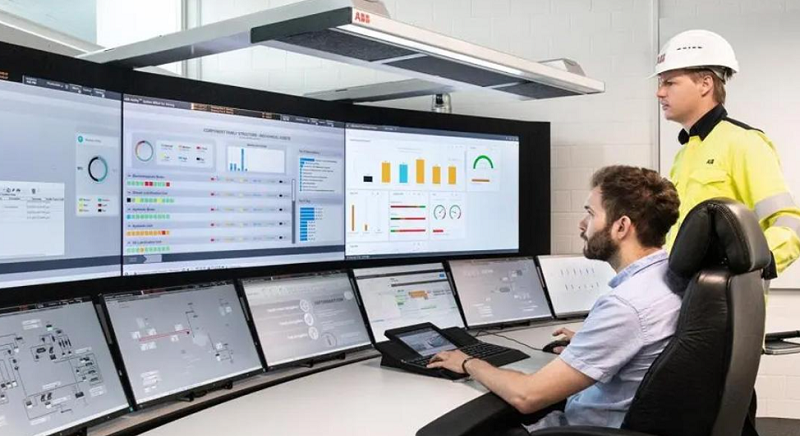
2026-11-10ABB has launched ABB Ability™ Augmented Operator, an AI-enabled industrial software suite designed to help control room operators make faster and more informed decisions. The solution was introduced during ADIPEC 2026 in Abu Dhabi in November 2026, addressing the growing demand for intelligent process monitoring, operational efficiency and reliable industrial decision support.
As industrial facilities become more complex, operators must manage increasing volumes of process data while maintaining production quality, equipment reliability and workplace safety. ABB’s new software combines artificial intelligence, historical operating information and predictive analysis to help personnel identify process abnormalities earlier and evaluate possible responses before making operational changes.
The launch highlights the growing role of industrial AI in process automation and the transition toward more intelligent, data-driven manufacturing operations.
AI-Powered Process Anomaly Detection
Industrial production processes involve numerous variables, including temperature, pressure, flow, level, vibration and equipment status. Changes in these parameters can indicate developing process deviations, equipment problems or abnormal operating conditions.
Traditional monitoring systems rely heavily on predefined alarm limits and operator experience. Although alarms remain essential for industrial safety and process control, some developing problems may involve subtle changes across several variables rather than a single measurement exceeding its configured limit.
ABB Ability Augmented Operator uses AI to analyze multiple data points simultaneously and identify unusual process behavior. This can help operators recognize potential abnormalities earlier and investigate developing situations before they become more serious.
The software is designed to provide additional operational context rather than replace established process protection systems. Existing control strategies, alarm configurations and safety systems continue to play their essential roles.
Learning from Historical Plant Operating Data
One of the important capabilities of Augmented Operator is its ability to use a facility’s historical operating information.
Industrial plants accumulate years of operational experience through process records, incident reports, maintenance activities and operator decisions. However, this knowledge is not always easy to access, particularly when experienced personnel retire or when new employees join a control room team.
ABB’s software can search historical plant data to identify similar situations and show how previous teams handled them.
This capability can provide several benefits:
-
Knowledge retention: Preserve useful operational experience in accessible digital form.
-
Faster troubleshooting: Help operators find historical examples of similar process conditions.
-
Improved consistency: Support more standardized responses across different operating shifts.
-
Operator training: Allow less experienced personnel to learn from previous operational situations.
-
Better decision support: Combine current process conditions with relevant historical information.
By making operational knowledge easier to retrieve, the system can help reduce dependence on information held only by individual employees.
Predictive Simulation Before Operational Changes
Another key capability is the ability to forecast critical process variables and simulate potential outcomes before an operator implements a change.
In complex process environments, adjusting one operating parameter can influence several other variables. For example, changing a flow setpoint may affect pressure, temperature, energy consumption and downstream production conditions.
Without sufficient process information, operators may find it difficult to predict the full consequences of an adjustment.
Augmented Operator brings predictive analysis and what-if simulation into the decision-making workflow. Operators can evaluate possible responses and examine expected process behavior before implementing a change.
This approach can help reduce unnecessary trial and error, particularly in applications where operating conditions are sensitive or production interruptions are costly.
Importantly, the system provides guidance while keeping operational decisions with human personnel. Engineers and operators remain responsible for reviewing recommendations and confirming that proposed actions comply with established operating procedures.
Applications Across Process Industries
ABB has developed Augmented Operator for industries that rely on continuous and complex industrial processes, including chemicals, oil and gas, power generation and water.
Oil and Gas
Oil and gas facilities operate with interconnected equipment and demanding process conditions. AI-assisted monitoring can help operators identify unusual process patterns, review previous operating events and evaluate possible adjustments.
Chemical Manufacturing
Chemical production requires accurate control of temperature, pressure, flow and other process variables. Historical data analysis and predictive simulation can support process consistency and help operators investigate deviations.
Power Generation
Power plants must balance equipment performance, operating efficiency and stable electricity production. Additional decision-support information can help control room teams evaluate changing operating conditions.
Water and Utilities
Water treatment and distribution facilities depend on reliable monitoring of pumps, treatment processes and network conditions. Intelligent analysis can help personnel identify abnormal behavior and improve operational visibility.
The value of these applications depends on the quality of available process data, the accuracy of system configuration and the suitability of the software for each facility.
Supporting the Development of Autonomous Operations
Industrial automation is gradually moving beyond traditional control and monitoring toward systems that can provide more advanced operational intelligence.
Conventional PLC and DCS platforms execute control logic, process field measurements and manage alarms. Newer digital applications can analyze information across multiple systems, identify patterns and provide recommendations to operators.
ABB Ability Augmented Operator represents a development in this direction. By combining anomaly detection, historical knowledge extraction and predictive process analysis, it helps connect operational data with practical decision-making.
This approach can support the development of more autonomous industrial operations, but autonomy does not mean removing human oversight. Critical industrial environments still require clear responsibility, validated control strategies and appropriate safety procedures.
For facilities considering AI integration, the first steps should include evaluating data quality, defining cybersecurity requirements and identifying operational tasks where AI assistance can provide measurable value.
What This Means for PLC and DCS Engineers
For PLC engineers, DCS specialists and industrial system integrators, the launch reflects an important change in automation project requirements.
Modern industrial systems are no longer evaluated only by their ability to execute control logic. Customers increasingly expect automation platforms to support data integration, equipment monitoring, operational analytics and intelligent decision-making.
When introducing AI-enabled applications, engineering teams should consider:
-
Data availability: Confirm that relevant process measurements and historical records are accessible and reliable.
-
System integration: Evaluate communication interfaces and compatibility with existing automation infrastructure.
-
Cybersecurity: Establish appropriate access controls and network protection for connected digital applications.
-
Operational validation: Verify AI-generated recommendations before using them in production workflows.
-
Operator training: Ensure personnel understand the software’s capabilities and limitations.
A carefully planned implementation can help organizations introduce intelligent monitoring without compromising the reliability of their existing control systems.
Conclusion
ABB Ability Augmented Operator represents another step in the development of AI-assisted industrial automation. By combining process anomaly detection, historical operating knowledge and predictive simulation, the software is designed to help control room teams understand changing conditions and make more confident decisions.
For oil and gas, chemical, power generation and water industries, the technology offers opportunities to improve operational consistency, support knowledge transfer and strengthen process monitoring.
As industrial facilities continue adopting digital technologies, AI-powered decision support is likely to become an increasingly important part of modern PLC and DCS environments. ABB’s latest development demonstrates how artificial intelligence can complement established automation systems while keeping experienced operators involved in critical decisions.