

ProductPRODUCT
Featured products
Contact Us
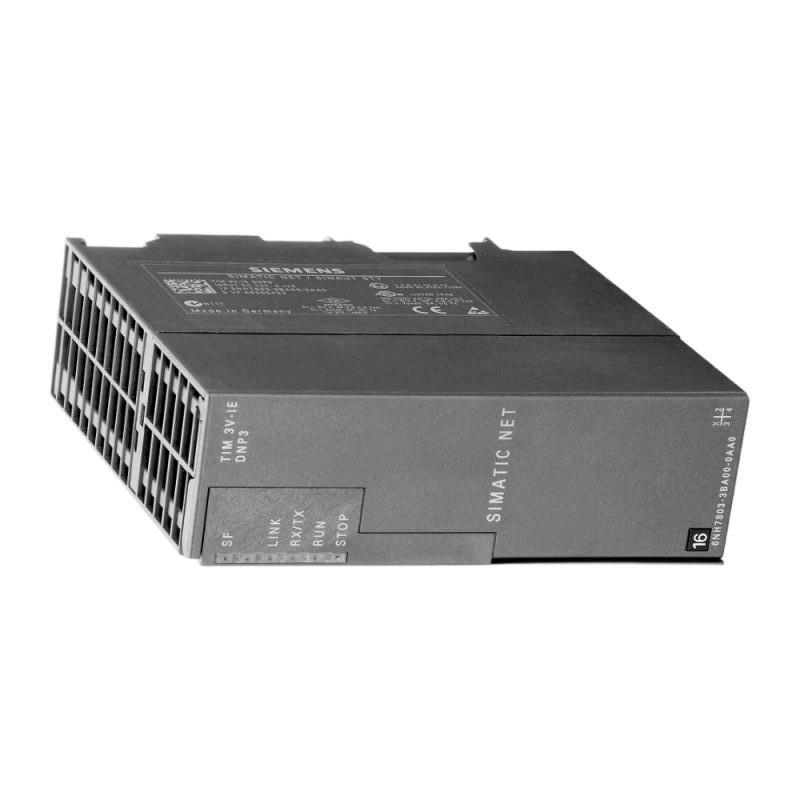
- Siemens
- 6AG1803-3BA00-7AA0
- Communication Module
- Germany
- 120 × 40 × 125 mm
- 0.315 kg
- Xiamen, China
- New & In Stock
- T/T, PayPal, Western Union
- 1 Year
- 1-3 Working Days
- DHL, UPS, TNT, FedEx and EMS.
- 24-Hour Service
- COO
- 8
Our advantage

Global Logistics
We have a 10-year logistics and express cooperation agreement, so our products can be shipped to any place in the world.

Brand new and original
Our products are imported in bulk from the place of origin. Because of the cooperative relationship, our products are all original and 100% new.

24-hour service
We provide 7*24 hours service to our customers. We will be there whenever you need us.

Price advantage
All our products are priced very favorably because we have our own warehouse and supply.
| Company Information | |||
| [email protected] | |||
| Mobile | +8615980777398 | ||
| +8615980777398 | |||
| 15980777398 |
Product Overview
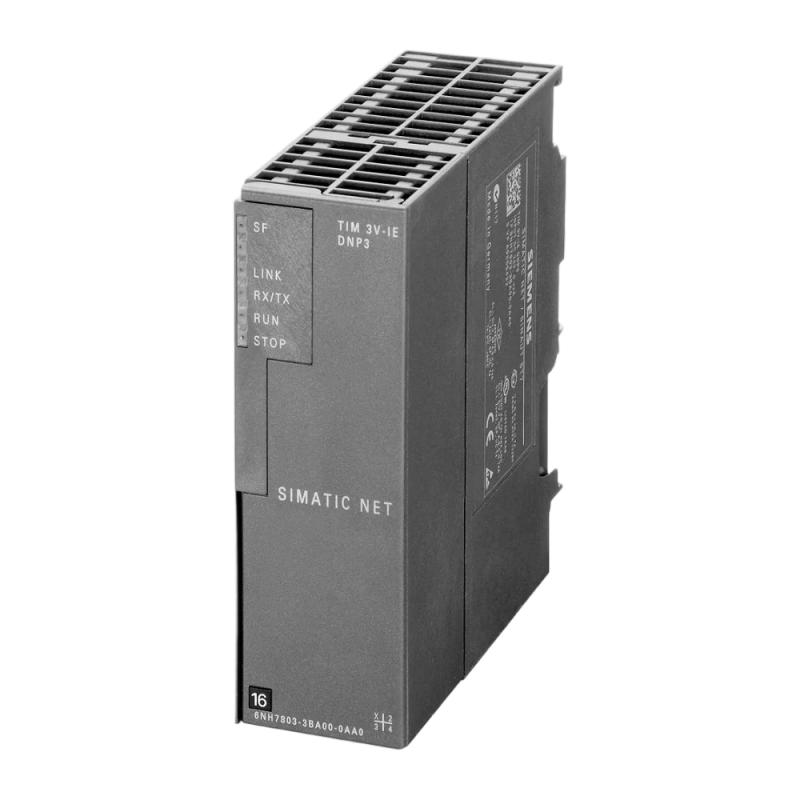
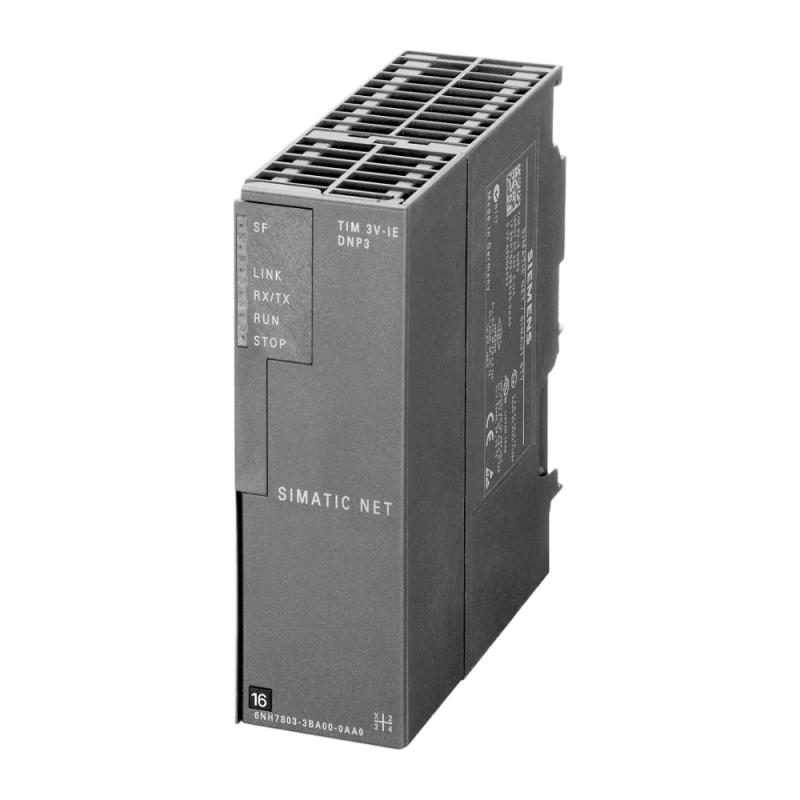
The Siemens 6AG1803-3BA00-7AA0 SIPLUS NET TIM 3V-IE DNP3 Communication Module is an industrial communication processor designed for integration with SIMATIC S7-300 automation systems. It provides communication capabilities for telemetry and remote-control applications, enabling data exchange between local automation equipment and remote control centers through conventional wide area networks (WANs) and IP-based networks.
This module belongs to the Siemens SIPLUS product family. SIPLUS products are designed for applications where environmental conditions may be more demanding than those encountered in standard industrial control cabinets. The 6AG1803-3BA00-7AA0 is based on the standard 6NH7803-3BA00-0AA0 TIM 3V-IE DNP3 communication module and incorporates conformal coating to provide additional protection for electronic components.
The module supports the DNP3 communication protocol, which is widely used in supervisory control and data acquisition (SCADA), telemetry, and utility automation. It is designed to facilitate communication between an S7-300 station and a remote master system. Its communication capabilities make it relevant to applications involving distributed equipment, remote monitoring stations, and geographically separated industrial facilities.
The 6AG1803-3BA00-7AA0 provides an Industrial Ethernet interface and an RS232 interface. The Ethernet interface supports communication through IP-based networks, while the serial interface can be used for an external modem or compatible serial communication equipment. This combination allows the module to support different communication arrangements according to the network infrastructure.
With a specified operating temperature range of -25 to +70°C, the module is suitable for selected installations exposed to wider temperature variations. Its conformal coating provides additional protection for the printed circuit boards and electronic components. However, the coating does not eliminate the need for appropriate cabinet protection, grounding, and environmental control.
Technical Specifications
| Parameter | Specification |
|---|---|
| Brand | Siemens |
| Product Family | SIPLUS NET |
| Model | 6AG1803-3BA00-7AA0 |
| Product Type | TIM 3V-IE DNP3 Communication Module |
| Standard Base Model | 6NH7803-3BA00-0AA0 |
| Application Platform | SIMATIC S7-300 |
| Communication Protocol | DNP3 |
| Industrial Ethernet Interface | 1 |
| Serial Interface | RS232 |
| Network Communication | IP-based WAN or LAN |
| Serial Communication | Conventional WAN through external modem or compatible serial equipment |
| Supply Voltage | 24 V DC external supply |
| Maximum Current Consumption | 0.2 A at 24 V DC |
| Power Loss | 5.8 W |
| Conformal Coating | Included |
| Operating Temperature | -25 to +70°C |
| Storage Temperature | -40 to +70°C |
| Transport Temperature | -40 to +70°C |
| Maximum Installation Altitude | 5,000 m, subject to applicable derating |
| Dimensions Provided | 120 × 40 × 125 mm |
| Net Weight | 0.315 kg |
| Typical Application | Telecontrol, telemetry, SCADA, and remote communication |
Note: The supplied dimensions correspond to the listed packaging dimensions in the available product data. The exact physical dimensions of the module should be confirmed using the manufacturer’s mechanical drawing before panel-layout planning.
Function and Working Principle
The Siemens 6AG1803-3BA00-7AA0 operates as a communication processor within an S7-300 automation station. Rather than performing ordinary digital or analog signal acquisition, it manages communication between the local PLC environment and remote systems.
Its main purpose is to provide a structured communication path for process information, status data, and control-related messages.
1. DNP3 Protocol Communication
DNP3, also known as Distributed Network Protocol 3, is commonly used in SCADA and telemetry systems. It provides a standardized method for exchanging data between field devices, remote terminal units, communication processors, and supervisory systems.
The TIM 3V-IE DNP3 module uses this protocol to exchange information with an assigned master system. It can support remote monitoring and control architectures in which information must travel between geographically separated locations.
Typical data exchanged in such systems may include equipment status, process measurements, alarms, and control-related information.
2. Industrial Ethernet Communication
The module provides one Industrial Ethernet interface for IP-based communication. This interface allows the S7-300 station to communicate through a suitable Ethernet network.
Depending on the network design, communication may take place over a local network, a routed industrial network, or a WAN connection. Ethernet connectivity is particularly useful when remote sites are connected through managed IP infrastructure.
Network configuration, addressing, routing, and security settings must be coordinated with the wider automation network.
3. RS232 Serial Communication
The RS232 interface provides a serial communication path for compatible external equipment. In traditional telecontrol installations, it can be used to connect an external modem for communication over a conventional WAN.
The serial interface may also be used for an appropriate Modbus RTU slave connection to the S7-300 system, subject to the supported configuration and application requirements.
When selecting external equipment, engineers should confirm serial parameters, interface wiring, communication settings, and the intended protocol.
4. Data Buffering and Communication Continuity
A communication processor can help manage data exchange when the connection to a remote communication partner is interrupted. The TIM 3V-IE DNP3 architecture includes buffering capabilities for communication data, helping the system manage temporary communication interruptions.
Buffering is useful in remote installations where network availability may vary. However, it should not be treated as a substitute for a reliable network design, suitable communication settings, or a properly configured SCADA system.
5. Environmental Protection
The SIPLUS version includes conformal coating on the printed circuit boards and electronic components. This coating is intended to provide additional protection in environments involving certain chemically active or humid conditions.
The specified operating temperature range is -25 to +70°C. Installation should still follow Siemens environmental requirements, including any applicable humidity, altitude, and derating restrictions.
Role in Industrial Control Systems
The 6AG1803-3BA00-7AA0 serves as a communication interface between a local SIMATIC S7-300 station and remote automation or supervisory equipment.
Its role is especially relevant to systems where a central control room must collect information from multiple remote stations.
SIMATIC S7-300 Integration
The module is designed for integration with the SIMATIC S7-300 platform. It provides communication functionality alongside the PLC’s control and I/O modules.
The PLC executes the machine or process logic, while the TIM communication processor manages the configured telecontrol data exchange. This separation allows the control program and communication functions to be organized within the same automation architecture.
Before installation, verify the supported rack arrangement, hardware configuration, firmware requirements, and engineering software version.
SCADA System Connectivity
SCADA systems collect information from industrial equipment and provide operators with centralized monitoring and supervisory control capabilities.
The TIM 3V-IE DNP3 module can serve as a communication endpoint for an assigned master system. It allows information from a local S7-300 station to be exchanged with a remote supervisory environment using the supported protocol.
Typical SCADA applications include remote equipment status monitoring, alarm reporting, process measurement collection, and supervisory commands.
Remote Station Communication
Industrial facilities may contain equipment distributed across large geographical areas. Examples include pumping stations, water treatment facilities, electrical substations, and pipeline installations.
The module’s Ethernet and serial interfaces provide options for connecting remote stations through different network infrastructures. The appropriate method depends on the available communications service, distance, network topology, and required reliability.
Centralized Data Collection
When several remote stations are connected to a supervisory system, the communication processor helps organize the exchange of information between the local PLC and the central system.
This arrangement can reduce the need for operators to inspect each remote location individually. Instead, process information can be collected and presented through a central monitoring platform.
Industrial Applications
The Siemens SIPLUS TIM 3V-IE DNP3 communication module is suitable for selected telemetry and remote-control applications where S7-300 automation equipment communicates with a supervisory system.
1. Water and Wastewater Treatment
Water treatment facilities often operate pumping stations, reservoirs, filtration equipment, and chemical dosing systems across different locations.
The module can support communication between local S7-300 stations and a central SCADA system. Process information such as pump status, tank levels, alarms, and operating conditions can be exchanged through a properly configured DNP3 network.
Its extended operating temperature range may also be relevant to remote installations where environmental conditions vary.
2. Electrical Substations
Electrical substations require communication between monitoring equipment, control systems, and supervisory platforms.
DNP3 is commonly used in utility automation for exchanging status information, measurements, and control-related data. The TIM 3V-IE DNP3 module can be incorporated into suitable S7-300-based telecontrol architectures.
Protection and safety functions must remain within their dedicated, appropriately engineered systems. The communication module should not be treated as a replacement for protective relays or safety devices.
3. Pipeline Monitoring
Pipeline systems may include remote pumping stations, valve stations, pressure monitoring points, and other distributed equipment.
A local PLC can collect process information, while the communication processor provides a connection to the remote supervisory network. This supports centralized visibility of equipment conditions and process variables.
Network availability, communication delay, and cybersecurity requirements should be considered when designing the complete system.
4. Industrial Pumping Stations
Remote pumping stations are common in water distribution, wastewater management, and industrial fluid-handling systems.
The module can help transmit pump operating status, alarms, and process measurements to a central control room. This allows operators to monitor multiple stations through a common supervisory platform.
5. Energy and Utility Infrastructure
Distributed energy and utility installations often require communication between remote equipment and central monitoring systems.
Where an S7-300-based control station and DNP3 communication architecture are used, the 6AG1803-3BA00-7AA0 can provide a communication interface for exchanging operational information.
6. Environmental Monitoring Systems
Environmental monitoring installations may collect information from remote sensors and local control equipment. A suitable PLC system can process the information and use the communication module to transfer selected data to a central monitoring platform.
Examples include water-level monitoring, industrial environmental stations, and remote process measurement installations.
Installation and System Integration
Correct installation and configuration are essential for stable communication and reliable operation.
1. Verify the Module Order Number
Before installation, confirm that the module is the Siemens 6AG1803-3BA00-7AA0 and not a similar TIM communication module.
The 6AG1803-3BA00-7AA0 is the SIPLUS version based on 6NH7803-3BA00-0AA0. It should not be confused with other TIM modules that may support different protocols, interfaces, or communication functions.
2. Check S7-300 Hardware Compatibility
Confirm that the existing SIMATIC S7-300 station supports the selected TIM module. Review the rack arrangement, hardware configuration, CPU compatibility, and applicable engineering software requirements.
The module should be installed according to the specified mounting and connection procedures. Avoid inserting or removing modules while the system is energized unless the manufacturer explicitly permits the operation.
3. Connect the External Power Supply
The module uses an external 24 V DC supply. Its specified maximum current consumption is 0.2 A at 24 V DC, with a power loss of 5.8 W.
Check the power supply’s voltage stability, current capacity, grounding arrangement, and protective provisions. Verify terminal polarity before energizing the module.
4. Configure the Ethernet Interface
For IP-based communication, configure the Ethernet network parameters according to the system architecture.
Typical configuration tasks include:
- Assigning the appropriate IP address.
- Defining subnet and gateway settings.
- Checking network routing.
- Confirming communication with the remote master.
- Applying the required network security measures.
The module should be connected to a suitable industrial Ethernet network using compatible cables and connectors.
5. Configure the RS232 Interface
If the application uses a serial modem or another compatible serial device, verify the RS232 wiring and communication settings.
Baud rate, parity, data bits, stop bits, and other interface parameters should match the connected equipment. Incorrect serial settings can prevent communication even when the physical wiring is correct.
6. Configure DNP3 Communication
DNP3 communication requires coordinated configuration between the local TIM module and the remote master system.
Depending on the architecture, configuration may involve station addressing, master and node roles, communication parameters, data points, and event handling.
Use the supported Siemens SINAUT engineering tools and applicable STEP 7 configuration environment. Confirm the software version and project configuration requirements before commissioning.
7. Test Communication and Diagnostics
After installation, verify the module’s operating status and communication interfaces.
Check Ethernet connectivity, serial communication where applicable, DNP3 data exchange, and the connection to the assigned master system. Review diagnostic information and communication buffers when troubleshooting.
Document the final configuration and maintain a backup of the engineering project.
Compatible System Components
The 6AG1803-3BA00-7AA0 is designed to operate within a wider automation and telecontrol architecture.
| Component | Function | Integration Considerations |
|---|---|---|
| SIMATIC S7-300 CPU | Executes PLC control logic | Confirm hardware and firmware compatibility |
| S7-300 rack and backplane | Provides mechanical and electrical integration | Follow the supported mounting arrangement |
| 24 V DC power supply | Provides external module power | Verify voltage stability and current capacity |
| Industrial Ethernet switch | Connects the module to an IP network | Configure network topology and routing |
| RS232 modem | Supports conventional WAN communication | Confirm interface and serial settings |
| SCADA master system | Collects and supervises remote data | Configure compatible DNP3 communication |
| STEP 7 engineering software | Supports PLC hardware and project configuration | Verify supported software versions |
| SINAUT engineering tools | Support telecontrol configuration and diagnostics | Use a version compatible with the module |
| Industrial Ethernet cable | Connects network devices | Select suitable industrial-grade cable and connectors |
These are system-level components that may be used in an appropriate installation. They are not necessarily included with the communication module.
Alternative Models and Replacement Considerations
The 6AG1803-3BA00-7AA0 is a specific SIPLUS communication processor. Replacement selection should consider its DNP3 functionality, interface arrangement, environmental rating, and S7-300 integration.
| Alternative or Related Model | Description | Replacement Considerations |
|---|---|---|
| 6NH7803-3BA00-0AA0 | Standard TIM 3V-IE DNP3 base model | Similar communication functionality, but environmental protection and operating conditions differ |
| 6AG1803-4BA00-7AA0 | SIPLUS TIM 4R-IE DNP3 communication module | Different interface configuration; check serial-port requirements and system compatibility |
| 6AG1800-3BA00-7AA0 | SIPLUS TIM 3V-IE communication module | Different communication configuration and protocol capabilities; not an automatic substitute |
| Other SIMATIC S7-300 communication processors | Provide alternative communication functions | Verify supported protocols, interfaces, firmware, and engineering software |
When replacing the module, compare:
- DNP3 protocol requirements.
- Ethernet and RS232 interface availability.
- Master and node communication roles.
- S7-300 hardware compatibility.
- External power requirements.
- Operating temperature range.
- Conformal coating and environmental protection.
- STEP 7 and SINAUT software compatibility.
- Existing SCADA configuration and data-point mapping.
A module with a similar product name may not provide the same communication functions. Confirm the complete order number before approving a replacement.
Key Advantages
DNP3 Communication Support
The module supports DNP3 communication for suitable telecontrol and SCADA applications. This allows compatible S7-300 stations to exchange information with remote supervisory systems.
Ethernet and Serial Interfaces
The combination of Industrial Ethernet and RS232 provides flexibility for IP-based and conventional WAN communication arrangements.
SIMATIC S7-300 Integration
The module is designed for the S7-300 platform, allowing communication functionality to be incorporated into an established PLC architecture.
SIPLUS Environmental Protection
The conformal coating provides additional protection for electronic components under specified environmental conditions.
Extended Operating Temperature
The -25 to +70°C operating range supports installations exposed to a wider temperature range than standard indoor control environments, subject to applicable operating conditions and derating.
Remote Monitoring Capability
The communication processor supports the exchange of process information between local automation stations and remote supervisory systems.
Established Telecontrol Architecture
The TIM 3V-IE DNP3 family is intended for telecontrol applications where communication reliability, data exchange, and remote station connectivity are important.
Technical FAQs
1. What is the Siemens 6AG1803-3BA00-7AA0?
It is a SIPLUS NET TIM 3V-IE DNP3 communication module designed for SIMATIC S7-300 systems. It supports telecontrol communication using DNP3 and provides Industrial Ethernet and RS232 interfaces.
2. What is the difference between 6AG1803-3BA00-7AA0 and 6NH7803-3BA00-0AA0?
The 6AG1803-3BA00-7AA0 is the SIPLUS version based on the standard 6NH7803-3BA00-0AA0. The SIPLUS version includes conformal coating and an extended specified operating temperature range of -25 to +70°C.
3. Which communication protocol does the module support?
The module is designed for DNP3 communication. This protocol is commonly used in SCADA and telecontrol systems for exchanging monitoring and control information.
4. Does the module support Ethernet communication?
Yes. It has one Industrial Ethernet interface for communication through IP-based networks.
5. Does it have an RS232 interface?
Yes. The module provides an RS232 interface that can be used with compatible external communication equipment, including a modem for conventional WAN communication.
6. What power supply does the module require?
The module uses an external 24 V DC supply. Its specified maximum current consumption is 0.2 A at 24 V DC.
7. What is its operating temperature range?
The specified operating temperature range is -25 to +70°C. Storage and transport temperatures are specified as -40 to +70°C.
8. Can it be used with a Siemens S7-300 PLC?
Yes. It is designed for integration with the SIMATIC S7-300 platform. The exact CPU, hardware configuration, and software requirements should be checked before installation.
9. What engineering software is used for configuration?
The module is configured through the supported Siemens SINAUT engineering environment and the relevant STEP 7 configuration tools. Software versions should be checked against the module’s technical documentation.
10. Is the 6AG1803-3BA00-7AA0 suitable for outdoor installation?
Its extended operating temperature range and conformal coating make it suitable for selected demanding environments. However, the module should still be installed in an appropriate enclosure that provides the required protection against water, dust, and other environmental hazards.
Procurement and Maintenance Recommendations
When purchasing the Siemens 6AG1803-3BA00-7AA0, verify the complete order number and confirm that the module is the SIPLUS NET TIM 3V-IE DNP3 version. This is particularly important when replacing an existing telecontrol communication processor because other TIM models may have different interfaces and protocol capabilities.
For new, surplus, or refurbished equipment, request clear photographs of the front label, connectors, and product condition. Confirm whether the module is supplied with terminal accessories and check the condition of the communication ports.
Before installation, verify the S7-300 hardware configuration, 24 V DC power supply, Ethernet network, RS232 equipment, and DNP3 master configuration. Confirm that the engineering software supports the selected hardware and that the existing SCADA system can communicate with the replacement module.
For maintenance, inspect the communication connectors, wiring, grounding, and cabinet environment. Monitor diagnostic information and investigate communication interruptions, excessive retransmissions, or abnormal buffering behavior. Maintain backups of the PLC project and telecontrol configuration so that the system can be restored after equipment replacement.
Conclusion
The Siemens 6AG1803-3BA00-7AA0 SIPLUS NET TIM 3V-IE DNP3 is a specialized communication processor for SIMATIC S7-300 telecontrol applications. With DNP3 protocol support, one Industrial Ethernet interface, one RS232 interface, conformal coating, and an operating temperature range of -25 to +70°C, it provides communication capabilities for suitable remote monitoring and SCADA systems.
Its role in distributed automation is to connect local PLC stations with remote supervisory systems and support the exchange of operational information. For maintenance and replacement projects, verifying the exact module version, communication interfaces, engineering software, and environmental requirements is essential for reliable system integration.