
NewsNEWCENTER
Featured products
Contact Us
Siemens Unifies Automation Business to Accelerate Industrial AI and Smart Manufacturing
2026-10-13Siemens is strengthening its industrial automation strategy by bringing its key automation businesses together under a unified organizational structure. Effective October 1, 2026, the company consolidated Factory Automation, Motion Control, Process Automation and Customer Services into a single Automation organization led by Rainer Brehm.
The organizational change reflects Siemens’ growing focus on integrated automation, industrial software and artificial intelligence. As manufacturers face increasing pressure to improve productivity, reduce operating costs and respond quickly to changing market demands, Siemens aims to make its automation capabilities more coordinated and accessible to industrial customers.
A Unified Structure for Industrial Automation
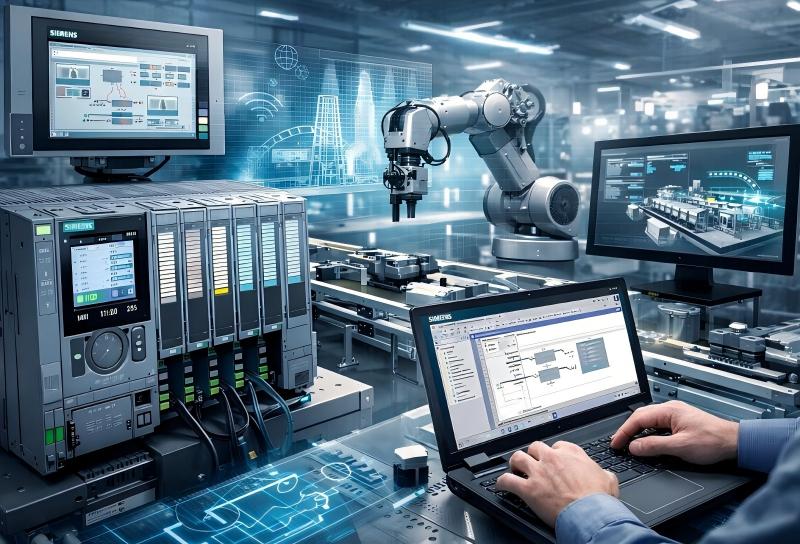
Industrial automation projects often involve multiple technologies, including programmable logic controllers (PLCs), motion control systems, industrial networks, process control platforms and engineering software.
When these technologies are developed and deployed across separate business areas, customers may face challenges coordinating system design, commissioning, maintenance and future upgrades. A unified automation organization can help align these capabilities and support more consistent solutions across the industrial lifecycle.
Siemens’ new structure brings together four important areas:
-
Factory Automation: PLCs, distributed I/O, industrial communication and machine control.
-
Motion Control: Servo drives, motors, CNC systems and coordinated motion applications.
-
Process Automation: Control and monitoring technologies for continuous and hybrid manufacturing processes.
-
Customer Services: Technical support, maintenance services, modernization and lifecycle assistance.
By combining these capabilities within one organization, Siemens intends to strengthen collaboration between engineering, hardware, software and service teams.
For industrial customers, the long-term objective is to simplify how automation solutions are developed, implemented and maintained.
Industrial AI Becomes a Strategic Priority
Artificial intelligence is increasingly being applied to industrial engineering and production operations. Beyond analyzing historical data, newer systems can assist with programming, configuration, troubleshooting and the optimization of manufacturing workflows.
Siemens has been expanding its industrial AI portfolio to help engineering teams automate repetitive tasks and accelerate project development.
For example, AI-assisted engineering can help developers organize automation projects, generate parts of PLC programs and connect electrical design information with software configuration. These capabilities can reduce manual work and allow engineers to spend more time on system architecture, safety requirements and application-specific logic.
However, industrial AI must operate within carefully defined engineering processes. Generated control logic and system configurations still require verification, testing and approval before deployment on production equipment.
The unified Automation organization provides a framework for coordinating these developments across different automation technologies.
Implications for PLC and DCS Applications
Siemens’ strategy is relevant to both discrete manufacturing and process industries.
In discrete manufacturing, SIMATIC PLCs, distributed I/O, SINAMICS drives and motion control technologies are commonly used to coordinate machinery, production lines and material-handling systems. Better integration between these components can simplify engineering and improve visibility across manufacturing operations.
In process industries, automation platforms must coordinate measurements, control loops, alarms, operator interfaces and communication between field devices and supervisory systems. Modernization projects also require careful management of legacy equipment, system availability and process continuity.
A more integrated automation portfolio could help customers plan upgrades across these different layers rather than treating each component as an isolated investment.
For system integrators, the practical value will depend on product compatibility, engineering tools, technical documentation and the quality of support available throughout implementation.
Supporting Digitalization and Flexible Manufacturing
Manufacturers increasingly need production systems that can accommodate new products, changing demand and more complex manufacturing requirements.
Traditional automation projects may require substantial manual configuration whenever a machine is modified or a production line is expanded. Digital engineering tools, standardized project structures and reusable software components can help reduce this workload.
Siemens’ broader automation strategy emphasizes connecting engineering data with operational systems. When equipment configuration, control logic and production information are managed consistently, engineering teams can more easily validate changes and maintain a reliable record of system behavior.
Digital twins and simulation tools can also support virtual testing before physical changes are introduced. This approach can help identify design issues earlier, reduce commissioning complexity and shorten the time required to bring new equipment into operation.
These benefits depend on accurate digital models and reliable integration between engineering software and physical equipment.
What Industrial Customers Should Consider
The organizational change does not automatically mean that existing Siemens PLCs, drives or process control systems require replacement. Facilities should continue evaluating equipment upgrades according to operational requirements, lifecycle status and compatibility.
When planning a modernization project, engineering teams should consider:
-
Existing system compatibility: Confirm that current controllers, drives, I/O modules and communication networks can support the intended upgrade.
-
Engineering continuity: Preserve project documentation, software versions, configuration records and backup files.
-
Cybersecurity: Review access permissions, network segmentation and update procedures.
-
Operational testing: Validate control logic and communication before deploying changes to production.
-
Lifecycle support: Assess spare-part availability, maintenance requirements and the long-term service plan.
For plants operating continuously, a phased modernization strategy may reduce disruption while allowing new automation capabilities to be introduced gradually.
Conclusion
Siemens’ decision to consolidate its major automation activities into a single Automation organization marks an important step in its strategy to connect hardware, software, industrial AI and lifecycle services.
For PLC engineers, system integrators and process automation specialists, the development highlights the growing importance of integrated engineering and intelligent automation. As industrial systems become more connected, customers will increasingly look for solutions that simplify configuration, improve maintainability and support more flexible production.
The success of this strategy will ultimately depend on how effectively Siemens translates organizational integration into practical improvements in engineering workflows, system interoperability and customer support.