

ProductPRODUCT
Featured products
Contact Us
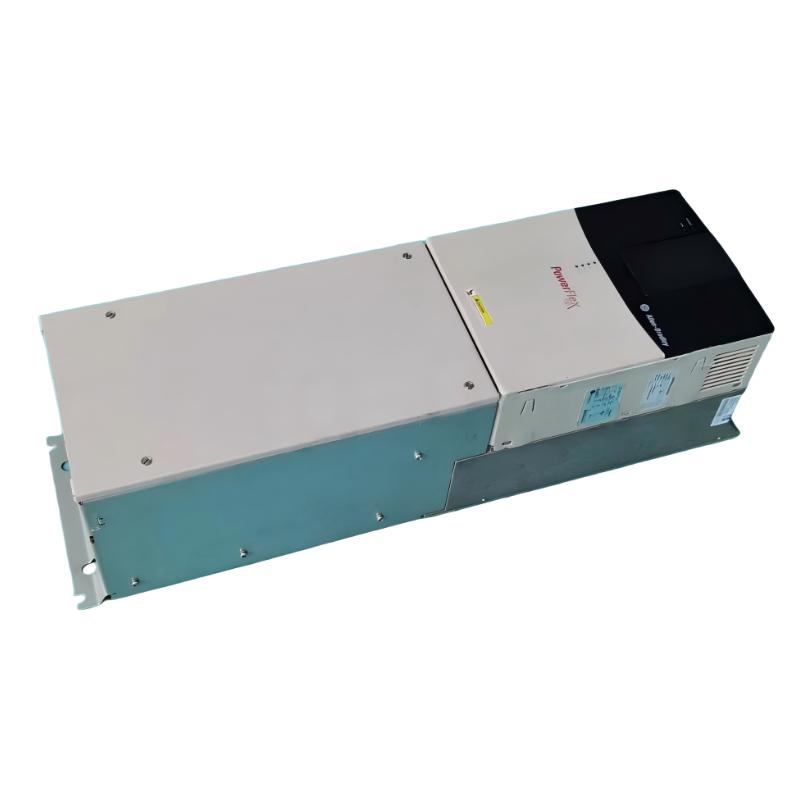
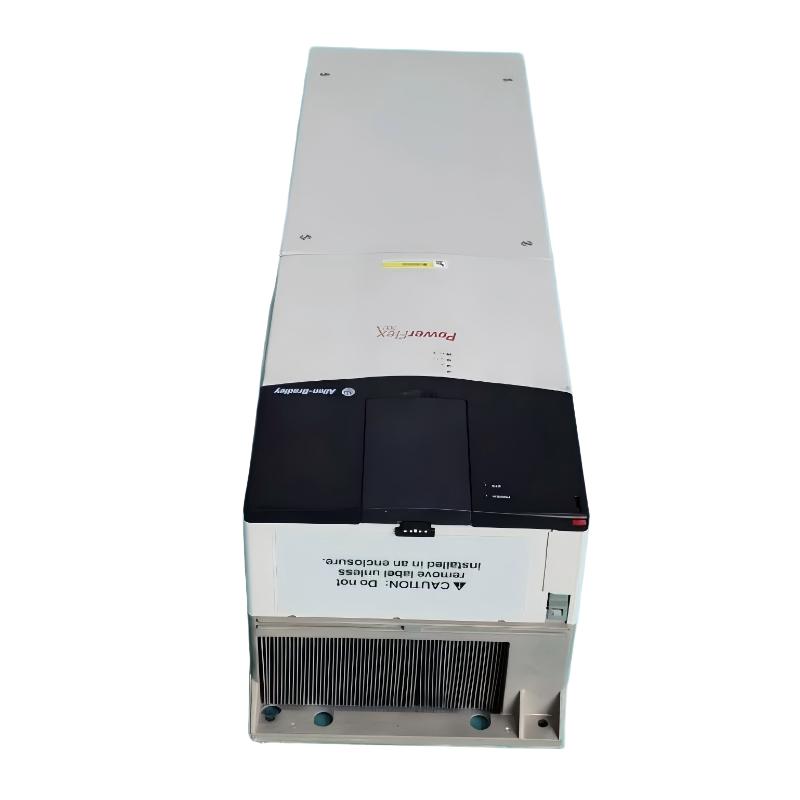
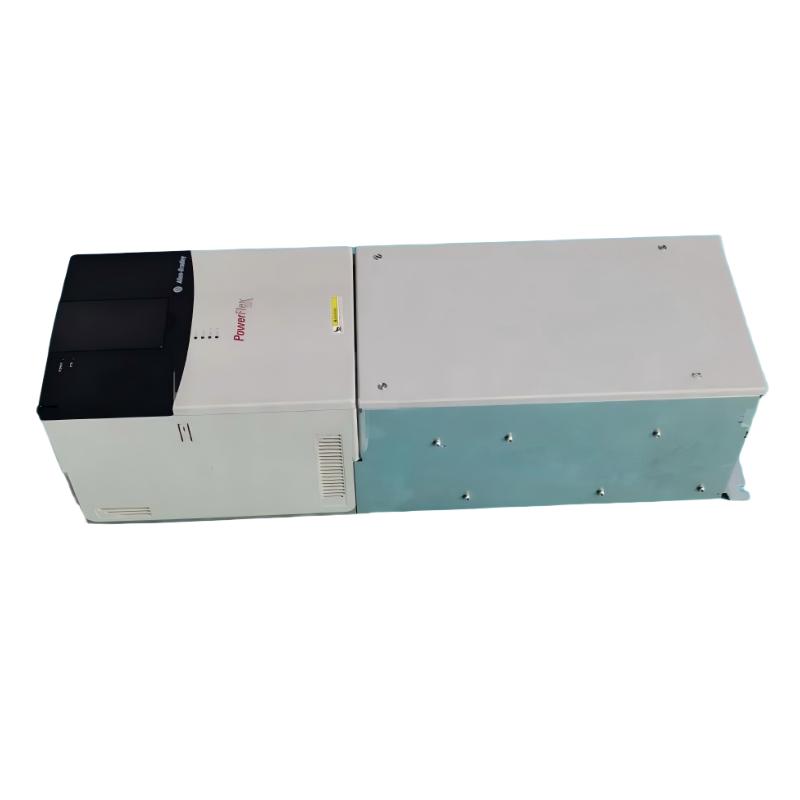
- Allen Bradley
- 20BD248A3ANNAND0
- PowerFlex AC Drive
- USA
- 850.0 × 403.9 × 275.5 mm
- 71.44kg
- Xiamen, China
- New & In Stock
- T/T, PayPal, Western Union
- 1 Year
- 1-3 Working Days
- DHL, UPS, TNT, FedEx and EMS.
- 24-Hour Service
- COO
- 4
Our advantage

Global Logistics
We have a 10-year logistics and express cooperation agreement, so our products can be shipped to any place in the world.

Brand new and original
Our products are imported in bulk from the place of origin. Because of the cooperative relationship, our products are all original and 100% new.

24-hour service
We provide 7*24 hours service to our customers. We will be there whenever you need us.

Price advantage
All our products are priced very favorably because we have our own warehouse and supply.
| Company Information | |||
| [email protected] | |||
| Mobile | +8615980777398 | ||
| +8615980777398 | |||
| 15980777398 |
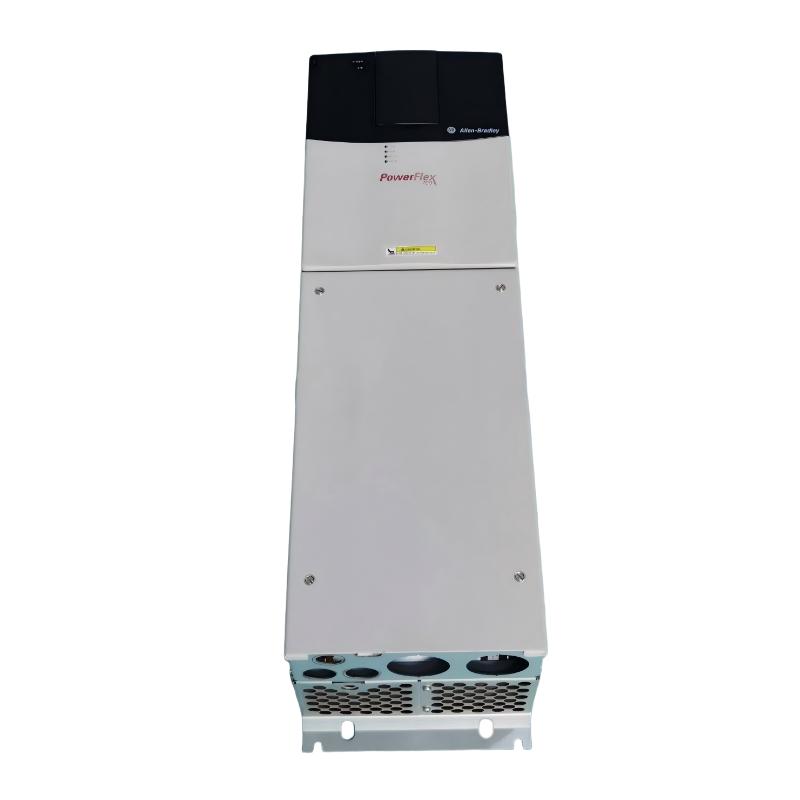
Allen-Bradley 20BD248A3ANNAND0 AC Drive — Product Specifications, Features, Applications, and Model Recommendations
1. Product Overview
The Allen-Bradley 20BD248A3ANNAND0 is a high-power AC drive in the PowerFlex 700 family. It is designed for industrial motor control applications that require adjustable speed, controlled acceleration and deceleration, and stable operation under changing load conditions.
This model belongs to the 480 V-class drive range and is intended for three-phase industrial power systems. Its 248 A current rating places it in a high-power category suitable for larger motors and demanding equipment, subject to the motor nameplate, load profile, and drive configuration.
The PowerFlex 700 platform supports industrial speed and torque control. It is used in machinery where direct-on-line motor starting would cause excessive starting current or mechanical shock, or where the process benefits from changing motor speed to match operating requirements.
The full catalog number 20BD248A3ANNAND0 contains configuration information beyond the basic current rating. Details such as enclosure arrangement, installed options, braking provisions, filtering, and control features should be checked against the exact drive nameplate before selecting a replacement or ordering a unit.
2. Detailed Product Parameters
The following table summarizes the principal technical characteristics of model 20BD248A3ANNAND0. Dimensions and weight refer to the drive unit, not the shipping package, unless otherwise specified.
|
Parameter |
Specification |
|---|---|
|
Product model |
20BD248A3ANNAND0 |
|
Brand |
Allen-Bradley |
|
Product series |
PowerFlex 700 |
|
Product type |
Adjustable-frequency AC drive / Variable-frequency drive (VFD) |
|
Input voltage |
480 V AC |
|
Input phase |
Three-phase |
|
Input frequency |
60 Hz nominal |
|
Rated output current |
248 A |
|
Normal-duty motor rating |
200 HP |
|
Heavy-duty motor rating |
150 HP |
|
Output voltage |
Variable, up to approximately 460 V AC for a 480 V-class supply |
|
Output frequency |
Standard control: up to 400 Hz; vector control range may extend to 420 Hz, depending on configuration |
|
Control methods |
Volts-per-hertz (V/Hz) and sensorless vector control |
|
Display and operator interface |
LCD display with full numeric keypad |
|
Enclosure protection |
IP20, NEMA/UL Type 1 |
|
Braking IGBT |
Not included |
|
Internal braking resistor |
Not included |
|
Feedback device |
No feedback option included in the listed configuration |
|
Communication module |
No internal communication module included in the listed configuration |
|
EMC filter / common-mode choke |
Configuration includes filtering and common-mode choke |
|
Nominal DC bus voltage |
Approximately 648 V DC |
|
Typical carrier-frequency setting |
2 kHz in the listed configuration; supported settings depend on drive setup |
|
Approximate operating ambient temperature |
0–50°C for applicable IP20 configurations; derating may be required |
|
Approximate height |
850.0 mm |
|
Approximate width |
403.9 mm, including mounting hardware |
|
Approximate depth |
275.5 mm |
|
Approximate drive weight |
71.44 kg |
|
Approximate packaged weight |
100.9 kg, depending on packing and supplied accessories |
|
Mounting bracket hole spacing |
Approximately 300.0 mm wide × 825.0 mm high |
|
Typical installation environment |
Indoor industrial control cabinet or suitable electrical installation area |
|
Main function |
Variable-speed and torque control for three-phase AC motors |
Important sizing note: The 200 HP normal-duty and 150 HP heavy-duty ratings are not interchangeable. Heavy-duty operation generally requires greater overload capability, so the permitted motor rating can be lower. The actual motor nameplate current, load characteristics, supply voltage, ambient temperature, and installation conditions should all be considered before commissioning.
Dimension and weight note: The dimensions above represent the listed drive configuration. The packaged weight can vary with packaging, accessories, and shipment preparation. For cabinet design, lifting, or replacement planning, use the actual unit nameplate and physical measurements whenever possible.
3. Product Introduction
3.1 What the 20BD248A3ANNAND0 does
The 20BD248A3ANNAND0 is an industrial variable-frequency drive used to regulate the speed and operating behavior of a three-phase AC motor. Instead of running a motor continuously at its supply frequency, the drive changes the output frequency and voltage to suit the requirements of the connected machine.
This is useful when a process does not need the motor to run at full speed all the time. A conveyor may need to move slowly during loading and faster during normal production. A pump may need to adjust its flow rate as system demand changes. A fan may need to vary airflow throughout the working day. A suitably configured drive can handle these changes without requiring the motor to be repeatedly switched on and off.
At 248 A, this model is intended for relatively large motors and industrial loads. It is not a small machine-level drive intended primarily for compact equipment. Its installation typically involves appropriate circuit protection, grounding, cable selection, heat management, and a control arrangement matched to the application.
3.2 Motor speed and process control
Motor speed can be adjusted by changing the output frequency. This allows the operator or a control system to select a speed appropriate to the process rather than relying solely on fixed-speed operation.
The drive can also control acceleration and deceleration. Instead of applying full speed immediately, the motor can ramp up over a programmed interval. During stopping, the drive can reduce speed in a controlled manner when the selected stop mode and the mechanical load permit it.
This controlled behavior can reduce mechanical shock on belts, couplings, gearboxes, shafts, and other connected equipment. It may also help reduce sudden changes in material flow or pressure. The actual benefit depends on the machine design, load inertia, parameter settings, and the braking method available.
3.3 Vector control capability
The PowerFlex 700 platform supports both V/Hz control and sensorless vector control. V/Hz control is often suitable for applications where a straightforward relationship between frequency and motor voltage is sufficient.
Sensorless vector control uses a more detailed motor model to improve speed and torque behavior without necessarily requiring a shaft-mounted feedback device. This can be useful when a load needs more consistent speed under changing torque conditions.
The absence of a feedback option in the listed configuration should be considered during selection. If an application requires encoder-based closed-loop speed regulation or a specific feedback arrangement, the drive configuration must be checked carefully. The exact control mode and achievable performance also depend on motor data, autotuning, parameter setup, and the application.
3.4 Operator interface and setup
The model is listed with an LCD display and full numeric keypad. This interface allows technicians to review drive status, enter operating parameters, and examine faults or warnings directly at the unit.
For maintenance personnel, a local operator interface is useful during commissioning and troubleshooting. It can help identify whether a problem is associated with the incoming supply, motor connection, drive parameters, overload conditions, or another part of the system.
The interface does not eliminate the need for appropriate electrical safety procedures. Work inside the drive or its power circuit must be performed by qualified personnel using the required isolation, discharge, and verification procedures.
3.5 Installation and enclosure considerations
The IP20, NEMA/UL Type 1 configuration is intended for installation in a suitable indoor environment. It should not be treated as a sealed, washdown-ready, or outdoor-rated enclosure.
The installation must provide adequate ventilation and clearance around the drive. High-power drives dissipate heat, and insufficient airflow can lead to excessive internal temperatures or nuisance trips. Dust, conductive contamination, corrosive vapors, moisture, and condensation must also be considered.
For harsh environments, the drive may need to be installed in a suitable cabinet or engineered enclosure. The cabinet design must account for the drive’s heat loss, airflow requirements, cable entry, electrical clearances, and access for service.
4. Main Applications

4.1 Conveyor systems
Conveyors in manufacturing plants, packaging lines, warehouses, and material-handling facilities often require adjustable speed and controlled starting. The drive can help coordinate conveyor movement, reduce abrupt starts, and adjust line speed to match upstream and downstream equipment.
When multiple conveyors work together, the control system can use drive speed commands to help maintain product spacing and process flow. The final control strategy must account for belt loading, mechanical tension, braking requirements, and the possibility of a loaded conveyor driving the motor.

4.2 Industrial pumps
Pump systems may need to adjust flow or pressure according to process demand. A variable-frequency drive can change motor speed rather than relying entirely on throttling valves or bypass arrangements.
For suitable centrifugal-pump applications, speed adjustment can improve process flexibility and may reduce energy consumption when the pump does not need to run at full speed. The expected savings depend on the pump curve, static head, system resistance, operating schedule, and control method.

4.3 Fans and ventilation equipment
Industrial fans and ventilation systems often operate under varying airflow requirements. Adjustable motor speed allows the system to respond to changing ventilation demand or process conditions.
This can help avoid unnecessary full-speed operation in suitable systems. Proper selection must still account for fan inertia, minimum operating speed, cooling requirements, and any mechanical resonance zones that should be avoided.

4.4 Mixers and process machinery
Mixers, agitators, and similar machinery can require different operating speeds during filling, blending, processing, and discharge. A drive provides a means of changing speed to match these stages.
The 248 A rating makes correct load assessment particularly important. Some mixing applications have high starting torque, rapidly changing loads, or extended low-speed operation. The selected duty rating must be sufficient for the actual load rather than being based only on motor horsepower.

4.5 Large industrial machinery
The drive may also be suitable for selected machine tools, material-processing equipment, production machinery, and other motor-driven systems that need adjustable speed.
Suitability depends on the machine’s torque curve, required speed range, acceleration time, stopping method, and control accuracy. Applications requiring precise positioning, rapid cyclic motion, or closed-loop feedback may need a different drive configuration or a different product family.
5. Product Advantages
5.1 High current capacity for larger motors
The rated output current of 248 A makes this drive suitable for a range of large industrial motor applications. It provides a substantial current capacity for equipment that exceeds the range of smaller compact drives.
A higher current rating can be useful when selecting a drive for a large motor, but the final choice should always be based on motor full-load current and the drive’s applicable duty rating. Two motors with similar horsepower may have different current requirements because of their voltage, efficiency, power factor, and load conditions.
5.2 Adjustable speed instead of fixed-speed operation
The drive allows the motor to operate at different speeds according to the process. This can improve production flexibility and make it easier to coordinate equipment with different operating stages.
For pump and fan applications, speed adjustment can sometimes reduce energy use compared with continuously running at full speed and restricting flow mechanically. For conveyors and process machines, it can help regulate throughput and reduce unnecessary mechanical stress.
These benefits are application-dependent rather than guaranteed. They should be evaluated against the actual operating profile and system design.
5.3 Controlled acceleration and deceleration
A controlled speed ramp can reduce the mechanical shock associated with abrupt motor starting. This may help protect couplings, belts, gearboxes, and connected equipment from repeated stress.
The drive also supports selectable stopping methods. The appropriate method depends on the required stopping time, load inertia, safety requirements, and whether energy must be dissipated or returned elsewhere in the system.
Because this model is not listed with an internal braking resistor or braking IGBT, applications requiring rapid deceleration or frequent braking should be evaluated carefully. An appropriate external braking solution or another drive configuration may be needed.
5.4 Multiple motor-control approaches
V/Hz control provides a practical approach for many general-purpose loads, while sensorless vector control can improve speed and torque behavior in applications with more demanding operating characteristics.
This flexibility means that the drive can potentially serve different types of machinery without requiring the same control strategy in every case. However, the motor parameters and control mode must be configured correctly, and the selected mode must match the required performance.
5.5 Local diagnostics and parameter access
The LCD and full numeric keypad provide a local method for setup and troubleshooting. Technicians can inspect operating information and fault indications without necessarily relying on a separate operator panel.
This can simplify maintenance work, particularly when diagnosing an existing installation or checking parameters during commissioning. It is still important to retain a record of the working parameter set and the application-specific settings.
5.6 Industrial installation format
The drive’s mounting dimensions and enclosure format can help engineers plan a cabinet layout or evaluate a replacement installation. Its physical size and weight, however, mean that handling and mounting should be planned in advance.
Adequate structural support, electrical clearance, airflow, cable routing, and service access are important. A replacement should not be selected based solely on whether it fits into the existing cabinet.
5.7 Suitable for established industrial systems
A PowerFlex 700 drive may be found in existing industrial equipment where the control design, electrical drawings, and maintenance procedures were built around that platform.
When replacing a failed unit, keeping the same model and configuration can reduce the number of changes required to the installation. Even so, the replacement must match the control interface, communication requirements, duty rating, and options of the original equipment.
Lifecycle consideration: The PowerFlex 700 family is a legacy product range, and this model should be treated as a replacement or maintenance-parts selection rather than assumed to be a current-generation drive. Before purchasing, confirm availability, serviceability, and the feasibility of a functional replacement.
6. Brand and Product Series
Brand: Allen-Bradley
Allen-Bradley is the brand name associated with this drive. In this description, the brand is included solely to identify the product and distinguish it from drives with similar electrical ratings.
Product series: PowerFlex 700
The PowerFlex 700 family is an industrial AC drive series designed for adjustable-speed motor applications. It includes models with different voltage classes, output-current ratings, duty ratings, enclosure arrangements, and configuration options.
The series is intended for industrial environments where motor speed and torque need to be managed as part of a larger machine or process. Depending on the specific model and installed options, drives in this family may provide local keypad operation, configurable control methods, analog and digital I/O, and communication options.
The exact features should not be assumed to be identical across every catalog number. In particular, communication modules, feedback interfaces, braking hardware, filtering, control I/O voltage, and enclosure options can vary by model.
For 20BD248A3ANNAND0, the key identifying characteristics are its 480 V-class input, 248 A output-current rating, high-power motor capability, LCD keypad interface, and IP20/NEMA Type 1 installation format.
7. Five Related or Same-Series Models
The following models are possible comparison candidates within the PowerFlex 700 family. The table distinguishes basic model-family information from details that must be confirmed for the exact catalog number.
|
Model |
Series / type |
Principal parameters |
Dimensions (H × W × D) |
Weight |
|---|---|---|---|---|
|
20BD248A3ANNAND0 |
PowerFlex 700 AC drive |
480 V AC, 3-phase; 248 A; 200 HP normal duty / 150 HP heavy duty |
Approx. 850.0 × 403.9 × 275.5 mm |
Approx. 71.44 kg, drive only |
|
20BD248A3ANNANC0 |
PowerFlex 700 AC drive |
480 V-class, 248 A model family; compare options and suffix configuration before substitution |
Not confirmed for this exact catalog number |
Not confirmed |
|
20BD248A3ANNANA0 |
PowerFlex 700 AC drive |
480 V AC, 248 A; approximately 200 HP normal duty; IP20/NEMA Type 1 configuration |
Approx. 850.0 × 403.9 × 275.5 mm |
Approx. 71.44 kg, drive-only reference; verify exact unit |
|
20BD180A3ANNANC0 |
PowerFlex 700 AC drive |
Lower-current model family than the 248 A unit; exact duty rating and options require confirmation |
Not confirmed |
Not confirmed |
|
20BD180A3ANNAND0 |
PowerFlex 700 AC drive |
Lower-current model family than the 248 A unit; exact duty rating and options require confirmation |
Not confirmed |
Not confirmed |
How to choose among these models
– For a like-for-like replacement: Start with the exact catalog number, 20BD248A3ANNAND0. Confirm the complete suffix, revision, control I/O, communication requirements, braking options, and filtering.
– For a model with the same current rating: A 248 A variant may be worth comparing, but matching the current rating alone does not establish electrical or functional compatibility.
– For a lower-current application: The 180 A models may be worth evaluating only if the connected motor and load requirements permit the lower rating. Do not use a lower-current model simply because the physical dimensions appear similar.
– For a control-system change: Check communication modules, command sources, feedback needs, analog and digital I/O, and the way the existing PLC or controller sends run and speed commands.
– For a cabinet replacement: Confirm actual dimensions, mounting-hole positions, clearance requirements, heat dissipation, cable entry, and weight before finalizing the layout.
The models above are comparison candidates, not guaranteed drop-in replacements. Catalog-number suffixes can represent meaningful configuration differences.
8. Five Popular or Commonly Used Models Under the Same Brand
The models below represent other commonly encountered AC drives from the same brand. They are included as general comparison options rather than direct substitutes for the 248 A PowerFlex 700. Their current ratings and physical sizes are in different ranges, so each must be matched to the motor and application.
|
Model |
Product series |
Principal parameters |
Dimensions (H × W × D) |
Weight |
|---|---|---|---|---|
|
25B-D024N104 |
PowerFlex 525 |
480 V-class drive; approximately 24 A model designation; compact-drive application range |
Not confirmed for this exact catalog number |
Not confirmed |
|
25B-D017N104 |
PowerFlex 525 |
480 V-class drive; approximately 17 A model designation; general-purpose variable-speed control |
Not confirmed for this exact catalog number |
Not confirmed |
|
25B-D010N104 |
PowerFlex 525 |
480 V-class drive; approximately 10 A model designation; smaller motor applications |
Not confirmed for this exact catalog number |
Not confirmed |
|
22B-D012N104 |
PowerFlex 40 |
480 V-class model family; approximately 12 A model designation; general-purpose motor-speed control |
Not confirmed for this exact catalog number |
Not confirmed |
|
22B-D017N104 |
PowerFlex 40 |
480 V-class model family; approximately 17 A model designation; compact industrial motor control |
Not confirmed for this exact catalog number |
Not confirmed |
Selection warning: The PowerFlex 525 and PowerFlex 40 models listed above are substantially smaller drive classes than the 248 A PowerFlex 700. They are useful for comparing the broader product range, but they are not direct replacements for a 150 HP heavy-duty or 200 HP normal-duty application.
For all five models, the precise rated current, motor horsepower, voltage details, enclosure dimensions, and weight should be checked against the complete catalog number and its revision before procurement. The current values in the table are identification-level comparisons, not a substitute for the full rating plate.
9. Installation, Commissioning, and Maintenance Considerations
9.1 Electrical supply and protection
The drive is intended for a 480 V-class, three-phase supply. The incoming supply must be within the applicable voltage and frequency limits, and the upstream protection must be selected according to the installation requirements and the drive’s ratings.
Circuit breakers, fuses, disconnects, grounding conductors, and power cables must be sized in accordance with the relevant electrical code and installation instructions. The drive’s current rating alone is not enough to determine every upstream component.
Before energizing the unit, verify the supply wiring, motor wiring, protective earth, terminal torque, and separation between power and control wiring.
9.2 Motor data and parameter setup
Correct motor data is essential for reliable operation. The motor nameplate should be used to enter the appropriate voltage, current, frequency, speed, and other required parameters.
If sensorless vector control is used, the commissioning process may also require motor tuning according to the drive’s supported procedure. Incorrect motor data can affect torque performance, current behavior, and speed regulation.
A backup of the original drive parameters is particularly valuable when replacing an existing unit. Application-specific settings such as acceleration time, deceleration time, minimum speed, maximum speed, stop mode, and fault responses should be recorded before any changes are made.
9.3 Cooling and cabinet ventilation
A high-power drive generates heat during normal operation. The installation should provide sufficient airflow and clearance so that cooling air can circulate as intended.
Filters, fans, and ventilation openings should be inspected periodically. Dust buildup or a failed fan can raise internal temperature and shorten component life.
If the drive is installed inside a cabinet, the cabinet’s thermal design should account for the drive’s heat loss and the heat produced by other equipment. A cabinet that physically accommodates the drive may still be unsuitable if it cannot remove the generated heat.
9.4 Braking and high-inertia loads
This model is not listed with an internal braking resistor or braking IGBT. That matters when a load must stop quickly, when deceleration occurs frequently, or when the motor can regenerate energy into the drive during stopping.
For high-inertia machinery, the required stopping time and energy must be assessed before commissioning. An external braking arrangement, a different control strategy, or another drive configuration may be needed.
The stopping method must also be compatible with the machine’s safety requirements. A normal drive stop should not automatically be treated as a safety-rated stopping function.
9.5 Troubleshooting and spare-parts planning
For an installed unit, maintenance personnel should record the complete catalog number, revision, firmware information where applicable, parameter backup, and the connected motor’s nameplate data.
When diagnosing a fault, check the incoming power, motor connections, load condition, cooling system, drive status, and fault history before replacing components. Replacing the drive without identifying the original cause may result in a repeat failure.
For older installations, it is also sensible to evaluate whether a refurbished unit, a same-model replacement, or a functional replacement is the most practical long-term approach. Compatibility must be assessed at the system level, not just by comparing horsepower and current.
10. Purchasing and Replacement Recommendations
Before ordering the 20BD248A3ANNAND0, confirm the following details with the physical unit or its existing installation records:
1. Complete catalog number: Ensure the suffix is exactly 20BD248A3ANNAND0, including the final characters.
2. Electrical ratings: Confirm the supply voltage, phase, output current, and motor duty requirement.
3. Control arrangement: Confirm whether the system uses local keypad operation, hardwired I/O, PLC commands, or a communication network.
4. Feedback and braking: Check whether the machine requires encoder feedback, rapid deceleration, or braking hardware not included in this configuration.
5. Enclosure and filtering: Verify IP20/NEMA Type 1 suitability and whether the installation depends on the existing EMC filter or common-mode choke.
6. Physical fit: Compare the mounting dimensions and hole locations with the existing cabinet. Allow for airflow, wiring bends, and maintenance access.
7. Weight and handling: Use the approximate 71.44 kg drive-only weight for preliminary planning, then confirm the actual unit and lifting requirements before installation.
8. Product lifecycle: Since this is a legacy series, check the condition of any used or refurbished unit, including its revision, repair history, fan condition, power section, keypad, and parameter retention.
9. Functional replacement: If the exact model is unavailable, compare candidate replacements across current, duty rating, motor control, I/O, communications, braking, enclosure, and commissioning requirements.
10. Commissioning documentation: Retain a copy of the final parameter set, wiring diagram, fault history, and motor data for future maintenance.
11. Final Product Summary
The Allen-Bradley 20BD248A3ANNAND0 is a high-power, 480 V-class AC drive in the PowerFlex 700 family. Its principal rating is 248 A output current, with a nominal motor rating of 200 HP under normal duty and 150 HP under heavy duty.
Its main strengths are adjustable motor speed, configurable motor-control methods, controlled acceleration and deceleration, and a local LCD keypad for operation and maintenance. These features make it a candidate for large conveyors, industrial pumps, fans, mixers, and other motor-driven machinery where the electrical and mechanical requirements fit the drive’s ratings.
The main points to check before purchase are its legacy lifecycle, exact catalog-number configuration, absence of an internal braking resistor and braking IGBT, enclosure suitability, and compatibility with the existing control system.
For preliminary planning, the drive measures approximately 850.0 × 403.9 × 275.5 mm and weighs approximately 71.44 kg without packaging. These figures are useful for initial cabinet and handling assessments, but the actual unit should be checked before final installation.
For a replacement project, the safest starting point is to match the complete catalog number and then verify the supply, motor current, duty rating, control interface, communication requirements, braking needs, enclosure, and mounting dimensions. A model with a similar horsepower rating is not necessarily a compatible substitute.