

ProductPRODUCT
Featured products
Contact Us
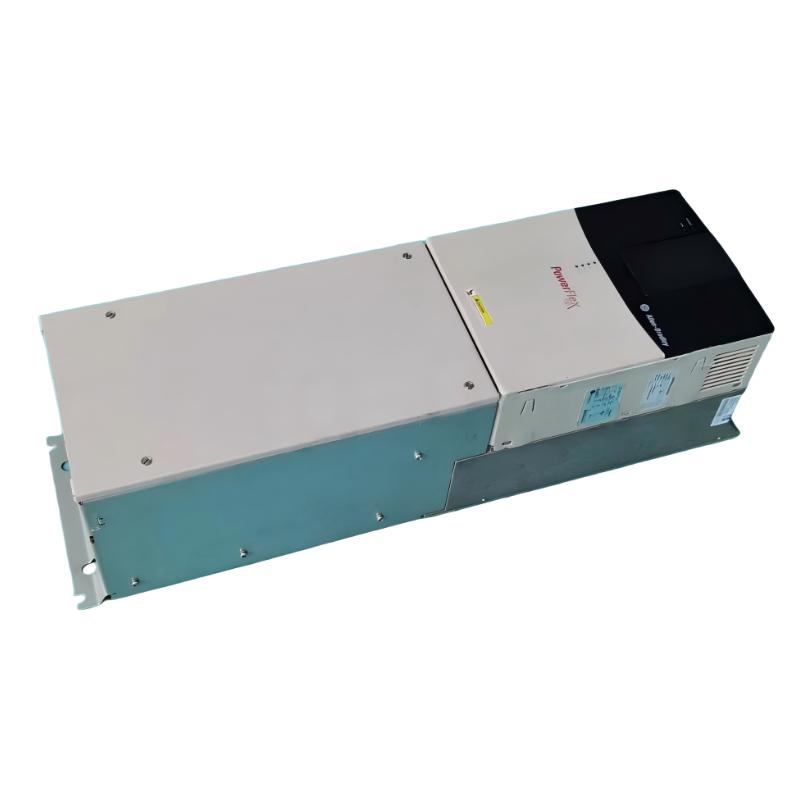
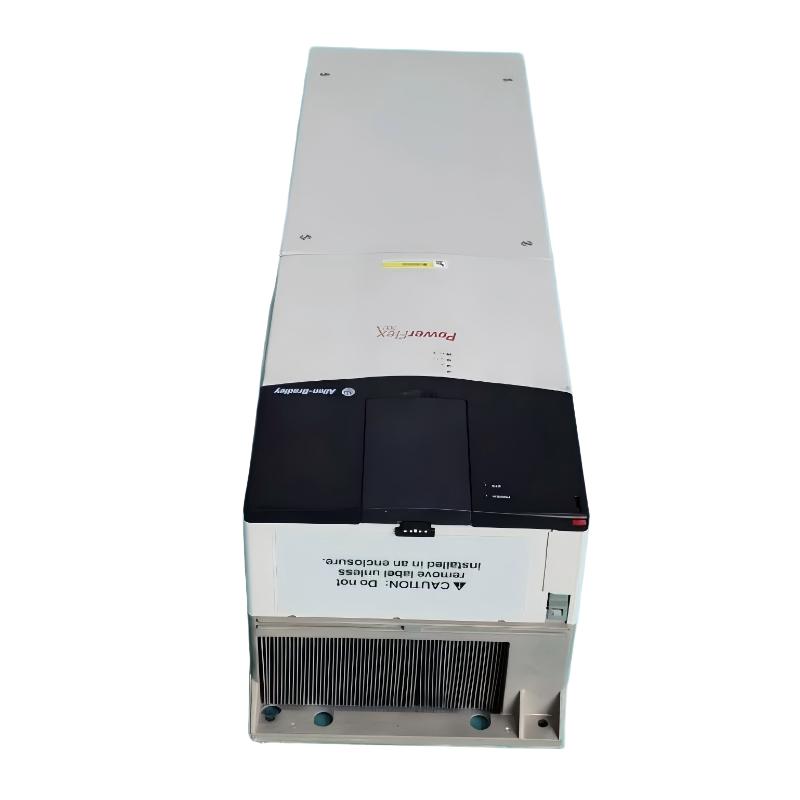
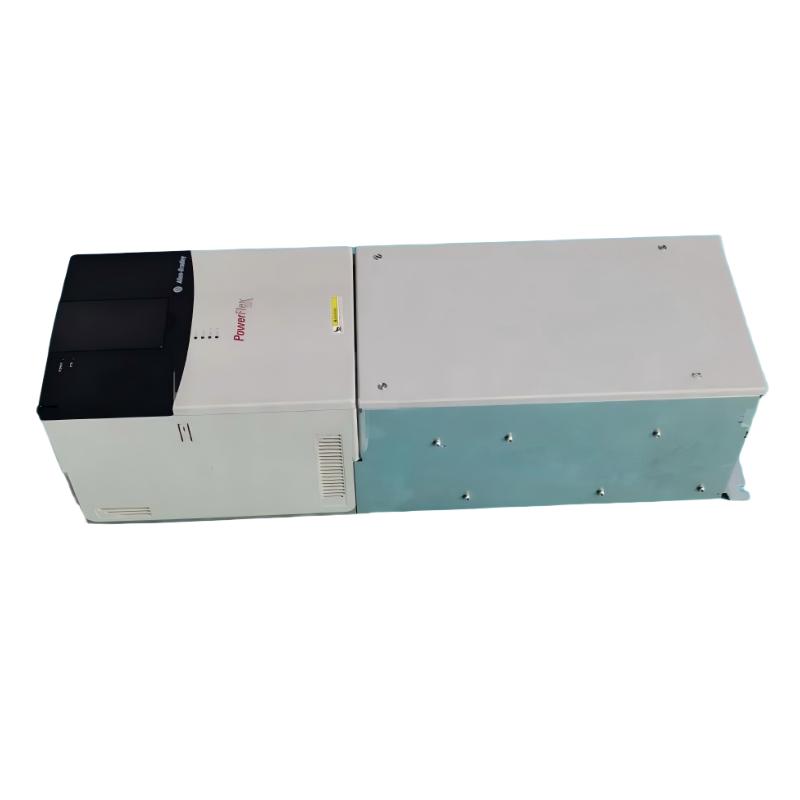
- Allen Bradley
- 20BC170A3ANNANC0
- PowerFlex AC Drive
- USA
- 1,828.8 × 711.3 × 487.8 mm
- 229.07kg
- Xiamen, China
- New & In Stock
- T/T, PayPal, Western Union
- 1 Year
- 1-3 Working Days
- DHL, UPS, TNT, FedEx and EMS.
- 24-Hour Service
- COO
- 3
Our advantage

Global Logistics
We have a 10-year logistics and express cooperation agreement, so our products can be shipped to any place in the world.

Brand new and original
Our products are imported in bulk from the place of origin. Because of the cooperative relationship, our products are all original and 100% new.

24-hour service
We provide 7*24 hours service to our customers. We will be there whenever you need us.

Price advantage
All our products are priced very favorably because we have our own warehouse and supply.
| Company Information | |||
| [email protected] | |||
| Mobile | +8615980777398 | ||
| +8615980777398 | |||
| 15980777398 |
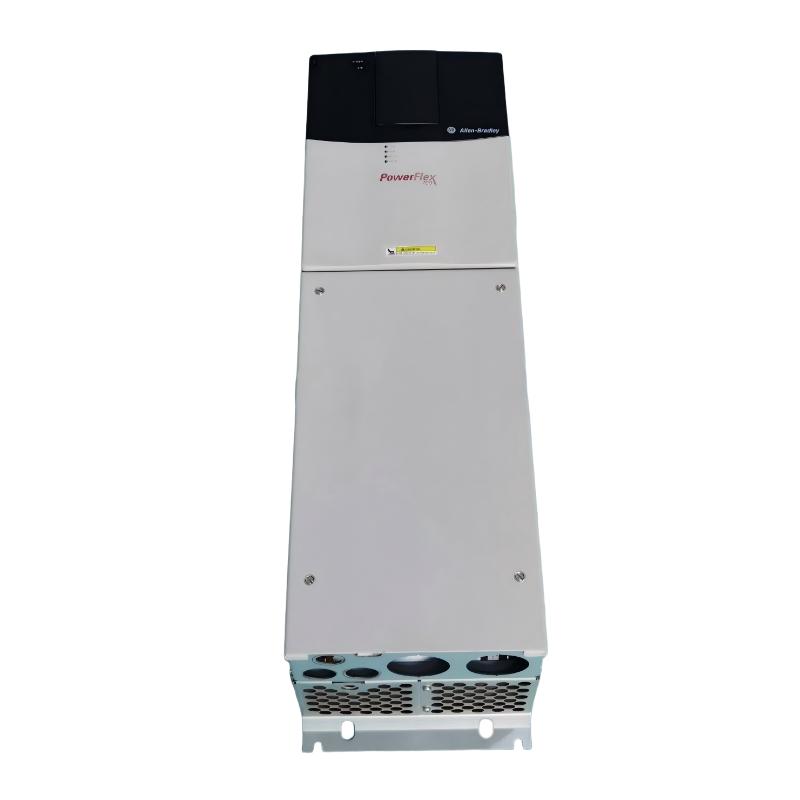
Allen-Bradley 20BC170A3ANNANC0 AC Drive: Technical Specifications, Product Description, Applications, Advantages, and Recommended Models
1. Product Overview
The Allen-Bradley 20BC170A3ANNANC0 is a catalog-number configuration associated with the PowerFlex 700 family of industrial variable-frequency AC drives. This product family is designed to control the speed and operation of three-phase AC motors in industrial automation, manufacturing, material handling, and process-control applications.
An AC drive regulates the electrical frequency and voltage supplied to a motor, allowing the motor to operate at different speeds according to the requirements of the machine. This provides greater flexibility than operating a motor continuously at a fixed supply frequency.
In industrial environments, variable-frequency drives are commonly used to improve process control, coordinate machinery, manage acceleration and deceleration, and reduce unnecessary motor speed when the application permits. The benefits depend on the motor, the driven load, the control strategy, and the operating conditions.
The 20BC170A3ANNANC0 should be evaluated using its complete catalog number and installed hardware configuration. Although related models in the PowerFlex 700 family may have similar electrical ratings, differences in communication interfaces, feedback options, braking components, enclosure arrangements, and control hardware can affect their suitability for a particular machine.
This document provides a structured technical overview, application analysis, purchasing considerations, and model comparisons. Since no live product verification is being performed, specifications that cannot be established confidently are marked for confirmation instead of being presented as guaranteed factory data.
2. Product Identification and Basic Information
|
Parameter |
Product information |
|---|---|
|
Model |
20BC170A3ANNANC0 |
|
Brand |
Allen-Bradley |
|
Product series |
PowerFlex 700 |
|
Product category |
Industrial variable-frequency AC drive |
|
Equipment type |
Adjustable-frequency motor controller |
|
Primary function |
AC motor speed and torque control |
|
Intended environment |
Industrial automation and motor-control installations |
|
Motor type |
Compatible three-phase AC motors |
|
Supply arrangement |
Three-phase industrial AC supply; confirm the nameplate |
|
Control capability |
Configurable motor control, speed references, and operating commands |
|
Application class |
Industrial machinery and process equipment |
|
Communication |
Exact installed communication interface requires confirmation |
|
Feedback |
Confirm the installed encoder or feedback option |
|
Enclosure |
Exact enclosure designation and protection rating require confirmation |
|
Dimensions |
Must be confirmed against the exact mechanical drawing |
|
Weight (kg) |
Exact net equipment weight requires confirmation |
|
Replacement suitability |
Depends on electrical, mechanical, and control-system compatibility |
The complete catalog number is essential for equipment identification. When preparing a quotation, maintenance record, or replacement specification, the number should be copied directly from the drive nameplate rather than reconstructed from a similar model.
The model’s 170 designation is consistent with the 170 A drive class associated with the reference PowerFlex 700 configuration. The exact continuous current rating, overload category, and motor power should still be confirmed against the drive’s rating plate and applicable configuration data.
3. Detailed Technical Specifications
The following table summarizes the main electrical and operating characteristics associated with the 20BC170A3ANNANC0 product class. Mechanical details and option-specific features should be confirmed for the exact catalog configuration before purchasing or installing the drive.
|
Parameter |
Specification |
|---|---|
|
Model |
20BC170A3ANNANC0 |
|
Brand |
Allen-Bradley |
|
Product series |
PowerFlex 700 |
|
Product type |
Industrial AC variable-frequency drive |
|
Rated input voltage |
400 V AC nominal |
|
Input voltage range |
380–480 V AC class |
|
Input phase |
Three-phase |
|
Input frequency |
50 Hz nominal |
|
Continuous output current |
170 A at 400 V AC, normal duty, for the associated drive rating |
|
Normal-duty power rating |
Approximately 90 hp, equivalent to 67 kW |
|
Heavy-duty power rating |
Application and configuration dependent; verify the drive rating plate |
|
Output voltage |
Variable, up to the applicable motor voltage |
|
Maximum output frequency |
Up to 420 Hz for the associated configuration; verify exact model data |
|
Control methods |
Sensorless vector control and configurable V/Hz control, subject to configuration |
|
Acceleration and deceleration |
Independently programmable ramp times |
|
Acceleration/deceleration range |
Up to 3,600 seconds per programmed ramp for the associated family configuration |
|
Analog inputs |
2 |
|
Analog outputs |
2 |
|
Digital inputs |
6 |
|
Digital outputs |
3 |
|
Communication interface |
Exact installed interface requires confirmation |
|
Feedback option |
Confirm whether encoder feedback hardware is installed |
|
Internal braking resistor |
Not assumed to be fitted |
|
Braking transistor |
Confirm the exact catalog configuration |
|
Internal EMC filter |
Confirm the installed filter and common-mode choke configuration |
|
Efficiency |
Approximately 97.5% at rated current and nominal line voltage for the associated drive configuration |
|
Enclosure protection |
Exact enclosure and IP rating require confirmation |
|
Ambient operating temperature |
Up to 50°C for applicable ratings, subject to derating |
|
Relative humidity |
5–95%, non-condensing |
|
Maximum altitude without derating |
Approximately 1,000 m under applicable rated conditions |
|
Dimensions (H × W × D) |
Exact dimensions require the mechanical drawing for this catalog number |
|
Weight (kg) |
Exact net equipment weight requires confirmation |
|
Installation |
Suitable industrial control enclosure or approved installation arrangement |
3.1 Electrical Performance
The 170 A drive class is intended for substantial industrial motor loads. Its actual suitability depends on the motor’s rated current, operating duty, overload demand, and environmental conditions.
A drive’s normal-duty and heavy-duty ratings should not be treated as interchangeable. Normal-duty operation may permit a higher nominal motor power rating, while heavy-duty applications require sufficient current capacity to handle elevated torque demands.
For example, a loaded conveyor may require significant torque during startup, while a centrifugal fan may have a more gradual torque demand as it accelerates. The two applications may therefore require different drive-sizing considerations even if their motors have similar nominal power ratings.
3.2 Motor Control Functions
The PowerFlex 700 family supports configurable motor-control functions designed for industrial applications. Depending on the installed configuration, the drive may support speed regulation, programmed acceleration and deceleration, current limiting, motor protection, and different stop modes.
Sensorless vector control can provide improved speed and torque regulation compared with basic V/Hz operation when the motor data and tuning are configured correctly.
The exact control mode should be selected according to the motor type, speed-regulation requirement, load characteristics, and whether external feedback is necessary.
3.3 Communication and Control Integration
Industrial drives commonly operate as part of a wider control system involving programmable logic controllers, operator interfaces, sensors, and other motor controllers.
The communication interface on the exact model must be checked before integration. A drive with an installed ControlNet interface, for example, should not be assumed to be interchangeable with a model that has no communication module or uses another network.
Where an existing machine is being maintained, the installed communication hardware, I/O wiring, network settings, and control-program assumptions should all be documented before a replacement is selected.
3.4 Mechanical and Environmental Requirements
The drive’s dimensions and weight are determined by its mechanical frame, enclosure, and configuration. A standalone enclosed unit can be substantially larger and heavier than an open-panel drive with a similar electrical rating.
Before installation, verify the overall height, width, depth, mounting points, cable-entry locations, ventilation requirements, and service clearances.
The surrounding environment must also be suitable for the enclosure’s protection rating. Dust, moisture, corrosive vapors, conductive particles, and excessive ambient temperature can affect equipment reliability.
4. Product Description
The 20BC170A3ANNANC0 is an industrial AC drive designed to provide adjustable-speed operation for compatible three-phase AC motors.
In a fixed-speed motor installation, the motor normally operates at a speed determined primarily by the supply frequency, motor design, and mechanical load. A variable-frequency drive changes the frequency and voltage delivered to the motor, allowing its operating speed to be adjusted to match the process.
This makes the equipment useful in machinery where speed changes are necessary during startup, production, material transfer, or shutdown. It can also help reduce mechanical shock when machinery accelerates or decelerates.
The PowerFlex 700 series is intended for industrial environments in which motor control, equipment protection, and integration with external automation systems are important. Depending on the installed options, a drive can accept external commands, receive speed references, monitor operating conditions, and provide information about faults.
For maintenance personnel, the complete catalog number is particularly important. Closely related drive models can have different communication modules, feedback options, braking arrangements, or enclosure types. These differences can affect both the physical installation and the way the machine operates.
The 20BC170A3ANNANC0 should therefore be assessed as part of the complete motor-control system rather than as an isolated electrical component.
5. Product Applications
5.1 Conveyor and Material-Handling Systems

Conveyor systems frequently need adjustable speed to coordinate the movement of materials between different production stages.
A variable-frequency drive can provide controlled acceleration and deceleration, helping reduce sudden mechanical loading on belts, couplings, gearboxes, and conveyor structures.
In automated production lines, the drive can also help synchronize conveyor speed with packaging equipment, inspection stations, and downstream machinery.
The drive should be sized according to the conveyor’s starting torque, load inertia, expected operating speed, and frequency of starts and stops.
5.2 Industrial Pumping Systems

Pumping systems often operate under changing flow and pressure requirements. A variable-frequency drive allows the motor speed to be adjusted to meet the required operating conditions.
In suitable centrifugal pump systems, reducing speed can lower energy consumption compared with operating continuously at high speed and controlling flow exclusively through throttling.
The application must account for the pump curve, minimum flow, static head, motor cooling, and any required pressure or process interlocks.
5.3 Fans and Blowers

Fans and blowers are used in industrial ventilation, cooling, exhaust systems, and process-air handling.
The drive allows airflow to be adjusted according to process demand. This can reduce unnecessary motor speed when the system does not require full airflow.
The engineering assessment should include fan inertia, minimum operating speed, airflow requirements, motor cooling at reduced speed, and possible mechanical resonance.
5.4 Mixers and Agitators
Mixers and agitators may require different operating speeds during loading, mixing, and discharge.
A drive can provide gradual startup and adjustable speed to suit the material being processed. This can be useful when viscosity, batch size, or process conditions vary.
The motor and drive must be sized for the most demanding expected operating condition, particularly where the machine starts with material already inside the vessel.
5.5 Manufacturing Equipment
Manufacturing equipment often operates as part of a coordinated automation system.
A variable-frequency drive can provide adjustable motor speed, controlled acceleration and deceleration, and operating information for the machine’s control system.
Potential applications include selected production machinery, material-processing systems, industrial handling equipment, and auxiliary motor-driven systems.
The drive’s communication interface and I/O arrangement must match the existing control architecture where integration with other automation equipment is required.
6. Main Advantages
6.1 Adjustable Speed
The drive allows the motor speed to be changed according to operating requirements.
This is useful for machinery that operates at different speeds during startup, normal production, and shutdown. Adjustable speed can also help match machine output to changing process demand.
6.2 Controlled Acceleration and Deceleration
Programmable acceleration and deceleration allow the motor to change speed over a defined period.
This can reduce sudden loading on mechanical components and help prevent abrupt product movement in material-handling systems.
The correct ramp settings depend on the motor, load inertia, stopping requirements, and operating cycle.
6.3 Industrial Motor-Control Capability
The PowerFlex 700 family supports motor-control functions intended for industrial applications.
Depending on configuration, these may include vector control, V/Hz control, current limiting, programmed stop modes, and motor-protection functions.
Proper configuration is necessary to obtain the expected performance.
6.4 Integration with Automation Equipment
The drive can be incorporated into a larger control system using its supported communication and I/O interfaces.
This can help coordinate motor operation with sensors, programmable controllers, operator interfaces, and other machinery.
The exact integration options depend on the installed hardware and control-system requirements.
6.5 Fault Monitoring and Protection
Industrial drives typically provide protective functions that help detect abnormal operating conditions.
Depending on the configuration, these may include overcurrent, overvoltage, undervoltage, ground-fault, and overheating protection.
These functions can assist with troubleshooting, but they do not replace correctly selected branch-circuit protection, grounding, or machine-safety equipment.
6.6 Potential Energy Savings
In suitable variable-torque applications, especially centrifugal pumps and fans, reducing motor speed can reduce energy consumption.
Actual savings depend on the operating profile, system characteristics, and required output. The benefit should be evaluated against real operating conditions rather than assumed from the presence of a drive alone.
6.7 Support for Industrial Maintenance and Retrofit Projects
When a machine already uses a compatible PowerFlex 700 drive, existing drawings, parameter records, and maintenance procedures can help support replacement planning.
However, an alternative model must be checked for current rating, communication compatibility, feedback options, enclosure, and mounting dimensions before installation.
7. Five Models from the Same Series or Related Configurations
The following models are candidates for comparison with the 20BC170A3ANNANC0. The first group focuses on related PowerFlex 700 configurations, while the final entry provides a comparison with a different current class.
Mechanical values are not assigned where the exact catalog-specific drawing or net-weight specification cannot be established confidently.
|
Model |
Series |
Main parameters |
Configuration considerations |
Dimensions (H × W × D) |
Weight (kg) |
|---|---|---|---|---|---|
|
20BC170A3ANNANC0 |
PowerFlex 700 |
400 V AC class; 170 A normal duty; approximately 90 hp normal-duty rating for the associated configuration |
Reference model; confirm exact options |
Exact drawing required |
Not verified |
|
20BC170A3ANNACC0 |
PowerFlex 700 |
400 V AC class; 170 A continuous normal duty; approximately 90 hp |
Related configuration with different option details; check communication and control hardware |
Approx. 1,828.8 × 711.3 × 487.8 mm for the associated standalone enclosure; verify applicability |
Approx. 229.07 kg including packaging for the associated standalone configuration |
|
20BC170A3ANNADB0 |
PowerFlex 700 |
380–480 V AC class; 170 A normal-duty class |
Confirm exact suffix definition and installed hardware |
Approx. 1,828.8 × 711.3 × 487.8 mm for the associated standalone enclosure; verify applicability |
Approx. 229.07 kg including packaging for the associated standalone configuration |
|
20BC170A0ANNANN0 |
PowerFlex 700 |
400 V AC class; 170 A normal-duty class |
Related open-panel configuration; confirm mounting and enclosure requirements |
Exact frame drawing required |
Not verified |
|
20BC170A0ANNAND0 |
PowerFlex 700 |
400 V AC class; 170 A normal-duty class |
Related configuration; confirm communication, feedback, and braking options |
Exact frame drawing required |
Not verified |
7.1 Model Selection Guidance
20BC170A3ANNANC0 should be used as the reference when documenting the existing equipment or planning a replacement.
20BC170A3ANNACC0 is a useful comparison where the current rating is similar but the control and communication options need to be checked. The two models should not be assumed to have identical hardware.
20BC170A3ANNADB0 is another candidate in the same general current class. The precise configuration should be verified before it is considered suitable for a replacement project.
20BC170A0ANNANN0 is relevant when evaluating an open-panel installation. An open-panel drive and a standalone enclosed drive can require different mounting arrangements, environmental protection, and cabinet provisions.
20BC170A0ANNAND0 can be considered for further comparison when evaluating a related PowerFlex 700 configuration. Its option suffix must be confirmed before deciding whether it can support the original machine.
The recommended selection process is to compare the electrical rating first, followed by control options, communication compatibility, enclosure, dimensions, and weight.
8. Five Popular Allen-Bradley Models for Broader Comparison
These models represent other industrial drive options that may be relevant to new machinery, lower-power applications, or system modernization.
They are not all direct replacements for the 170 A reference drive. In particular, the PowerFlex 525 models belong to smaller current classes.
|
Model |
Product series |
Main parameters |
Typical applications |
Dimensions (H × W × D) |
Weight (kg) |
|---|---|---|---|---|---|
|
25B-D017N104 |
PowerFlex 525 |
480 V-class model; approximately 17 A class; confirm exact motor rating |
Compact conveyors, pumps, fans |
Exact frame drawing required |
Not verified |
|
25B-D030N104 |
PowerFlex 525 |
480 V-class model; approximately 30 A class; verify overload rating |
Packaging machinery and general-purpose equipment |
Exact frame drawing required |
Not verified |
|
25B-D043N104 |
PowerFlex 525 |
480 V-class model; approximately 43 A class; verify application-specific rating |
Larger compact-drive applications |
Exact frame drawing required |
Not verified |
|
20F1ANC170JA0NNNNN |
PowerFlex 753 |
Industrial drive candidate; verify voltage, frame, current, and options |
Process equipment, conveyors, pumps, and fans |
Exact frame and enclosure drawing required |
Not verified |
|
20G1ANC260JA0NNNNN |
PowerFlex 755 |
Industrial drive candidate; verify complete electrical and control ratings |
Industrial motor-control and automation systems |
Exact frame and enclosure drawing required |
Not verified |
8.1 PowerFlex 525
The PowerFlex 525 family is designed for compact variable-speed motor-control applications.
It is often considered for machinery where cabinet space, installation simplicity, and general-purpose motor control are important.
The three listed models have different current ratings and should be selected according to the motor nameplate, overload requirements, and operating environment. They should not be substituted for the 20BC170A3ANNANC0 without a complete redesign and electrical assessment.
8.2 PowerFlex 753
The PowerFlex 753 family is intended for industrial motor-control applications requiring configurable drive functions and automation integration.
It may be considered for process machinery, pumps, fans, conveyors, and other industrial equipment where a more extensive control arrangement is needed.
When evaluating it as a modernization option, compare the required motor current, control interface, feedback hardware, enclosure, and programming requirements.
8.3 PowerFlex 755
The PowerFlex 755 family is designed for industrial applications requiring configurable motor control and integration with automation systems.
It can be considered for demanding motor-control installations where the control architecture is being upgraded or where additional feedback and control functions are required.
A move from PowerFlex 700 to PowerFlex 755 should be treated as an engineering project rather than a simple catalog-number exchange.
9. Application Comparison Table
|
Application |
Suitability |
Key technical considerations |
Potential benefit |
|---|---|---|---|
|
Heavy conveyor |
Suitable if motor and drive ratings match |
Starting torque, load inertia, acceleration time |
Smoother material movement |
|
Industrial pump |
Suitable for compatible pump arrangements |
Flow, pressure, minimum speed, motor cooling |
Adjustable flow and potential energy savings |
|
Industrial fan |
Suitable for compatible fan arrangements |
Airflow, inertia, cooling, resonance |
Adjustable ventilation |
|
Mixer or agitator |
Application-dependent |
Startup torque, viscosity, overload duration |
More flexible process control |
|
Automated production line |
Suitable with compatible automation interfaces |
I/O, communications, machine sequencing |
Coordinated motor operation |
|
Material-processing machinery |
Application-dependent |
Continuous current, overload duty, temperature |
Adjustable operating speed |
|
Industrial retrofit |
Potentially suitable |
Wiring, mounting, feedback, communication |
Reuse of compatible system components |
10. Installation and Maintenance Considerations
10.1 Electrical Supply and Protection
The drive must be connected to a supply matching its rated voltage and phase requirements.
Branch-circuit protection, conductor sizing, grounding, and short-circuit protection must be designed for the complete installation. The drive’s internal protective functions do not replace these measures.
10.2 Motor Data and Parameter Configuration
Before commissioning, record the motor’s rated voltage, current, frequency, speed, and power. Enter the applicable values into the drive and complete the required tuning procedure.
Acceleration, deceleration, minimum speed, maximum speed, current limits, and stopping behavior should be configured according to the machine’s operating requirements.
10.3 Cabinet Space and Mechanical Support
The dimensions of the complete drive assembly must be checked against the available installation space.
For standalone units, mounting arrangements, cable access, ventilation, service clearance, and mechanical support are particularly important. The net equipment weight must be distinguished from shipping weight when designing supports or planning lifting operations.
10.4 Communication and Feedback
The installed communication interface must match the automation system.
Confirm the network type, I/O signal requirements, feedback hardware, and control-program assumptions before commissioning. An electrically compatible drive may still require control-system modifications if its communication or feedback configuration differs.
10.5 Safe Maintenance
Before servicing the drive, isolate the supply, follow the appropriate lockout procedures, allow the specified DC-bus discharge time, and verify that hazardous voltage is absent.
Maintenance should include inspection of cooling passages, fans, electrical terminals, signs of overheating, and fault history. Any replacement should be tested under controlled conditions before the machine returns to normal operation.
11. Final Recommendation
The Allen-Bradley 20BC170A3ANNANC0 is associated with the PowerFlex 700 family of industrial AC drives and the 170 A normal-duty class. Its principal purpose is to provide adjustable-speed motor control for industrial machinery and process equipment.
Its key advantages include programmable acceleration and deceleration, configurable motor-control functions, industrial I/O, and the ability to integrate with suitable automation systems.
For an existing installation, the closest compatible PowerFlex 700 configuration is usually the first model to evaluate. A different model should only be selected after checking the electrical ratings, control options, communication interface, feedback requirements, and enclosure.
The dimensions and weight of the exact 20BC170A3ANNANC0 configuration remain items to verify. Do not use mechanical values from a related catalog number as guaranteed dimensions or net weight for this model.
Before ordering, confirm the complete catalog number, rated output current, motor power, enclosure, dimensions, and weight (kg). This will help avoid electrical mismatches, mounting problems, and unnecessary changes to the existing control system.