

ProductPRODUCT
Featured products
Contact Us
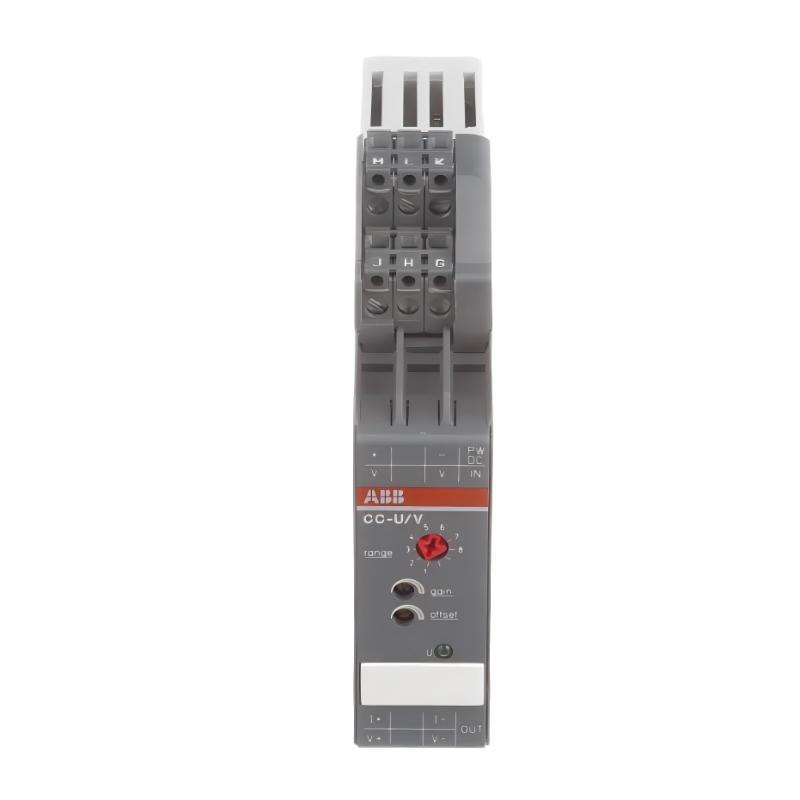
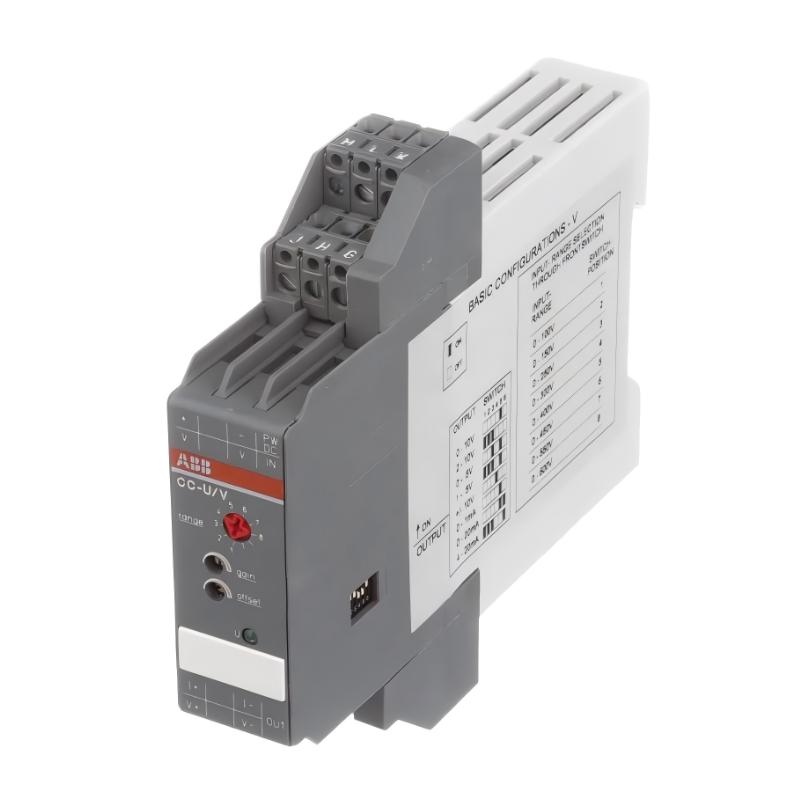
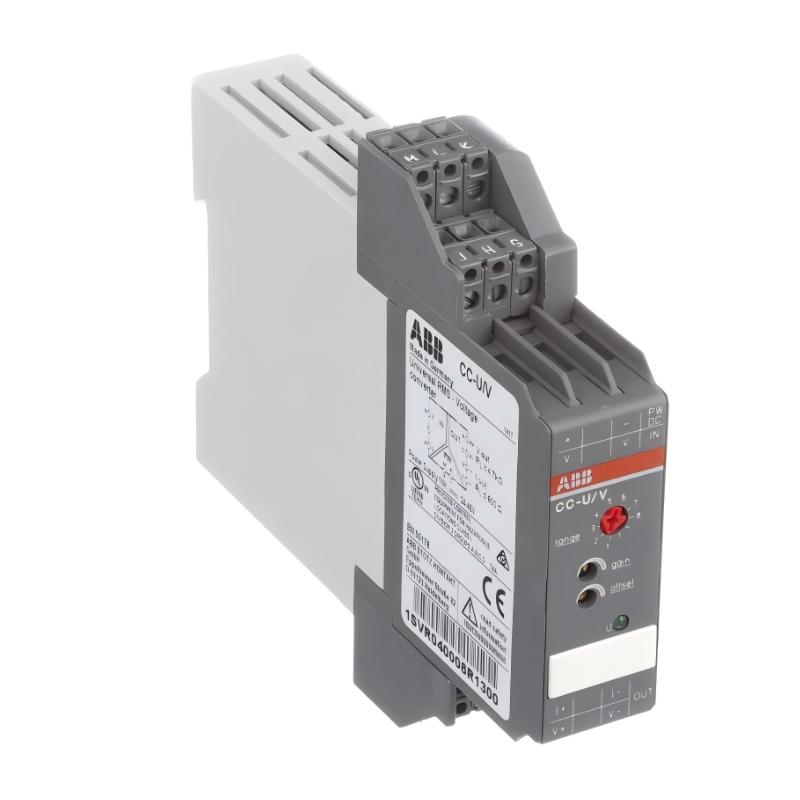
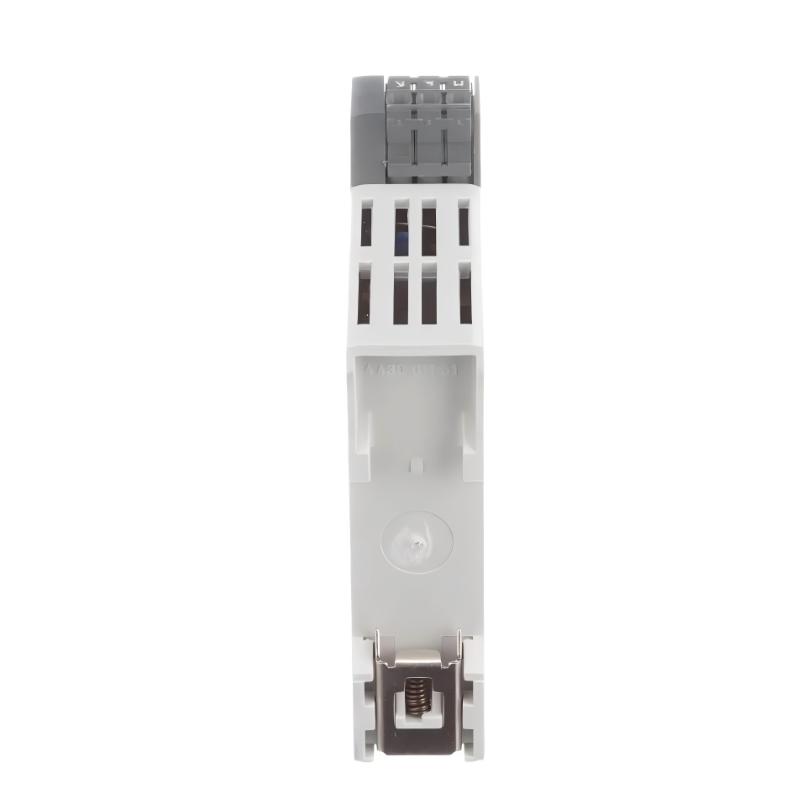
- ABB
- CC-U/V 1SVR040008R1300
- Universal Signal Converter
- Sweden (SE)
- 120 × 22.5 × 105 mm
- 0.128 kg
- Xiamen, China
- New & In Stock
- T/T, PayPal, Western Union
- 1 Year
- 1-3 Working Days
- DHL, UPS, TNT, FedEx and EMS.
- 24-Hour Service
- COO
- 7
Our advantage

Global Logistics
We have a 10-year logistics and express cooperation agreement, so our products can be shipped to any place in the world.

Brand new and original
Our products are imported in bulk from the place of origin. Because of the cooperative relationship, our products are all original and 100% new.

24-hour service
We provide 7*24 hours service to our customers. We will be there whenever you need us.

Price advantage
All our products are priced very favorably because we have our own warehouse and supply.
| Company Information | |||
| [email protected] | |||
| Mobile | +8615980777398 | ||
| +8615980777398 | |||
| 15980777398 |
Product Overview
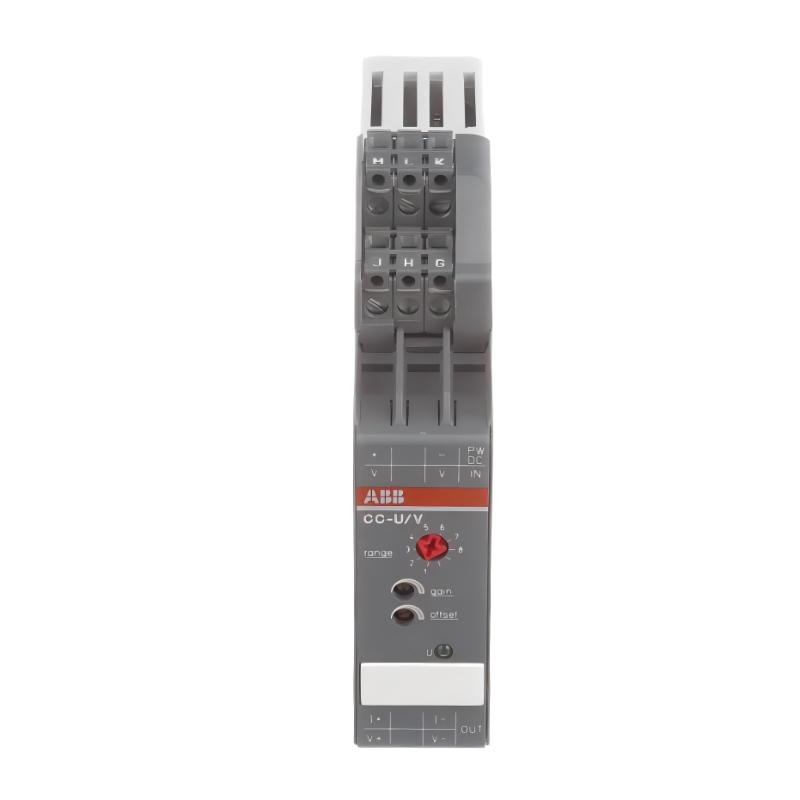
The ABB CC-U/V 1SVR040008R1300 Universal Signal Converter is a signal-conditioning device used to convert electrical control and measurement signals into a suitable form for downstream automation equipment. It belongs to the ABB CC-U signal converter family and is intended for use where field signals need to be adapted between different parts of an industrial control circuit.
In a typical control panel, the converter can be positioned between sensors, transmitters, controllers, PLC I/O, and other signal-processing equipment. It allows the connected control architecture to handle signals according to the requirements of the receiving device rather than connecting incompatible signal interfaces directly.
The CC-U/V converter is particularly useful in instrumentation and automation circuits where signal conversion, isolation, or adaptation is required. It can be used in applications involving process measurements, machine monitoring, control commands, and interface signals between field devices and control equipment.
For maintenance work, the converter should be considered part of the signal path. Incorrect configuration, wiring, or a failed converter can affect the signal reaching the PLC, controller, indicator, or other receiving equipment even when the field device itself is operating normally.
Technical Specifications
| Parameter | Specification |
|---|---|
| Manufacturer | ABB |
| Model | 1SVR040008R1300 |
| Product Family | CC-U |
| Product Series | CC-U/V |
| Product Type | Universal Signal Converter |
| Primary Function | Signal conversion and conditioning |
| System Role | Signal interface and conditioning |
| Application | Industrial automation and instrumentation systems |
| Dimensions | 120 × 22.5 × 105 mm |
| Weight | 0.128 kg |
Product Features
- Universal signal converter for industrial control applications
- Part of the ABB CC-U signal converter family
- Provides signal adaptation between field and control-system circuits
- Suitable for instrumentation and automation signal paths
- Can be integrated into PLC and controller interface circuits
- Useful for adapting signals between different automation devices
- Compact control-panel component for signal-conditioning applications
- Suitable for machine and process-control installations
Working Principle
The CC-U/V operates within the signal path between an input device and the receiving automation equipment. An electrical signal from a sensor, transmitter, or control circuit enters the converter, where the configured conversion function processes the input and produces the corresponding output signal.
Field Sensor / Transmitter → CC-U/V Signal Converter → Converted Signal → PLC / Controller / Indicator
The converter allows the input and output sides of the control circuit to use the signal characteristics required by their respective devices. Depending on the application configuration, the resulting signal can then be used by a PLC input, controller, display, monitoring device, or another signal-processing circuit.
Because the converter is part of the measurement or control signal path, incorrect input wiring, output configuration, or supply conditions can produce an apparently faulty signal at the receiving device. Troubleshooting should therefore consider the complete path from the field signal through the converter to the final input.
Role in an Industrial Signal Conditioning Control Architecture
The 1SVR040008R1300 occupies the signal-interface layer of an industrial automation system. It adapts the electrical signal before it reaches the control or monitoring equipment, allowing different signal interfaces to work together within the same control architecture.
Field Device → CC-U/V Universal Signal Converter → PLC / Controller → HMI / SCADA
| System Element | Function |
|---|---|
| Sensor / Transmitter | Generates the field measurement signal |
| CC-U/V Converter | Converts and conditions the electrical signal |
| PLC / Controller | Processes the converted signal for control logic |
| HMI | Displays operating and process information |
| SCADA System | Provides supervisory monitoring and data management |
| Control Output Equipment | Acts on commands generated by the control system |
The converter therefore acts as an interface component rather than replacing the PLC or controller. Its correct configuration is important to ensure that the receiving equipment interprets the converted signal as intended.
Industrial Applications
| Application | Typical Use |
|---|---|
| Process Instrumentation | Signal adaptation between transmitters and control inputs |
| Factory Automation | Interface between field devices and PLC systems |
| Machine Control | Conversion of control and measurement signals |
| Temperature Monitoring | Signal conditioning for measurement circuits |
| Pressure Monitoring | Adaptation of transmitter signals for controllers |
| Level Measurement | Interface between process instruments and automation |
| Control Panels | Signal conversion within electrical control cabinets |
| Building Automation | Interface for compatible monitoring and control signals |
Installation and Maintenance
- Verify the complete 1SVR040008R1300 part number before installation.
- Confirm that the converter’s intended signal function matches the control circuit.
- Review the existing wiring and record input and output connections before replacement.
- Mount the converter securely in the designated control-panel position.
- Verify the required supply connections before energizing the device.
- Connect the input signal from the appropriate sensor, transmitter, or control circuit.
- Connect the converter output to the intended PLC, controller, indicator, or receiving device.
- Check terminal identification and wiring polarity where applicable.
- Verify the configured conversion parameters before commissioning.
- Compare the converter input and output signals when troubleshooting abnormal measurements.
- Inspect terminals and wiring if the receiving controller shows an unstable or missing signal.
- After replacement or adjustment, verify the complete field-device-to-controller signal path under normal operating conditions.
Compatible System Components
| Component | Function |
|---|---|
| ABB CC-U Signal Converters | Signal conversion and conditioning |
| Sensors | Generate measurement signals |
| Process Transmitters | Provide instrumentation signals |
| PLC Input Modules | Receive converted automation signals |
| Industrial Controllers | Process measurement and control information |
| HMI Panels | Display process and machine information |
| SCADA Systems | Provide supervisory monitoring |
| Control Panel Terminal Blocks | Provide field wiring and signal distribution |
Recommended Related Models
| Model / Product Family | Product Type | Typical Application |
|---|---|---|
| ABB CC-U Series | Signal Converter | Industrial signal conditioning |
| ABB CC-U/V Series | Universal Signal Converter | Signal conversion and interface |
| ABB CC-U/RTD Series | Signal Converter | Temperature signal applications |
| ABB CC-U/TC Series | Signal Converter | Thermocouple signal applications |
| ABB CC-U/RTD-x Series | Signal Converter | Resistance temperature measurement |
| ABB Signal Converter Series | Signal Conditioning Unit | Industrial instrumentation |
| ABB Interface Modules | Interface Module | Control and signal interfacing |
Key Advantages
- Provides a dedicated interface for industrial signal conversion.
- Helps adapt field signals to the requirements of receiving automation equipment.
- Suitable for PLC, controller, instrumentation, and monitoring circuits.
- Supports organized signal conditioning within control panels.
- Useful for troubleshooting and maintaining signal paths between field devices and controllers.
- Integrates into a wide range of industrial automation and instrumentation architectures.
Technical FAQs
Where should a CC-U/V signal converter be installed in a control circuit?
It is normally positioned between the field signal source and the receiving automation equipment when signal conversion or conditioning is required. The exact location depends on the signal architecture and the input requirements of the connected controller or monitoring device.
How can a signal converter fault be distinguished from a sensor fault?
Compare the signal entering the converter with the signal leaving it. If the input is correct but the output is missing or incorrect, the converter, its configuration, supply, or wiring should be investigated. If the input is already abnormal, the field sensor or transmitter should be checked first.
What wiring problems can cause incorrect output from a CC-U/V converter?
Incorrect terminal assignment, signal polarity, missing supply connections, loose terminals, or an unsuitable input/output configuration can affect the resulting signal. Checking both sides of the converter helps isolate wiring problems from configuration or equipment faults.
What should be verified after replacing a CC-U/V converter?
Confirm the replacement part number, wiring, supply connections, and configured signal function. The input and output signals should then be measured under operating conditions to verify that the receiving PLC, controller, or monitoring device receives the expected signal.