
NewsNEWCENTER
Featured products


Contact Us
ABB and NVIDIA Advance Industrial Robot AI Simulation Technology to Accelerate Smart Manufacturing Automation
2026-07-08The global manufacturing industry is entering a new stage of intelligent automation, where traditional robotic systems are being enhanced with artificial intelligence, simulation technology, and digital twin capabilities. ABB, one of the world’s leading industrial automation and robotics companies, is advancing the development of AI-enabled robotics through collaboration with NVIDIA to improve industrial robot training and deployment.
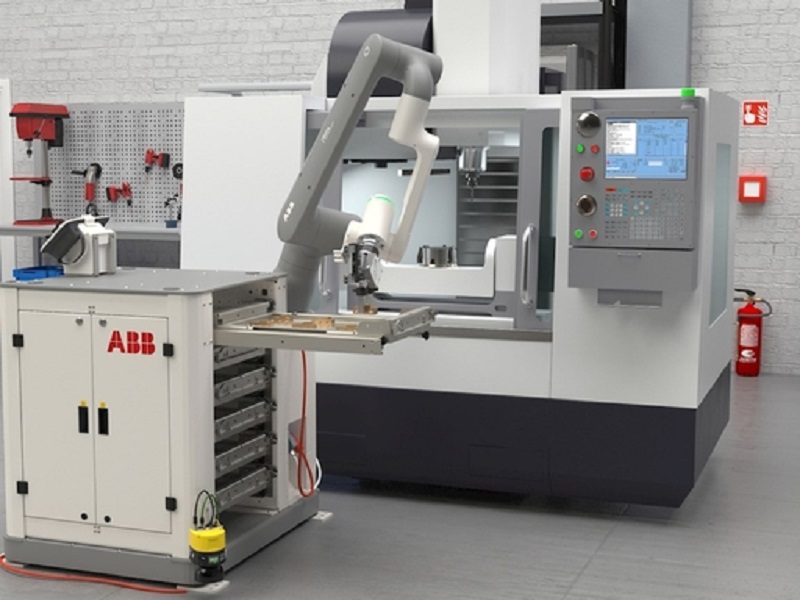
The combination of ABB robotics expertise and NVIDIA simulation technology represents an important step toward smarter manufacturing environments. By using advanced virtual simulation platforms, industrial robots can be trained in realistic digital environments before being deployed on actual production lines.
For manufacturers, this development provides significant advantages, including faster commissioning, reduced engineering costs, improved production flexibility, and higher reliability of automated systems.
Industrial automation customers are increasingly looking for solutions that combine PLC control systems, robot technology, industrial software, and artificial intelligence. The integration of AI into automation platforms is becoming a key trend for factories seeking higher productivity and operational efficiency.
The Growing Role of AI in Industrial Automation
For decades, industrial robots have been widely used in automotive manufacturing, electronics assembly, packaging, and material handling applications. Traditional robots are highly accurate and repeatable, but their performance often depends on carefully programmed movements and controlled environments.
Modern manufacturing requirements are changing rapidly. Production lines now need to handle:
- Multiple product variations
- Shorter product life cycles
- Flexible manufacturing processes
- Complex assembly tasks
- Real-time decision making
Artificial intelligence provides new possibilities by allowing robots to understand changing environments and improve their performance through data-driven learning.
AI-powered automation enables industrial robots to analyze information from:
- Machine vision systems
- Industrial sensors
- Production data
- Simulation models
- Manufacturing execution systems
This creates a more intelligent automation ecosystem where robots are no longer isolated machines but connected components of a complete digital manufacturing platform.
For PLC and DCS engineers, this transformation means that future automation architectures will increasingly combine traditional control technologies with AI-based optimization systems.
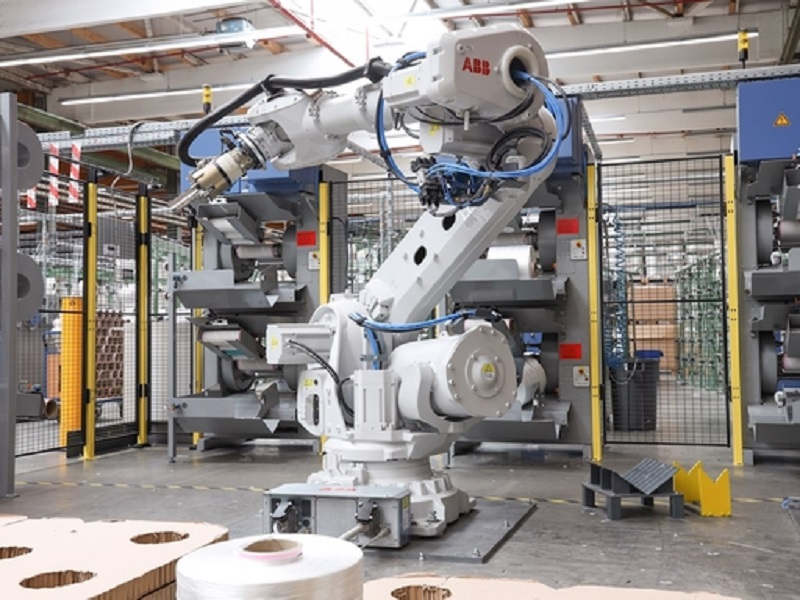
Digital Twin Technology Improves Robot Training and Deployment
One of the major challenges in industrial robot implementation is the difference between virtual programming environments and real factory conditions.
A robot program that works perfectly in simulation may encounter unexpected problems when introduced into a real production environment. Factors such as lighting conditions, mechanical vibration, material differences, and equipment positioning can influence robot performance.
Digital twin technology helps solve this challenge by creating a virtual representation of the physical production environment.
Through realistic simulation, engineers can:
- Test robot movements before installation
- Optimize production processes
- Identify potential problems earlier
- Reduce commissioning time
- Improve system reliability
The cooperation between ABB and NVIDIA focuses on improving the accuracy of these simulation environments, allowing robots to receive more realistic training before entering operation.
This approach is particularly valuable for industries such as:
- Automotive manufacturing
- Semiconductor production
- Consumer electronics
- Battery manufacturing
- Industrial equipment production
These industries require extremely high precision and rapid production changes, making intelligent robotics an important competitive advantage.
Impact on Industrial Automation System Integration
The development of AI-driven robotics will influence the entire industrial automation ecosystem.
Traditional automation projects typically involve:
- PLC programming
- HMI configuration
- Motion control setup
- Robot programming
- Field device integration
Future smart factories will require deeper integration between:
- PLC systems
- Industrial networks
- Robot controllers
- Edge computing platforms
- Cloud-based industrial software
- Artificial intelligence models
Automation engineers will need to consider not only machine control but also data collection, analysis, and optimization.
For example, a modern production line may include:
A PLC system controlling machine sequences.
A robot controller managing assembly operations.
Industrial sensors collecting equipment data.
An edge computing platform analyzing production conditions.
An AI system optimizing process parameters.
This integrated architecture represents the next generation of industrial automation.
Benefits for Global Manufacturing Companies
The adoption of AI-based robot simulation technology can provide several important benefits for manufacturers.
Faster Engineering and Commissioning
Traditional robot installation requires significant time for physical testing and adjustment. Virtual simulation allows engineers to validate processes before equipment arrives at the factory.
This reduces project implementation time and helps manufacturers bring new production lines online faster.
Lower Operational Costs
Production downtime can create significant financial losses. By identifying potential problems during simulation, companies can reduce unexpected failures during commissioning.
AI-supported optimization can also improve resource utilization and reduce unnecessary production adjustments.
Improved Manufacturing Flexibility
Modern factories must respond quickly to changing customer requirements.
AI-enabled robotic systems can support flexible production models by allowing faster adaptation to new products and processes.
This is especially important in industries where product customization and frequent design changes are becoming common.
AI and the Future of Smart Factory Automation
The development of intelligent robotics is closely connected with the broader Industry 4.0 transformation.
Future factories will increasingly depend on:
- Autonomous production systems
- Digital twins
- Industrial artificial intelligence
- Connected automation platforms
- Real-time manufacturing analytics
Companies investing in automation modernization will gain advantages in efficiency, quality control, and production flexibility.
For industrial automation suppliers and equipment providers, this creates new opportunities in areas such as:
- PLC hardware supply
- DCS modernization
- Robot integration
- Industrial communication solutions
- Automation spare parts
- Control system upgrades
The demand for advanced automation components is expected to continue growing as manufacturers worldwide upgrade their production infrastructure.
Conclusion: AI-Powered Robotics Will Reshape Industrial Automation
The cooperation between ABB and NVIDIA highlights a major direction in the future development of industrial automation. By combining robotics, artificial intelligence, and digital simulation technologies, manufacturers can create smarter, more flexible, and more efficient production systems.
For companies operating in manufacturing, energy, automotive, electronics, and process industries, intelligent automation is becoming a strategic investment rather than simply a technology upgrade.
The next generation of factories will not only automate physical operations but will also use AI to improve decisions, optimize processes, and create continuously improving production environments.
Industrial automation professionals, PLC engineers, and DCS specialists will play an essential role in building this new generation of intelligent manufacturing systems.